Dumbbell vs Cable Lateral Raise: Best Way to Build Side Delts?
The lateral raise is the number one exercise for building wider shoulders. But should you use dumbbells or cables? This small equipment choice changes how the exercise feels and how effective each rep is.
Publicado: 2026-03-09
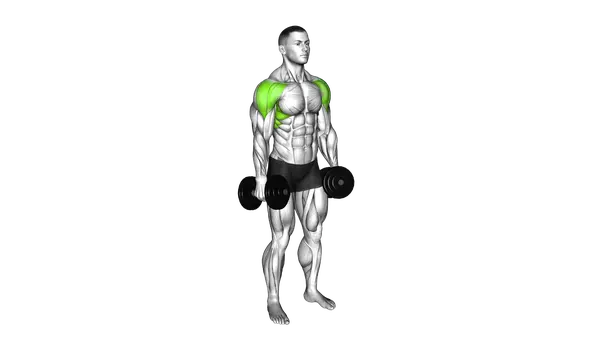
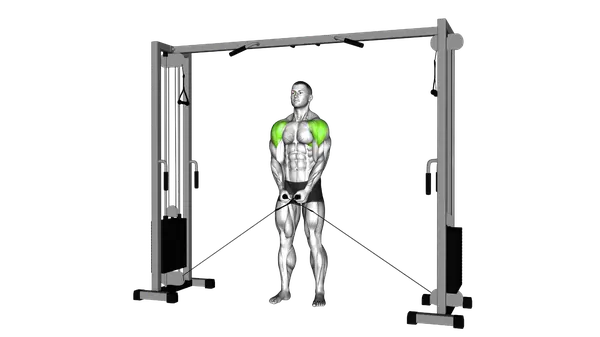
Where is the exercise hardest?
With dumbbells, the exercise is easiest at the bottom (arms at your sides) and hardest at the top (arms parallel to the floor). This means the first third of each rep barely works your delts at all. The good stuff only happens in the upper half.
With a cable set low, the resistance is more consistent throughout the entire range of motion. From the very first inch of movement, the cable is pulling your arm down and your delt is fighting it [1]. This means every part of every rep counts.
Time under tension
Because cables provide resistance through the full range, your side delts spend more total time working during each set. More time under tension generally means more muscle stimulus.
With dumbbells, you can swing through the easy bottom portion, essentially resting your delts for part of each rep. Cables make that impossible. You might use less weight on cables, but your delts work harder overall.
Momentum and cheating
Let's be real — almost everyone cheats on dumbbell lateral raises. You swing the weight up, use body english, shrug your traps. It's one of the most commonly performed exercises with poor form.
Cables make cheating harder. The constant pull of the cable requires you to control the movement on the way down, which eliminates the swinging momentum that dumbbells allow. You're forced to use a weight you can actually control.
Practicality
Dumbbells are available in every gym on the planet. You grab a pair and start raising. No setup, no cable adjustment, and you can do both arms at once.
Cable lateral raises are typically done one arm at a time, which doubles the time per set. You also need a cable station, which might be occupied. In a busy gym, dumbbells are faster and more convenient.
La conclusión
Cable lateral raises are technically the better exercise because they keep tension on your side delts through the full range of motion. But dumbbell lateral raises are perfectly effective when done with good form and controlled weight. Use cables when available, dumbbells when they're not, and ideally rotate between both.
¿Cuál es tu objetivo de fitness?
Elige uno y la app construye tu programa en torno a él, a tu equipamiento y a los días que puedes entrenar.
De un vistazo
Dumbbell Lateral Raise
Crossed Cable Lateral Raise
Preguntas frecuentes
How heavy should lateral raises be?
Lighter than you think. Lateral raises are a small-muscle isolation exercise. Most people get more out of 8kg dumbbells with perfect form than 15kg dumbbells with swinging. Leave your ego at the door.
Should I go above shoulder height?
Raising slightly above parallel is fine and can increase the range of motion. Going much higher shifts the work to your traps. Stop at or just above shoulder height for best results.
Referencias cientificas
Coratella G, Tornatore G, Longo S et al. · International journal of environmental research and public health (2020)
Campos YAC, Vianna JM, Guimarães MP et al. · Journal of human kinetics (2020)
Maeo S, Wu Y, Huang M et al. · European journal of sport science (2023)
Las fuentes son publicaciones academicas revisadas por pares de PubMed.
Guía completa del ejercicio
Dumbbell Lateral Raise
Guía completa del ejercicio
Crossed Cable Lateral Raise