Hammer Curl vs Bicep Curl: The Grip That Changes Your Arms
Both exercises curl a dumbbell up. The only difference is how you hold it — palms up for a regular curl, palms facing each other for a hammer curl. That small grip change targets different muscles and affects how your arms look.
Publicado: 2026-03-09
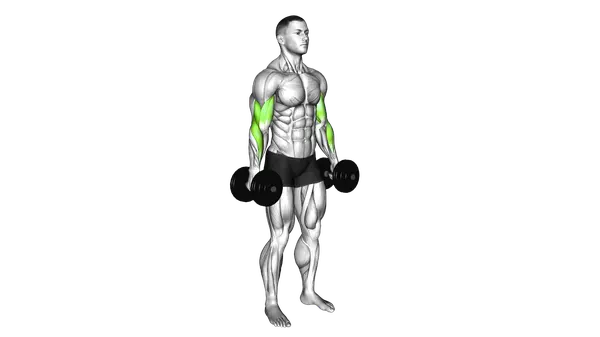
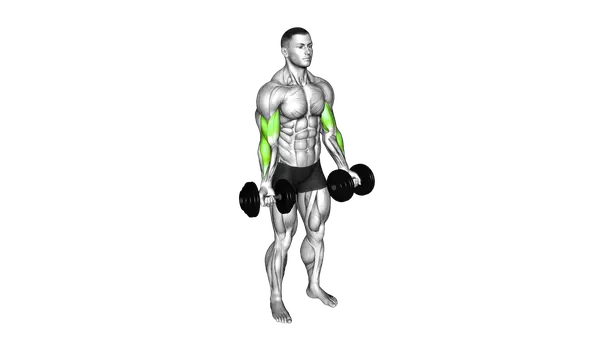
Different grip, different muscles
The regular bicep curl (palms up) puts your biceps in the strongest position to curl the weight. It primarily targets the biceps brachii — the muscle that creates the "peak" when you flex.
The hammer curl (palms facing in) shifts work to the brachialis and brachioradialis [1]. The brachialis sits underneath your biceps and pushes it up when it grows, making your arm look thicker from the front. The brachioradialis is your main forearm muscle, which gives your arms that tapered look.
Arm width vs arm peak
If you want taller, peaked biceps when you flex, regular curls are your best bet. They target the biceps brachii directly, which is the muscle responsible for that peak shape.
If you want thicker, wider-looking arms — especially when your arms are relaxed at your sides — hammer curls are the way to go. The brachialis adds width that you can see from the front, and the forearm development makes your entire arm look more complete.
Forearm development
Hammer curls are one of the best exercises for building your forearms. The neutral grip loads the brachioradialis heavily, which is the muscle that gives your forearm its shape when you look at it from the side.
Regular bicep curls do very little for forearm development. If your forearms are lagging behind your upper arms, hammer curls (along with wrist curls) should be in your program.
Which is easier on the wrists?
Hammer curls are almost always more comfortable. The neutral grip keeps your wrist in a natural position — the same position your hand is in when you hang your arms at your sides.
Regular curls force your palm to face up throughout the movement, which can strain the wrist, especially with heavier weights. If curls bother your wrists, switch to hammer curls. You'll still build great arms.
La conclusión
Do both for complete arm development. Regular bicep curls build the biceps peak. Hammer curls build arm thickness, the brachialis, and your forearms. If you can only do one, hammer curls are the more complete exercise because they train more muscles, but your biceps peak might lag without some regular curls in the mix.
¿Cuál es tu objetivo de fitness?
Elige uno y la app construye tu programa en torno a él, a tu equipamiento y a los días que puedes entrenar.
De un vistazo
Dumbbell Hammer Curl
Dumbbell Biceps Curl
Preguntas frecuentes
Can I alternate between hammer and regular curls each workout?
That's a great approach. Or do both in the same workout — regular curls first, then hammer curls. 2-3 sets of each is plenty.
Should I use the same weight for both?
Most people are slightly stronger on hammer curls because the brachialis and brachioradialis assist more. If you curl 14kg dumbbells for regular curls, you might use 16kg for hammer curls.
Referencias cientificas
Krings BM, Shepherd BD, Swain JC et al. · Journal of strength and conditioning research (2021)
[2] Forearm posture and grip effects during push and pull tasks.
Di Domizio J, Keir PJ · Ergonomics (2010)
Las fuentes son publicaciones academicas revisadas por pares de PubMed.