Variantes de ejercicios

Bench Press Variations: Flat vs Incline vs Decline vs Close-Grip

Flat, incline, decline, and close-grip bench press variations all train the pressing pattern, but they shift emphasis between the sternal and clavicular portions of the pectoralis major and the triceps. The main differences come from bench angle, grip width, bar path, and the joint positions those choices create. For most lifters, the decision is not which variation is best in general, but which one best matches the target muscle region, strength goal, and tolerance at the shoulder and elbow.

Publicado:

4 variantes

¿Cuál deberías usar?

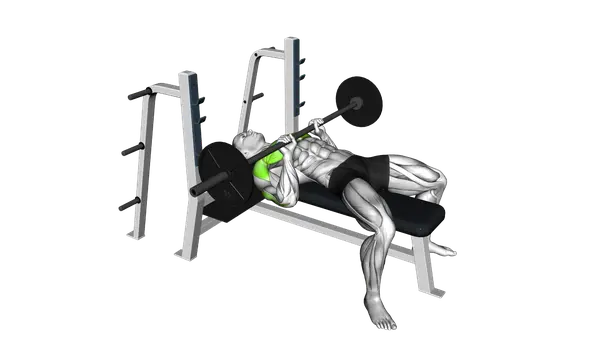
Barbell Bench Press

01

Barbell Bench Press

Pectorales

Ideal para: overall chest and strength

Use this as the primary barbell press when you want the most balanced combination of pec development and pressing load. It is usually the first choice for general strength programs and for tracking long-term pressing progress.

Ver ejercicio
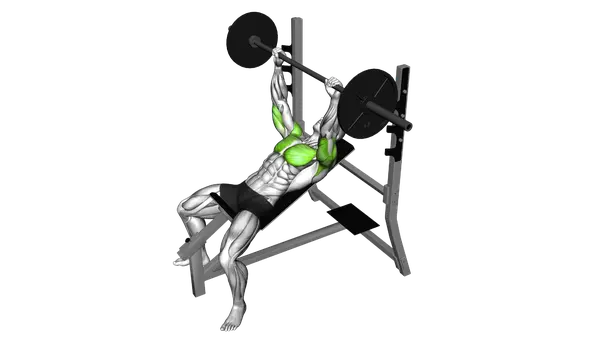
Barbell Incline Bench Press

02

Barbell Incline Bench Press

Pectorales

Ideal para: upper chest emphasis

Use this when clavicular pec development is the main goal or when flat pressing already covers general chest work. It fits well as the first or second press in a chest-focused program, but most lifters should expect lower loading than on flat bench.

Ver ejercicio
Barbell Decline Bench Press

03

Barbell Decline Bench Press

Pectorales

Ideal para: lower chest emphasis

Use this when you want more sternal pec bias or when decline pressing feels more shoulder-tolerant than incline work. It is usually a secondary chest press rather than the main benchmark lift.

Ver ejercicio
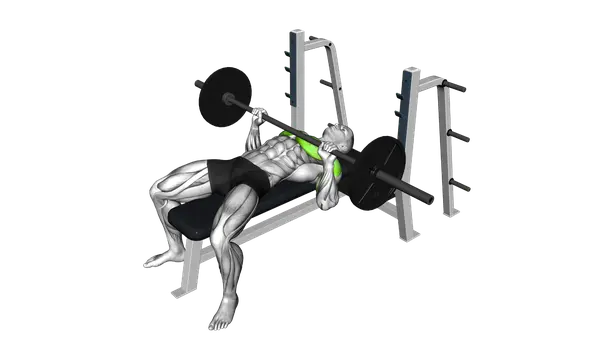
Close-Grip Barbell Bench Press

04

Close-Grip Barbell Bench Press

Tríceps

Ideal para: triceps-focused pressing strength

Use this when triceps strength or bench lockout is the limiting factor. It works best after standard bench work or on a separate upper-body day where the goal is more elbow extension demand with some chest involvement.

Ver ejercicio

01

How the variations differ

Flat and close-grip bench press use a horizontal press pattern. Incline bench press changes the torso angle upward, which increases shoulder flexion demands and shifts more work toward the clavicular, or upper, fibers of the pectoralis major [1]. Decline bench press angles the torso downward, which generally favors the sternal, or lower/mid, fibers by changing the pressing line.

Grip width changes the contribution of the triceps. A closer grip usually reduces the moment arm at the shoulder and increases the elbow extension demand, so the triceps become a larger limiter. That is why close-grip bench press is usually chosen for triceps strength and lockout development rather than maximum chest emphasis.

All four lifts are compound barbell presses, so pecs, triceps, and front delts all contribute. The difference is the degree of contribution, not a complete change in the movement.

02

Muscle emphasis by bench angle and grip

Incline pressing is the clearest choice when the goal is more clavicular pec involvement. Research comparing bench angles found that increasing the incline raises upper pectoralis major activation, while flatter positions remain more balanced across the chest [1].

Flat bench press is the general-purpose option for overall chest development. It loads the pecs heavily without biasing the upper chest as much as incline or reducing chest contribution as much as a close-grip setup.

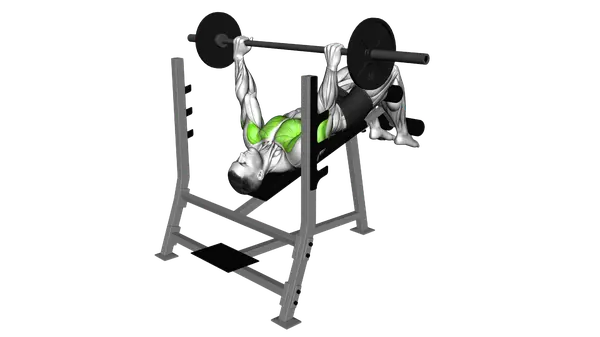
Decline bench press is typically used to emphasize the sternal fibers of the pecs. It also shortens the pressing range slightly for many lifters, which can allow stable loading while keeping the movement chest-dominant.

Close-grip bench press shifts emphasis toward the triceps while still training the pecs and front delts. It is not a pure chest builder compared with standard flat or incline work, but it is highly useful when elbow extension strength is the priority.

03

Setup, bar path, and loading differences

Flat bench press uses a standard supine setup with the eyes under the bar, shoulder blades retracted and depressed, and feet planted. The bar usually travels from over the shoulder joint at lockout to the lower chest or sternum on the descent. This is the most common variation for heavy loading and broad transfer to general pressing strength.

Incline bench press uses the same basic upper-back setup, but the bench angle changes the pressing line toward the upper chest. The bar typically touches higher on the torso than in flat benching. Most lifters use less load than on flat bench because the shoulder flexion demand is higher and the pec contribution shifts.

Decline bench press places the torso on a downward slope with the legs secured. The bar path usually targets the lower chest, and the range of motion is often slightly shorter than flat bench. Many lifters find it stable and chest-focused, though the setup is less convenient and less available in some gyms.

Close-grip bench press keeps the flat bench setup but narrows the hand spacing. The exact width varies, but the forearms should remain close to vertical at the bottom rather than collapsing inward. Load is usually lower than a standard flat bench because the triceps become the main limiting factor.
04

Joint stress and technical tradeoffs

Incline bench press increases shoulder flexion demands, so it can be less tolerant for lifters whose shoulders are aggravated by pressing at steeper angles. Flat bench is often the middle ground because it balances chest loading and shoulder demand. Decline bench can reduce the shoulder angle relative to incline, which some lifters find more comfortable for pressing volume.

Close-grip bench press usually reduces shoulder abduction compared with a wide-grip flat bench, but it increases elbow extension demand. That can make it useful when wide-grip benching irritates the shoulder, but less ideal when the elbows or wrists are the limiting joints.

Barbell bench press technique also depends on controlling the bar path, not just moving the bar vertically. Bench press biomechanics include lateral barbell forces, meaning the lifter must stabilize the bar in multiple directions rather than only press straight up and down [2]. Variations that change grip width or bench angle also change how demanding that stabilization feels.

05

How to prioritize them

Use flat barbell bench press as the default if the goal is overall chest size plus general pressing strength. It gives the best blend of load potential, chest involvement, and carryover to other barbell pressing.

Use incline barbell bench press when upper chest development is undertrained or when a program already includes enough flat pressing. It is the most direct way to bias the clavicular pec fibers [1].

Use decline barbell bench press when the goal is more sternal pec emphasis or when a flatter or upward pressing angle is less comfortable at the shoulder. It is a secondary chest press rather than the main strength benchmark for most lifters.


Use close-grip barbell bench press when triceps strength, lockout strength, or a chest press with more elbow extension demand is needed. It works best as a supplement to standard benching, not a full replacement for chest-focused pressing.

La conclusión

For most lifters, the standard barbell bench press should be the base variation because it provides the best mix of chest stimulus and heavy loading. Add incline bench press if upper chest development is a priority, since bench angle increases clavicular pec involvement [1]. Use decline bench press as a secondary option for more sternal pec emphasis or better shoulder tolerance. Use close-grip bench press primarily for triceps strength and lockout work, not as the main chest-builder unless triceps development is the specific goal.

Bench Press Variations: Flat vs Incline vs Decline vs Close-Grip

De un vistazo

Característica Barbell Bench Press Barbell Incline Bench Press Barbell Decline Bench Press Close-Grip Barbell Bench Press
Músculos principales Pectorales Pectorales Pectorales Tríceps
Músculos secundarios Tríceps, Deltoides anteriores Tríceps, Deltoides anteriores Tríceps, Deltoides anteriores Pectorales, Deltoides anteriores
Equipamiento Barra (Barbell) Barra (Barbell) Barra (Barbell) Barra (Barbell)
Dificultad Intermedio Intermedio Intermedio Intermedio
Tipo Compuesto Compuesto Compuesto Compuesto

Hecho para progresar

Deja de adivinar, empieza a progresar

La app de GrabGains crea tu plan con ejercicios que encajan con tu objetivo y tu equipamiento — y registra cada serie para que sepas cuál funciona para ti.

Descarga gratis · 14 días de Pro
Empieza a entrenar con GrabGains
Planes de entrenamiento GrabGains

Conviene saber

Preguntas frecuentes

Which bench press variation is best for upper chest?

The barbell incline bench press is the most direct choice for upper chest emphasis. Increasing the bench angle raises activation of the clavicular portion of the pectoralis major compared with flatter positions [1].

Is decline bench press necessary for lower chest?

No. Flat bench press already trains the sternal fibers of the pecs effectively. Decline bench is an optional variation when you want more lower-chest bias or a pressing angle that feels more comfortable at the shoulder.

Does close-grip bench press still build the chest?

Yes. The pecs still contribute, but the narrower grip increases the relative demand on the triceps. It is better viewed as a triceps-focused press with secondary chest training than as a primary chest variation.

Which variation is best for maximum pressing strength?

The standard flat barbell bench press is usually the main strength lift because it allows the broadest combination of chest contribution, stable setup, and high loading. Bench press performance also depends on controlling bar path and lateral forces, not only vertical force production [2].

Referencias científicas

  1. [1]
    Influence of bench angle on upper extremity muscular activation during bench press exercise.

    Lauver JD, Cayot TE, Scheuermann BW · European journal of sport science (2016)

  2. [2]
    Understanding Bench Press Biomechanics-The Necessity of Measuring Lateral Barbell Forces.

    Mausehund L, Werkhausen A, Bartsch J et al. · Journal of strength and conditioning research (2022)

Las fuentes son publicaciones académicas revisadas por pares de PubMed.