Alternativas de ejercicios

Straight Arm Pulldown Alternatives: 6 Lat-Focused Exercises

The best straight arm pulldown alternatives train the lats through shoulder extension, pulling the arms down toward the hips with little or no elbow bend. Few exercises reproduce that isolated action exactly, so substitutes are ranked by how well they keep the lat emphasis, the joint action, and a usable resistance profile. Cable, free-weight, machine, bodyweight, and band options are included.

Publicado:

Qué hace a un buen sustituto

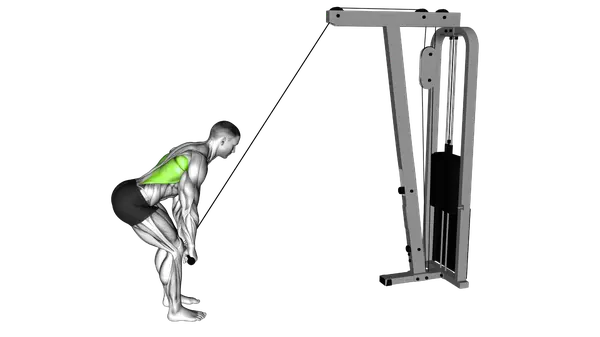
The cable straight arm pulldown is a shoulder-extension isolation exercise. With the elbows held almost straight, the upper arms sweep from about shoulder height down to the thighs, and the latissimus dorsi and teres major do most of the work, assisted by the long head of the triceps, which crosses the shoulder joint. Because the elbows do not bend, the biceps contribute little.

A good substitute keeps the lats as the main mover. Pulldowns and rows qualify in part: they combine shoulder movement with elbow flexion, which adds biceps work but allows heavier loads. Among the pulldown and row variations tested in one study, the wide-grip pulldown and the seated row produced the highest ratio of lat to biceps activation [3].

The resistance profile also matters. A cable keeps tension on the lats all the way to the hips, whereas free-weight versions lose tension once the arms point straight up or down. In the pullover, muscle activity depends on the external lever arm [1], which is largest with the arms behind the head and smallest with the arms vertical above the chest.

Cable Straight Arm Pulldown (Lat Prayer)

Mejores alternativas a Cable Straight Arm Pulldown (Lat Prayer)

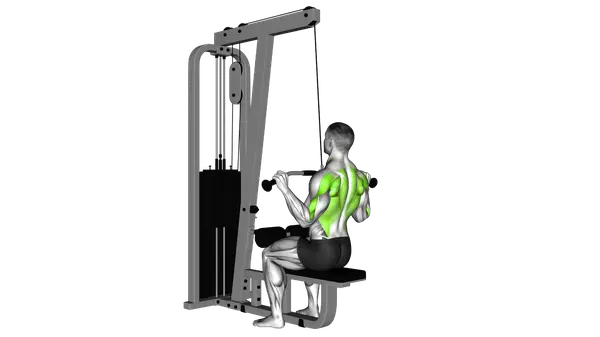
01 Lat Pulldown

Lat Pulldown

Dorsales · Cable · Principiante

Diferencia clave

The lat pulldown trains the same muscle in a vertical pull, but with a wide grip the upper arms travel out to the sides rather than in front of the body, and the elbows bend, so the biceps share the work and much heavier loads are possible. The long head of the triceps remains active in the pulldown, with the highest activity recorded when a wide grip is pulled to the front [4].

Cuándo elegirlo

Choose this when the goal is overall lat size and strength rather than isolation. It is usually found on the same cable tower, which makes it the simplest swap in a commercial gym.


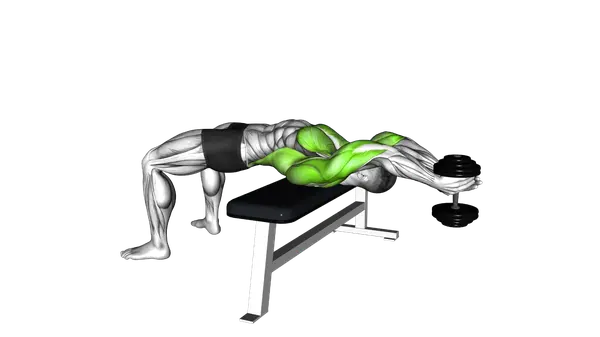
02 Dumbbell Pullover

Dumbbell Pullover

Dorsales · Mancuerna · Intermedio

Diferencia clave

The pullover uses the same straight-arm shoulder extension, performed lying on a bench with one dumbbell. Resistance is greatest when the arms are behind the head and fades as they reach vertical, so it loads the stretched range and omits the finish at the hips. EMG data show greater pectoralis major than latissimus dorsi activity in the pullover [1], and a 2026 review found that it appears to favor the pectoralis major rather than selectively target the lats [2].

Cuándo elegirlo

Choose this when no cable is available and a dumbbell and bench are. Expect a substantial chest contribution, and keep the bottom position within comfortable shoulder mobility, since the shoulder is in deep flexion under load.

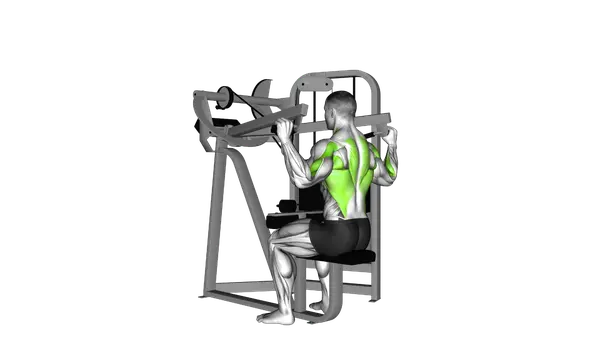
03 Lever Lateral Wide Pulldown

Lever Lateral Wide Pulldown

Dorsales · Máquina · Intermedio

Diferencia clave

This machine pulldown follows a fixed arc and, like the cable pulldown, combines shoulder movement with elbow flexion. The guided path removes balance demands and makes heavy, controlled sets straightforward, but the biceps remain involved and the arm path cannot be changed.

Cuándo elegirlo

Choose this when cable stations are occupied or when a heavy, stable lat exercise is needed alongside lighter isolation work. It replaces the lat training volume of the straight arm pulldown rather than its isolation character.

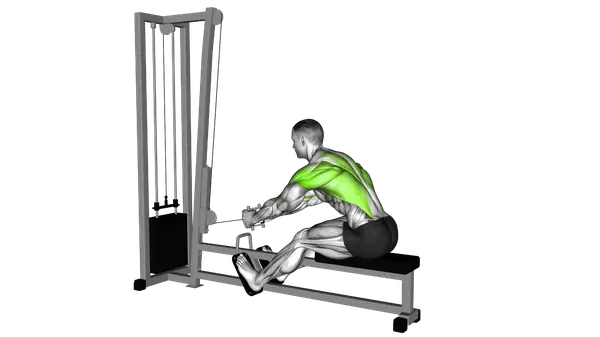
04 Seated Cable Row

Seated Cable Row

Dorsales, Trapecios · Cable · Intermedio

Diferencia clave

The seated row moves the upper arm from in front of the body back past the torso, which is shoulder extension in a horizontal direction combined with elbow flexion. In a comparison of pulldown and row variations, the seated row shared the highest lat-to-biceps activation ratio with the wide-grip pulldown and produced the greatest middle trapezius and rhomboid activity [3].

Cuándo elegirlo

Choose this when you want a cable lat exercise that also trains the mid-back, or when overhead arm positions are uncomfortable. A narrower grip and a lower shoulder-abduction angle, with the elbows near the ribs, have each been associated with greater lat activity in the seated row [2].

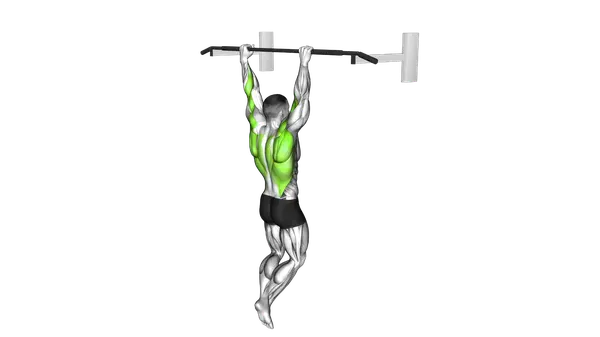
05 Pull Up

Pull Up

Dorsales · Ejercicios con peso corporal · Intermedio

Diferencia clave

The pull-up is a compound vertical pull with bodyweight as the resistance, combining shoulder movement with elbow flexion. The lats are the most active of the measured muscles during pull-up variations, alongside substantial biceps activity [5]. The load cannot be reduced below bodyweight without assistance.

Cuándo elegirlo

Choose this when a bar is available and you can complete several controlled repetitions. It suits home training with a doorway or wall-mounted bar and gives heavy lat loading without any other equipment.

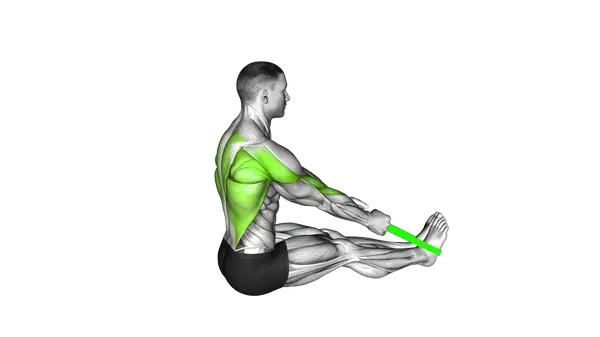
06 Resistance Band Seated Row

Resistance Band Seated Row

Dorsales, Trapecios · Banda de resistencia · Principiante

Diferencia clave

This band row reproduces the seated cable row on the floor, with the band looped around the feet. Band tension rises as the band stretches, so resistance is lowest with the arms extended and highest as the hands reach the torso, unlike the more constant resistance of a cable.

Cuándo elegirlo

Choose this for home training or travel when no bar or weights are available. Keep the elbows close to the torso, a position associated with greater lat activity in seated rowing [2], and progress with a heavier band or a shorter band length.

Entrenar en casa

The resistance band seated row needs only a band and floor space, which makes it the most accessible home option. The pull-up works with a doorway or wall-mounted bar, and the dumbbell pullover requires one dumbbell and a bench or other stable support for the upper back. The cable and machine exercises in this list require gym equipment.

La conclusión

The cable bar lateral pulldown is the most practical replacement for overall lat training, because it uses the same equipment and loads the lats heavily, at the cost of added biceps involvement. The dumbbell pullover is the closest match in joint action when no cable is available, but the chest shares more of the work than in the cable version [1]. The seated cable row and lever lateral wide pulldown suit heavier compound lat work, while the pull-up and resistance band seated row cover training at home.

¿Cuál es tu objetivo de fitness?

Elige uno y la app construye tu programa en torno a él, a tu equipamiento y a los días que puedes entrenar.

Descarga gratis · 14 días de Pro

Conviene saber

Preguntas frecuentes

Is the dumbbell pullover a good substitute for the straight arm pulldown?

It is the closest in movement, since both keep the elbows nearly straight and extend the shoulder. However, the dumbbell pullover loads the stretched overhead range rather than the finish at the hips, and EMG research shows the chest contributes more than the lats. It works best as a substitute when no cable is available.

Can I replace straight arm pulldowns with lat pulldowns?

Yes, for overall lat development. The lat pulldown trains the lats with heavier loads but adds biceps work and changes the arm path, so it does not reproduce the isolated shoulder-extension action. Many programs use both, with the straight arm pulldown as a lighter accessory.

What is the best straight arm pulldown alternative at home?

The resistance band seated row is the most accessible option because it needs only a band. The pull-up is the strongest option when a bar is available, and a dumbbell pullover on a bench is the closest in movement if a dumbbell is at hand.

Referencias científicas

  1. [1]
  2. [2]
    Electromyographic Analysis of Latissimus Dorsi Activation During Common Resistance Training Exercises: A Narrative Review.

    Di Fonza D, Di Claudio G, Colantuono G et al. · Journal of functional morphology and kinesiology (2026)

  3. [3]
  4. [4]
  5. [5]
    Surface electromyographic activation patterns and elbow joint motion during a pull-up, chin-up, or perfect-pullup™ rotational exercise.

    Youdas JW, Amundson CL, Cicero KS et al. · Journal of strength and conditioning research (2010)

Las fuentes son publicaciones académicas revisadas por pares de PubMed.