Comparativa de ejercicios
Face Pull vs Reverse Fly: Which Rear Delt Exercise to Use
The face pull and the reverse fly, also called the rear delt fly, both train the rear delts but combine different shoulder movements. The dumbbell reverse fly is a single-joint horizontal abduction exercise that isolates the rear delts. The cable face pull adds elbow flexion, shoulder blade retraction and external rotation, spreading the work across the rear delts, the middle and lower trapezius and the rotator cuff.
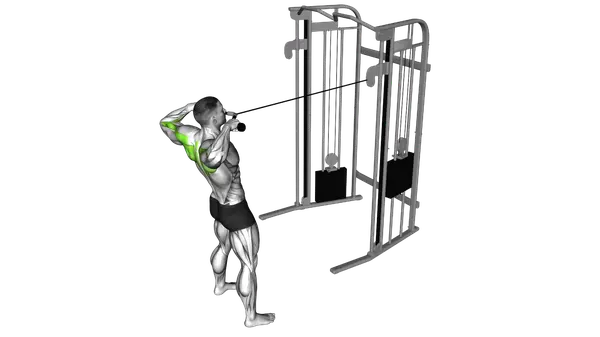
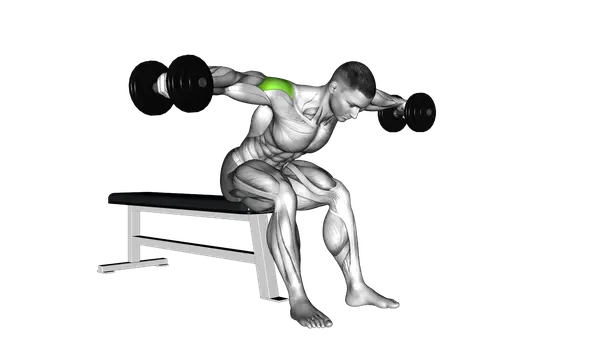
Cable Standing Face Pull (With Rope) vs Dumbbell Rear Fly
De un vistazo
| Característica | Cable Standing Face Pull (With Rope) | Dumbbell Rear Fly |
|---|---|---|
| Músculos principales | Deltoides posterior | Deltoides posterior |
| Músculos secundarios | Trapecios | Trapecios |
| Equipamiento | Cable | Mancuerna |
| Dificultad | Intermedio | Intermedio |
| Tipo | Aislamiento | Aislamiento |
| Tipo de fuerza | Pull | Pull |
01
Setup and movement
The Dumbbell Rear Fly is performed with the torso hinged forward until it is nearly parallel to the floor, or lying chest-down on an incline bench. The dumbbells hang below the shoulders with a slight, fixed bend in the elbows and are raised out to the sides in a wide arc until the upper arms reach about torso level. The main joint action is horizontal abduction of the shoulder, with some retraction of the shoulder blades.
The Cable Standing Face Pull is performed with a rope attachment set at about face height or slightly above. The rope is pulled toward the face with the elbows high and wide, and the hands separate at the end so they finish beside the ears with the upper arms rotated outward. Each repetition combines horizontal abduction, shoulder blade retraction, elbow flexion and external rotation of the shoulder.
02
Muscle emphasis
Both exercises list the rear deltoids as the primary mover and the trapezius as a secondary one, but the distribution of work differs. Isolated horizontal abduction is a strong posterior deltoid stimulus: in trained men, the reverse pec deck produced greater posterior deltoid activation than the seated row and the inclined lat pulldown [1]. The dumbbell rear fly uses the same horizontal abduction pattern, with gravity providing the resistance. The face pull itself has not been compared with the rear fly in published EMG research.
The face pull adds a rowing component and an external rotation finish. External rotation brings in the infraspinatus and teres minor, and the elbow flexion and shoulder blade retraction add work for the middle trapezius, rhomboids and biceps. In a study of horizontal abduction performed in different shoulder rotation positions, external rotation increased middle and lower trapezius activity and reduced anterior tilt of the shoulder blade compared with neutral and internal rotation [2]. The face pull finishes in that externally rotated position.
03
Grip and arm rotation
Arm rotation affects how much the rear deltoid contributes. On a reverse fly machine, a neutral grip with the palms facing each other produced greater posterior deltoid and infraspinatus activity than a palms-down grip [3]. In an intramuscular EMG study of shoulder external rotation exercises, prone horizontal abduction at 100 degrees of abduction with full external rotation produced the highest posterior deltoid activity of the seven exercises tested, at 88% of maximal voluntary contraction [4].
For the dumbbell rear fly, these findings support a neutral grip with the thumbs pointing forward rather than a palms-down grip. The face pull builds external rotation into the finish position itself, so the external rotators work on every repetition regardless of how the rope is held.
04
Resistance profile and loading
With dumbbells, the rear fly is hardest at the top, when the arms are level with the torso and the rear deltoids are shortened, and nearly unloaded at the bottom, where the arms hang straight down. Swinging the torso to start the dumbbells moving is the most common way the exercise is cheated, so strict sets with light weights are standard.
The cable keeps tension on the face pull from the start, when the arms are extended and the rear deltoids are lengthened, through to the finish. A cable stack also allows smaller load increases than dumbbells, which matters because rear delt loads are light and moving to the next dumbbell size can be a large relative jump. The main error on the face pull is using enough weight that the elbows drop and the movement turns into a row, which shifts the work toward the lats and away from the rear deltoids and external rotators.
05
Equipment and practical use
The dumbbell rear fly requires only a pair of light dumbbells and works at home. The chest-supported version on an incline bench removes the lower back demand of holding a hinged position. The face pull requires a cable station with a rope, although a resistance band anchored at face height reproduces the movement at home.
The face pull is usually performed for moderate to high repetitions as part of upper back and shoulder-focused training, because it trains external rotation and shoulder blade retraction together. The rear fly is the more direct choice when the goal is rear deltoid hypertrophy, because the rear deltoid is the limiting muscle rather than the grip, biceps or upper back.
La conclusión
Choose the Dumbbell Rear Fly when the goal is direct rear deltoid growth, since isolated horizontal abduction targets the posterior deltoid more than multi-joint pulls such as the seated row [1]. Choose the Cable Standing Face Pull when the goal is to train the rear deltoids together with the external rotators and the middle and lower trapezius, whose activity increases when horizontal abduction is combined with external rotation [2]. The two exercises are complementary rather than interchangeable, and many programs include both: the rear fly for focused rear delt volume and the face pull for upper back and rotator cuff work. If only one fits a program, base the choice on that goal and on the available equipment.
¿Cuál es tu objetivo de fitness?
Elige uno y la app construye tu programa en torno a él, a tu equipamiento y a los días que puedes entrenar.
Conviene saber
Preguntas frecuentes
The reverse fly is the more direct rear delt exercise because it isolates horizontal abduction of the shoulder. The face pull also trains the rear delts but shares the work with the trapezius, rhomboids, rotator cuff and biceps. For rear delt size specifically, the reverse fly is the stronger choice.
Face pulls can cover general upper back and rear shoulder work, but they are not an exact substitute for reverse flies. They train more muscles at once, so a smaller share of the effort goes to the rear delts. Programs focused on rear delt hypertrophy benefit from keeping a fly variation.
A neutral grip, with the palms facing each other, is the most common recommendation. Research on reverse fly machines found that a neutral grip increased rear delt and infraspinatus activity compared with a palms-down grip.
Referencias científicas
-
[1]
Analysis of anterior, middle and posterior deltoid activation during single and multijoint exercises.
Franke Rde A, Botton CE, Rodrigues R et al. · The Journal of sports medicine and physical fitness (2015)
-
[2]
Shoulder Rotation Affects Trapezius Muscle Activity During Shoulder Horizontal Abduction.
Yu I, Kang M · International journal of sports medicine (2024)
-
[3]
Effect of hand position on EMG activity of the posterior shoulder musculature during a horizontal abduction exercise.
Schoenfeld B, Sonmez RG, Kolber MJ et al. · Journal of strength and conditioning research (2013)
-
[4]
Electromyographic analysis of the rotator cuff and deltoid musculature during common shoulder external rotation exercises.
Reinold MM, Wilk KE, Fleisig GS et al. · The Journal of orthopaedic and sports physical therapy (2004)
Las fuentes son publicaciones académicas revisadas por pares de PubMed.
Ejercicios


































Más comparaciones de ejercicios
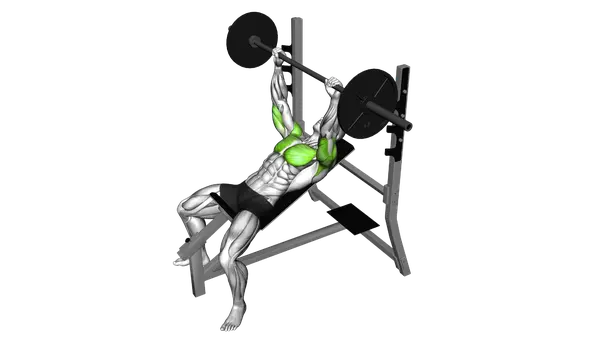
Incline Bench Press vs Flat Bench Press: Do You Need Both?
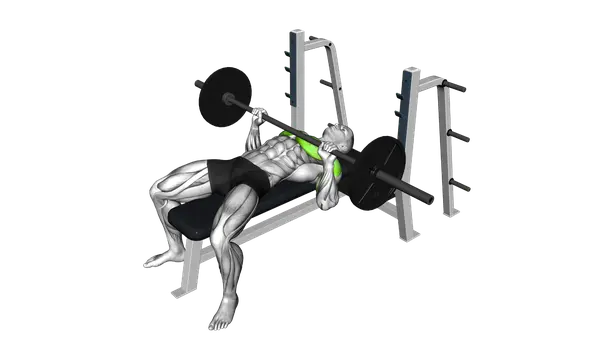
Barbell Bench Press vs Dumbbell Press: Which Builds a Bigger Chest?
Push-Ups vs Bench Press: Can Bodyweight Match the Barbell?
Barbell Row vs Dumbbell Row: The Best Back Builder?
Barbell Curl vs Dumbbell Curl: Which Grows Bigger Biceps?
Deadlift vs Romanian Deadlift: They're Not the Same Exercise