Variantes de ejercicios

Back vs Front vs Goblet vs Bulgarian Split Squat

These squat variations train the same general pattern but change how load is positioned, how upright the torso stays, and how much each leg contributes. Those changes affect quad versus glute emphasis, balance demands, mobility requirements, and how much load the spine can tolerate. The best choice depends on whether the priority is maximal loading, quad bias, learning the squat pattern, or building single-leg strength.

Publicado:

4 variantes

¿Cuál deberías usar?

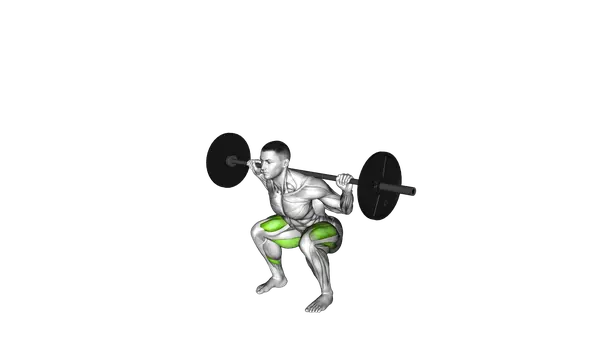
Barbell Squat

01

Barbell Squat

Cuádriceps, Glúteos

Ideal para: maximal full-body strength

Use the barbell squat when you need the highest loading potential and want to build lower-body strength with significant trunk involvement. It is best suited to intermediate lifters with access to a rack and enough technique to manage heavy spinal loading.

Ver ejercicio
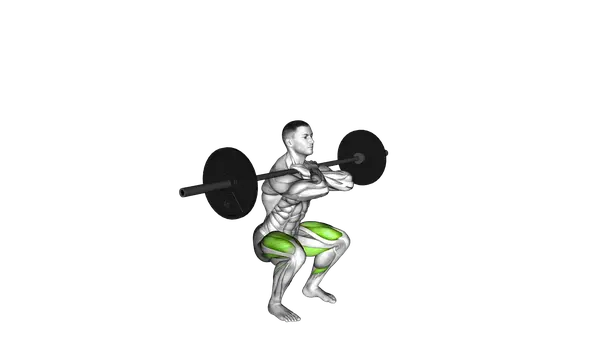
Barbell Front Squat

02

Barbell Front Squat

Cuádriceps, Glúteos

Ideal para: quad-focused barbell squatting

Use the barbell front squat when you want a more upright squat with strong quad demand and stricter torso positioning. It is practical for lifters who tolerate the front rack well and want a barbell squat that is usually self-limiting before back squat loads.

Ver ejercicio
Dumbbell Goblet Squat

03

Dumbbell Goblet Squat

Cuádriceps, Glúteos

Ideal para: beginner squat patterning

Use the dumbbell goblet squat when learning depth, balance, and bracing or when training at home with minimal equipment. It is also useful as a lighter squat option when barbell setup is unnecessary.

Ver ejercicio
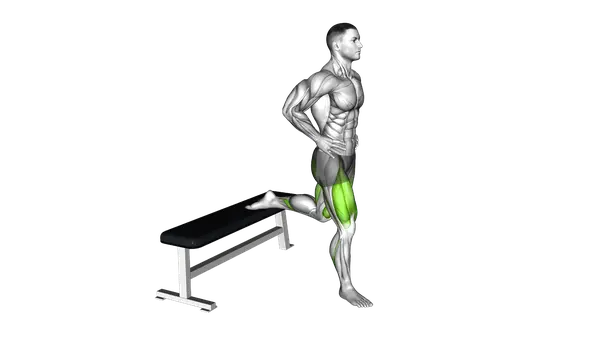
Bulgarian Split Squat

04

Bulgarian Split Squat

Cuádriceps, Glúteos

Ideal para: single-leg strength and control

Use the Bulgarian split squat when you want each leg to work independently and when balance, control, or side-to-side differences matter. It is effective with dumbbells or bodyweight and remains challenging without heavy barbell loading.

Ver ejercicio

01

How the setup changes the movement

The barbell squat places the load across the upper back. This shifts the system's center of mass backward, so the torso usually inclines forward more to keep balance over the midfoot.

The barbell front squat moves the bar to the front of the shoulders. That front-loaded position usually requires a more upright torso and greater knee travel, which tends to increase the demand on the quads while reducing how much forward lean is available.

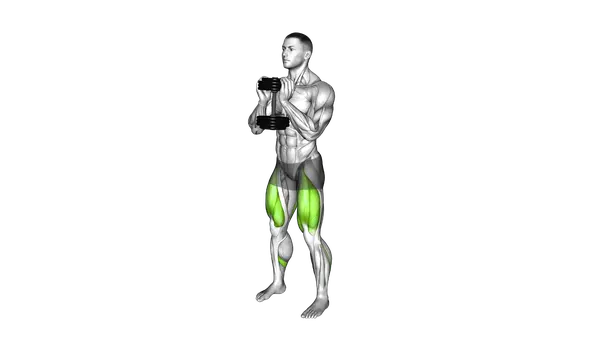
The dumbbell goblet squat also uses a front load, but with a single dumbbell held at chest height. The load is lighter and easier to counterbalance, which helps many beginners reach a stable, upright squat without needing a barbell rack.

The Bulgarian split squat is not a bilateral squat but a split-stance unilateral exercise. One foot is elevated behind the body, which increases balance demands and shifts the movement toward single-leg knee and hip extension rather than a symmetrical two-leg squat.

02

Muscle emphasis and joint mechanics

All four exercises primarily train the quads and glutes. In closed-chain lower-body work, muscle contribution changes with knee and hip angles: more forward knee travel generally increases knee extensor demand, while more hip flexion and forward torso lean generally increase hip extensor demand [1].

The barbell squat usually allows the heaviest absolute loading, so it is often the strongest choice for total lower-body strength. Its combination of knee and hip extension also creates substantial demand on the erector spinae and trunk to resist spinal flexion under load.

The barbell front squat and dumbbell goblet squat usually bias the quads more because the torso stays more upright and the knees move further forward. The glutes still contribute strongly, but the movement generally relies less on hip-dominant mechanics than a back-loaded squat.

The Bulgarian split squat increases the work done by each leg and adds a frontal-plane balance component. Modeling work comparing back squats and split squats found meaningful differences in lower-body muscle forces, supporting the use of split squats when the goal is to challenge one leg more directly rather than distribute force across both legs [2].

03

Spinal loading, stability, and mobility demands

The barbell squat usually creates the highest overall spinal loading because it supports the greatest external loads and requires the trunk to stabilize a bar on the back. It is effective for strength development, but it also demands more bracing skill, shoulder positioning, and confidence under a heavy bar.

The barbell front squat reduces the forward moment on the trunk by keeping the load in front and the torso more vertical. That can make it a useful option when you want a squat pattern with less torso lean, although it requires more ankle mobility and enough wrist, shoulder, and thoracic mobility to hold the front rack position.

The dumbbell goblet squat has the lowest technical barrier. The front-held dumbbell helps balance, the load is easy to drop if needed, and the movement usually requires less spinal loading than barbell squats because the total load used is lower.

The Bulgarian split squat reduces the need for a rack and limits total spinal loading compared with heavy bilateral barbell squats, but it raises balance and hip mobility demands. Rear-foot elevation can also make setup quality more important, since stride length changes whether the movement feels more knee-dominant or more hip-dominant.
04

Loading potential and progression

The barbell squat has the highest ceiling for progressive overload. It is the standard choice when the goal is maximal lower-body strength, because most lifters can add more total load to it than to front-loaded or unilateral variations.

The barbell front squat also progresses well, but most lifters use less weight than in the barbell squat because the front rack and upright torso become limiting factors before leg strength does. That tradeoff is often acceptable when quad emphasis and positional discipline matter more than absolute load.

The dumbbell goblet squat is easiest to learn but hardest to load heavily over time. Grip, dumbbell availability, and the awkwardness of holding a large dumbbell at chest height usually cap progression before the legs are fully challenged.

The Bulgarian split squat can be loaded with dumbbells or bodyweight and remains effective even with moderate loads because one leg does most of the work. It is efficient when equipment is limited or when bilateral squats are not practical.

05

How to choose the right variation

Choose the barbell squat when the priority is maximal full-body strength and long-term loading potential. It fits intermediate lifters who can brace well, control depth, and train with barbell equipment.

Choose the barbell front squat when the priority is quad strength, a more upright squat pattern, or reducing reliance on forward torso lean. It also fits lifters who want a squat that reinforces trunk stiffness and clean movement positions.

Choose the dumbbell goblet squat when the priority is learning squat mechanics, training at home, or using a lower-skill variation that still builds the quads and glutes. It is the most accessible entry point for beginners.

Choose the Bulgarian split squat when the priority is unilateral leg strength, balance, or training hard with limited equipment. It is also useful when you want to challenge the legs without the same total spinal loading used in heavy bilateral barbell squats.


La conclusión

For maximal strength and the greatest long-term loading potential, the barbell squat is the default choice. For a more upright, quad-biased barbell pattern, the barbell front squat is the better fit. For beginners or home training, the dumbbell goblet squat is the simplest and most accessible option. For unilateral strength, balance, and lower total spinal loading than heavy bilateral barbell work, the Bulgarian split squat is the most targeted choice.

Back vs Front vs Goblet vs Bulgarian Split Squat

De un vistazo

Característica Barbell Squat Barbell Front Squat Dumbbell Goblet Squat Bulgarian Split Squat
Músculos principales Cuádriceps, Glúteos Cuádriceps, Glúteos Cuádriceps, Glúteos Cuádriceps, Glúteos
Músculos secundarios Isquiotibiales, Erector de la columna, Abdominales, Trapecios Isquiotibiales, Erector de la columna, Deltoides anteriores, Deltoides laterales, Trapecios, Abdominales Isquiotibiales, Aductores, Erector de la columna, Trapecios Isquiotibiales, Aductores, Erector de la columna
Equipamiento Barra (Barbell) Barra (Barbell) Mancuerna Mancuerna, Barra (Barbell), Ejercicios con peso corporal
Dificultad Intermedio Intermedio Principiante Intermedio
Tipo Compuesto Compuesto Compuesto Compuesto

Hecho para progresar

Deja de adivinar, empieza a progresar

La app de GrabGains crea tu plan con ejercicios que encajan con tu objetivo y tu equipamiento — y registra cada serie para que sepas cuál funciona para ti.

Descarga gratis · 14 días de Pro
Empieza a entrenar con GrabGains
Planes de entrenamiento GrabGains

Conviene saber

Preguntas frecuentes

Which squat is best for quad emphasis?

The barbell front squat and dumbbell goblet squat usually place more emphasis on the quads because the load is held in front, which encourages a more upright torso and greater knee travel. The Bulgarian split squat can also be made more quad-dominant with a shorter stride and more forward knee movement.

Which variation places the most stress on the spine?

The barbell squat usually creates the highest spinal loading because it supports the heaviest absolute loads and requires substantial trunk stiffness under a back-loaded bar. Front squats, goblet squats, and Bulgarian split squats are typically performed with less total load, which generally reduces spinal demand.

Is the Bulgarian split squat a replacement for regular squats?

It can replace bilateral squats when equipment is limited or when unilateral strength is the main goal, but it is not identical. It trains one leg at a time, adds more balance demand, and usually cannot match the total loading potential of the barbell squat.

Which squat is best for beginners?

The dumbbell goblet squat is usually the best starting point because the front-held load helps balance and the setup is simple. It teaches depth, bracing, and torso position without the technical demands of a barbell rack or front rack.

Referencias científicas

  1. [1]
    Effect of knee position on hip and knee torques during the barbell squat.

    Fry AC, Smith JC, Schilling BK · Journal of strength and conditioning research (2003)

  2. [2]
    Female Lower Body Muscle Forces: A Musculoskeletal Modeling Comparison of Back Squats, Split Squats and Good Mornings.

    Jaeggi JS, Achermann B, Lorenzetti SR · Journal of functional morphology and kinesiology (2024)

Las fuentes son publicaciones académicas revisadas por pares de PubMed.