Back

Exercise

Dumbbell Wrist Curl (Over Bench)

Dumbbell Wrist Curl (Over Bench)
Add to Workout

Dumbbell Wrist Curl (Over Bench)

Build

How to Perform

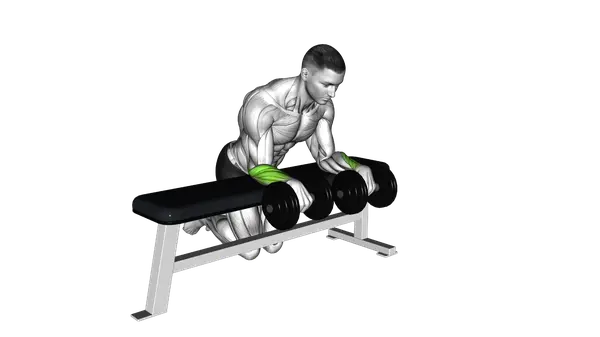
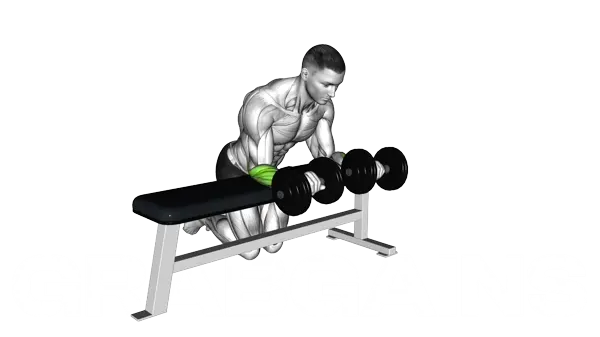
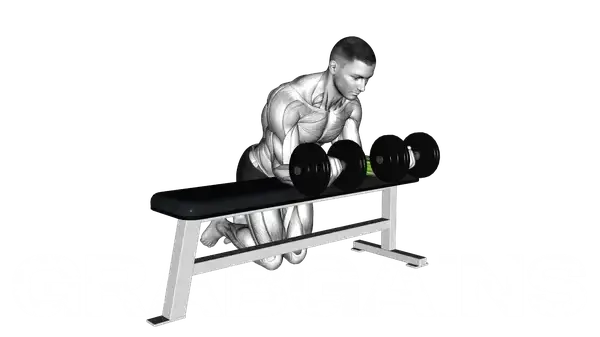
  1. Position a bench in front of you and kneel with the front of your forearms resting on the bench, palms facing down and wrists extending beyond the edge.
  2. Hold a dumbbell in each hand with your wrists in a neutral position, ensuring your elbows are stable and forearms are firmly against the bench.
  3. Keeping your forearms stationary on the bench, slowly lower the dumbbells by extending your wrists downward as far as comfortably possible. Inhale during this lowering phase.
  4. Pause briefly at the bottom position, feeling a stretch in your forearm extensors while maintaining stability in your upper arms.
  5. Exhale as you curl the dumbbells upward by contracting your forearm extensors and flexing your wrists, lifting only through wrist movement.
  6. Continue the curling motion until your hands are slightly above parallel with your forearms, maintaining tension in the target muscles.
  7. Hold the contracted position momentarily, focusing on squeezing your forearm extensors while keeping your shoulders relaxed.
  8. Lower the dumbbells back to the starting position with control, maintaining the tension throughout the movement.

Important information

  • Select a lighter weight than you might expect as wrist extensors are typically weaker than flexors and can be easily strained.
  • Keep your forearms firmly pressed against the bench throughout the exercise to isolate the wrist movement and prevent using momentum.
  • Make sure your wrists move through their full range of motion without compromising form or using excessive weight.
  • If you experience any wrist pain (not normal muscle fatigue), stop the exercise and consider reducing the weight or checking your form.

Exercise Details

Primary Muscles

Forearms

Muscle Groups

Arm exercises

Mechanic

Isolation

Risk Areas

Forearms

Built for progress

Take the guesswork out of training

Create personalized AI-powered workout plans that evolve with you. Train smarter, track every rep and keep moving forward, one workout at a time.

Be among the first to join!
GrabGains workout plans

The dumbbell wrist curl over a bench is a highly effective isolation movement that targets the forearm flexors with remarkable precision. This intermediate-level exercise has long been a staple in bodybuilding routines for developing those signature forearm muscles that not only enhance aesthetic appeal but also contribute significantly to overall grip strength and functional performance. Unlike compound movements that engage multiple muscle groups simultaneously, this focused exercise allows you to zero in on the forearms specifically, making it invaluable for bodybuilders seeking balanced physique development. The flexor muscles targeted during this movement are crucial for activities ranging from heavy deadlifts to everyday tasks requiring grip stability. 

For strength athletes and bodybuilders alike, well-developed forearms serve both practical and visual purposes. Functionally, stronger forearms translate to improved performance in pulling exercises and enhanced wrist stability during pressing movements. Aesthetically, they complete the arm's appearance, preventing the disconnected look of developed biceps and triceps paired with underdeveloped forearms. The beauty of this intermediate exercise lies in its adaptability. As your forearm strength progresses, you can easily increase the challenge by incrementing the dumbbell weight. This progressive overload principle is fundamental to continuing strength gains and muscle hypertrophy in the forearm region. Consistency with this exercise typically yields noticeable results within weeks, with many bodybuilders reporting improved vascularity and definition along the forearm muscles. The forearms respond particularly well to dedicated training, often showing visible changes more quickly than larger muscle groups. 

Including this movement in your routine 2-3 times weekly provides sufficient stimulus for growth without overtraining these frequently used muscles. For optimal results, pair it with complementary exercises like reverse wrist curls to ensure balanced forearm development. Remember that forearm strength represents a crucial link in your body's kinetic chain, supporting performance across virtually all upper body movements.

FAQ - Dumbbell Wrist Curl (Over Bench)

What muscles do dumbbell wrist curls target?

Dumbbell wrist curls primarily target the forearm flexors (flexor carpi radialis, flexor carpi ulnaris, and palmaris longus). These muscles are responsible for wrist flexion and contribute significantly to grip strength and forearm development.

How often should I include wrist curls in my routine?

Include wrist curls 2-3 times weekly with at least 48 hours between sessions to allow for adequate recovery. Since forearms are involved in many daily activities and other exercises, avoid training them the day before heavy pulling workouts.

What are common form mistakes to avoid?

Avoid hyperextending your lower back at the top of the bridge position, which puts unnecessary strain on your spine. Don't let your knees collapse inward during the movement, and ensure you're driving through your heels rather than your toes to properly engage your glutes.

How can I make this exercise easier or more challenging?

To make it easier, reduce the weight or switch to a half-kneeling position (one knee up). To increase difficulty, add more weight, slow down the eccentric (lowering) phase to 3-4 seconds, or progress to a tall kneeling position with knees close together to challenge core stability further.

Can wrist curls help with other lifts and activities?

Yes, stronger forearms from regular wrist curl training directly improve your grip strength for deadlifts, rows, and pull-ups. The increased wrist stability also benefits pressing movements and carries over to sports requiring forearm strength like rock climbing, tennis, and golf.

Alternative Exercises

Barbell Wrist Curl

Barbell Wrist Curl

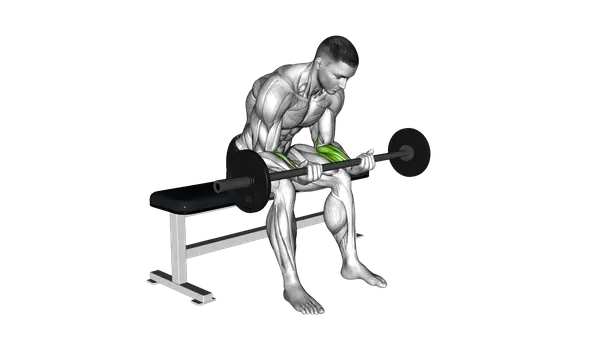
The barbell wrist curl stands as a fundamental forearm exercise in the arsenal of both novice lifters and seasoned bodybuilders alike. This accessible movement specifically targets the flexor muscles of the forearms, making it an excellent choice for beginners looking to develop a stronger grip and more defined lower arms. Despite its simplicity, this exercise delivers impressive results when performed consistently as part of a well-rounded strength training program. For those new to strength training, the barbell wrist curl offers a gentle introduction to forearm development without overwhelming complexity or excessive strain on the joints. The controlled nature of this movement allows beginners to focus on establishing a mind-muscle connection with their forearms—a skill that translates to improved performance in virtually all other lifting exercises that require grip strength. In bodybuilding circles, the barbell wrist curl has maintained its popularity for decades because of its effectiveness in creating that coveted forearm definition. The visibility of well-developed forearms can dramatically enhance overall physique aesthetics, as these muscles are frequently exposed even in everyday clothing. Many competitive bodybuilders incorporate wrist curls into their training regimens to ensure balanced development throughout their entire arm structure. Beyond aesthetic benefits, strengthening the forearms through barbell wrist curls carries significant functional advantages. Enhanced grip strength directly impacts performance in compound movements like deadlifts, rows, and pull-ups. This carryover effect makes forearm training not merely cosmetic but essential for overall strength development. Athletes across various sports—from rock climbing to wrestling—rely on formidable forearm strength for peak performance. Regular inclusion of barbell wrist curls in your routine will gradually build resilience in the tendons and ligaments of the wrists and elbows, potentially reducing injury risk during more demanding exercises. This preventative benefit makes this simple exercise a smart investment for long-term training sustainability, allowing lifters to continue making progress without unnecessary setbacks from preventable injuries.

Strength
Bodybuilding
Barbell
Push-Up to Renegade Row

Push-Up to Renegade Row

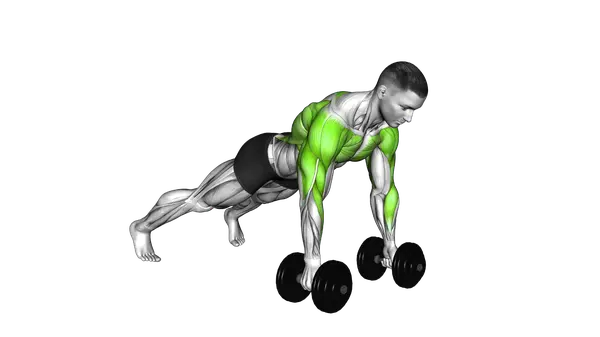
The Push-Up to Renegade Row combines two powerful compound movements, creating an intermediate-level exercise that delivers remarkable bang for your buck in minimal time. This dynamic pairing targets multiple major muscle groups simultaneously, with primary activation in the pectoral muscles, triceps, and anterior deltoids during the push-up phase, then shifting focus to the latissimus dorsi during the row component. What makes this exercise particularly effective is its ability to transition seamlessly between pushing and pulling patterns, creating a comprehensive upper body challenge that also demands significant core stability throughout the entire movement sequence. The stabilizing effects reach beyond just the primary movers, engaging the rotational muscles of the core, rhomboids, and even the lower body as you maintain a rigid plank position. Athletes across various disciplines incorporate this exercise into their regimens for different purposes. HIIT enthusiasts appreciate its cardiovascular demands when performed with pace, while CrossFit athletes value its functional strength carryover to more complex movements. Bodybuilders might employ slower, more controlled variations to maximize time under tension for muscle hypertrophy. From a strength development perspective, the Push-Up to Renegade Row builds balanced upper body power while addressing common weaknesses in core anti-rotation capabilities. This makes it particularly valuable for athletes seeking to improve performance while reducing injury risk. The unilateral component of the row helps identify and correct strength imbalances between sides. Research suggests that multi-planar exercises like this one promote greater neuromuscular coordination than single-plane movements alone, potentially enhancing overall athletic performance. The intensity can be easily modified through weight selection, rep schemes, and tempo manipulation, making it adaptable to various fitness levels despite its intermediate classification. Whether you're looking to build functional strength, enhance muscle definition, or improve athletic performance, the Push-Up to Renegade Row deserves consideration as a time-efficient addition to your training arsenal.

Strength
HIIT
Crossfit
+1
Dumbbell
Renegade Row

Renegade Row

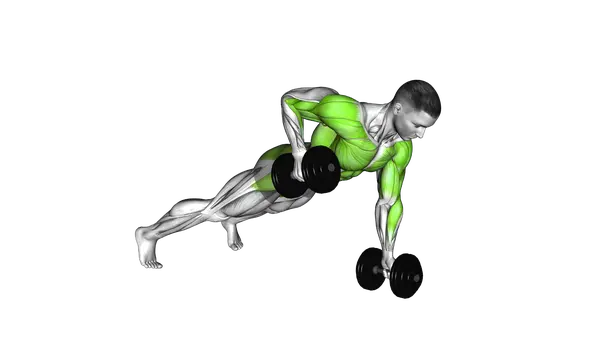
The Renegade Row stands as a formidable compound exercise in the fitness world, challenging even intermediate athletes with its unique blend of anti-rotation stability and unilateral pulling power. This dynamic movement simultaneously engages multiple muscle groups, with primary activation in the latissimus dorsi (lats), while significantly recruiting the triceps and anterior deltoids (front delts) as crucial supporting players in the movement pattern. What makes the Renegade Row particularly valuable is its versatility across training methodologies. In HIIT protocols, it elevates heart rate while building functional strength; within CrossFit WODs, it tests core stability under fatigue; and in bodybuilding regimens, it sculpts definition across the back while enhancing upper body symmetry. This adaptability makes it a premium selection for anyone looking to maximize training efficiency. The exercise's true benefit lies in its comprehensive strength development. Beyond the obvious back and arm work, the plank position foundation creates tremendous core engagement, essentially turning your midsection into an isometric powerhouse that must resist rotation with each repetition. This anti-rotation component trains the body for real-world strength that translates to improved performance in daily activities and athletic endeavors alike. Research suggests that unilateral exercises like the Renegade Row address muscle imbalances more effectively than their bilateral counterparts, potentially reducing injury risk while optimizing functional strength development. The exercise's ability to simultaneously challenge stability and strength makes it particularly effective for developing the kind of practical, usable power that serves athletes across disciplines. For those seeking to break through training plateaus, the Renegade Row offers that perfect combination of challenge and reward. Its compound nature triggers substantial hormonal responses favorable to muscle development, while its stability demands enhance neuromuscular efficiency: essentially teaching your body to recruit more muscle fibers more effectively during all pulling movements.

Strength
HIIT
Crossfit
+1
Dumbbell
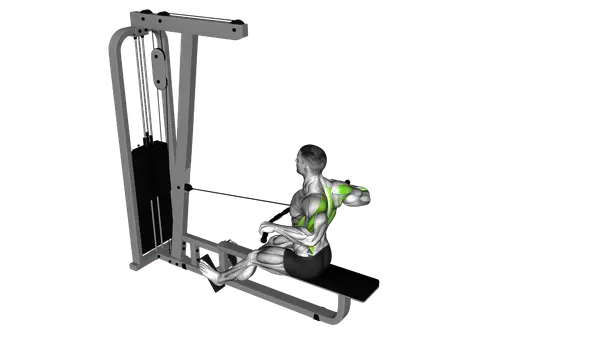
Wide Grip Seated Cable Row

Wide Grip Seated Cable Row

The Wide Grip Seated Cable Row stands as a cornerstone back exercise in the arsenal of intermediate fitness enthusiasts looking to develop impressive back width and thickness. This compound movement primarily targets the latissimus dorsi (lats) and trapezius muscles, creating that coveted V-taper physique that's essential for a balanced, aesthetic appearance in bodybuilding circles. Unlike its narrow grip counterpart, the wide grip variation places greater emphasis on the outer portions of your back, helping to create that wingspan effect that's so highly prized on competitive stages. The beauty of this exercise lies in its versatility: while powerfully building strength in your posterior chain, it simultaneously enhances muscle definition and contributes to overall back development that translates into both functional power and visual impact. For intermediate lifters navigating the path between beginner fundamentals and advanced techniques, this movement offers the perfect balance of challenge and accessibility. The constant tension provided by the cable mechanism ensures your back muscles remain engaged throughout the entire range of motion, a distinct advantage over free weight alternatives when hypertrophy is the primary goal. This continuous tension is particularly effective for bodybuilding purposes, where muscle fiber recruitment and time under tension drive results. Strength athletes also benefit tremendously from incorporating wide grip seated cable rows into their training regimen. The exercise reinforces proper scapular retraction and enhances postural strength, both critical components for those looking to improve performance in deadlifts, barbell rows, and even bench press stability. The controlled nature of the movement also makes it excellent for developing mind-muscle connection, that elusive skill that separates good lifters from great ones. Whether you're aiming to carve out an impressive back for the stage or build functional strength for athletic performance, the wide grip seated cable row deserves a prominent place in your training program. Its versatility, effectiveness, and scalability make it a timeless exercise that continues to deliver results for generations of dedicated lifters.

Strength
Bodybuilding
Cable