Shoulder exercises with kettlebell
Kettlebell shoulder exercises offer a unique combination of strength, coordination, and stability. Because the weight is offset from the handle, kettlebells challenge the shoulders differently than dumbbells or machines. This makes them especially effective for developing shoulder control, unilateral strength, and full-range pressing capacity. While the exercise selection is smaller, kettlebell shoulder movements deliver a high training stimulus with minimal variation.
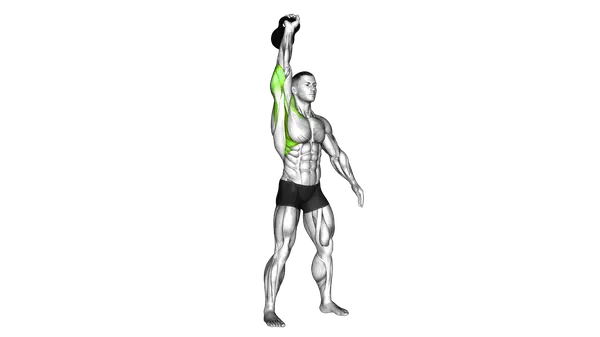
Kettlebell Arnold Press
The Kettlebell Arnold Press combines a rotating press with an offset load to build shoulder strength, control, and coordination.
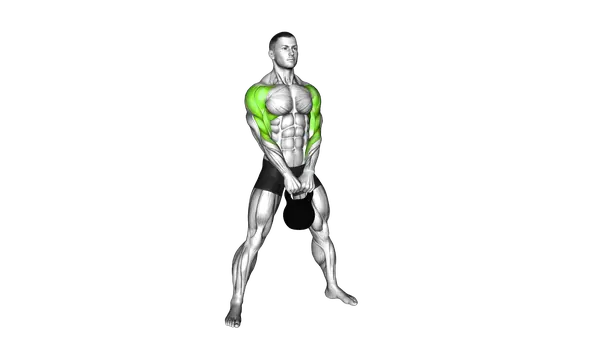
Kettlebell Upright Row
The Kettlebell Upright Row targets the shoulders and upper back, combining controlled pulling with upright posture for upper-body strength.
Why kettlebells challenge strength, stability and coordination
Benefits of training shoulders with kettlebells
Kettlebells place the load away from the center of the hand, forcing the shoulders and stabilizing muscles to work harder throughout each repetition. This improves joint control and reinforces strong overhead mechanics while still allowing meaningful strength progression.
Key advantages:
- Increased shoulder stability due to offset load
- Strong activation of delts, rotator cuff, and core
- Excellent unilateral strength development
- Functional carryover to pressing and overhead control
- Efficient training with minimal equipment
How these movements fit into your weekly routine
When to use kettlebells for shoulder training
Kettlebell shoulder exercises work well as primary lifts in minimalist programs or as accessory movements alongside barbell or dumbbell pressing. They fit naturally into upper-body days, functional strength training, or conditioning-focused workouts. Most athletes include kettlebell shoulder work one to two times per week, focusing on control and quality of movement rather than maximum load.
Focused movements worth prioritizing
Key kettlebell shoulder exercises
Because kettlebell shoulder training emphasizes quality over quantity, the following exercises represent the most effective options available on this page.
- Kettlebell Arnold press: A rotational pressing movement that targets the anterior and medial delts while improving shoulder mobility and control through a full range of motion.
- Kettlebell upright row: A compound pull that engages the medial delts and traps, supporting shoulder strength and upper-body coordination when performed with controlled range.
Exercise overview
| Exercise | Primary focus | Training goal |
|---|---|---|
| Kettlebell Arnold press | Anterior + medial delts | Strength, mobility, and control |
| Kettlebell upright row | Medial delts + traps | Strength and shoulder coordination |
Placing these movements inside your program
How to integrate kettlebell shoulder exercises
Use kettlebell shoulder exercises either as main lifts in minimalist training plans or as accessories following heavier compound presses. Focus on controlled repetitions and stable overhead positions rather than maximal loading. Pair pressing and pulling patterns to maintain shoulder balance and long-term joint health. Create your personal training program in the app tailored to your goals, fitness level, and schedule.
Frequently asked questions about shoulder exercises with kettlebell
Focus on smooth transitions, controlled tempo, and stable overhead positions. Prioritize quality reps over heavy weight.
Kettlebell shoulder exercises primarily target the anterior and medial delts, while also engaging the traps, rotator cuff, and core. The offset load increases stabilizer activation throughout the movement.
Start lighter than you would with dumbbells. Proper control and stable overhead positioning matter more than load when training with kettlebells.
One to two sessions per week is sufficient for most people. Kettlebell shoulder training is demanding on stabilizers, so recovery is important.
Kettlebells are excellent for control and functional strength but do not fully replace barbells or machines for maximal loading. They work best as a complement.