Kettlebell Arnold Press
Reviewed by Tim Renting, Physiotherapist
The Kettlebell Arnold Press combines a rotating press with an offset load to build shoulder strength, control, and coordination.
Kettlebell Arnold Press
Muscles Worked: Kettlebell Arnold Press
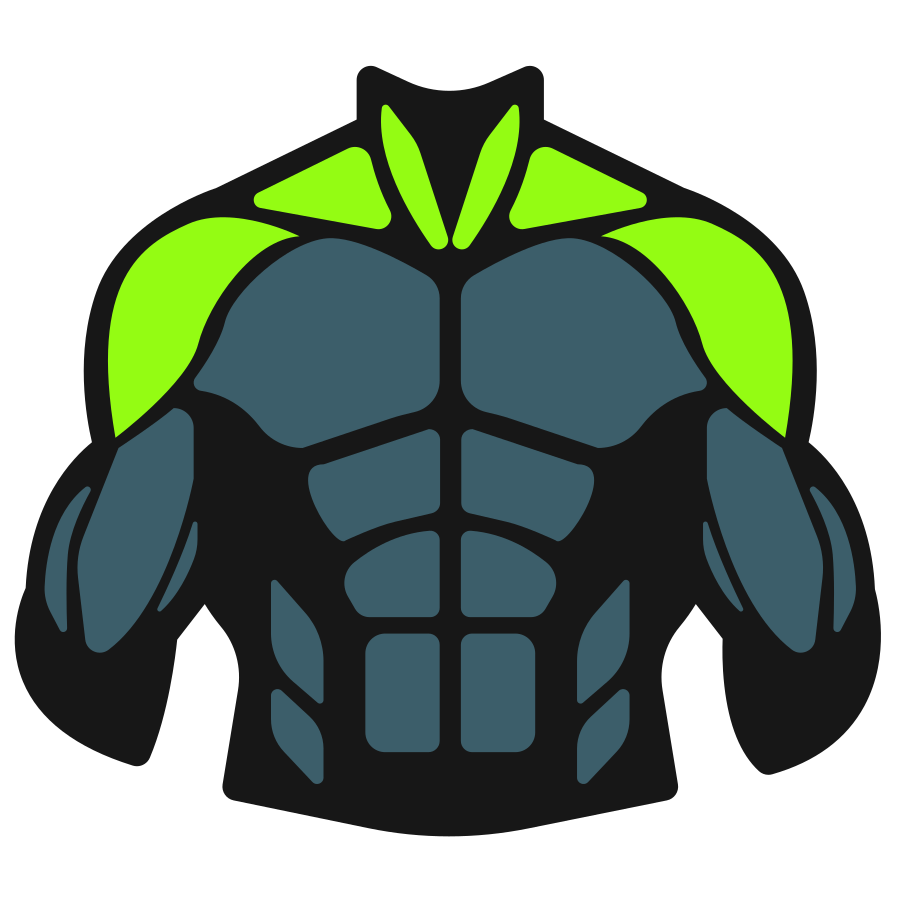
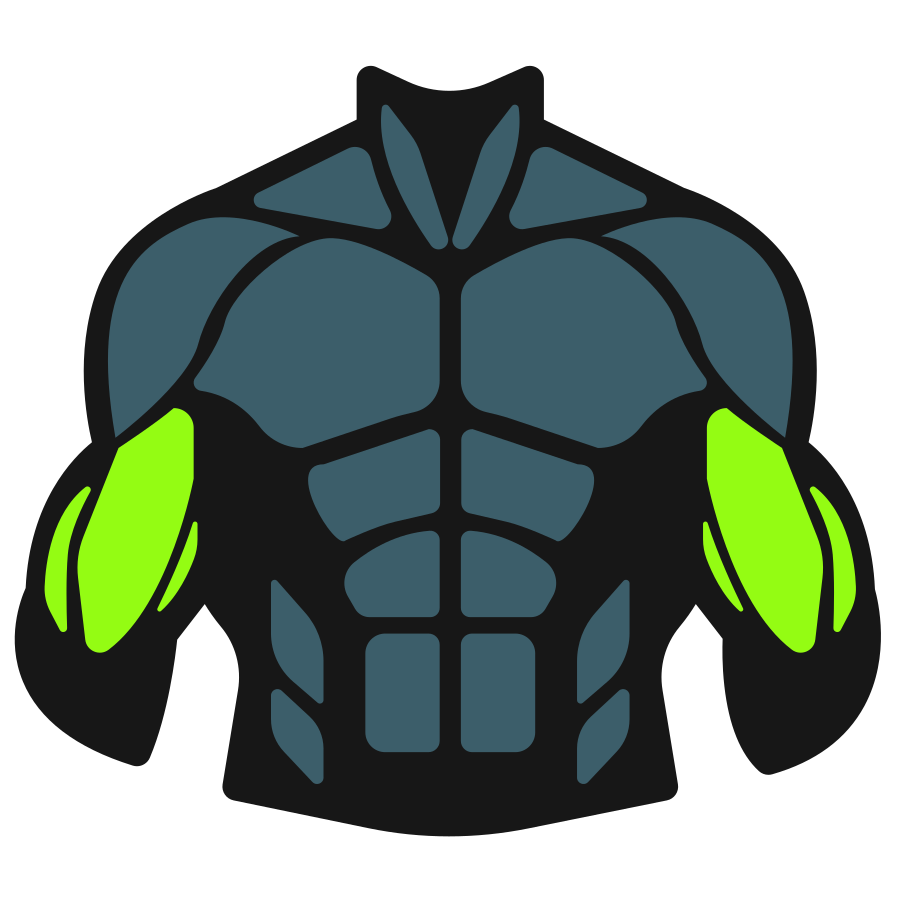
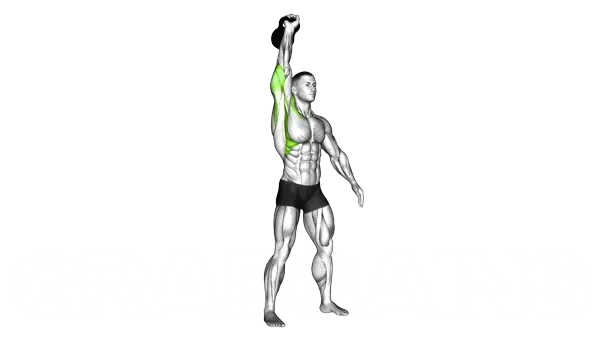
The kettlebell Arnold press mainly works your front and side delts, which raise your arms and drive the bell overhead. Your triceps help finish each rep by straightening your elbows, and the overhead lockout matches a position that has been shown to produce greater triceps hypertrophy during elbow-extension training than a neutral arm position (Maeo et al., 2023). Because the bell moves from in front of your body to overhead, your shoulders stay under tension through a long range of motion while your arms assist. You should feel your shoulders doing most of the work, with your triceps kicking in hardest near the top.
Built for progress
Take the guesswork out of training
Get a personalized workout plan built around your goal, equipment and schedule. Train smarter, track every rep and keep moving forward, one workout at a time.






Technique and form
How to perform the Kettlebell Arnold Press
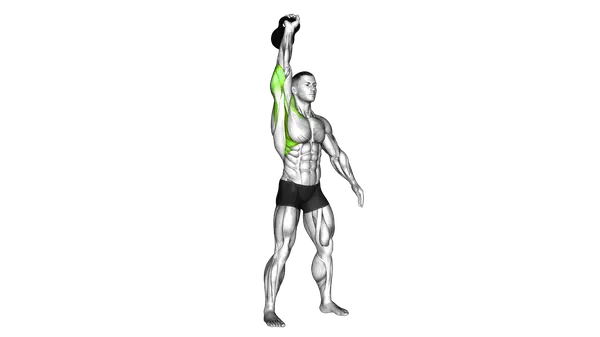
- Stand with feet shoulder-width apart and hold a kettlebell in each hand at shoulder level with palms facing you and elbows tucked into your sides.
- Brace your core and maintain a neutral spine position while keeping your chest up and shoulders pulled back and down.
- Initiate the movement by rotating your wrists as you begin pressing the kettlebells upward, transitioning from palms facing your body to palms facing forward.
- Exhale as you press the kettlebells overhead, extending your arms fully while maintaining shoulder stability and avoiding excessive arching in your lower back.
- At the top position, the kettlebells should be directly above your shoulders with arms straight but elbows not completely locked, creating a straight line from the weights through your arms to your shoulders.
- Inhale as you begin the descent, slowly lowering the kettlebells while simultaneously rotating your palms to face toward your body again.
- Control the kettlebells throughout the downward phase, keeping your core engaged and elbows tracking in a smooth arc until you return to the starting position.
- Pause briefly at the bottom position before beginning the next repetition, ensuring proper grip and wrist alignment before continuing.
Important information
- Keep your wrists straight and aligned with your forearms throughout the entire movement to prevent strain.
- Avoid leaning back or pushing your hips forward as you press overhead, which can place stress on your lower back.
- Start with lighter kettlebells until you master the rotation pattern, as this exercise requires significant shoulder mobility and coordination.
- If you feel any shoulder impingement or pain during the movement, reduce the weight or consider modifying the exercise with a more neutral grip.
Is the Kettlebell Arnold Press good for muscle growth?
Yes. The kettlebell Arnold press can build shoulder muscle well because it trains the front and side delts through a long pressing path, and the overhead finish also trains elbow extension in an overhead position, which is a setup linked to greater triceps hypertrophy in direct elbow-extension training (Maeo et al., 2023). It is especially useful when you want one press that challenges the shoulders from the start of the rep all the way to lockout.
- Longer shoulder working range — Unlike a basic overhead press that starts with your hands already turned out, the Arnold press begins with the bells in front of you and then rotates as you press. That usually means more total shoulder work per rep because the delts stay loaded from the bottom to the top.
- Extra front-delt bias — The start position puts your elbows slightly in front of your body, which makes the front delts work hard early in the rep. If your goal is bigger front shoulders, this can make it a better choice than a stricter straight-line press like the kettlebell overhead press.
- Useful triceps stimulus at lockout — Every rep finishes overhead, so your triceps have to straighten the elbow under load. Research on direct elbow-extension training shows greater triceps hypertrophy when that work is done overhead rather than with the arm by the side, which supports overhead elbow work as a solid add-on for arm size (Maeo et al., 2023).
- Hard to cheat with momentum — Kettlebells shift weight slightly differently than dumbbells, so most lifters notice they have to stay smoother and more controlled. That makes this a strong accessory press after heavier work like the kettlebell push press, where the legs help more.
Programming for muscle growth
Do 3-4 sets of 6-10 reps with 90-120 seconds rest. Use it 1-2 times per week, usually after your main heavy press, because the rotating path is more demanding on control than a basic overhead press. Pick a load that lets you move smoothly through the full range without rushing the turn at the bottom.
Alternative Exercises
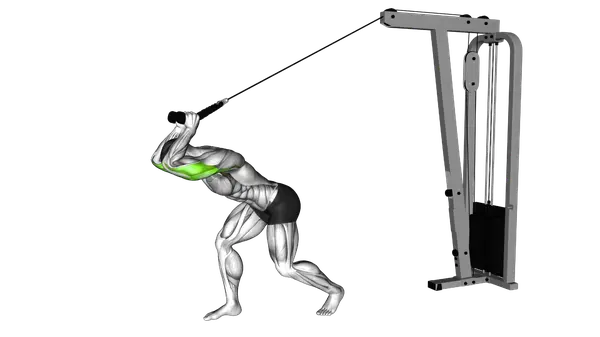
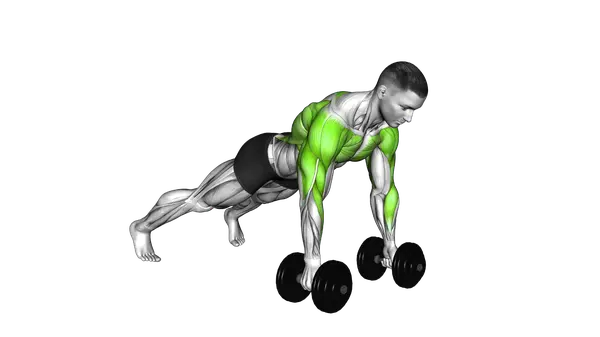
FAQ - Kettlebell Arnold Press
The Kettlebell Arnold Press primarily targets the deltoid complex (front, side, and rear deltoids) with significant engagement of the triceps. The rotational component activates the rotator cuff muscles while the core and upper back serve as stabilizers throughout the movement.
Start by holding the kettlebells at shoulder height with palms facing your body. As you press upward, rotate your palms to face forward at the top of the movement while fully extending your arms overhead. Lower with control while rotating your palms back toward your body to return to the starting position.
The rotational component makes this exercise moderately demanding on shoulder joints, so proper form and appropriate weight selection are crucial. If you have existing shoulder issues, start with lighter weights and consider consulting a physical therapist before incorporating this movement into your routine.
For an easier variation, perform the exercise seated to reduce core stability demands or use lighter kettlebells while focusing on perfect form. To increase difficulty, try performing the movement with a slower tempo, incorporate a split stance position, or progress to heavier kettlebells once your technique is solid.
For optimal results, incorporate the Kettlebell Arnold Press 1-2 times weekly within your shoulder or upper body training sessions. Allow 48-72 hours between sessions that target the same muscle groups to ensure proper recovery and adaptation.
Scientific References
Maeo S, Wu Y, Huang M et al. · European journal of sport science (2023)
Sources are peer-reviewed academic publications from PubMed.
Reviewed by

Physiotherapist
Highlights Physiotherapist at GrabGains: Brings specialized clinical expertise to verify exercise content and ensure safe, effective movement guidance across the platform. Licensed Physiotherapist: Registered in the Dutch BIG Register (BIG: 59930315504) as a…
Kettlebell Arnold Press
Thank you for your feedback!
Thank you for your feedback!