Back
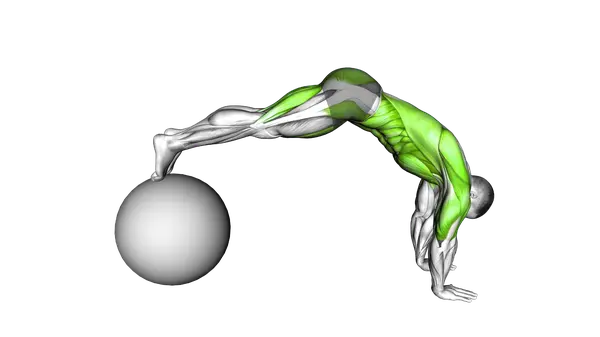
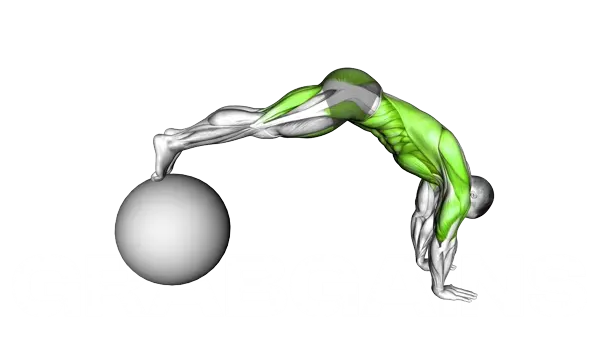
Stability Ball Pike Push-Up
Add to Workout

Stability Ball Pike Push-Up

Build

How to Perform

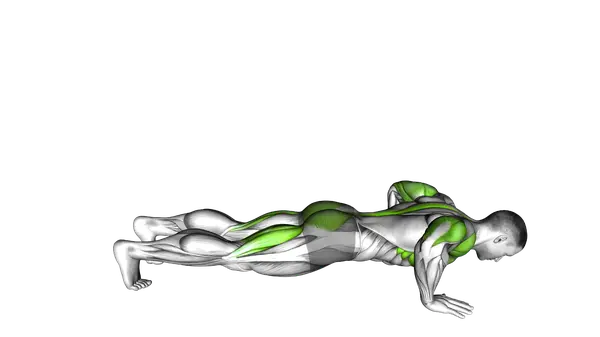
  1. Position yourself in a pushup position with your hands slightly wider than shoulder-width apart on the floor and your shins resting on top of a stability ball.
  2. Establish a strong plank position by engaging your core and aligning your body in a straight line from your head to your heels.
  3. Inhale and begin the movement by drawing your hips up toward the ceiling while keeping your legs straight, rolling the ball forward toward your chest.
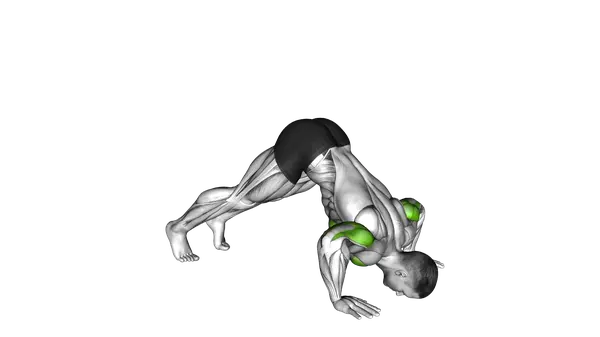
  4. Continue lifting your hips until your body forms an inverted V shape, with your shoulders positioned directly over your hands.
  5. Pause briefly at the pike position while maintaining control of the ball with your feet.
  6. From the pike position, bend your elbows to lower your head toward the floor between your hands while exhaling.
  7. Push through your palms to straighten your arms and return to the pike position while inhaling.
  8. Complete the exercise by slowly lowering your hips and rolling the ball back to the starting plank position with controlled movement.

Important information

  • Keep your core engaged throughout the entire movement to maintain stability and protect your lower back.
  • If you're struggling with balance, try placing the stability ball against a wall to limit its movement until you develop more control.
  • Avoid letting your shoulders rise toward your ears during the pike portion; actively press them down away from your ears.
  • Progress gradually by starting with pike holds before attempting the push-up component if you're new to this challenging exercise.

Exercise Details

Primary Muscles

Front Delts Triceps

Muscle Groups

Shoulder exercises Arm exercises

Mechanic

Compound

Risk Areas

Front Delts Triceps

Built for progress

Take the guesswork out of training

Create personalized AI-powered workout plans that evolve with you. Train smarter, track every rep and keep moving forward, one workout at a time.

Be among the first to join!
GrabGains workout plans

The Stability Ball Pike Push-Up stands as a formidable challenge in the realm of advanced bodyweight training, elevating the traditional push-up to an entirely new dimension of difficulty. This movement seamlessly blends shoulder strength development with core stabilization, making it a powerful addition to any serious fitness enthusiast's repertoire. This exercise primarily targets the front deltoids, the anterior portion of your shoulders responsible for that coveted capped look, while simultaneously engaging the triceps as crucial secondary movers. What truly sets this exercise apart, however, is the extraordinary core engagement required to maintain proper positioning throughout the movement. Perfect for integration into high-intensity interval training sessions or CrossFit WODs, the Stability Ball Pike Push-Up delivers maximum stimulus with minimal equipment. 

The instability factor introduces an element that traditional gym machines simply cannot replicate, forcing your body to recruit stabilizing muscles throughout your entire kinetic chain. Bodybuilders also appreciate this movement for its ability to isolate and sculpt the shoulders while maintaining functional strength patterns. The compound nature of this exercise makes it particularly effective for developing practical, real-world strength. As you progress with this movement, you'll notice improvements in overhead pressing power, core stability, and overall body control. The intense demand placed on your core musculature creates a synergistic effect, enhancing total-body strength beyond what isolated movements can achieve. 

For those seeking to break through plateaus in their fitness journey, the Stability Ball Pike Push-Up represents an excellent progression tool. The instability of the ball coupled with the inverted body position creates a unique challenge that forces muscular adaptation. This exercise embodies the principle that true strength isn't just about moving weight: it's about controlling your body through space with precision and power.

FAQ - Stability Ball Pike Push-Up

What muscles does the Stability Ball Pike Push-Up target?

This advanced exercise primarily targets the anterior deltoids (front shoulders) and triceps, while demanding exceptional core engagement throughout the movement. Your chest, serratus anterior, and even your trapezius muscles work as secondary movers to stabilize your body position.

How can I modify this exercise if I'm not ready for the full version?

Begin with standard stability ball push-ups to develop ball control, then progress to a partial pike position with less elevation. Another effective regression is performing pike push-ups on the floor first, then introducing the stability element once you've built adequate shoulder strength and core stability.

What are the most common form mistakes with this exercise?

The three most critical errors are allowing the hips to sag (losing the pike position), shoulders rolling forward (compromising joint safety), and excessive body wobbling due to poor core bracing. Focus on maintaining a straight line from hands to hips, keeping shoulders packed away from ears, and engaging your core throughout the movement.

How often should I incorporate Stability Ball Pike Push-Ups into my routine?

For optimal results, perform this exercise 1-2 times weekly with 48-72 hours between sessions to allow for shoulder recovery. Start with 2-3 sets of 6-10 repetitions, focusing on quality movement rather than quantity, especially when first mastering this challenging exercise.

Can this exercise help with my handstand push-up progression?

Yes, the Stability Ball Pike Push-Up serves as an excellent bridge between standard push-ups and handstand push-ups. It develops the specific shoulder strength, core stability, and proprioception needed for inverted pressing movements while gradually acclimating your body to working in a more vertical position.

Alternative Exercises

Bodyweight Full Squat With Overhead Press

Bodyweight Full Squat With Overhead Press

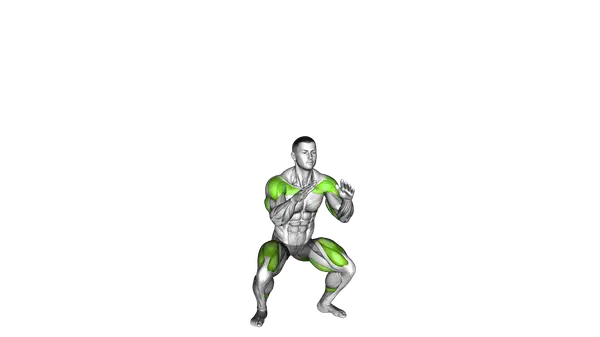
The Bodyweight Full Squat With Overhead Press combines lower body power with upper body pushing strength in one fluid movement, creating an efficient full-body exercise that elevates your heart rate while building functional strength. This intermediate-level compound movement simultaneously targets your quadriceps, glutes, and front deltoids, making it perfect for those looking to maximize their workout efficiency. This versatile exercise fits seamlessly into various training methodologies including HIIT circuits, bodybuilding routines, and CrossFit workouts. The dynamic nature of combining a squat with an overhead press creates a cardiovascular demand that burns calories while developing both strength and muscular endurance throughout your entire body. What makes this movement particularly valuable is how it mimics everyday functional patterns: the kind of integrated movement you might use when lifting objects from the ground and placing them on a high shelf. By training these movement patterns together, you're enhancing your body's natural coordination systems while developing practical strength that translates to daily activities. The full squat component engages your entire lower body kinetic chain, activating the quadriceps as primary movers while recruiting the glutes, hamstrings, and core stabilizers. Meanwhile, the overhead press portion develops shoulder strength and stability, particularly in the anterior deltoids, while engaging your triceps and upper back muscles as synergists. For those focused on metabolic conditioning, this exercise delivers impressive results by recruiting large muscle groups simultaneously, significantly elevating oxygen consumption and caloric expenditure. The compound nature makes it particularly effective for those with limited workout time who need maximum benefits from minimal exercises. Regular incorporation of the Bodyweight Full Squat With Overhead Press can lead to improved posture, enhanced core strength, better overhead mobility, and increased lower body power—all critical components for athletic performance and daily function. Whether you're focused on building strength, enhancing endurance, or improving overall fitness, this exercise delivers comprehensive benefits in a single, efficient movement.

Strength
Endurance
HIIT
Bodybuilding
+1
Bodyweight exercises
High Pulley Overhead Tricep Extension

High Pulley Overhead Tricep Extension

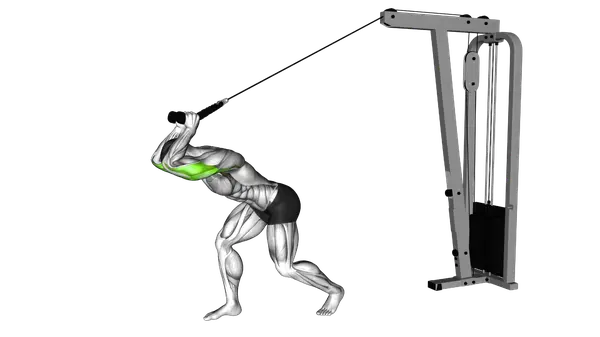
The High Pulley Overhead Tricep Extension stands as a quintessential isolation movement for anyone serious about developing their triceps. This intermediate-level exercise has earned its place in countless bodybuilding and strength training programs due to its effectiveness at targeting the triceps brachii with remarkable precision. When you're looking to add definition and power to the back of your arms, this movement delivers consistent results by emphasizing the long head of the triceps—the largest portion of the muscle that significantly contributes to that coveted horseshoe appearance. The beauty of using the cable pulley system lies in the constant tension it provides throughout the entire range of motion, something free weights simply cannot replicate with the same efficiency. For intermediate lifters who have mastered basic tricep movements, the High Pulley Overhead Extension offers the perfect progression to continue challenging these muscles. The exercise excels at isolating the triceps while minimizing involvement from supporting muscle groups, making it particularly valuable for bodybuilders seeking targeted hypertrophy in their arm development strategy. Strength athletes benefit from this movement as well, as stronger triceps translate to improved performance in pressing movements like the bench press and overhead press. The overhead position specifically trains the triceps in a stretched state, which research suggests may optimize muscle growth and development of functional strength through a complete range of motion. While primarily known as a bodybuilding staple, this exercise bridges the gap between aesthetic-focused training and practical strength development. The controlled nature of the movement allows for focused mind-muscle connection—a critical component for maximizing growth stimulus in any resistance training program. Whether incorporated into an arm-specific training day or as a finishing movement in a push workout, the High Pulley Overhead Tricep Extension delivers exceptional value for intermediate lifters committed to building impressive, powerful arms.

Strength
Bodybuilding
Cable
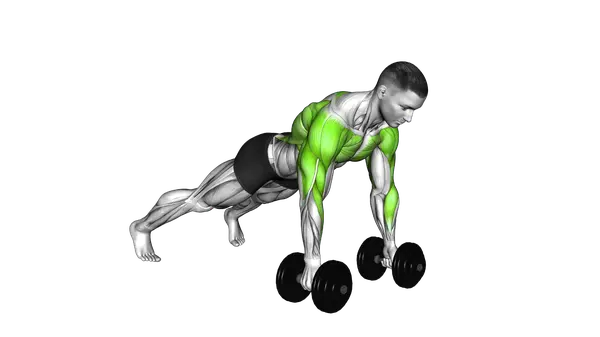
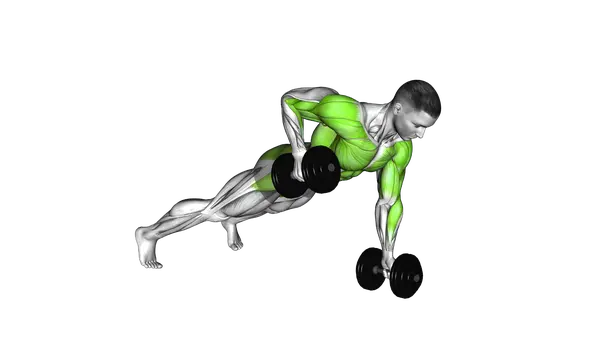
Push-Up to Renegade Row

Push-Up to Renegade Row

The Push-Up to Renegade Row combines two powerful compound movements, creating an intermediate-level exercise that delivers remarkable bang for your buck in minimal time. This dynamic pairing targets multiple major muscle groups simultaneously, with primary activation in the pectoral muscles, triceps, and anterior deltoids during the push-up phase, then shifting focus to the latissimus dorsi during the row component. What makes this exercise particularly effective is its ability to transition seamlessly between pushing and pulling patterns, creating a comprehensive upper body challenge that also demands significant core stability throughout the entire movement sequence. The stabilizing effects reach beyond just the primary movers, engaging the rotational muscles of the core, rhomboids, and even the lower body as you maintain a rigid plank position. Athletes across various disciplines incorporate this exercise into their regimens for different purposes. HIIT enthusiasts appreciate its cardiovascular demands when performed with pace, while CrossFit athletes value its functional strength carryover to more complex movements. Bodybuilders might employ slower, more controlled variations to maximize time under tension for muscle hypertrophy. From a strength development perspective, the Push-Up to Renegade Row builds balanced upper body power while addressing common weaknesses in core anti-rotation capabilities. This makes it particularly valuable for athletes seeking to improve performance while reducing injury risk. The unilateral component of the row helps identify and correct strength imbalances between sides. Research suggests that multi-planar exercises like this one promote greater neuromuscular coordination than single-plane movements alone, potentially enhancing overall athletic performance. The intensity can be easily modified through weight selection, rep schemes, and tempo manipulation, making it adaptable to various fitness levels despite its intermediate classification. Whether you're looking to build functional strength, enhance muscle definition, or improve athletic performance, the Push-Up to Renegade Row deserves consideration as a time-efficient addition to your training arsenal.

Strength
HIIT
Crossfit
+1
Dumbbell
Renegade Row

Renegade Row

The Renegade Row stands as a formidable compound exercise in the fitness world, challenging even intermediate athletes with its unique blend of anti-rotation stability and unilateral pulling power. This dynamic movement simultaneously engages multiple muscle groups, with primary activation in the latissimus dorsi (lats), while significantly recruiting the triceps and anterior deltoids (front delts) as crucial supporting players in the movement pattern. What makes the Renegade Row particularly valuable is its versatility across training methodologies. In HIIT protocols, it elevates heart rate while building functional strength; within CrossFit WODs, it tests core stability under fatigue; and in bodybuilding regimens, it sculpts definition across the back while enhancing upper body symmetry. This adaptability makes it a premium selection for anyone looking to maximize training efficiency. The exercise's true benefit lies in its comprehensive strength development. Beyond the obvious back and arm work, the plank position foundation creates tremendous core engagement, essentially turning your midsection into an isometric powerhouse that must resist rotation with each repetition. This anti-rotation component trains the body for real-world strength that translates to improved performance in daily activities and athletic endeavors alike. Research suggests that unilateral exercises like the Renegade Row address muscle imbalances more effectively than their bilateral counterparts, potentially reducing injury risk while optimizing functional strength development. The exercise's ability to simultaneously challenge stability and strength makes it particularly effective for developing the kind of practical, usable power that serves athletes across disciplines. For those seeking to break through training plateaus, the Renegade Row offers that perfect combination of challenge and reward. Its compound nature triggers substantial hormonal responses favorable to muscle development, while its stability demands enhance neuromuscular efficiency: essentially teaching your body to recruit more muscle fibers more effectively during all pulling movements.

Strength
HIIT
Crossfit
+1
Dumbbell