All Exercises

Stability ball

Pick your muscle groups
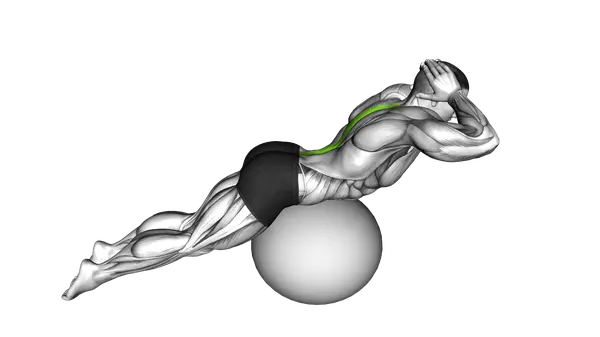
Back Extension On Stability Ball

Back Extension On Stability Ball

The Back Extension on Stability Ball stands as a versatile intermediate-level exercise that effectively targets the erector spinae: those powerful muscles running along both sides of your spine. This movement has earned its place in both bodybuilding regimens and recovery protocols due to its ability to challenge the posterior chain while minimizing pressure on the spine compared to machine-based alternatives. When incorporated into a consistent training routine, this exercise contributes significantly to developing core strength and overall back stability. The dynamic nature of performing extensions on an unstable surface like an Stability ball engages additional stabilizing muscles throughout your entire midsection, creating a comprehensive strengthening effect that transcends what you'd achieve with more static variations. Fitness enthusiasts particularly appreciate this movement for its dual benefits in strength development and injury prevention. The erector spinae muscles, when properly conditioned, support better posture and provide the foundation for heavier lifts in other compound movements like deadlifts and squats. Many physical therapists also recommend this exercise during recovery phases following lower back issues, as it strengthens the supporting musculature without excessive loading. The beauty of this exercise lies in its adaptability across fitness levels within the intermediate range. The stability ball itself provides a natural limitation to the range of motion, helping prevent hyperextension of the lower back: a common issue with fixed back extension machines. This makes it particularly valuable for those looking to rebuild strength following periods of inactivity or minor injury. For bodybuilders, the back extension on stability ball serves as an excellent finishing movement after heavier training, promoting blood flow to the lumbar region while reinforcing the mind-muscle connection with the posterior chain. The strength and stability gains transfer effectively to both athletic performance and everyday functional movements, making this more than just an aesthetic exercise but a foundational component of a well-rounded fitness program.

Strength
Core
Bodybuilding
Recovery
Stability ball
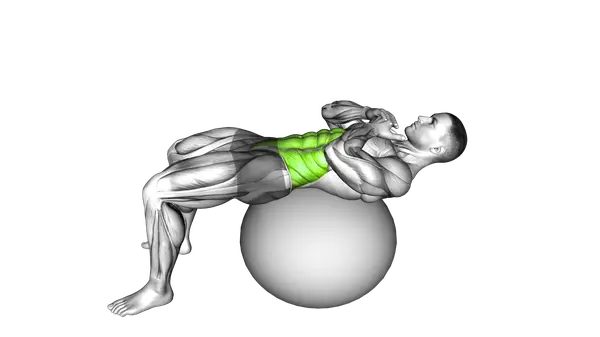
Crunch (On Stability Ball)

Crunch (On Stability Ball)

The Stability Ball Crunch elevates the traditional crunch into a more comprehensive core exercise by introducing an element of instability. This intermediate-level movement specifically targets the abdominal muscles while engaging the entire core musculature in ways that a standard floor crunch simply cannot match. The curved surface of the stability ball allows for a greater range of motion, enabling deeper muscle activation while providing feedback that helps maintain proper form throughout the movement. When incorporated into bodybuilding routines, the Stability Ball Crunch helps develop that coveted six-pack definition while also building functional core strength that supports heavier lifts in other exercises. The subtle balance requirements activate deeper stabilizer muscles, creating a more complete abdominal workout than many machine-based alternatives. These stabilizing benefits extend beyond aesthetics, contributing to improved posture and reduced risk of lower back injuries during both training and daily activities. For those in recovery phases, this exercise offers an excellent option to maintain core conditioning without placing excessive strain on the spine. The ball provides natural support for the lower back while still allowing for effective muscle engagement. This makes it particularly valuable for athletes working around certain injuries or those gradually building back to full training intensity after a layoff period. What makes the Stability Ball Crunch particularly effective is how it forces the core to work as a complete unit. While the primary focus remains on the rectus abdominis (the "six-pack" muscle), the exercise simultaneously engages the obliques, transverse abdominis, and even some lower back muscles to maintain stability throughout the movement. This comprehensive activation pattern makes it superior to isolation exercises for developing functional strength that translates to improved athletic performance and everyday movement quality.

Core
Bodybuilding
Recovery
Stability ball
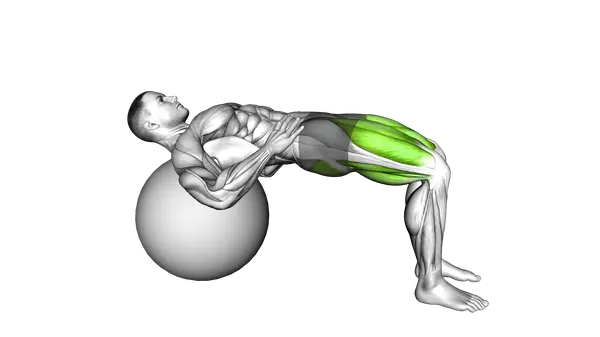
Lying Hip Lift (On Stability Ball)

Lying Hip Lift (On Stability Ball)

The Lying Hip Lift on a stability ball offers a challenging intermediate-level movement that effectively targets multiple muscle groups simultaneously. This exercise primarily engages your glutes and hamstrings while requiring significant core activation to maintain proper positioning throughout the movement. The unstable nature of the stability ball intensifies the workout, forcing your body to recruit additional stabilizer muscles that might remain dormant during similar exercises performed on stable surfaces. Popular among bodybuilders for its ability to sculpt and define the posterior chain, this exercise also serves as an excellent rehabilitation option for those recovering from lower back injuries when performed with proper form and appropriate resistance. The controlled movement pattern helps strengthen the muscles supporting the spine without placing excessive stress on the vertebral column itself. The beauty of the Lying Hip Lift lies in its versatility - it can be seamlessly incorporated into strength-focused routines or core-centric workouts depending on your specific fitness goals. By adjusting foot positioning and range of motion, you can shift emphasis between different muscle groups while maintaining the overall benefits of the exercise. Many fitness enthusiasts appreciate how this movement creates a mind-muscle connection with the glutes that's difficult to achieve with other exercises. As you progress with this exercise, you'll likely notice improvements in hip mobility, core stability, and overall lower body strength. These adaptations translate well to everyday movements and athletic performance. The exercise promotes balanced muscular development, addressing common imbalances caused by prolonged sitting and sedentary lifestyles that can lead to lower back pain and reduced athletic performance. Remember that while the stability ball adds an element of challenge, it also requires greater body awareness and control. This mindfulness aspect makes the Lying Hip Lift not just a physical exercise but also an opportunity to develop greater proprioception and kinesthetic awareness - valuable attributes for both serious athletes and fitness enthusiasts alike.

Strength
Core
Bodybuilding
Recovery
Stability ball
Pull In (On Stability Ball)

Pull In (On Stability Ball)

The Pull In on a stability ball presents an intermediate-level core challenge that elevates traditional abdominal training through the introduction of instability. This dynamic exercise engages multiple layers of your abdominal muscles simultaneously, particularly targeting the rectus abdominis and transverse abdominis, while also recruiting stabilizing muscles throughout your entire core region. Unlike stationary exercises, the stability ball creates a constantly shifting foundation that forces your core to make continuous micro-adjustments, significantly increasing muscle activation and proprioceptive awareness. This makes the Pull In particularly valuable across diverse training modalities including HIIT circuits, bodybuilding regimens, and even recovery protocols, where controlled core engagement promotes healing without excessive strain. What makes this exercise especially effective is the way it combines both stability and mobility elements. As your body negotiates the movement while maintaining balance on the ball, you're developing functional core strength that translates directly to improved performance in daily activities and athletic endeavors. The instability factor means your body recruits more muscle fibers than it would during similar movements performed on stable surfaces. For those integrating this exercise into HIIT workouts, the Pull In delivers an intense metabolic stimulus when performed with appropriate tempo and minimal rest periods. Bodybuilders appreciate how it targets the often difficult-to-activate lower abdominals while simultaneously engaging the entire core musculature. During recovery phases, the controlled nature of the movement allows for therapeutic engagement of the core without excessive loading or spinal compression. The versatility of the Pull In makes it a standout choice for comprehensive core development. By challenging both strength and stability simultaneously, it addresses the multifaceted nature of core function. Regular incorporation of this exercise promotes improved posture, enhanced athletic performance, and contributes to that coveted abdominal definition, making it a valuable addition to virtually any fitness regimen focused on core development.

Core
HIIT
Bodybuilding
+1
Stability ball
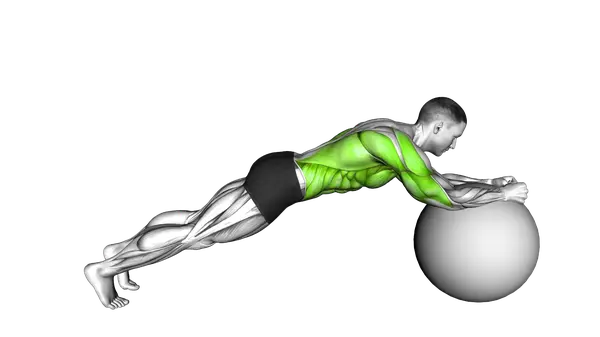
Stability Ball Body Saw

Stability Ball Body Saw

The Stability Ball Body Saw stands as a remarkable core-strengthening exercise that challenges your abdominal muscles and front deltoids simultaneously, making it a perfect addition to any intermediate fitness enthusiast's routine. This dynamic movement builds upon the traditional plank by incorporating an element of instability and controlled motion that intensifies the engagement of your core musculature. When properly executed, the Body Saw creates continuous tension throughout your midsection, particularly targeting the rectus abdominis, transverse abdominis, and obliques while your front deltoids work overtime to maintain proper shoulder positioning. The beauty of this exercise lies in its simplicity combined with its effectiveness: you don't need complex equipment or extensive space, just a quality stability ball and determination. Popular in HIIT circuits, Crossfit workouts, and bodybuilding regimens, the Stability Ball Body Saw offers versatility for various training styles. In high-intensity interval training, it serves as an excellent metabolic conditioning element that elevates heart rate while building core strength. Crossfit athletes appreciate its functional carry-over to other movements requiring midline stability, while bodybuilders value its ability to sculpt and define the abdominal wall without adding bulky muscle mass. The exercise's primary benefit comes from the anti-extension component that forces your core to resist arching your lower back as your body moves. This anti-extension training proves particularly valuable for improving posture, enhancing athletic performance, and reducing the risk of lower back injuries in daily activities and sports movements. For those looking to progress their core training beyond basic planks, the Stability Ball Body Saw represents a significant step up in difficulty and effectiveness. The constant muscle tension created throughout the movement pattern stimulates greater muscle fiber recruitment than static holds alone, resulting in more comprehensive core development. As with any progressive core exercise, consistency with this movement will yield noticeable improvements in overall stability, strength, and athletic capability.

Core
HIIT
Crossfit
+1
Stability ball

Built for Progress

Take the Guesswork
Out of Training

Create personalized AI-powered workout plans that evolve with you. Train smarter, track every rep and keep moving forward.
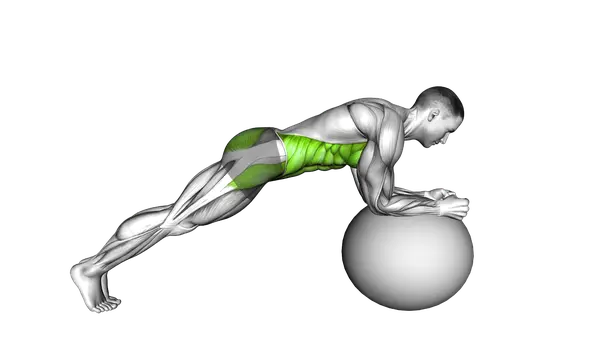
Stability Ball Front Plank

Stability Ball Front Plank

The Stability Ball Front Plank transforms the traditional plank into a dynamic core challenge that demands increased muscle activation and proprioceptive awareness. This intermediate-level exercise targets primarily the abdominals and erector spinae muscles while engaging the entire core musculature as a functional unit. When you introduce the unstable surface of the stability ball to your plank, you're essentially creating a more complex environment for your core to navigate. Research has shown that exercises performed on unstable surfaces can increase muscle activation by up to 25% compared to stable surface exercises, making this variation particularly effective for those looking to progress their core training. The beauty of the Stability Ball Front Plank lies in its versatility across training modalities. In HIIT sessions, it serves as an excellent timed station that rapidly builds core endurance and elevates heart rate. For bodybuilders, it functions as a specialized isolation movement that develops the aesthetic six-pack appearance while simultaneously strengthening the deeper core muscles that support heavy compound lifts. During recovery phases, the exercise can be modified to serve as an active restoration technique that promotes blood flow to recovering tissues without excessive strain. What sets this exercise apart is how it challenges your body's stabilization systems. The constant micro-adjustments required to maintain balance on the ball engage not just the visible "six-pack" muscles, but also the transverse abdominis, internal obliques, and multifidus – essential stabilizers that support optimal posture and functional movement patterns in daily life. While many focus solely on the abdominal benefits, the Stability Ball Front Plank provides substantial work for the erector spinae, the muscles running along your spine. This balanced development helps prevent the postural imbalances that often result from overdeveloping the anterior chain while neglecting posterior support structures – a common pitfall in many fitness routines.

Core
HIIT
Bodybuilding
+1
Stability ball
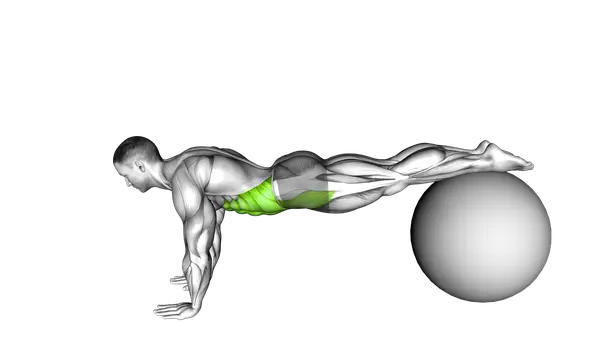
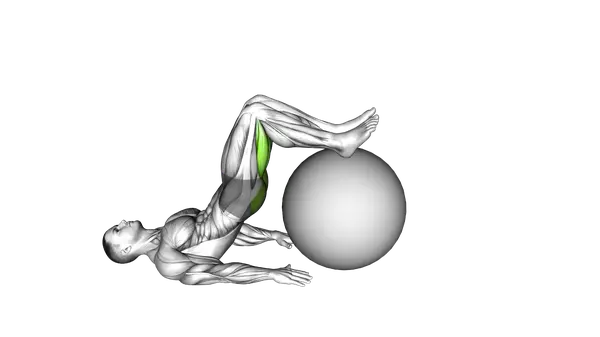
Stability Ball Leg Curl

Stability Ball Leg Curl

The Stability ball Leg Curl stands as a versatile intermediate-level movement that powerfully targets the posterior chain, with primary emphasis on the hamstrings and glutes. This exercise has earned its place in both bodybuilding routines and rehabilitation programs, offering significant benefits without requiring complex equipment or excessive joint stress. When incorporated into a consistent training regimen, the Stability Ball Leg Curl contributes substantially to lower body strength development while promoting muscular balance between the quadriceps and hamstrings. This balance is crucial not only for aesthetic symmetry prized in bodybuilding circles but also for functional strength and injury prevention. The stability challenge presented by the Stability ball engages additional stabilizer muscles throughout the core and hips, creating a more comprehensive lower body workout than many machine-based alternatives. For those recovering from certain lower back or knee injuries, this exercise can serve as an effective rehabilitation tool when performed under appropriate supervision. The reduced axial loading compared to traditional hamstring exercises like deadlifts makes it accessible to those working around specific limitations while still stimulating meaningful muscle activation and growth. Strength athletes find value in the Stability Ball Leg Curl as an accessory movement that addresses potential weak links in their posterior chain. The exercise creates significant time under tension for the hamstrings: a quality that promotes muscle hypertrophy when performed in moderate to high repetition ranges. This focused attention on hamstring development pays dividends in improved athletic performance, from enhanced sprinting speed to greater stability in compound lifts. The adjustable difficulty based on ball position, leg extension, and execution speed: makes this exercise scalable as fitness levels improve. While seemingly simple, mastering the Stability Ball Leg Curl requires body awareness, control, and dedicated focus to maximize its benefits. When programmed appropriately within a comprehensive training plan, this exercise delivers remarkable results for hamstring development and posterior chain strength that translate to both aesthetic improvements and functional capacity.

Strength
Bodybuilding
Recovery
Stability ball
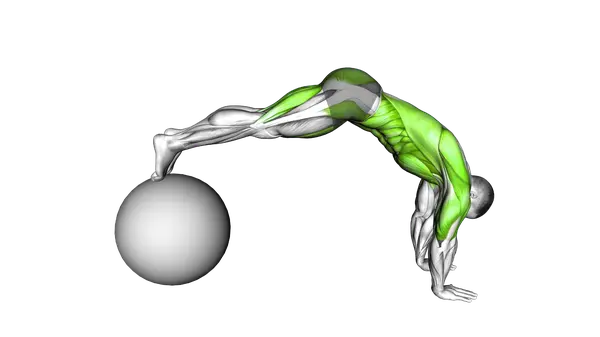
Stability Ball Pike Push-Up

Stability Ball Pike Push-Up

The Stability Ball Pike Push-Up stands as a formidable challenge in the realm of advanced bodyweight training, elevating the traditional push-up to an entirely new dimension of difficulty. This movement seamlessly blends shoulder strength development with core stabilization, making it a powerful addition to any serious fitness enthusiast's repertoire. This exercise primarily targets the front deltoids, the anterior portion of your shoulders responsible for that coveted capped look, while simultaneously engaging the triceps as crucial secondary movers. What truly sets this exercise apart, however, is the extraordinary core engagement required to maintain proper positioning throughout the movement. Perfect for integration into high-intensity interval training sessions or CrossFit WODs, the Stability Ball Pike Push-Up delivers maximum stimulus with minimal equipment. The instability factor introduces an element that traditional gym machines simply cannot replicate, forcing your body to recruit stabilizing muscles throughout your entire kinetic chain. Bodybuilders also appreciate this movement for its ability to isolate and sculpt the shoulders while maintaining functional strength patterns. The compound nature of this exercise makes it particularly effective for developing practical, real-world strength. As you progress with this movement, you'll notice improvements in overhead pressing power, core stability, and overall body control. The intense demand placed on your core musculature creates a synergistic effect, enhancing total-body strength beyond what isolated movements can achieve. For those seeking to break through plateaus in their fitness journey, the Stability Ball Pike Push-Up represents an excellent progression tool. The instability of the ball coupled with the inverted body position creates a unique challenge that forces muscular adaptation. This exercise embodies the principle that true strength isn't just about moving weight: it's about controlling your body through space with precision and power.

Strength
Core
HIIT
Crossfit
+1
Stability ball