Your First Beginner Workout Plan: A Realistic Starter Guide
Feeling lost? This beginner workout plan is your clear, actionable guide to starting fitness. Get routines for home or gym and build habits that last. A great beginner workout plan is one that actually fits into your life. It’s built on simple, consistent actions, not perfection. For most people, this means 2-3 full-body workouts per week using foundational movements you can do anywhere. The real goal here is to build a habit that sticks.


Where to start your fitness journey
Getting into a workout routine can feel like staring at a giant puzzle with a million pieces. Between all the conflicting advice and the vibe of a packed gym, it's easy to get analysis paralysis and do nothing at all.
But here's the good news: the starting line is way less complicated than you think. The best plans aren’t copied from a magazine; they're built on a solid foundation of knowing yourself and setting realistic goals. So, forget the one-size-fits-all templates for a minute. A workout plan that actually works starts with your real life: your schedule, your current fitness, and what you honestly want to accomplish.
Define your personal why
Before you even think about doing a single squat or push-up, you have to ask yourself one question: Why am I doing this? Vague goals like "get in shape" are the first to get abandoned because they have no real emotional pull. You need to dig a little deeper to find a motivator that has some teeth.
Built for progress
Take the guesswork out of training
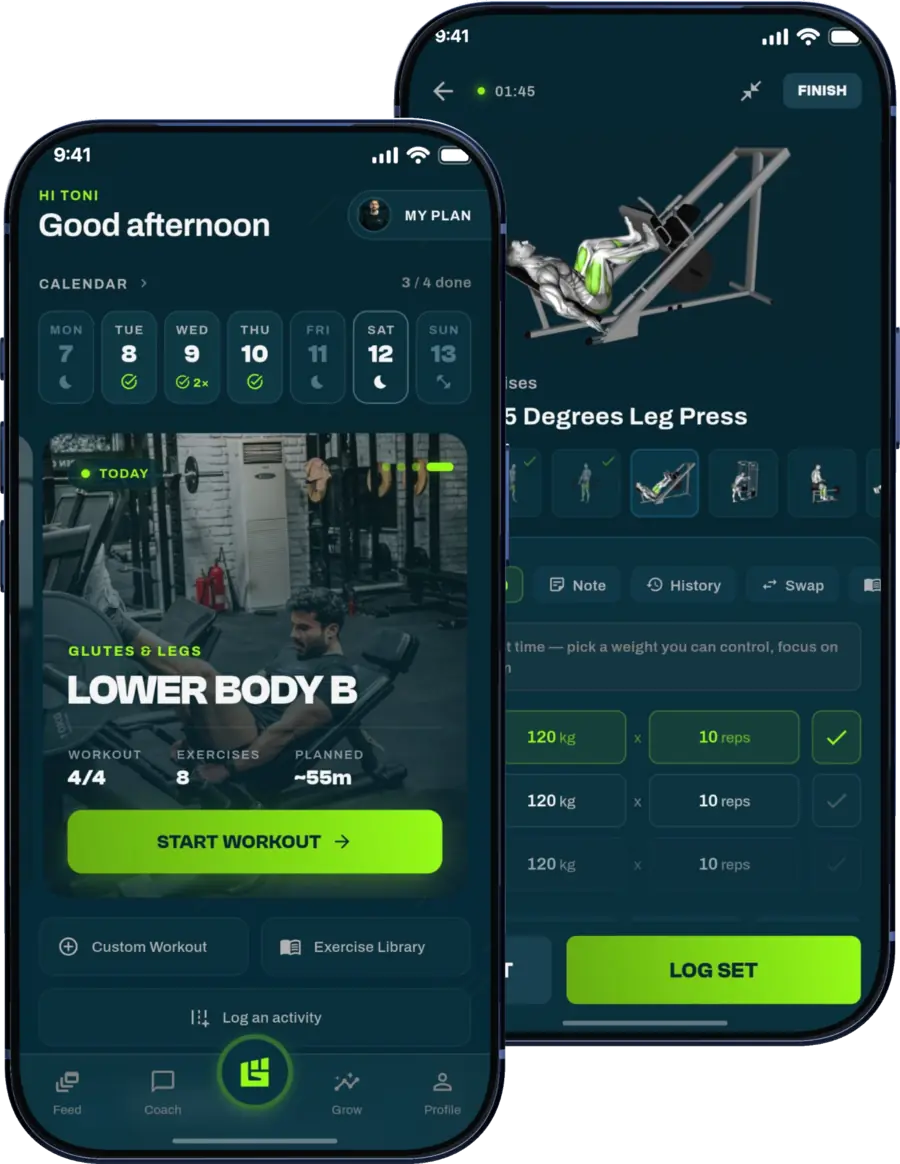
Get a personalized workout plan built around your goal, equipment and schedule. Train smarter, track every rep and keep moving forward, one workout at a time.






Your "why" can be anything, as long as it means something to you. Maybe you want to:
- Have enough energy to chase your kids or grandkids around the park.
- Feel genuinely confident and comfortable in your own skin.
- Melt away daily stress and clear your head.
- Build the kind of practical strength that lets you carry all the groceries in one trip.
Your "why" is the fuel that will keep you going when motivation inevitably dips. Write it down. Stick it on your fridge. This one small act turns a fuzzy idea into a clear mission.
Create a realistic schedule
One of the biggest traps beginners fall into is designing a workout schedule for a fantasy version of themselves. If you've got a demanding job, a family, and a commute, planning to hit the gym six days a week is just setting yourself up to fail.
Be brutally honest with yourself here. Pull up your calendar and look for the actual, real-life pockets of time you can dedicate to exercise. For most people just starting out, 2 to 3 workout sessions per week is the sweet spot. It's enough to tell your body to get stronger, but it also gives you crucial time to recover.
A classic, effective approach is scheduling your workouts on non-consecutive days—think Monday, Wednesday, and Friday. This gives your muscles about 48 hours to rest, repair, and come back stronger. Remember, consistency over a few days a week is infinitely more powerful than one heroic workout that leaves you too sore to move for a week. Your plan needs to fit your life, not the other way around.
Crafting your first workout routine
Alright, you've got your goals and your schedule sorted. Now for the fun part: turning all that into an actual workout plan. A good beginner routine isn't about complicated exercises or living in the gym. It’s about finding a simple, effective plan you can stick with, whether you're at a fully-equipped gym or just using your body weight at home.
The secret to a solid start is balance. A truly effective plan hits three key areas: strength training to build functional muscle, cardio for a healthy heart, and flexibility to keep you moving freely. Nailing these three ensures you're building a capable, resilient body from the ground up.
This is the basic flow: set a clear goal, get a real sense of where you are now, and then build a schedule that actually fits your life.
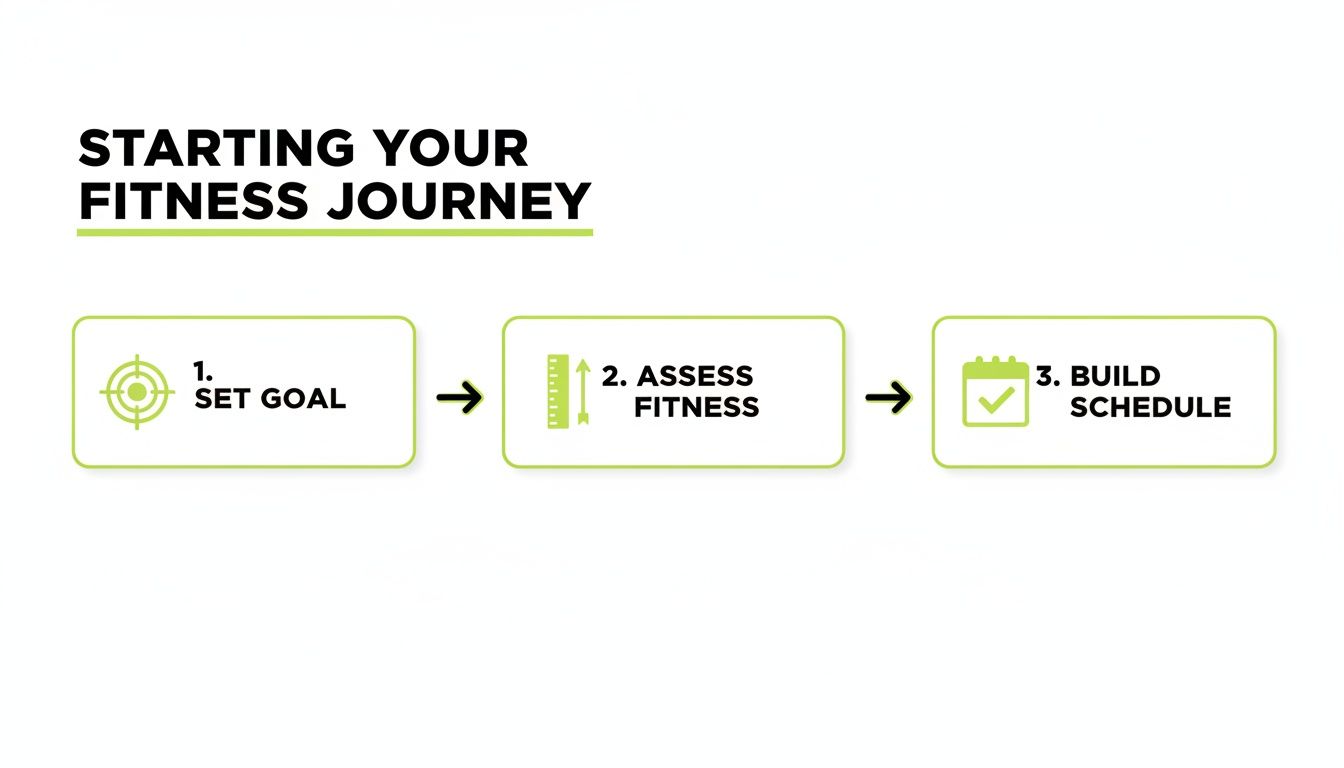
Following these steps keeps you grounded in reality, building a plan for your life, not someone else's.
The building blocks of your first workout
Before we dive into the exercises, let's get the lingo down. Seeing terms like "reps" and "sets" can feel a little intimidating at first, but they're just simple tools to give your workout structure.
- Reps (Repetitions): One complete movement of an exercise. If you do 10 squats in a row, you’ve just done 10 reps.
- Sets: A group of reps. When your plan says "3 sets of 10 squats," it means you'll do 10 squats, take a breather, and then repeat that two more times.
- Rest: The downtime between your sets. For beginners, 60 to 90 seconds is a great starting point. It's just enough time to catch your breath so you can hit the next set with good form.
Once you understand these three terms, you can walk into any gym or start a home workout feeling like you know exactly what you're doing. It turns a confusing list of exercises into a clear, actionable plan.
Full-body workouts: the best start for beginners
When you're new to this, a full-body routine is hands-down the most efficient way to train. Instead of splitting your week into "leg day," "chest day," and so on, you'll work all your major muscle groups in a single session. This approach just makes sense for a few reasons.
First off, it lets you train each muscle more frequently. By hitting your chest, back, and legs two or three times a week, you're constantly signaling your body to get stronger. It’s also incredibly time-efficient—a huge plus for anyone juggling a busy schedule.
Finally, you get more practice on the foundational movements. You’ll be doing squats, rows, and push-ups every time you train, which helps you master the technique much faster.
A full-body routine done three times a week on non-consecutive days (like Monday, Wednesday, and Friday) is the gold standard for beginners. It strikes the perfect balance between training hard and recovering properly.
Your 4-week beginner workout plan
Here’s a sample full-body routine you can follow for the next four weeks. We've included options for both gym-goers and anyone working out at home with little to no equipment. Just aim to complete the workout three times a week on days that aren't back-to-back.
Don't sweat it if you can't hit all the target reps with perfect form right away. That's totally normal. Just do as many as you can, jot it down, and aim to beat that number next time. That's progress.
This table lays out a simple, progressive plan for your first month.
Sample 4-week beginner full-body workout plan
| Day | Workout Focus | Gym Exercise Example (Sets x Reps) | Home Exercise Example (Sets x Reps) |
|---|---|---|---|
| Week 1 | Full Body | Goblet Squats: 3 x 8 Dumbbell Rows: 3 x 8 | Bodyweight Squats: 3 x 10 Incline Push-ups: 3 x 8 |
| Week 2 | Full Body | Goblet Squats: 3 x 10 Dumbbell Rows: 3 x 10 | Bodyweight Squats: 3 x 12 Incline Push-ups: 3 x 10 |
| Week 3 | Full Body | Goblet Squats: 3 x 12 Dumbbell Rows: 3 x 12 | Bodyweight Squats: 3 x 15 Knee Push-ups: 3 x 8 |
| Week 4 | Full Body | Goblet Squats: 3 x 12 Dumbbell Rows: 3 x 12 | Bodyweight Squats: 3 x 15 Knee Push-ups: 3 x 10 |
Always start with a 5–10 minute warm-up (think light cardio and dynamic stretches) and finish with a cool-down. At the end of the day, whether you choose the gym or home workouts, just being consistent is what will get you results. If you're on the fence, our guide on bodyweight vs. equipment training can help you decide what's best for you.
Mastering foundational fitness moves
Your workout plan is just the blueprint; real results are built rep by rep, with good form. Not all exercises are created equal, especially when you're just starting out. The secret sauce to a killer beginner plan is focusing on compound movements—the big lifts that work multiple muscle groups all at once.
Think of them as the MVPs of your workout. Instead of wasting time on tiny isolation exercises, you're teaching your body to move as a single, coordinated unit. This approach is brutally efficient, building real-world strength that you’ll actually use, whether you're hauling groceries or chasing your kids around the park.
Squats: the king of lower body exercises
If you could only do one lower-body exercise for the rest of your life, it should probably be the squat. It’s the undisputed champ for building strong quads, hamstrings, glutes, and a solid core, all while improving your balance and mobility.
Here’s the breakdown for a perfect bodyweight squat:
- The Stance: Get your feet set just a bit wider than your hips. Toes can point straight ahead or slightly outward—do what feels natural.
- The Start: Take a big breath, brace your core like you're about to get punched in the gut, and push your hips back first. Imagine you're aiming for a chair behind you.
- The Descent: Lower yourself until your thighs are at least parallel to the floor. Go as low as you can while keeping your chest up and your back flat.
- The Ascent: Power back up by driving through your heels. Give your glutes a good squeeze at the top to finish the rep.
The most common mistake? Letting your knees collapse inward. A great mental cue is to imagine you're trying to spread the floor apart with your feet. This fires up your glutes and keeps your knees tracking safely over your toes.
Push-ups: the ultimate upper body builder
The push-up is a total powerhouse for your chest, shoulders, triceps, and core. But let's be real—most beginners can't bust out a set of perfect push-ups on day one, and that's completely fine. Modifications are your ticket to success here.
- Incline Push-ups: Find a sturdy, elevated surface like a kitchen counter, a bench, or the arm of a sofa. The higher the incline, the easier it is. This is a fantastic way to build strength through the full range of motion.
- Knee Push-ups: Drop to your knees. This shortens the lever and reduces the amount of weight you have to press, letting you nail down the form before you move to your toes.
The non-negotiable rule for any push-up is a rigid torso. Your body must move like one solid plank from your head to your knees (or heels). If your hips sag or pike up, you're doing it wrong.
Rows: for a strong and healthy back
We live our lives hunched over screens. Rows are the perfect antidote. They hit all the important muscles in your upper back, lats, and biceps, pulling your shoulders back and improving your posture.
If you're at home, you can do a dumbbell row with just about anything—a gallon of water, a backpack loaded with books, or a single dumbbell.
Here’s how to set it up:
- Find a bench or a sturdy chair. Place your left knee and left hand on it for support.
- Grab your weight in your right hand, letting it hang straight down.
- Pull the weight up toward your chest, keeping your elbow tight to your side.
- Give your back muscles a hard squeeze at the top, then slowly lower the weight back to the start.
The key is to initiate the pull with your back, not by yanking with your arm. Think about starting a lawnmower—it's a powerful, controlled pull that starts from your back and shoulder.
Planks: the core strength foundation
A strong core is the anchor for everything you do. The plank is a simple but brutal isometric exercise that builds endurance in your abs, lower back, and shoulders without any movement at all.
Get down on your forearms, with your body forming a dead-straight line from your head to your heels. Squeeze your core and glutes, and just hold on.
Avoid the classic rookie mistake of letting your hips dip toward the floor or rise up to the ceiling. A good cue is to imagine a straight rod running from your shoulders all the way down to your ankles.
Strength training isn't just a niche hobby anymore; it's gone mainstream. A recent report found that 50% of Gen Z exercisers now prefer strength training, a massive leap from its 10th-place ranking back in 2021. The best part? Global guidelines suggest just 2-3 weekly sessions are enough to see significant gains, which is perfect for a busy schedule. You can get a seriously effective workout in under 45 minutes, crushing the number one excuse most people have: not enough time. You can discover more insights about Gen Z fitness trends and get inspired to start your own journey.
How to progress your workout plan
That initial rush of motivation is a powerful thing. But what happens when the squats that left your legs shaking now feel… kind of easy? That’s not a bad sign—it’s a great one. It means your body is adapting and getting stronger.
To keep the results coming, you can't just do the same workout on repeat forever. The secret to long-term gains is a concept called progressive overload. It might sound a bit technical, but the idea is simple: you have to consistently ask your muscles to do a little more than they're used to. This is what forces them to adapt and grow.
The art of getting stronger
Progressive overload isn’t about slapping another 50 pounds on the bar overnight. Think of it as slowly turning up a dial, not flipping a switch. It’s about making small, strategic increases in difficulty over time.
Here are a few straightforward ways to apply this principle to your plan:
- Add More Reps: If you hit 8 reps on your dumbbell rows last week, shoot for 10 reps this week with the same weight.
- Add More Weight: Once you can comfortably nail 12 reps with clean form, it’s probably time to grab the next dumbbell up.
- Do More Sets: Instead of doing 3 sets of squats, challenge yourself with 4 sets using the same weight and reps.
- Decrease Your Rest Time: If you normally rest for 90 seconds between sets, try trimming it to 75. This makes your muscles work harder with less recovery.
The key is to pick one of these methods and apply it gradually. Don't try to change everything all at once. Small, consistent nudges are what build lasting strength and keep you from getting stuck. For a deeper dive, check out our guide on progressive overload training.
Making your workouts smarter
You can’t progress if you don’t know where you started. How will you know it’s time to level up if you can’t remember what you lifted last week? A simple notebook gets the job done, but technology can make the process much smoother.
Mobile exercise apps have completely changed the game, becoming the #4 fitness trend for 2026. With over 345 million users downloading more than 850 million apps in 2024 alone, it's like having a personal trainer in your pocket. Apps like GrabGains can provide adaptive plans for goals like strength or hypertrophy and automatically adjust them based on your logged performance. This approach is backed by evidence showing beginners can build serious muscle with low-volume training—even less than 5 weekly sets per muscle can deliver impressive results.
The real magic of progressive overload is that it turns your workouts into a forward-moving journey. You’re not just exercising; you’re actively building on your past efforts, creating a clear path to your goals.
When to increase the challenge
Knowing the perfect time to make things harder can feel like guesswork, but there are simple rules you can follow. A classic one is the "2 for 2" rule. If you can complete two more reps than your target for two workouts in a row, it’s a solid sign that you're ready to increase the weight.
For example, your goal is 10 reps on the goblet squat. If you hit 12 reps on both Monday and Wednesday, you're ready to go heavier on Friday. This simple system takes the uncertainty out of the equation.
Ultimately, the most important thing is to listen to your body. Some days you’ll feel like a superhero, ready to push your limits. Other days, just getting through your planned workout is a win. A beginner workout plan isn't about crushing yourself every single session. It's about building a consistent habit of challenging yourself just enough to keep moving forward.
Fueling your body for success
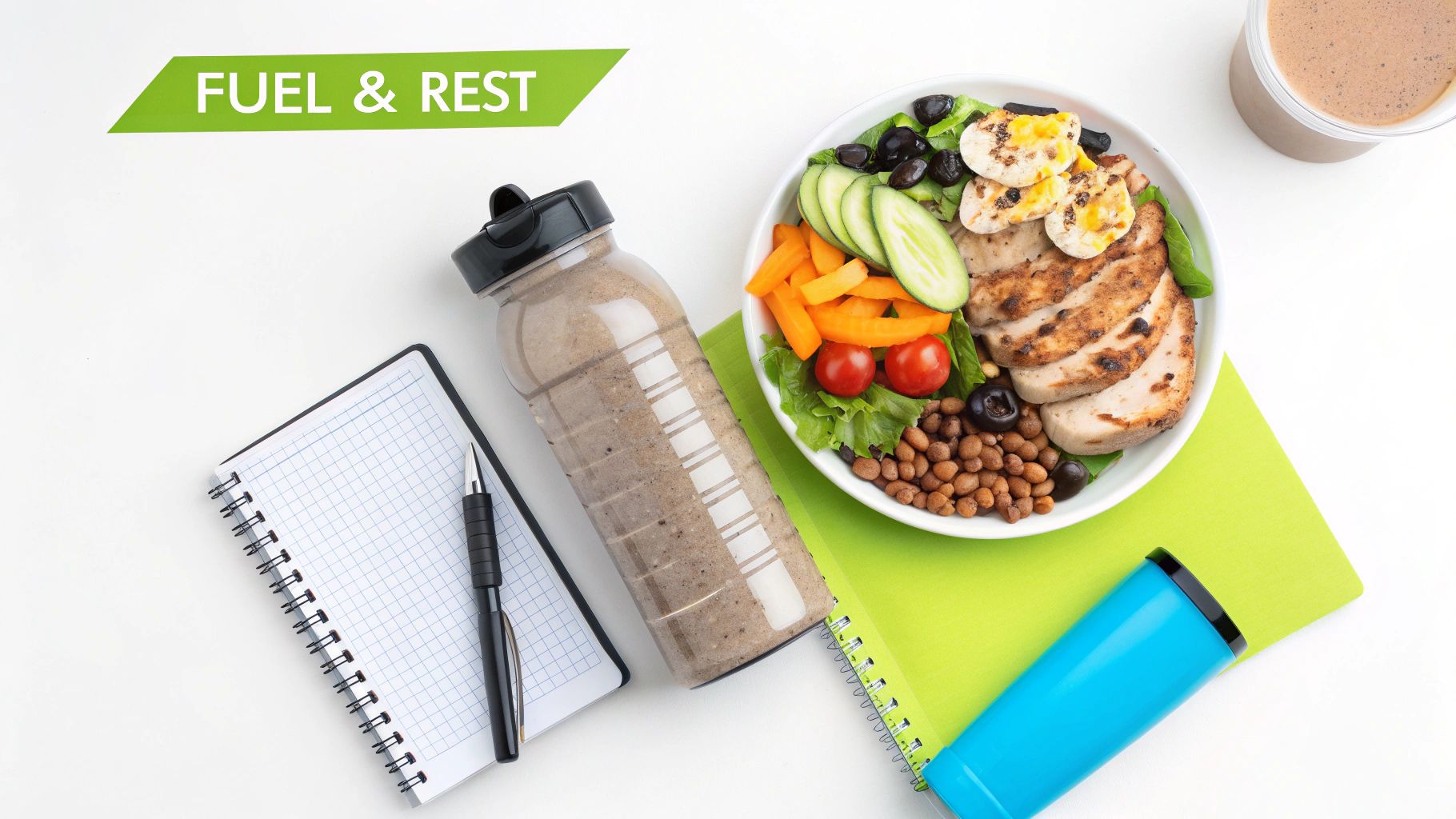
Look, the workout itself is only half the battle. Your time in the gym is just the signal you send your body to get stronger. The real magic—the actual muscle growth and fitness gains—happens when you rest, refuel, and sleep.
If you ignore nutrition and recovery, you're just spinning your wheels. Think of it this way: your body is a high-performance car. The workout is the drive, food is the fuel, and rest is the pit stop for maintenance. You can’t expect to win the race if you’re running on empty and skipping repairs.
What to eat before and after you train
Don't overcomplicate this. You don't need a PhD in nutrition to support your beginner workout plan. Just focus on a few simple principles to keep your energy up and kickstart muscle repair.
Before you train, the goal is simple: give your body some easy-to-access energy.
- Pre-Workout Fuel (1-2 hours before): Grab a small meal or snack that's mostly carbs with a little bit of protein. A banana with a spoonful of peanut butter, a small bowl of oatmeal, or some toast with avocado works perfectly.
After your workout, you need to switch gears. Now it's all about replenishing what you used and giving your muscles the building blocks they need to repair and grow.
- Post-Workout Recovery (within 1-2 hours after): This is your prime window to get in a solid meal with both protein and carbs. A protein shake is a quick and easy option, but so is Greek yogurt with berries or a classic chicken and rice bowl.
And please, don't forget the most important nutrient of all: water. Being even slightly dehydrated can tank your performance. Make a habit of sipping water all day long, not just when you feel thirsty at the gym.
The critical role of rest and recovery
Let me be clear: muscles don't grow while you're lifting weights. They grow while you're resting. That’s why rest days are not optional—they are a non-negotiable part of any smart training program. Pushing through without rest is a fast track to burnout, overtraining, and injury.
Make sure you're taking at least one full day off between your full-body workouts. A rest day doesn't have to mean becoming a couch potato, either. Light activity, or active recovery, like going for a walk, doing some stretching, or a light yoga session can actually help with muscle soreness.
Finally, let's talk about your secret weapon: sleep. When you're in a deep sleep, your body releases growth hormone, which is absolutely essential for repairing muscle tissue. Aiming for 7-9 hours of quality sleep per night is probably the single most effective thing you can do to see faster results.
It's this balanced approach that has fueled the massive shift toward at-home fitness. Back in 2019, only 24% of US exercisers preferred working out at home. By 2023, that number exploded to 51%. It wasn't a fluke, either—by 2023, people were working out at home 10% more frequently than at the gym. If you want to dial in your own nutrition, using a macro calculator is a great way to get a personalized starting point.
Your first fitness questions, answered
Jumping into a new fitness routine brings up a ton of questions. That's totally normal—everyone feels a little lost at first. Let's clear up some of the most common things people ask when they're just getting started.
How many days a week should I actually work out?
When you're starting from square one, the goal is to build a habit you can stick with. Forget trying to live in the gym.
Aim for 2 to 3 non-consecutive days per week. This gives your body just enough of a push to adapt and get stronger, while also baking in crucial time for recovery. A classic Monday, Wednesday, Friday full-body routine is a fantastic way to start. Consistency trumps intensity every time at this stage.
When will I actually start seeing results?
This is the big one, right? While patience is key, you won't be waiting forever. You'll likely feel a difference—more energy, better sleep—within the first 2 to 4 weeks.
Visible changes, like more muscle tone or the number on the scale finally budging, usually show up around the 6 to 8-week mark. That’s assuming you’re hitting your workouts and eating reasonably well. And remember, progress isn't just about weight. Lifting a little heavier or squeezing out one more rep are huge wins.
The biggest mistake I see beginners make is giving up right before the magic happens. Give yourself at least two solid months before you even think about quitting. Your body will surprise you.
Should I do cardio before or after lifting weights?
Ah, the classic debate. The answer really depends on what you’re prioritizing. If your main goal is to build strength and muscle, always lift first.
Strength training requires focus and energy to maintain good form. If you exhaust yourself with a long cardio session beforehand, your technique will suffer, and you'll increase your risk of getting hurt. A light 5 to 10-minute warm-up on a bike or treadmill is all you need before you hit the weights.
How do I stay motivated when I just don't feel like it?
Here’s the thing about motivation: it’s unreliable. It comes and goes. The real secret is building a system that makes showing up almost automatic, even on the days you'd rather be on the couch. Action creates motivation, not the other way around.
A few tricks that actually work:
- Shrink your goals. Don't worry about losing 20 pounds. Just focus on nailing your three workouts this week. That's it.
- Track everything. Use a simple notebook or an app to write down your reps and weights. Seeing concrete proof that you're getting stronger is the best motivation there is.
- Do what you enjoy (mostly). If you absolutely hate an exercise, swap it out. The best workout plan is the one you don't dread.
Using a tool that guides you can also make a world of difference by taking the guesswork out of it.
An adaptive app like GrabGains gives you clear direction and tracks your progress automatically, so you always know you're on the right path. It’s like having a coach in your pocket. Pre-register today and get ready to train smarter.
Get inspired and motivated