The 7 best chest exercises for size, strength & muscle growth
A well-developed chest isn’t built by accident. It comes from choosing high-stimulus exercises, training with enough intensity, and using movement patterns that target every part of the chest: the upper chest, mid chest, and lower chest.
This guide breaks down the 7 most effective chest exercises, based on biomechanics, loading potential, and long-term hypertrophy outcomes.
To make this article easy to follow, each exercise includes:
- A short introduction
- Why the exercise works
- Numbered performance steps
- Clear programming guidelines
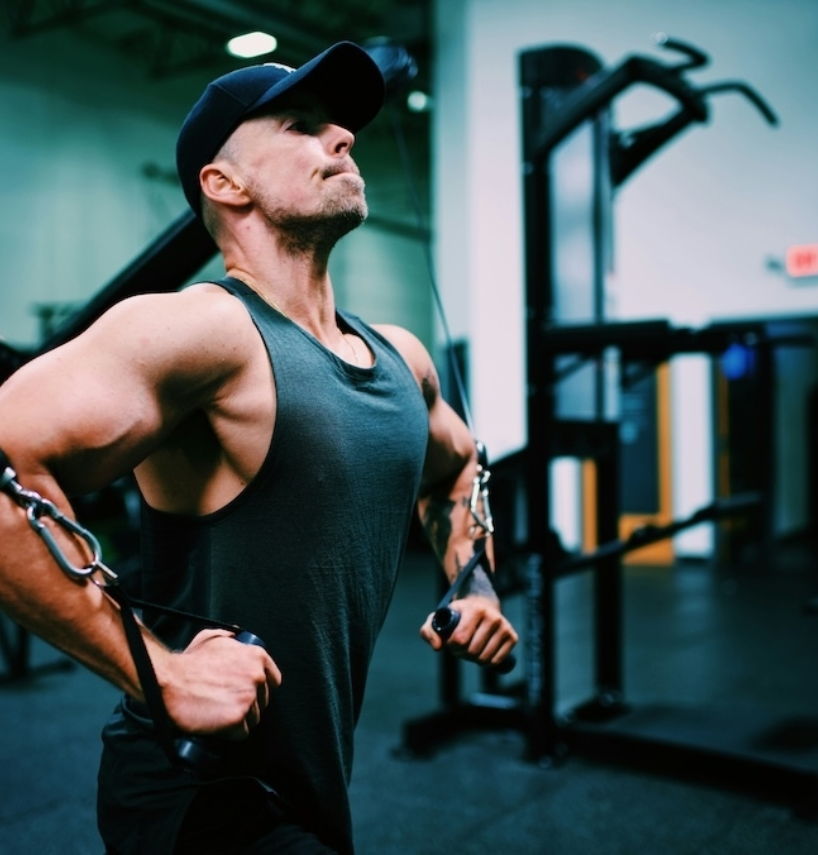
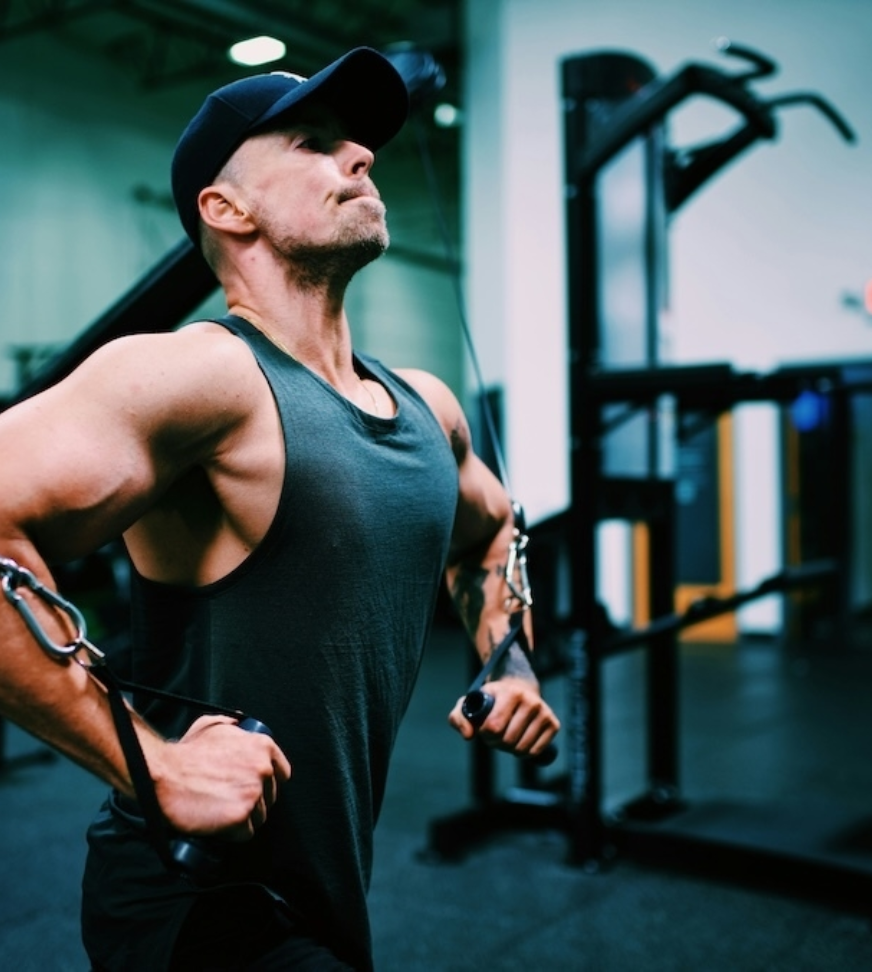
The 7 Best Chest Exercises
The chest grows best when you mix a few heavy presses with some controlled isolation movements. Here’s a quick look at the seven exercises we’ll cover in this guide:
The 7 best chest exercises
- Barbell bench press: a strong, stable press that works the whole chest
- Incline dumbbell press: great for building the upper chest
- Weighted chest dips: effective for strengthening the lower chest
- Dumbbell bench press: a natural-feeling press with a deep stretch
- Machine chest press: easy to control and gentle on the joints
- Middle cable chest fly: isolates the chest with smooth, steady tension
- Weighted push-ups: a simple but powerful bodyweight chest exercise
These seven movements give you everything you need for complete chest development.
Built for progress
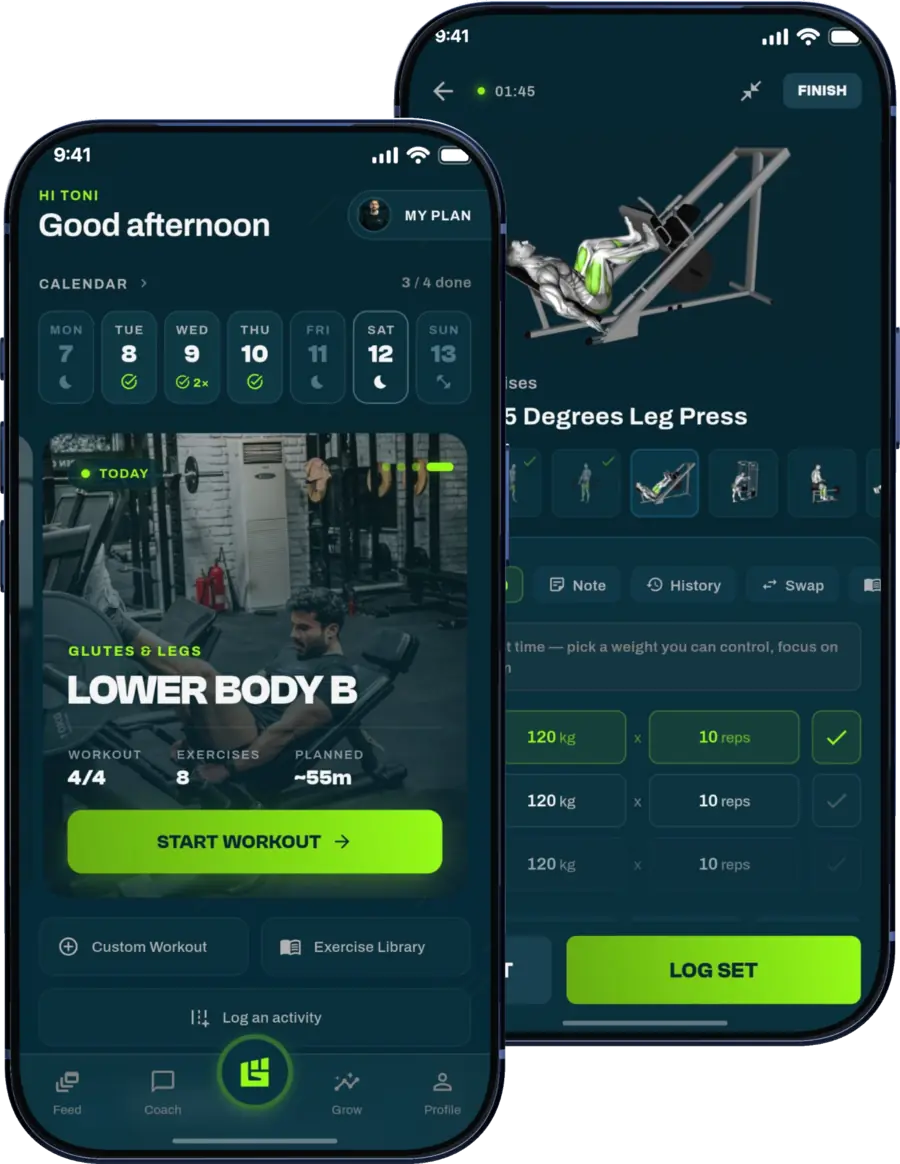
Take the guesswork out of training
Get a personalized workout plan built around your goal, equipment and schedule. Train smarter, track every rep and keep moving forward, one workout at a time.






Step-by-step guide
A classic strength builder for a fuller, stronger chest
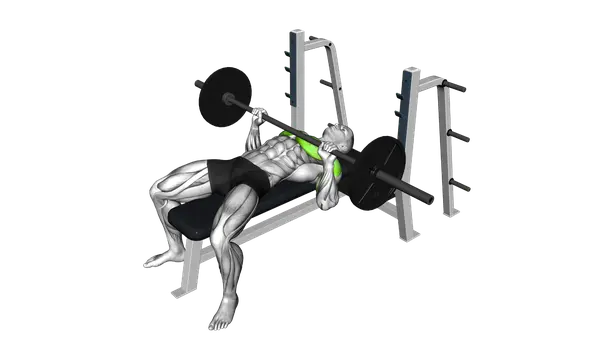
The Barbell Bench Press is the foundation of many chest routines for a simple reason: it lets you lift heavy with a stable, controlled movement. Because both arms press together on a fixed bar path, most lifters can apply more force compared to dumbbells. This creates strong mechanical tension: one of the most effective drivers of muscle growth.
The bench press mainly targets the mid chest, but the upper chest, shoulders, and triceps all contribute to the lift. This combination makes it a reliable choice whether you’re training for strength, size, or general upper-body development.
Why this exercise works
- Supports heavy loading, which creates strong muscle-building tension
- Places the chest under a deep stretch at the bottom of the movement
- Uses a stable bar path that’s easy to repeat and progress over time
- Trains multiple chest regions in one natural pressing pattern
How to perform the barbell bench press:
- Lie on the bench with your eyes directly under the bar. Plant your feet firmly on the floor and pull your shoulder blades back and down to create a stable base.
- Grip the bar slightly wider than shoulder width, keeping your wrists stacked above your elbows.
- Lift the bar out of the rack and hold it above your mid-chest with straight arms.
- Inhale and lower the bar with control toward the mid-chest, keeping your elbows at roughly a 45° angle.
- Push your feet into the floor, brace your core, and press the bar back up until your arms are fully extended.
Technique tips
- Keep a natural arch in your lower back: supportive, not exaggerated
- Maintain tight shoulder blade retraction throughout the entire set
- Let the bar follow a slight arc from chest to lockout for a comfortable bar path
- Control the lowering phase to increase tension and improve stability
- Think “press through the chest” rather than just moving the bar
A controlled pressing movement that targets the upper chest
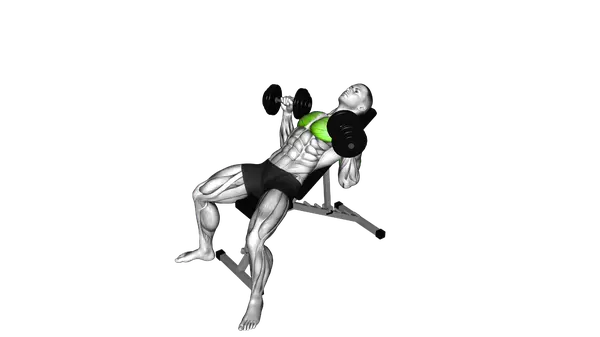
The Incline Dumbbell Press is one of the most effective ways to build the upper chest. By pressing at a slight incline, you shift more of the work toward the upper portion of the pectoral muscle. Dumbbells also allow each arm to move independently, creating a more natural path and letting you achieve a deeper stretch than you would with a barbell. This combination of freedom, stability, and stretch makes the incline dumbbell press a key movement for anyone aiming to improve upper-chest size, shape, and strength.
Why this exercise works
- Places the upper chest under a strong stretch at the bottom
- Allows a natural arm path that reduces shoulder stress
- Uses independent loading to correct left-right imbalances
- Challenges the chest through a longer, more controlled range of motion
How to perform the incline dumbbell press
- Set your bench to a low incline (25–35°) and sit back with dumbbells resting on your thighs.
- Lean backward and guide the dumbbells into position above your shoulders with straight arms.
- Lower the dumbbells out to the sides of your chest, keeping your elbows slightly tucked.
- Allow the dumbbells to reach a comfortable stretch at the bottom.
- Press upward in a slight inward arc until your arms are extended, keeping your chest lifted throughout.
Technique tips
- Keep your shoulders pulled back to maintain upper-chest tension
- Use a bench angle that targets the chest, not the shoulders
- Avoid touching the dumbbells at the top — maintain constant tension
- Think about pushing “up and in” rather than straight upward
Step-by-step guide
A powerful lower-chest builder with a deep stretch
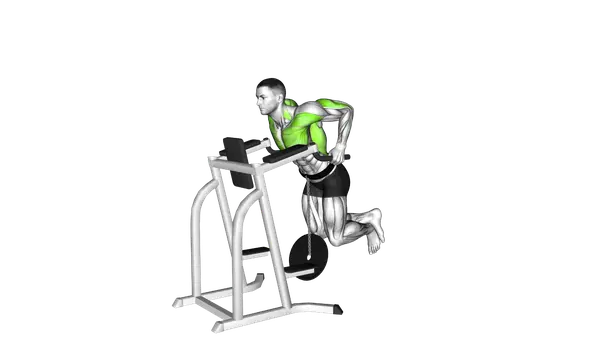
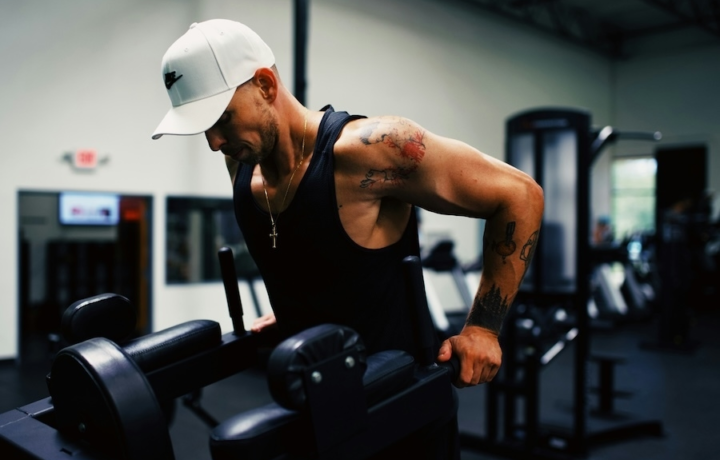
Weighted Chest Dips are one of the strongest movements you can use to develop the lower chest. By leaning your torso slightly forward and following a downward pressing angle, you target the lower portion of the chest while also challenging the triceps and shoulders. Dips provide a deep stretch at the bottom and allow you to add weight easily, making them a great progression tool for long-term strength and muscle gain.
Why this exercise works
- Emphasizes the lower chest through a natural downward pressing angle
- Allows for heavy loading with a dip belt or bodyweight progression
- Provides a deep stretch that’s difficult to achieve with other chest movements
- Recruits multiple upper-body muscles for strong overall development
How to perform weighted chest dips
- Grip the dip bars and lift yourself to the starting position with elbows slightly bent.
- Lean your torso forward and bring your legs slightly behind you to shift tension to the chest.
- Lower your body slowly while keeping your elbows gently flared.
- Descend until you feel a comfortable stretch in the lower chest and shoulders.
- Press yourself back up by driving your chest forward through the movement.
Technique tips
- Keep a forward lean to maintain chest emphasis
- Lower with control to protect the shoulders
- Avoid locking out aggressively at the top
- Focus on moving your torso through space, not just your arms
Step-by-step guide
A balanced pressing exercise with a deeper stretch than the barbell
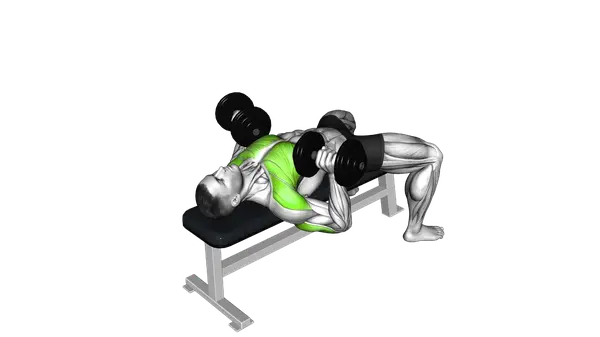
The dumbbell bench press offers a smoother, more natural pressing pattern compared to the barbell. Each arm moves independently, allowing your shoulders and elbows to find a comfortable path. This freedom often leads to a stronger mind-muscle connection and a deeper stretch at the bottom, which is especially effective for chest growth.
It’s an excellent alternative or companion to the barbell bench press, especially for lifters who want more range of motion and balanced left-right activation.
Why this exercise works
- Provides a deep, controlled stretch at the bottom
- Reduces shoulder stress through a natural arm path
- Helps correct muscle imbalances between sides
- Maintains tension through the full range of motion
How to perform the dumbbell bench press
- Sit on the bench with dumbbells resting on your thighs.
- Lean back and guide the dumbbells into position above your chest with straight arms.
- Lower the dumbbells outward in a wide arc, keeping elbows at a comfortable angle.
- Allow the weights to reach a natural stretch at the bottom.
- Press upward in a smooth arc until your arms are extended without touching the dumbbells together.
Technique tips
- Keep your wrist in line with your forearm for stability
- Avoid dropping the dumbbells too low beyond your natural range
- Maintain shoulder retraction to keep tension in the chest
- Control the descent for stronger activation
Step-by-step guide
A stable and joint-friendly press for focused tension
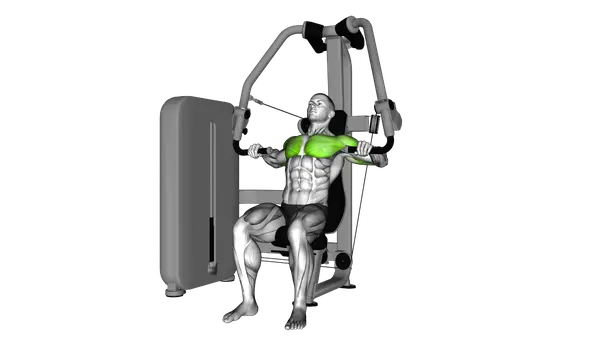
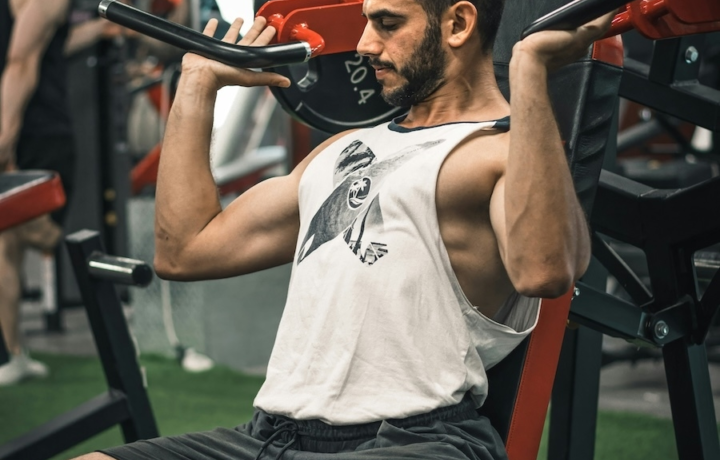
The Lever Chest Press is one of the most accessible and joint-friendly ways to train the chest. The guided path removes the need for stabilization, allowing you to focus entirely on pressing force and maintaining tension. This makes it especially useful later in a workout when your stabilizing muscles are fatigued. Whether you’re training for strength or hypertrophy, the machine press provides a controlled environment to push close to failure safely.
Why this exercise works
- Removes stability demands so you can focus purely on chest activation
- Supports consistent technique with every rep
- Ideal for high-tension work and training close to failure
- Reduces stress on shoulders compared to free-weight pressing
How to perform the machine chest press
- Adjust the seat so the handles sit at mid-chest height.
- Sit with your back against the pad and shoulders pulled back.
- Grip the handles lightly to avoid overusing your forearms.
- Press the handles forward in a steady motion until your arms are extended.
- Lower the weight slowly, keeping your chest engaged throughout.
Technique tips
- Keep your back flat against the pad for stability
- Don’t let your shoulders roll forward on the eccentric
- Maintain a controlled tempo to maximize tension
- Use a full range of motion without overextending your elbows
Step-by-step guide
A controlled isolation movement that targets the mid and inner chest
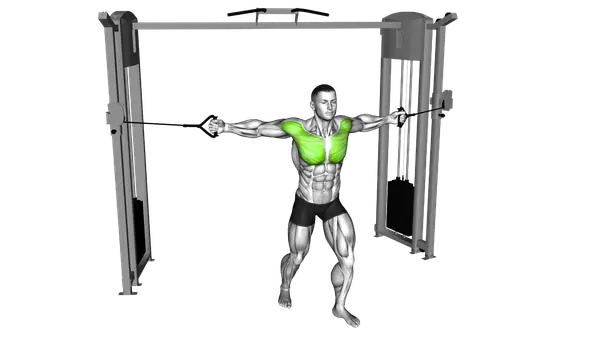
The Middle Cable Chest Fly is one of the most effective isolation movements for building the mid and inner chest. Unlike dumbbell flies, cables provide constant tension throughout the entire range of motion, allowing you to control both the stretch and the squeeze with precision. By setting the pulleys at chest height, you mimic the natural horizontal adduction pattern of the pecs — the exact function the muscle was designed for. This makes the middle cable fly especially useful for enhancing chest shape, definition, and symmetry.
Why this exercise works
- Places direct tension on the mid chest through a natural horizontal movement
- Provides consistent resistance from the stretch to the peak contraction
- Allows precise control over arm path and range of motion
- Emphasizes inner-chest development due to strong adduction
How to perform the middle cable chest fly
- Set both pulleys at chest height and take a small step forward with a staggered stance.
- Hold the handles with a slight bend in your elbows, keeping your chest lifted.
- Pull your hands together in front of your chest in a smooth horizontal arc.
- Squeeze your chest at the point where your hands meet.
- Slowly return to the starting position, allowing your chest to stretch while keeping your elbows fixed.
Technique tips
- Keep your arms slightly rounded as if hugging a wide tree
- Avoid turning the fly into a press: elbows should stay in the same angle
- Stand tall and keep your chest up to maintain the ideal line of pull
- Control the tempo, especially on the stretch portion of the rep
- Focus on bringing your biceps toward each other, not your hands
Step-by-step guide
A scalable bodyweight press that delivers high chest activation
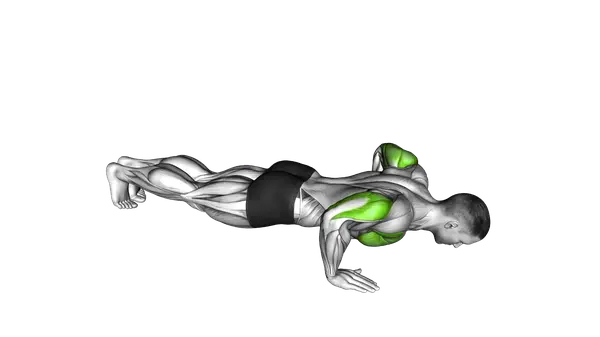
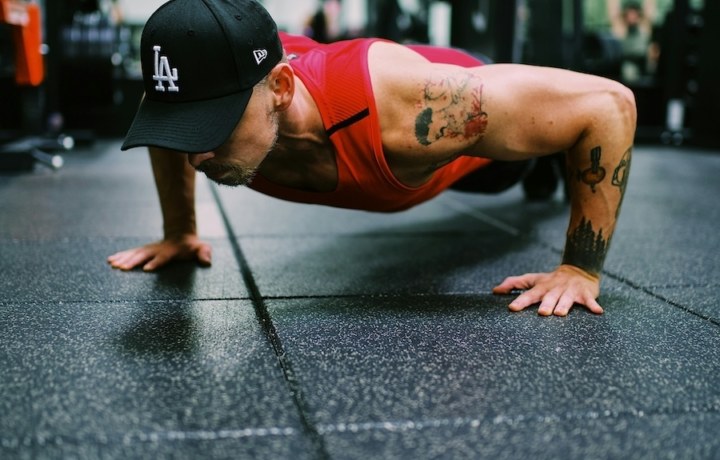
The push-up is a classic movement that remains one of the most effective chest builders: especially when you add external load. Weighted push-ups allow you to increase resistance while keeping the natural movement pattern that makes push-ups so joint-friendly. This variation challenges the mid and lower chest while also engaging your shoulders, triceps, and core, making it a versatile tool for both beginners and advanced lifters.
Why this exercise works
- Uses a natural pressing pattern that’s easy on the joints
- Allows progressive overload with plates, vests, or bands
- Trains the chest through a long range of motion
- Integrates core strength and full-body stability
How to perform the weighted push-up
- Place your hands slightly wider than shoulder width with your body in a straight line.
- Brace your core and lower your chest toward the floor, keeping elbows close to your sides.
- Descend until your chest is just above the ground.
- Press back up by driving through your chest and triceps.
- Add a plate or band across your back to increase resistance as you progress.
Technique tips
- Keep your hips in line with your shoulders to avoid sagging
- Focus on a full range of motion for better activation
- Maintain tension through your core to stay stable
- Think about pushing the floor away from you through your chest
To make it easier to see how these exercises compare, the table below summarizes the main benefits and focus areas of all seven movements. Use it as a quick guide to decide which exercises match your goals and training style.
Chest exercise summary table
| Exercise | Benefit | What it targets | Best used for |
|---|---|---|---|
| Barbell bench press | Highest overall strength potential | Mid chest, upper chest, triceps | Building full-chest mass and pressing power |
| Incline dumbbell press | Natural path with strong upper-chest emphasis | Upper chest | Improving upper-chest size and shape |
| Weighted chest dips | Deep stretch and heavy loading in downward angle | Lower chest | Developing thickness and strength in the lower chest |
| Dumbbell bench press | Greater stretch and balanced activation | Mid chest, stabilizing muscles | Adding controlled hypertrophy with more range of motion |
| Machine chest press | Stable and joint-friendly | Entire chest depending on grip/seat setup | Training safely near failure with constant tension |
| Middle cable chest fly | Smooth isolation with strong squeeze | Mid chest, inner chest | Enhancing definition and chest contraction control |
| Weighted push-ups | Scalable and accessible with full-body stability | Mid chest, lower chest | Home/gym versatility and strength endurance |
Final thoughts: building a stronger chest safely and effectivelyv
Developing a strong and well-shaped chest doesn’t come from doing dozens of random exercises: it comes from practicing a few movements consistently and with good technique. The seven exercises in this guide cover every key function of the chest: heavy horizontal pressing, incline pressing, bodyweight strength, and controlled fly movements for definition. If you’re just starting out, begin with one pressing movement and one fly variation. Focus on technique first, then slowly increase the load or reps over time.
More advanced lifters can use a wider mix of presses and flies to challenge the chest from different angles. Training your chest 1–2 times per week, using 2–4 exercises per session, is enough for most people to see steady progress. Combine this approach with controlled reps, a full range of motion, and patience: and your strength and size will follow.
FAQ: answers to common questions about the best chest exercises
This usually happens when your shoulders take over the movement. To shift the focus back to your chest, try:
- retracting your shoulder blades before each set
- lowering the weight with more control
- keeping elbows slightly tucked instead of flared
- using a full, comfortable range of motion
- choosing a bench angle that doesn’t shift tension to the front delts
With better setup and positioning, chest activation increases and shoulder strain decreases.
Most people benefit from training chest 1–2 times per week, with enough recovery time between sessions.
For most lifters, 2–4 exercises per session is ideal. Start with one heavy pressing movement (like a bench press or machine press), followed by one or two lighter presses or fly variations. Doing more than 4 exercises usually adds fatigue without better results. Quality of reps and control matter far more than the total number of movements.
Beginners often see the fastest progress with exercises that are easy to control and safe to learn, such as the machine chest press or dumbbell bench press. These allow you to focus on technique, range of motion, and stability without worrying too much about balance or bar path. Once you’re comfortable, you can progress to barbell pressing or dips.
Not necessarily — the chest works as one large muscle, but different angles emphasize different regions. A mix of flat presses, incline presses, and dips or cable fly movements is enough to develop the chest evenly. You don’t need a separate day for each part; simply including a variety of angles across your weekly training is more than enough for balanced growth.
All three work — they just do different jobs.
- Barbells are great for lifting heavy and building overall strength.
- Dumbbells improve stability, range of motion, and left–right balance.
- Machines allow you to safely push close to failure with consistent tension.
A combination of these tools usually produces the best long-term results.
Most chest exercises respond well to a moderate rep range (6–12 reps). Heavy presses can be done for fewer reps, while fly movements often work best at 10–15 reps to keep tension on the muscle. The most important part is that you train close enough to failure that the last few reps challenge you.
Chest related workouts
Get inspired and motivated