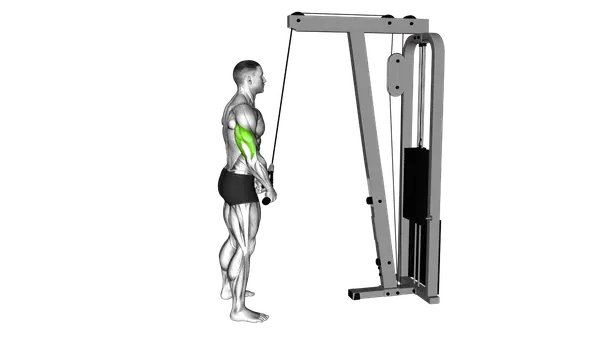
Back
Weighted Tricep Dips
Add to Workout

Weighted Tricep Dips

Build

How to Perform

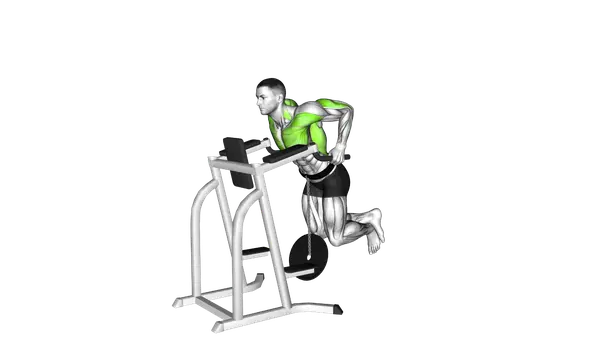
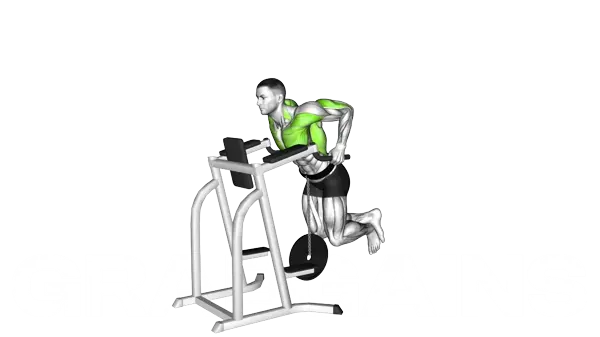
  1. Position yourself between parallel bars with your hands gripping the bars at shoulder width, fingers forward, and arms straight to support your body weight.
  2. Add the weighted plate to your lap by crossing your legs and securing it between your thighs, or use a dip belt around your waist with the weight attached.
  3. Keep your torso upright or slightly leaned forward (about 5-10 degrees) with shoulders pulled back and down to engage your triceps optimally.
  4. Inhale as you slowly lower your body by bending your elbows until they reach approximately 90 degrees, maintaining control throughout the descent.
  5. Keep your elbows pointing backward rather than flaring out to the sides to maximize tricep engagement and minimize shoulder strain.
  6. Pause briefly at the bottom position while maintaining tension in your triceps and keeping your shoulders away from your ears.
  7. Exhale forcefully as you push through your palms to extend your elbows and raise your body back to the starting position.
  8. Straighten your arms completely at the top of the movement to fully contract your triceps, but avoid locking out your elbows or shrugging your shoulders.

Important information

  • Start with lighter weights and gradually increase as your strength improves to prevent injury and maintain proper form.
  • Keep your core braced throughout the entire movement to stabilize your body and protect your lower back.
  • Avoid excessive forward lean which shifts emphasis to the chest rather than the triceps.
  • If you experience wrist, elbow or shoulder pain, reduce the weight or consider alternative tricep exercises until your form is perfected.

Exercise Details

Primary Muscles

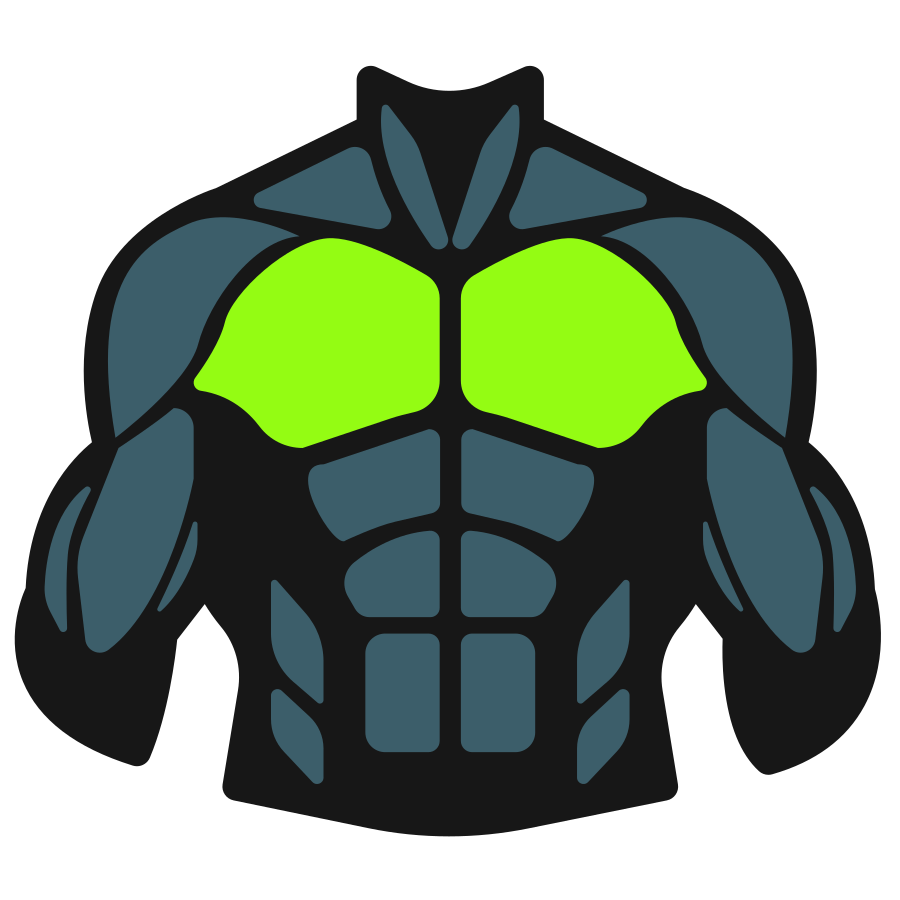
Triceps Pecs

Muscle Groups

Arm exercises Chest exercises

Mechanic

Compound

Risk Areas

Triceps

Built for progress

Take the guesswork out of training

Create personalized AI-powered workout plans that evolve with you. Train smarter, track every rep and keep moving forward, one workout at a time.

Be among the first to join!
GrabGains workout plans

Weighted Tricep Dips stand as a formidable evolution of the classic bodyweight dip, challenging even intermediate fitness enthusiasts to push their upper body development to new heights. This compound movement primarily targets the triceps brachii—those horseshoe-shaped muscles at the back of your arms—while simultaneously engaging the pectoral muscles for comprehensive upper body strength.

The beauty of weighted dips lies in their versatility across training styles. In bodybuilding circles, they're revered for their ability to add impressive mass and definition to the triceps and lower chest when performed with moderate weight and controlled tempo. Meanwhile, HIIT enthusiasts incorporate lighter weighted variations with higher repetitions to simultaneously build strength and elevate cardiovascular output during intense circuit training.

What sets weighted dips apart from other triceps exercises is the significant mechanical tension they create through a full range of motion. The added resistance—whether from a dip belt, weighted vest, or dumbbell held between the knees—intensifies the strength-building stimulus, promoting greater muscle fiber recruitment than bodyweight versions alone. This makes them particularly effective for breaking through strength plateaus when conventional pushing movements no longer provide adequate challenge.

For those serious about developing impressive arm definition, weighted dips offer unparalleled triceps activation. The exercise creates substantial time under tension through the eccentric (lowering) phase, triggering the microscopic muscle damage necessary for growth and repair. This makes them an excellent complement to pressing movements like bench press and overhead press in a comprehensive strength program.

While certainly not a beginner movement, weighted dips represent a worthy progression for those who've mastered bodyweight variations and are looking to continue their strength development. The exercise's ability to simultaneously build functional pushing power while sculpting aesthetically pleasing arms and chest makes it a time-efficient choice for intermediate lifters with serious training goals.

FAQ - Weighted Tricep Dips

What muscles do weighted tricep dips target?

Weighted tricep dips primarily target the triceps brachii (all three heads), while also engaging the chest (particularly the lower pectorals), front deltoids, and core stabilizers. The added resistance intensifies muscle fiber recruitment throughout the posterior upper body, making it one of the most effective compound movements for triceps development.

How can I safely add weight to my dips?

The safest method is using a proper dip belt that hangs weight plates between your legs, distributing the load evenly. Alternatives include holding a dumbbell between your feet, wearing a weighted vest, or using a backpack with weight—just ensure the weight is secure and doesn't shift during the movement to prevent injury.

How many weighted dips should I perform per set?

For strength and muscle building, aim for 3-4 sets of 6-10 reps with challenging weight that allows proper form throughout each rep. If your goal is muscular endurance, perform 2-3 sets of 12-15 reps with lighter weight. Always prioritize perfect technique over adding more resistance.

What are the most common form mistakes with weighted dips?

The most common errors include insufficient depth (not lowering until upper arms are parallel to the floor), excessive forward lean (which shifts emphasis to chest rather than triceps), and bouncing at the bottom position. Also watch for shrugging your shoulders toward your ears, which can strain your neck and reduce triceps activation.

How often should I incorporate weighted dips into my training?

Include weighted dips 1-2 times weekly with at least 48 hours between sessions to allow for proper recovery. Place them early in your push or arm workout when your energy is highest, and adjust frequency based on your overall training volume and recovery capacity.
Alternative Exercises

Stability Ball Pike Push-Up

Stability Ball Pike Push-Up

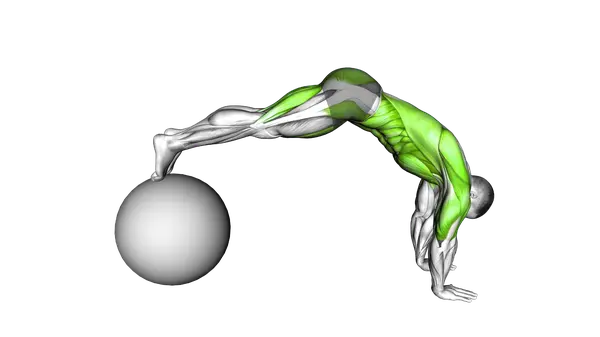
The Stability Ball Pike Push-Up stands as a formidable challenge in the realm of advanced bodyweight training, elevating the traditional push-up to an entirely new dimension of difficulty. This movement seamlessly blends shoulder strength development with core stabilization, making it a powerful addition to any serious fitness enthusiast's repertoire. This exercise primarily targets the front deltoids, the anterior portion of your shoulders responsible for that coveted capped look, while simultaneously engaging the triceps as crucial secondary movers. What truly sets this exercise apart, however, is the extraordinary core engagement required to maintain proper positioning throughout the movement. Perfect for integration into high-intensity interval training sessions or CrossFit WODs, the Stability Ball Pike Push-Up delivers maximum stimulus with minimal equipment. The instability factor introduces an element that traditional gym machines simply cannot replicate, forcing your body to recruit stabilizing muscles throughout your entire kinetic chain. Bodybuilders also appreciate this movement for its ability to isolate and sculpt the shoulders while maintaining functional strength patterns. The compound nature of this exercise makes it particularly effective for developing practical, real-world strength. As you progress with this movement, you'll notice improvements in overhead pressing power, core stability, and overall body control. The intense demand placed on your core musculature creates a synergistic effect, enhancing total-body strength beyond what isolated movements can achieve. For those seeking to break through plateaus in their fitness journey, the Stability Ball Pike Push-Up represents an excellent progression tool. The instability of the ball coupled with the inverted body position creates a unique challenge that forces muscular adaptation. This exercise embodies the principle that true strength isn't just about moving weight: it's about controlling your body through space with precision and power.

Strength
Core
HIIT
Crossfit
+1
Stability ball
High Pulley Overhead Tricep Extension

High Pulley Overhead Tricep Extension

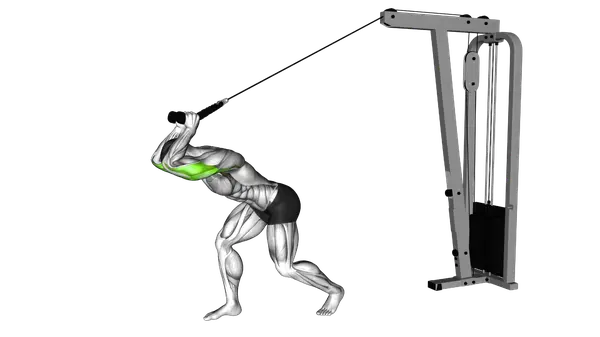
The High Pulley Overhead Tricep Extension stands as a quintessential isolation movement for anyone serious about developing their triceps. This intermediate-level exercise has earned its place in countless bodybuilding and strength training programs due to its effectiveness at targeting the triceps brachii with remarkable precision. When you're looking to add definition and power to the back of your arms, this movement delivers consistent results by emphasizing the long head of the triceps—the largest portion of the muscle that significantly contributes to that coveted horseshoe appearance. The beauty of using the cable pulley system lies in the constant tension it provides throughout the entire range of motion, something free weights simply cannot replicate with the same efficiency. For intermediate lifters who have mastered basic tricep movements, the High Pulley Overhead Extension offers the perfect progression to continue challenging these muscles. The exercise excels at isolating the triceps while minimizing involvement from supporting muscle groups, making it particularly valuable for bodybuilders seeking targeted hypertrophy in their arm development strategy. Strength athletes benefit from this movement as well, as stronger triceps translate to improved performance in pressing movements like the bench press and overhead press. The overhead position specifically trains the triceps in a stretched state, which research suggests may optimize muscle growth and development of functional strength through a complete range of motion. While primarily known as a bodybuilding staple, this exercise bridges the gap between aesthetic-focused training and practical strength development. The controlled nature of the movement allows for focused mind-muscle connection—a critical component for maximizing growth stimulus in any resistance training program. Whether incorporated into an arm-specific training day or as a finishing movement in a push workout, the High Pulley Overhead Tricep Extension delivers exceptional value for intermediate lifters committed to building impressive, powerful arms.

Strength
Bodybuilding
Cable
Push-Up to Renegade Row

Push-Up to Renegade Row

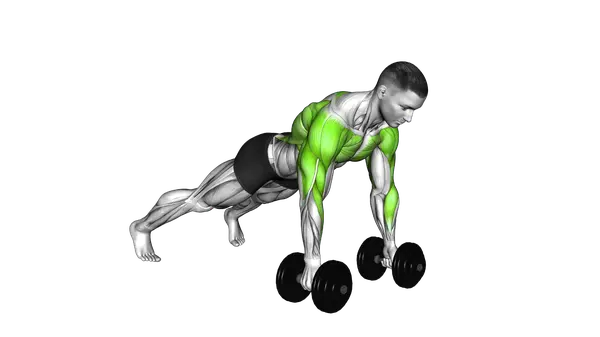
The Push-Up to Renegade Row combines two powerful compound movements, creating an intermediate-level exercise that delivers remarkable bang for your buck in minimal time. This dynamic pairing targets multiple major muscle groups simultaneously, with primary activation in the pectoral muscles, triceps, and anterior deltoids during the push-up phase, then shifting focus to the latissimus dorsi during the row component. What makes this exercise particularly effective is its ability to transition seamlessly between pushing and pulling patterns, creating a comprehensive upper body challenge that also demands significant core stability throughout the entire movement sequence. The stabilizing effects reach beyond just the primary movers, engaging the rotational muscles of the core, rhomboids, and even the lower body as you maintain a rigid plank position. Athletes across various disciplines incorporate this exercise into their regimens for different purposes. HIIT enthusiasts appreciate its cardiovascular demands when performed with pace, while CrossFit athletes value its functional strength carryover to more complex movements. Bodybuilders might employ slower, more controlled variations to maximize time under tension for muscle hypertrophy. From a strength development perspective, the Push-Up to Renegade Row builds balanced upper body power while addressing common weaknesses in core anti-rotation capabilities. This makes it particularly valuable for athletes seeking to improve performance while reducing injury risk. The unilateral component of the row helps identify and correct strength imbalances between sides. Research suggests that multi-planar exercises like this one promote greater neuromuscular coordination than single-plane movements alone, potentially enhancing overall athletic performance. The intensity can be easily modified through weight selection, rep schemes, and tempo manipulation, making it adaptable to various fitness levels despite its intermediate classification. Whether you're looking to build functional strength, enhance muscle definition, or improve athletic performance, the Push-Up to Renegade Row deserves consideration as a time-efficient addition to your training arsenal.

Strength
HIIT
Crossfit
+1
Dumbbell
Rope Tricep Extension

Rope Tricep Extension

The Rope Tricep Extension stands as one of the most effective isolation exercises for developing impressive triceps definition and strength. This intermediate-level movement has earned its place as a staple in bodybuilding routines for decades, targeting all three heads of the triceps brachii with particular emphasis on the medial and lateral heads. Unlike compound movements that distribute tension across multiple muscle groups, the Rope Tricep Extension creates focused stress directly on the triceps, making it ideal for those looking to add specific detail and size to the back of their arms. The use of a rope attachment provides a unique advantage by allowing natural wrist rotation throughout the movement, reducing unnatural stress on the joints while maximizing muscle fiber recruitment. For bodybuilders specifically, this exercise offers remarkable versatility within a training program. It can be positioned early in a workout for heavier loading when triceps are fresh, or saved for the finale to achieve that coveted muscle pump and metabolic stress necessary for hypertrophy. The exercise responds well to various rep ranges: lower reps with heavier weight for strength development, or higher rep schemes for muscular endurance and that skin-splitting pump. What makes the Rope Tricep Extension particularly valuable in a strength-building context is its ability to strengthen the lockout portion of pressing movements. Athletes who struggle with the final phase of bench presses or overhead presses often find that dedicated tricep work through extensions directly translates to improved performance in these compound lifts. While seemingly straightforward, mastering the mind-muscle connection with this movement transforms it from a simple accessory exercise into a powerful triceps developer. The adaptability of this exercise makes it suitable for training cycles focused on strength, hypertrophy, or even endurance, securing its position as a cornerstone movement for anyone serious about developing impressive, functional triceps.

Strength
Bodybuilding
Cable