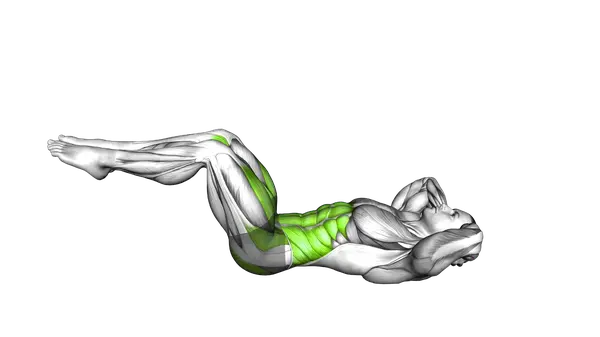
Abdominal Air Bike
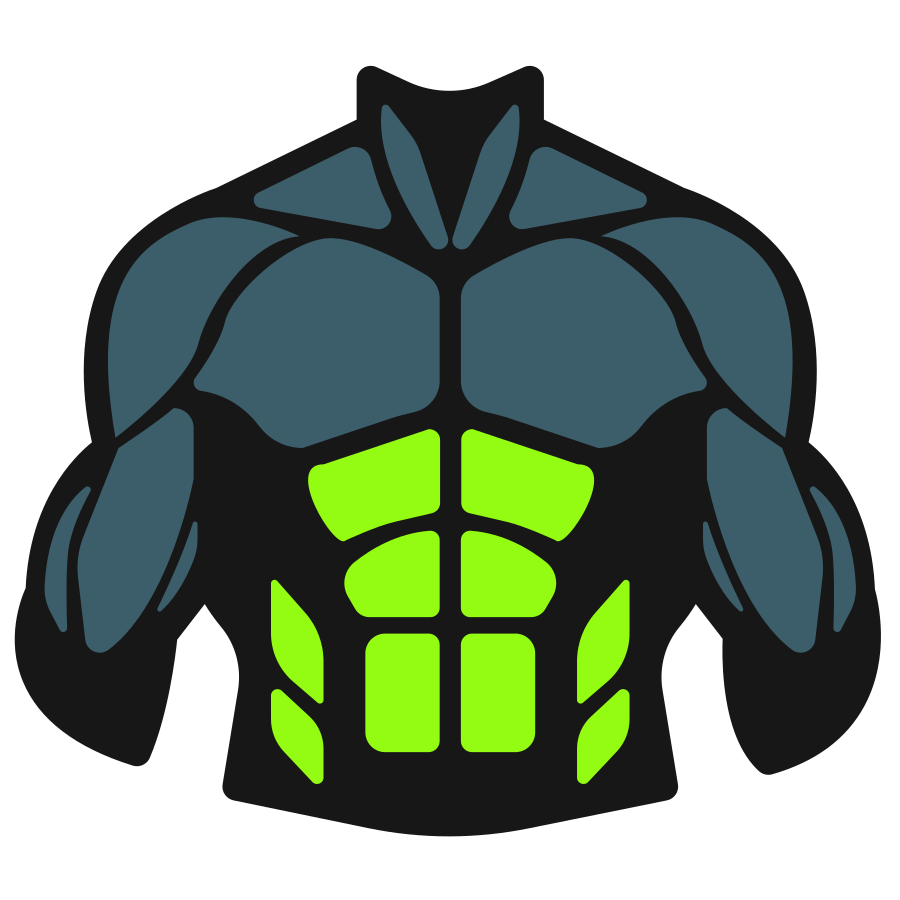
Muscles Worked: Abdominal Air Bike
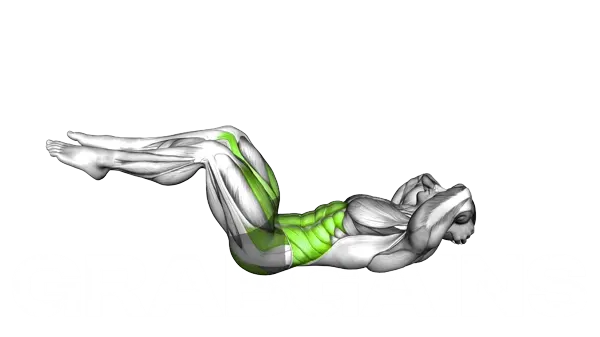
The Abdominal Air Bike mainly challenges your abs by repeatedly flexing and bracing the trunk while your legs cycle through each rep. Your obliques drive the side-to-side rotation that brings each shoulder toward the opposite knee, making them the key muscles for the twisting pattern. The hip flexors assist by lifting the legs, but keeping the ribs down helps shift more work back to the trunk. A steady tempo and full exhale on each twist can raise the conditioning demand, which matters because interval-style efforts improve endurance-related adaptations.
Built for progress
Take the guesswork out of training
Get a personalized workout plan built around your goal, equipment and schedule. Train smarter, track every rep and keep moving forward, one workout at a time.






Technique and form
How to perform the Abdominal Air Bike
- Lie on your back with hands behind your head, elbows flared out to the sides, and knees bent at 90 degrees.
- Lift your shoulder blades off the ground by engaging your core muscles while keeping your lower back pressed into the floor.
- Bring your right elbow toward your left knee while simultaneously extending your right leg straight out, keeping it a few inches off the ground.
- Exhale as you perform this twisting motion, focusing on the contraction in your oblique muscles.
- Return to the starting position with both knees bent at 90 degrees and shoulder blades slightly elevated.
- Repeat the movement on the opposite side, bringing your left elbow to your right knee while extending your left leg.
- Continue alternating sides in a fluid, controlled pedaling motion while maintaining tension in your abdominals throughout the exercise.
- Keep your breathing steady and rhythmic, exhaling during the effort phase when your elbow meets your opposite knee.
Important information
- Keep your lower back pressed firmly against the floor throughout the entire exercise to protect your spine.
- Focus on the rotation coming from your torso rather than just moving your arms and legs.
- Maintain a consistent pace rather than rushing through repetitions to maximize muscle engagement.
- If you experience neck strain, lightly support your head with your hands but avoid pulling on your neck.
Is Abdominal Air Bike effective for endurance?
Yes. The Abdominal Air Bike is more useful for local muscular endurance and trunk conditioning than for maximal muscle growth because the load is limited to bodyweight and the exercise is usually performed for time or high reps. Higher-intensity repeated efforts are well established for improving endurance-related fitness markers, which supports using this movement in conditioning circuits rather than as a primary hypertrophy tool.
- Rotational endurance — Each rep combines trunk flexion with rotation, so the abs and obliques have to keep producing force as fatigue builds. That makes the exercise useful when your goal is to maintain torso control during longer sets instead of just producing one hard contraction.
- Continuous tension — Unlike crunch variations with a clear reset, the cycling leg action keeps the trunk under near-constant demand. That uninterrupted work raises the cardiovascular cost and teaches you to brace while breathing, which is why it fits well beside mountain climbers or dead bug in core circuits.
- Low external load, high repeatability — Because there is no equipment and setup is minimal, you can accumulate more total reps or work intervals without technical breakdown from heavy loading. That makes progression simple: add time, reps, or density before you add complexity.
- Best for fatigue resistance — Research on high-intensity training shows repeated hard efforts improve functional capacity and endurance outcomes, while studies linking larger neuromuscular changes to hypertrophy are generally based on high-intensity loading that this exercise does not provide.
Programming for endurance
Do 2-4 sets of 20-40 total reps or 30-45 seconds of work, resting 30-60 seconds between sets. Use it 2-4 times per week, either early in a core circuit for quality or late in a conditioning block to build fatigue resistance. Stop each set when trunk rotation shortens or your lower back starts taking over.
Alternative Exercises
FAQ - Abdominal Air Bike
The Air Bike primarily targets your rectus abdominis (six-pack muscles) and the internal/external obliques along your sides. It also engages your hip flexors and quadriceps as secondary muscles during the pedaling motion.
For an easier version, slow down your pace or decrease the range of motion in your legs. To increase difficulty, speed up your tempo, extend your legs further away from your body, or add small ankle weights for additional resistance.
The biggest mistakes include pulling on your neck instead of using core strength, rushing through repetitions with momentum, and failing to fully rotate your torso to engage the obliques. Focus on controlled movements while keeping your lower back pressed into the floor throughout the exercise.
You can safely perform Air Bikes 2-4 times per week as part of your core training. Allow at least 24-48 hours between intensive ab workouts to give your core muscles adequate recovery time for optimal strength development.
While Air Bikes are excellent for strengthening your core muscles, they alone cannot spot-reduce belly fat. Combine them with a comprehensive exercise program and proper nutrition to create the caloric deficit necessary for overall fat loss, which will eventually reveal your stronger abdominal muscles.
Abdominal Air Bike
Thank you for your feedback!
Thank you for your feedback!