Back
Ball Rolling for Front Thigh
Add to Workout

Ball Rolling for Front Thigh

Build

How to Perform

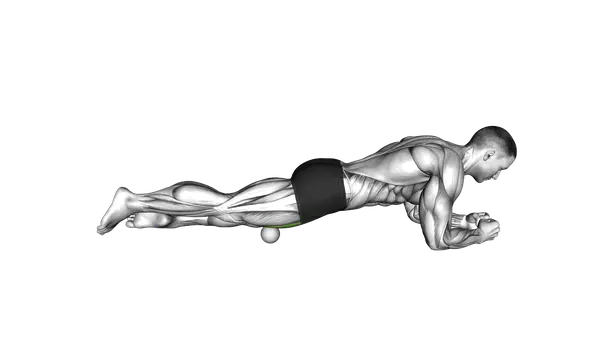
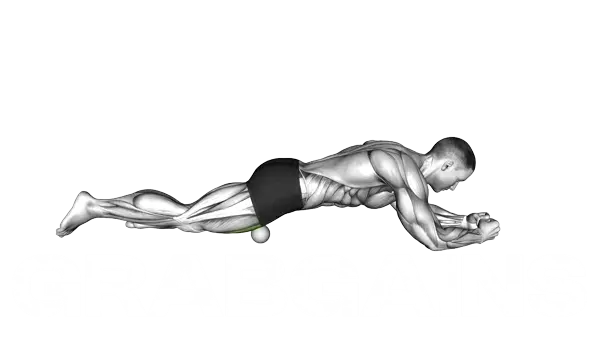
  1. Place a massage ball (lacrosse ball or similar firm ball) on the floor and lie face down with the ball positioned under the front of your thigh (rectus femoris muscle).
  2. Support your upper body weight by placing your forearms on the floor with elbows directly under your shoulders and maintain a neutral spine position. E
  3. Extend the leg that's not being worked to the side for stability and keep your core engaged throughout the movement.
  4. Use your forearms to control your body weight and slowly roll forward and backward, allowing the ball to move along the front of your thigh between your hip and just above your knee.
  5. When you find a sensitive spot (trigger point), pause and maintain pressure on that area for 20-30 seconds while taking deep breaths and allowing the muscle to relax.
  6. To increase pressure on tighter areas, lift your non-working leg slightly or shift more body weight onto the ball for deeper tissue release.
  7. Continue rolling for 1-2 minutes, ensuring you cover the entire length of the rectus femoris from hip to just above the knee, moving the ball to different areas of the muscle.
  8. Switch to the other leg and repeat the process, maintaining controlled breathing and keeping your core engaged for stability.
     

Important information

  • Avoid rolling directly over your knee joint or bones: focus on the muscle tissue between your hip and just above your knee.
  • Control your body weight through your forearms to regulate pressure: beginners should apply less pressure until tolerance builds.
  • Keep your movements slow and deliberate, allowing the tissue time to respond to the pressure from the ball.
  • If you experience sharp or shooting pain (rather than productive muscle discomfort), reduce pressure or consult with a healthcare professional.
  • The ball provides more targeted, intense pressure than a foam roller, so start gently and gradually increase pressure as needed.

Exercise Details

Primary Muscles

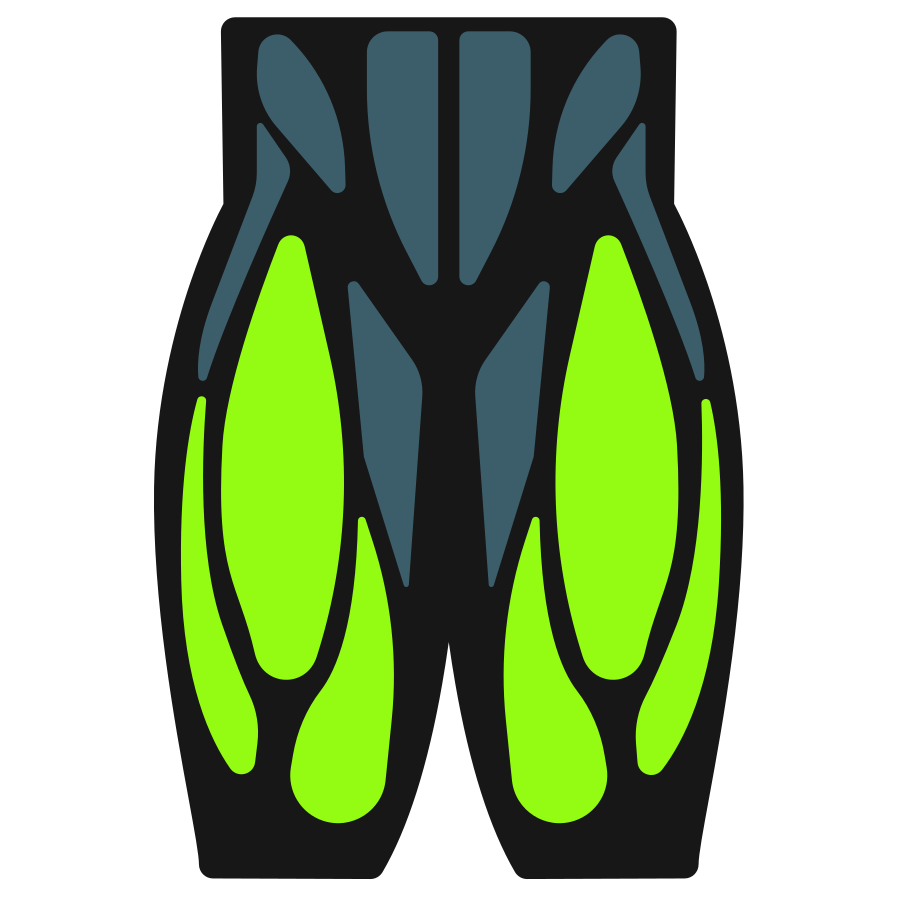
Quads

Muscle Groups

Leg exercises

Mechanic

Isolation

Built for progress

Take the guesswork out of training

Create personalized AI-powered workout plans that evolve with you. Train smarter, track every rep and keep moving forward, one workout at a time.

Be among the first to join!
GrabGains workout plans

Ball Rolling for Your Thigh Muscle is a simple and effective way to help relieve muscle tightness in the front of your thigh. This easy technique is perfect for beginners and works great before or after exercise. All you need is your body weight and a small firm ball, like a tennis ball or lacrosse ball. The muscle you're working on (called the rectus femoris) is special because it connects both your hip and knee, which means it gets tight easily from sitting too long or being active.

When you roll this muscle with a ball, it's like giving yourself a deep massage that helps loosen up knots and tight spots in your muscle. The pressure from the ball helps get more blood flowing to the area, which brings in good nutrients and helps remove waste that builds up in your muscles. This makes you feel less sore and helps you recover faster after exercise. The ball gives you more focused pressure than other tools, so you can really target those stubborn tight spots.

Using a ball regularly on this thigh muscle can make your legs feel much better and move more easily. When you release the tightness, you might notice it's easier to bend your knees, your hips feel looser, and everyday movements feel smoother. People who exercise often find they can squat deeper, run more comfortably, and jump better after making this part of their routine. The ball lets you work on exactly the spots that feel tight instead of just rolling over everything.

The great thing about using a ball for this muscle work is how simple and effective it is. Whether you're getting ready to exercise, cooling down afterward, or just want to feel better on a day off, this technique really helps. Since the ball is smaller than other massage tools, you can pinpoint exactly where you feel tight and work on those specific areas. Many healthcare professionals recommend this as a way to prevent common leg and knee problems, making it useful for anyone who wants to feel better and move more easily, regardless of how active they are.

FAQ - Ball Rolling for Front Thigh

What is my front thigh muscle and why should I use a ball on it?

Your front thigh muscle (called the quadriceps) is a large muscle group that helps you walk, run, and stand up. This muscle gets tight from sitting too long, exercising, or daily activities. Using a ball on it helps release tension, reduces stiffness, and makes your leg feel more comfortable and move better.

How often should I do ball rolling on my front thigh?

For general maintenance, 2-3 times per week is perfect. If you're very active or sit at a desk all day, you can do it daily. Each session should last 1-2 minutes per leg. It's great to do before exercise to prepare your muscles, or after exercise to help recovery.

What are the most common mistakes when ball rolling my front thigh?

The biggest mistakes are rolling too fast, using too much pressure right away, and rolling directly on bones or joints. Also, many people hold their breath - remember to breathe normally. Start gently and gradually increase pressure as your muscle gets used to it.

How do I know if I'm working on the right area?

You'll feel the ball on the front of your thigh between your hip and just above your knee. The muscle should feel firm under the ball. You might find tender spots - that's normal and shows you're working on areas that need attention. Avoid rolling directly on your kneecap or hip bone.

Can ball rolling my front thigh help me feel better during exercise?

Yes! Regular ball rolling can help you move more easily, reduce muscle stiffness, and may help prevent common leg problems. Many people notice they can squat deeper, their legs feel less tight during activities, and they recover faster after workouts. It's especially helpful if you sit a lot during the day.

Alternative Exercises

Lying (Side) Quadriceps Stretch

Lying (Side) Quadriceps Stretch

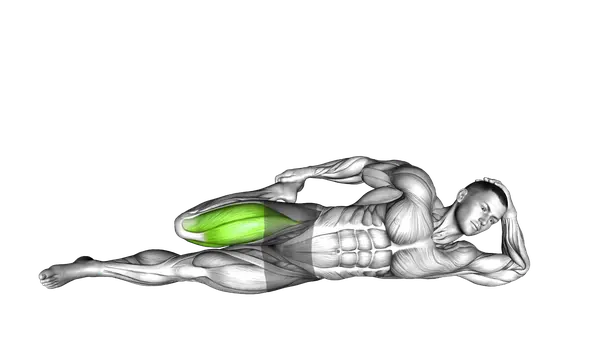
The Lying (Side) Quadriceps Stretch offers an excellent way to release tension in your quads while providing a deeper stretch than many standing variations. This beginner-friendly stretch targets the quadriceps muscles along the front of your thighs, making it perfect for recovery sessions, cool-downs after intense workouts, or as part of your warm-up routine when performed gently. What makes this stretch particularly effective is the side-lying position, which stabilizes your pelvis and allows for better isolation of the quadriceps muscle group. By stretching in this position, you're able to minimize compensation patterns that often occur during standing quad stretches, where people tend to arch their back or tilt their pelvis to avoid the full stretch sensation. The horizontal position also takes balance out of the equation, making this an accessible option for those with stability concerns. The stretch delivers significant mobility benefits for the hip flexors and knee joint in addition to the primary quad stretch. Regular practice can help counteract the tightness that develops from prolonged sitting, running, cycling, or strength training. Many athletes find that incorporating this stretch into their routine helps reduce anterior knee discomfort and improves overall movement quality in squats and lunges. For those engaged in regular strength training or high-impact activities, this stretch serves as valuable maintenance work, helping to preserve tissue quality and joint function. The passive nature of the position allows you to truly relax into the stretch, potentially achieving greater range of motion than more active stretching variations. While simple in execution, the Lying Side Quadriceps Stretch remains a staple in flexibility programs across fitness levels. Its effectiveness comes from its simplicity – sometimes the most basic approaches deliver the most reliable results when it comes to improving mobility and supporting recovery.

Stretching
Mobility
Recovery
Cool-down
+1
Bodyweight exercises
Foam Roller Tensor Fasciae Latae (TFL) Release

Foam Roller Tensor Fasciae Latae (TFL) Release

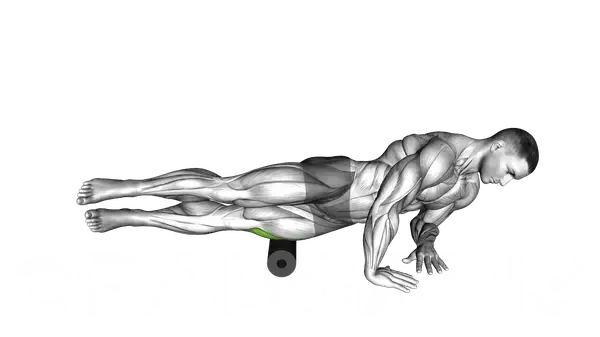
The Foam Roller Tensor Fasciae Latae Release is an effective way to relieve tension in the front and outer part of your hips. This small but important muscle, the tensor fasciae latae, works alongside the hip flexors and the iliotibial (IT) band to stabilize your pelvis during movement. Because it’s active in almost every lower-body exercise and even while walking or sitting, it often becomes overworked and tight. Using a foam roller helps reduce this tension, improving hip mobility and comfort during squats, running, or daily activities.When used before training, this release prepares your hips for movement by increasing blood flow and reducing stiffness in the connective tissue around the TFL and IT band. After workouts, it helps accelerate recovery by easing muscle tightness and improving circulation in the hip region. Regularly including this technique in your mobility routine can help prevent imbalances and reduce discomfort around the hips and knees.The strength of this mobility exercise lies in its simplicity. By targeting the tensor fasciae latae directly, you’re not only improving local flexibility but also promoting better movement patterns through the entire hip complex. Releasing tension in this area often eases strain on neighboring muscles such as the glutes, hamstrings, and lower back, leading to smoother, more efficient movement.Whether you’re new to foam rolling or experienced with recovery tools, the Foam Roller Tensor Fasciae Latae Release is easy to learn and self-regulated — you control the pressure and range. A few minutes of consistent practice can lead to noticeably freer hips, improved posture, and a lower risk of overuse injuries, proving that small, targeted recovery habits can make a big difference in overall performance.

Stretching
Mobility
Recovery
Cool-down
+1
Foam roller
Standing Wall Calf Stretch

Standing Wall Calf Stretch

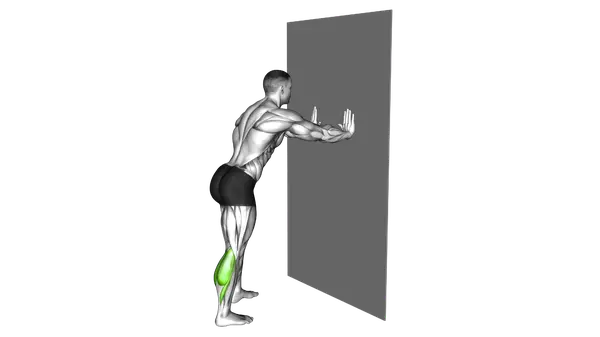
The Standing Wall Calf Stretch is a fundamental mobility exercise that serves as an excellent addition to any fitness routine, particularly for beginners looking to improve lower leg flexibility. This accessible stretch specifically targets the gastrocnemius and soleus muscles: collectively known as the calves, which often become tight from daily activities like walking, running, and even sitting for prolonged periods with feet in a flexed position. As a versatile recovery technique, this stretch can be seamlessly incorporated into your cool-down routine to help alleviate muscle tension after a workout. The gentle, sustained pressure helps to release lactic acid buildup and promotes better circulation to the working muscles, potentially reducing post-exercise soreness. Equally valuable as a warm-up element, the Standing Wall Calf Stretch prepares the lower legs for more intense activity by increasing tissue temperature and enhancing range of motion. The beauty of this stretch lies in its simplicity and effectiveness. By creating a controlled lengthening of the calf muscles, it addresses one of the most commonly tight areas in the body. Regular practice can contribute to improved ankle mobility, which translates to better performance in squats, lunges, and various athletic movements. For runners and walkers, maintaining flexible calves can help prevent overuse injuries such as Achilles tendinitis and plantar fasciitis. This stretch represents a perfect balance between stretching and mobility work: while it certainly elongates the muscle tissue for greater flexibility, it simultaneously improves the functional range of motion at the ankle joint. This dual benefit makes it particularly valuable for those with desk jobs or anyone who experiences calf tightness from daily activities. Whether you're an exercise novice or simply looking to maintain healthy tissue quality in your lower legs, the Standing Wall Calf Stretch offers an accessible, equipment-free option that delivers significant benefits with minimal time investment. Its gentle nature makes it appropriate for nearly all fitness levels and ages.

Stretching
Mobility
Recovery
Cool-down
+1
Bodyweight exercises
Sitting Bent-Over Back Stretch

Sitting Bent-Over Back Stretch

The Sitting Bent-Over Back Stretch offers a gentle yet effective way to release tension in your erector spinae and hamstrings simultaneously. This beginner-friendly stretch serves as a versatile component of your fitness routine, fitting perfectly into warm-ups, cool-downs, or recovery sessions when your muscles need some attention. What makes this stretch particularly valuable is its accessibility: requiring no equipment and minimal space, it can be performed virtually anywhere when you need to decompress your spine and lengthen those hamstrings after prolonged sitting or physical activity. The stretch works by creating a controlled elongation of the posterior chain, from your lower back muscles that run along your spine all the way down to the hamstrings at the backs of your thighs. Many people carry tension in their back muscles without realizing it, and this stretch addresses that hidden tightness while simultaneously improving your overall mobility. Regular practice can contribute to better posture and may help reduce the risk of back discomfort associated with tight erector spinae muscles. For desk workers especially, incorporating this stretch into daily routines can counteract the negative effects of extended sitting. The beauty of this stretch lies in its simplicity and effectiveness. While it appears straightforward, it delivers profound benefits for your body's mobility systems. The gentle traction it creates along the spine can help maintain the health of your intervertebral discs and promote optimal nerve function throughout the back. Remember that stretching shouldn't be rushed: this particular movement rewards patience and proper breathing. As with all stretching and mobility work, consistency yields the best results. Making this stretch part of your regular recovery protocol can lead to noticeable improvements in your movement quality, athletic performance, and everyday comfort. Your back and hamstrings will thank you for the regular attention to their flexibility needs.

Stretching
Mobility
Recovery
Cool-down
+1
Bodyweight exercises