Sumo Deadlift vs Conventional Deadlift: Which Style Is Right for You?
The sumo deadlift and conventional deadlift both start with a bar on the floor and end with you standing up straight. But the wide stance of the sumo changes which muscles work hardest and which body types have an advantage. Neither style is "cheating" — they're just different tools.
Published: 2026-03-09
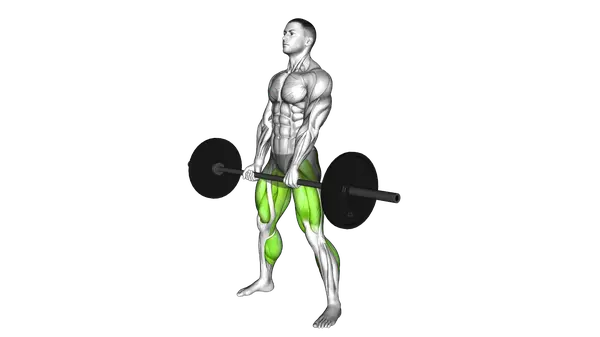
Barbell Sumo Deadlift
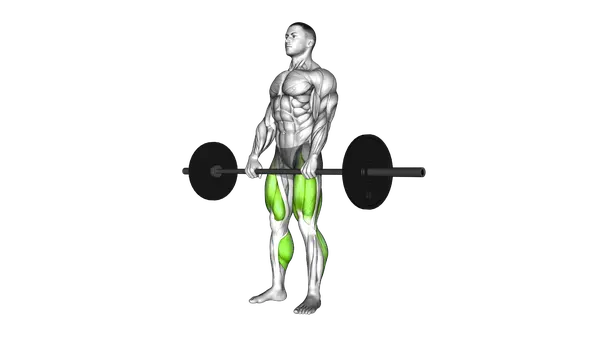
Barbell Deadlift
The stance changes the muscles
In a conventional deadlift, your feet are about hip-width apart and your hands grip outside your legs. This position demands a lot from your lower back, hamstrings, and glutes. Your torso leans forward more, which means your back works hard to keep the bar close.
In a sumo deadlift, your feet are wide and turned out, with your hands gripping between your legs. This keeps your torso more upright, shifting the work to your hips, inner thighs, and quads [1]. Your lower back still works, but not nearly as much.
Body proportions matter
Your body type often determines which deadlift style feels more natural. If you have long legs and a short torso, conventional deadlifts can put you in an awkward position with your back nearly parallel to the floor. Sumo often feels better for these body types.
If you have shorter legs, a longer torso, or less hip mobility, conventional might be your better option. The best way to find out is to try both for a few weeks and see which one lets you maintain better form with heavier weights.
The lower back question
If your lower back is the weak link in your deadlift, sumo may be the answer. The more upright torso position significantly reduces the demands on your spinal erectors. Many people who get back pain from conventional deadlifts find sumo comfortable.
That said, conventional deadlifts strengthen the lower back like few other exercises can. If your back is healthy, the extra lower back work from conventional pulling is a feature, not a problem.
Which moves more weight?
It depends entirely on the individual. At the elite level, some of the biggest deadlifts ever have been pulled both conventional and sumo. There's no inherent advantage to either style.
What matters is which style lets YOU move the most weight with good form. Try both, track your progress with each, and prioritize the one where you're stronger and more comfortable.
The Bottom Line
Try both styles for at least 4-6 weeks each and see which one feels better and lets you lift more. Use the other as an accessory. If you have lower back issues, try sumo first. If you have tight hips, conventional might be easier to start with. There's no wrong choice — only the choice that works best for your body.
What is your fitness goal?
Pick one and the app builds your program around it, your equipment and the days you can train.
At a Glance
Barbell Sumo Deadlift
Barbell Deadlift
Common Questions
Is sumo deadlift cheating?
No. In powerlifting, both styles are equally valid and compete against each other. The sumo has a shorter range of motion but requires more hip mobility and strength. Neither is easier — they're just different.
Can I switch between conventional and sumo?
Absolutely. Many lifters train both styles. A common approach is to compete or test maxes with your stronger style while using the other for training variety and to address weak points.
Scientific References
Gundersen AH, van den Tillaar R, Falch HN et al. · Journal of strength and conditioning research (2025)
[2] An electromyographic analysis of sumo and conventional style deadlifts.
Escamilla RF, Francisco AC, Kayes AV et al. · Medicine and science in sports and exercise (2002)
Sources are peer-reviewed academic publications from PubMed.
More Exercise Comparisons
Deadlift vs Romanian Deadlift: They're Not the Same Exercise
Leg Curl vs Romanian Deadlift: Two Ways to Train Your Hamstrings
Front Squat vs Back Squat: Where Should the Bar Go?
Hip Thrust vs Glute Bridge: Which Builds Better Glutes?
Squat vs Bulgarian Split Squat: Which One Should You Prioritize?
Squat vs Leg Press: Do You Really Need Both?