Back
Dumbbell Romanian Deadlift
Add to Workout

Dumbbell Romanian Deadlift

Build

How to Perform

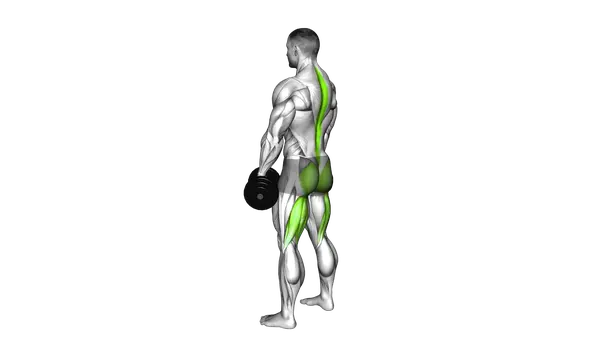
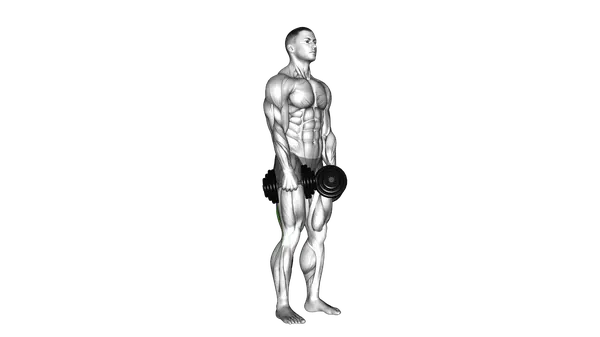
  1. Stand with feet hip-width apart, holding a dumbbell in each hand in front of your thighs with palms facing your body and arms fully extended.
  2. Brace your core, pull your shoulders back and down, and maintain a neutral spine throughout the movement.
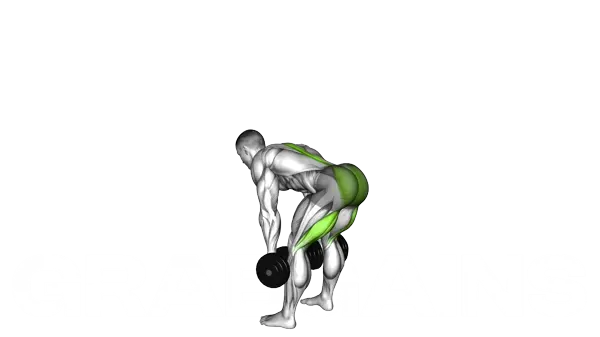
  3. Begin the movement by pushing your hips backward while maintaining a slight bend in your knees, allowing the dumbbells to lower along the front of your legs.
  4. Inhale as you hinge forward, keeping your back flat and chest up as the dumbbells travel toward the floor.
  5. Lower until you feel a stretch in your hamstrings or until your torso is nearly parallel to the floor, whichever comes first, while keeping the weights close to your shins.
  6. Maintain your shoulder position and keep your neck aligned with your spine by focusing your gaze about 3-6 feet in front of you.
  7. Exhale as you drive your hips forward to return to the starting position, squeezing your glutes at the top of the movement.
  8. Keep your core engaged throughout the entire exercise, and ensure the movement comes from your hips rather than your lower back.

Important information

  • Never round your lower back during the movement – the hinge should come from your hips, not your spine.
  • Choose a weight that allows you to maintain proper form; it's better to start lighter and perfect your technique before increasing load.
  • Keep the dumbbells close to your body throughout the entire movement to maintain leverage and reduce strain on your lower back.
  • If you can't maintain a flat back or feel the exercise primarily in your lower back instead of your hamstrings, reduce your range of motion or decrease the weight.

Exercise Details

Primary Muscles

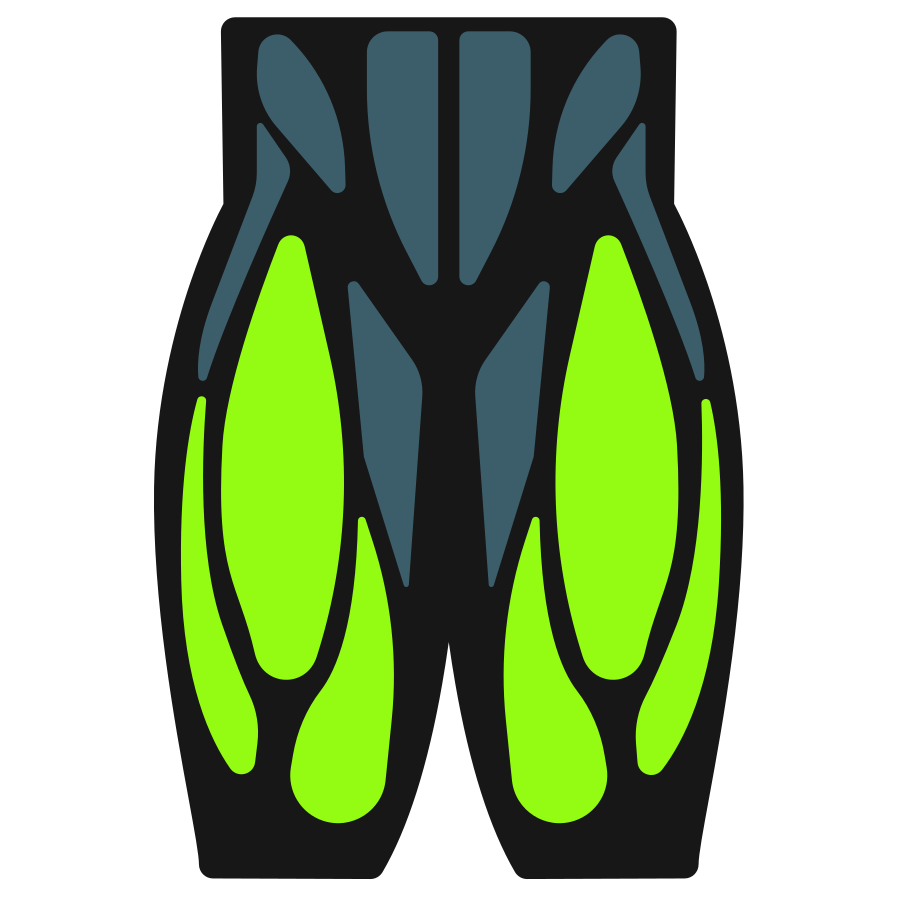
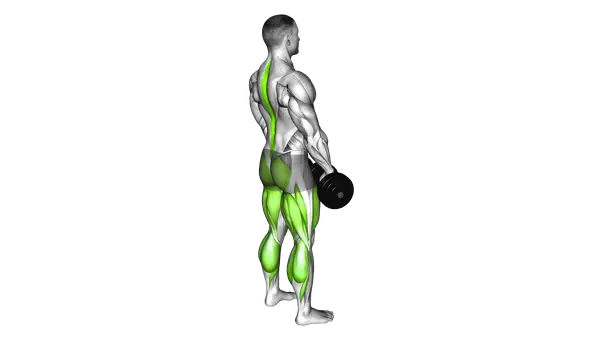
Glutes Hamstrings Erector Spinae

Muscle Groups

Glute exercises Leg exercises Back exercises

Mechanic

Compound

Risk Areas

Erector Spinae

Built for progress

Take the guesswork out of training

Create personalized AI-powered workout plans that evolve with you. Train smarter, track every rep and keep moving forward, one workout at a time.

Be among the first to join!
GrabGains workout plans

The Dumbbell Romanian Deadlift stands as a cornerstone movement for anyone serious about developing their posterior chain. This intermediate-level exercise primarily targets the glutes, hamstrings, and erector spinae muscles, making it invaluable for both bodybuilding aesthetics and powerlifting performance. Unlike its barbell counterpart, the dumbbell variation allows for a more natural range of motion and can help identify and correct strength imbalances between your left and right sides.

When incorporated regularly into your training regimen, this movement delivers impressive strength gains while sculpting the backside of your lower body. The Romanian deadlift pattern teaches your body to hinge properly at the hips while maintaining a neutral spine—a fundamental movement pattern that transfers to numerous athletic activities and everyday life. Many lifters find that mastering this exercise translates to improvements in conventional deadlifts, squats, and even sprint performance.

What makes the dumbbell Romanian deadlift particularly effective is the constant tension it places on the target muscles throughout the entire range of motion. This time under tension is crucial for hypertrophy goals, while the hip hinge pattern reinforces proper biomechanics for heavier strength work. The exercise can be programmed effectively for sets of 8-12 reps when focusing on muscle building, or heavier sets of 4-6 reps when prioritizing strength development.

For those balancing aesthetics with performance goals, few exercises deliver the same efficiency as the dumbbell Romanian deadlift. The movement builds functional strength while developing that coveted hamstring-glute tie-in that many bodybuilders seek. Additionally, the posterior chain development from consistent training helps create a more balanced physique, potentially reducing injury risk and improving posture in the process.

Remember that progress with this exercise isn't always about adding weight—improvements in form, range of motion, and mind-muscle connection are equally valuable metrics of advancement in your strength journey.

FAQ - Dumbbell Romanian Deadlift

What muscles does the Dumbbell Romanian Deadlift target?

The Dumbbell Romanian Deadlift primarily targets your posterior chain, with emphasis on the hamstrings, glutes, and erector spinae muscles. Your lats, traps, and forearms also work as stabilizers throughout the movement.

How do I maintain proper form during the Dumbbell Romanian Deadlift?

Keep your spine neutral (not rounded), hinge at the hips while pushing your buttocks backward, and lower the weights until you feel a stretch in your hamstrings—typically when the dumbbells reach mid-shin level. Maintain a slight bend in your knees throughout the movement and drive through your heels to return to standing.

How can I modify the Dumbbell Romanian Deadlift for my fitness level?

Beginners can start with lighter weights and reduce the range of motion until mobility improves. Advanced lifters can increase the challenge by using heavier dumbbells, adding a pause at the bottom position, or performing the exercise on a single leg for increased stability demands.

How often should I include Dumbbell Romanian Deadlifts in my routine?

For optimal results, incorporate this exercise 1-2 times weekly with at least 48 hours between sessions to allow for proper recovery of the posterior chain. You can program it effectively for 3-4 sets of 8-12 reps for hypertrophy or 4-6 reps for strength development.

What are the most common mistakes to avoid with this exercise?

The most common mistake is rushing through the movement without focusing on the quality of the rolling motion. Other errors include using excessive tension rather than controlled movement, and failing to achieve full range of motion through all three planes of shoulder movement (flexion, depression, and retraction).

Alternative Exercises

Dumbbell Deadlift

Dumbbell Deadlift

The dumbbell deadlift stands as a cornerstone movement for developing lower body strength and power while offering more accessibility than its barbell counterpart. This intermediate exercise primarily targets the glutes, hamstrings, and erector spinae, making it exceptional for both bodybuilding enthusiasts looking to sculpt their posterior chain and powerlifters seeking to enhance their overall pulling strength. What makes the dumbbell deadlift particularly valuable is its versatility and reduced technical demands compared to conventional deadlifts. The dumbbells naturally position your grip at your sides rather than in front of your body, creating a more intuitive pulling pattern that many find comfortable for their anatomical structure. This adjustment can significantly reduce stress on the lower back while still effectively engaging the target muscle groups. For strength development, the dumbbell deadlift delivers impressive results despite typically using less total weight than barbell variations. The independent nature of dumbbells introduces an element of stabilization that increases neuromuscular demands, potentially leading to greater overall strength gains when programmed correctly. Many serious lifters incorporate this movement as an accessory to complement their heavier conventional deadlifts or as a primary movement during deload phases. The exercise seamlessly bridges the gap between functional fitness and aesthetic development. From a bodybuilding perspective, the dumbbell deadlift creates tremendous tension through the hamstrings and glutes, stimulating muscle growth in areas that contribute significantly to a balanced physique. The constant tension maintained throughout the movement, particularly at the top position, makes it excellent for developing the dense, powerful look sought by physique athletes. Whether your goals lean toward raw strength development or muscular hypertrophy, the dumbbell deadlift deserves a place in your training regimen. Its joint-friendly nature makes it sustainable for long-term progression while still delivering the hormonal response and muscle recruitment patterns that drive results. Consider implementing this exercise twice weekly within your program for optimal development of your posterior chain.

Strength
Bodybuilding
Powerlifting
Dumbbell
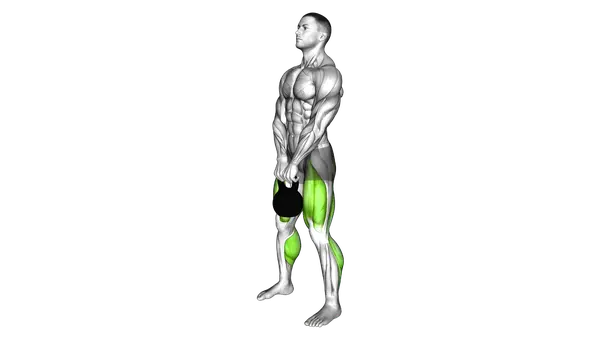
Kettlebell Deadlift

Kettlebell Deadlift

The Kettlebell Deadlift stands as a fundamental strength movement that delivers impressive results for intermediate fitness enthusiasts looking to develop their posterior chain. This powerful exercise primarily targets the glutes, hamstrings, and erector spinae muscles, making it an excellent addition to both bodybuilding and powerlifting regimens. Unlike its barbell counterpart, the kettlebell variation offers unique benefits due to the implement's design. The weight distribution of the kettlebell creates a different loading pattern that many find more accessible while still delivering substantial strength gains. The exercise effectively bridges the gap between beginner and advanced pulling movements, serving as a stepping stone toward more complex deadlift variations. For those focused on strength development, the Kettlebell Deadlift delivers exceptional results by creating significant tension through the posterior chain. This translates to improved performance across various athletic endeavors and everyday activities. The exercise's ability to strengthen the back, hips, and legs simultaneously makes it a time-efficient option for those with busy schedules. Many intermediate lifters appreciate how the Kettlebell Deadlift allows for precise form refinement before progressing to heavier barbell work. The movement pattern reinforces proper hip hinging—a crucial skill for injury prevention and optimal power development. Regular incorporation of this exercise can address muscle imbalances that may have developed from sedentary lifestyles or previous training approaches. From a bodybuilding perspective, the kettlebell deadlift creates significant metabolic stress and mechanical tension, two key factors for muscle hypertrophy. The exercise can be programmed with various rep ranges to emphasize either strength or muscle growth, making it versatile for different training phases. For powerlifters, it serves as an excellent accessory movement that reinforces proper positioning and builds specific strength through the pull. With consistent practice, the Kettlebell Deadlift can transform not only your physique but also your relationship with strength training, creating a solid foundation for more advanced lifting in the future.

Strength
Bodybuilding
Powerlifting
Kettlebell
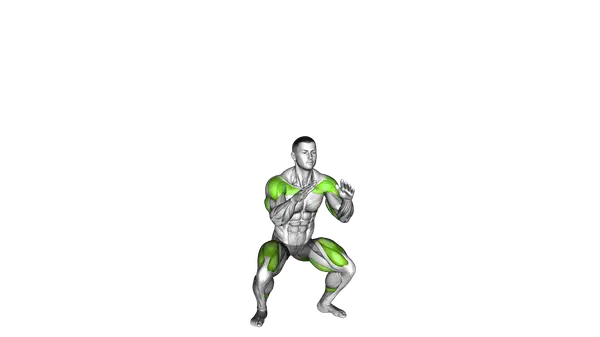
Bodyweight Full Squat With Overhead Press

Bodyweight Full Squat With Overhead Press

The Bodyweight Full Squat With Overhead Press combines lower body power with upper body pushing strength in one fluid movement, creating an efficient full-body exercise that elevates your heart rate while building functional strength. This intermediate-level compound movement simultaneously targets your quadriceps, glutes, and front deltoids, making it perfect for those looking to maximize their workout efficiency. This versatile exercise fits seamlessly into various training methodologies including HIIT circuits, bodybuilding routines, and CrossFit workouts. The dynamic nature of combining a squat with an overhead press creates a cardiovascular demand that burns calories while developing both strength and muscular endurance throughout your entire body. What makes this movement particularly valuable is how it mimics everyday functional patterns: the kind of integrated movement you might use when lifting objects from the ground and placing them on a high shelf. By training these movement patterns together, you're enhancing your body's natural coordination systems while developing practical strength that translates to daily activities. The full squat component engages your entire lower body kinetic chain, activating the quadriceps as primary movers while recruiting the glutes, hamstrings, and core stabilizers. Meanwhile, the overhead press portion develops shoulder strength and stability, particularly in the anterior deltoids, while engaging your triceps and upper back muscles as synergists. For those focused on metabolic conditioning, this exercise delivers impressive results by recruiting large muscle groups simultaneously, significantly elevating oxygen consumption and caloric expenditure. The compound nature makes it particularly effective for those with limited workout time who need maximum benefits from minimal exercises. Regular incorporation of the Bodyweight Full Squat With Overhead Press can lead to improved posture, enhanced core strength, better overhead mobility, and increased lower body power—all critical components for athletic performance and daily function. Whether you're focused on building strength, enhancing endurance, or improving overall fitness, this exercise delivers comprehensive benefits in a single, efficient movement.

Strength
Endurance
HIIT
Bodybuilding
+1
Bodyweight exercises
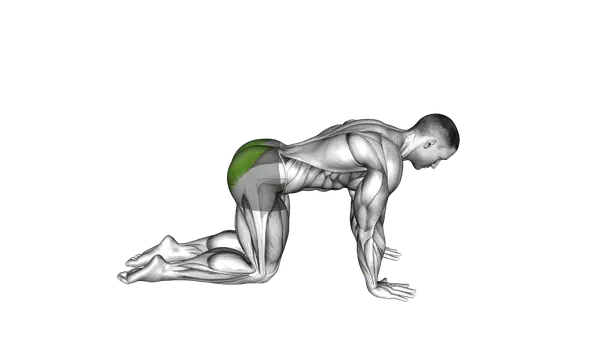
Bent Knee Glute Kickback

Bent Knee Glute Kickback

The Bent Knee Glute Kickback stands as a targeted isolation exercise that has earned its place in the arsenal of intermediate fitness enthusiasts looking to develop stronger, more defined glutes and hamstrings. This movement has gained popularity in bodybuilding circles and rehabilitation programs alike for its ability to effectively engage the posterior chain without placing excessive stress on the lower back. Unlike compound movements that distribute tension across multiple muscle groups, the bent knee variation creates a more concentrated stimulus directly on the gluteus maximus while simultaneously recruiting the hamstrings as secondary movers. The bent knee position is particularly valuable as it reduces hamstring involvement compared to straight-leg variations, allowing for more precise glute targeting: something essential for both aesthetic development and functional strength. For those in recovery phases or dealing with certain lower back conditions, this exercise provides a safer alternative to more demanding hip extension movements. The controlled nature of the kickback makes it ideal for rehabilitation protocols while still delivering enough resistance to stimulate muscle growth when properly loaded. The exercise becomes especially effective when incorporated into high-repetition finisher sets designed to create metabolic stress in the glutes. Strength athletes increasingly recognize the value of isolated glute work for improving performance in compound lifts. The bent knee glute kickback helps address posterior chain weaknesses that might limit progress in deadlifts, squats, and Olympic movements. By strengthening these muscles in isolation, athletes often find improved power generation and stability in their primary lifts. When programmed strategically: typically for 3-4 sets of 12-15 repetitions, this exercise proves valuable for hypertrophy-focused training splits and as an activation movement before heavier lifting sessions. The mind-muscle connection developed through this focused movement translates to better recruitment patterns during more complex exercises, making it not just an aesthetic builder but a performance enhancer for intermediate lifters seeking balanced posterior chain development.

Strength
Bodybuilding
Recovery
Bodyweight exercises