Back

Exercise

Dumbbell Sitting Leg Extension

Dumbbell Sitting Leg Extension
Add to Workout

Dumbbell Sitting Leg Extension

Build

How to Perform

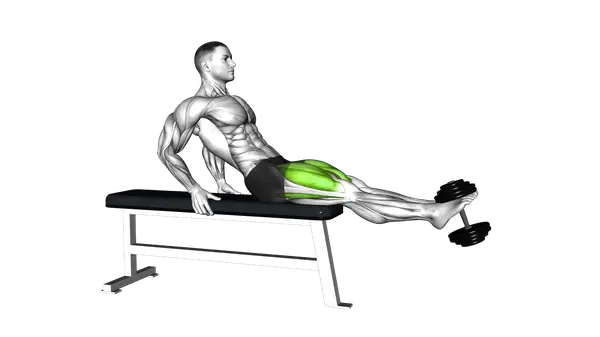
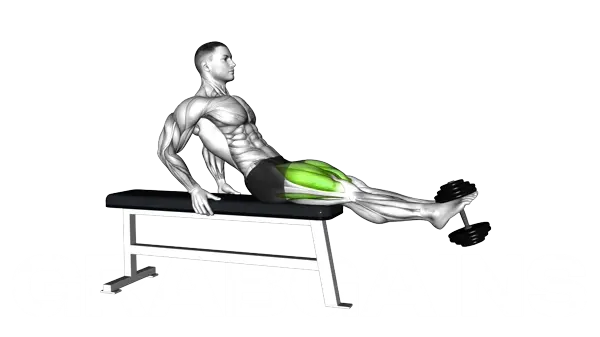
  1. Sit on a bench with your back straight, feet flat on the floor, and hold a dumbbell between your ankles or on top of your feet.
  2. Position your hands on the bench beside your hips for stability and keep your core engaged throughout the movement.
  3. Inhale and ensure your upper body remains stationary as you prepare for the movement.
  4. Exhale as you slowly extend your legs forward and upward until they're almost completely straight, maintaining a slight bend in your knees to avoid hyperextension.
  5. Squeeze your quadriceps at the top of the movement and hold this extended position for 1-2 seconds.
  6. Inhale as you slowly lower your legs back to the starting position, controlling the descent to maximize muscle engagement.
  7. Keep your back pressed against the support throughout the exercise and avoid using momentum to lift the weight.
  8. Maintain a consistent tempo for both the lifting and lowering phases, focusing on the contraction in your quadriceps.

Important information

  • Keep your upper body still throughout the movement — avoid leaning back to assist with the lift.
  • Start with a lighter dumbbell until you master proper form, then gradually increase the weight.
  • If you experience knee pain, reduce the range of motion or decrease the weight.
  • Make sure your knees track in line with your toes to protect your knee joints during the extension.

Exercise Details

Primary Muscles

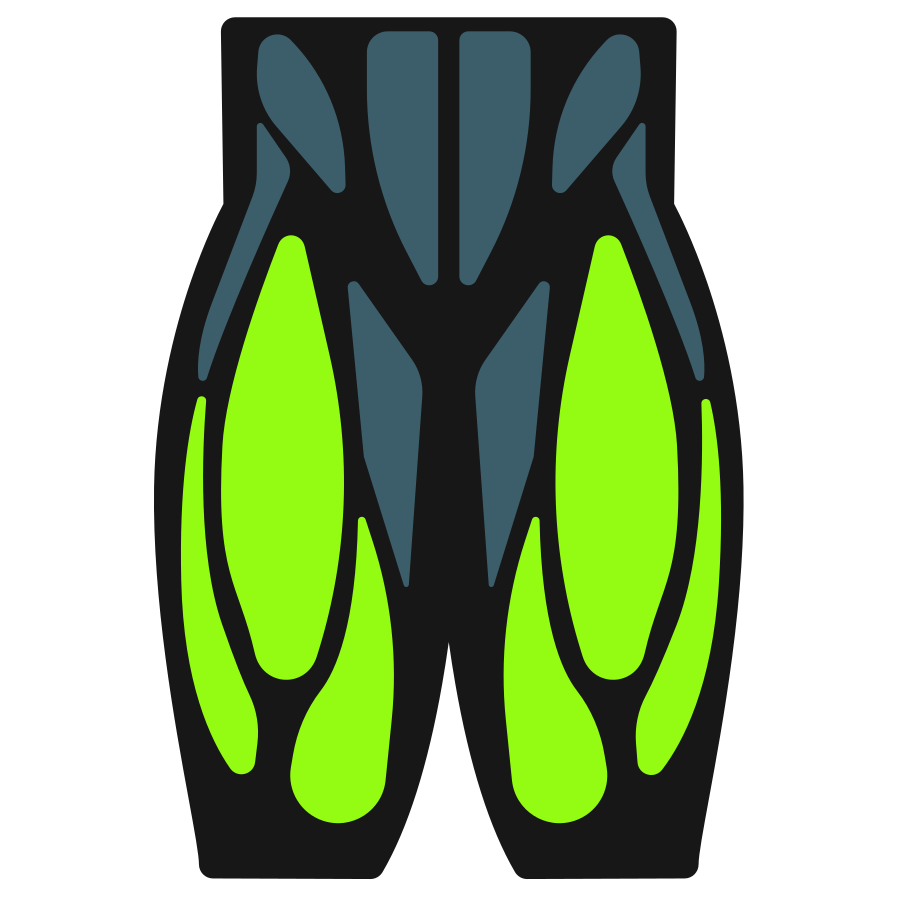
Quads

Muscle Groups

Leg exercises

Mechanic

Isolation

Risk Areas

Quads

Built for progress

Take the guesswork out of training

Create personalized AI-powered workout plans that evolve with you. Train smarter, track every rep and keep moving forward, one workout at a time.

Be among the first to join!
GrabGains workout plans

The dumbbell sitting leg extension offers an effective intermediate-level exercise for bodybuilding enthusiasts looking to isolate and strengthen their quadriceps without requiring access to a leg extension machine. This versatile movement creates dedicated tension across the four muscles of the quadriceps group: the rectus femoris, vastus lateralis, vastus medialis, and vastus intermedius. When incorporated into a comprehensive lower body routine, this exercise can be particularly valuable for developing balanced leg strength and enhancing aesthetic quad development.

Unlike many compound movements that distribute tension across multiple muscle groups, the dumbbell sitting leg extension focuses primarily on the quads, making it an excellent choice for bodybuilders seeking targeted hypertrophy. The exercise allows for unilateral training, enabling lifters to address potential strength imbalances between legs while ensuring symmetrical development. For strength athletes, this movement serves as valuable accessory work that can improve knee stability and enhance performance in primary lifts like squats.

The beauty of this exercise lies in its accessibility and adaptability. By simply adjusting the weight of the dumbbell, athletes can progress methodically as their strength improves. Many intermediate lifters find this variation particularly useful when traveling or training in facilities with limited equipment. The controlled nature of the movement also allows for concentrated mind-muscle connection, a critical component for maximizing hypertrophy in bodybuilding-focused training programs.

For optimal results, many strength coaches recommend incorporating dumbbell sitting leg extensions later in your workout after compound movements like squats or leg presses. This sequencing allows you to pre-fatigue the larger muscle groups before isolating the quadriceps. When programmed appropriately with progressive overload principles, this exercise can significantly contribute to both aesthetic quad development and functional lower body strength, making it a valuable addition to any intermediate lifter's training arsenal.

FAQ - Dumbbell Sitting Leg Extension

What muscles does the dumbbell sitting leg extension target?

The dumbbell sitting leg extension primarily targets the quadriceps muscle group, including the rectus femoris, vastus lateralis, vastus medialis, and vastus intermedius. It's an isolation exercise that concentrates tension specifically on the front of the thigh with minimal involvement from other muscle groups.

How should I position the dumbbell for maximum effectiveness?

Place the dumbbell horizontally across your hip crease (not on your stomach or thighs). Secure it with both hands on either side of the weight to prevent shifting during the movement, and maintain a neutral spine throughout the exercise.

How many sets and reps are optimal for quad development?

For hypertrophy-focused training, perform 3-4 sets of 8-15 reps with a weight that challenges you in the later reps of each set. Program this exercise later in your workout after compound movements like squats or leg presses for maximum effectiveness.

What are common mistakes to avoid with dumbbell sitting leg extensions?

Avoid using momentum by controlling both the lifting and lowering phases of the movement. Don't lock out your knees at the top of the movement, and ensure your back remains supported against the bench or chair to prevent compensating with your lower back.

Can I use this exercise if I have knee problems?

If you have existing knee issues, consult with a healthcare provider before incorporating this exercise. You can modify by using lighter weights, limiting the range of motion to a pain-free zone, or substituting with more knee-friendly exercises like partial squats or leg presses if discomfort persists.

Alternative Exercises

Lever Seated Leg Press

Lever Seated Leg Press

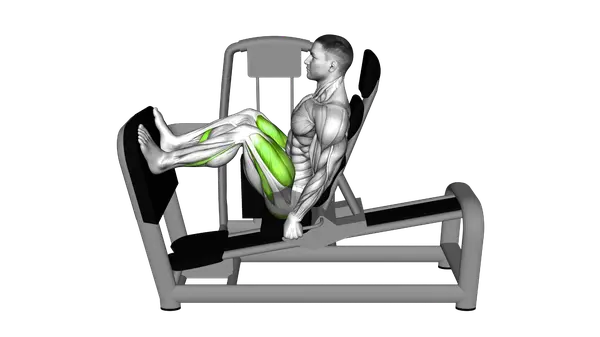
The Lever Seated Leg Press stands as a cornerstone machine in strength training arsenals across gyms worldwide, offering a robust lower-body workout that targets multiple muscle groups simultaneously. This intermediate-level exercise primarily engages the quadriceps, while also effectively recruiting the hamstrings and glutes as secondary movers throughout the pressing motion. The beauty of this exercise lies in its versatility, making it equally valuable for bodybuilders sculpting defined legs and powerlifters developing foundational strength. What distinguishes the Lever Seated Leg Press from its counterparts is the biomechanically advantageous seated position, which naturally supports proper spinal alignment and reduces lower back strain compared to traditional squat variations. This design allows lifters to handle substantial loads safely, creating the mechanical tension necessary for muscle hypertrophy while maintaining joint stability. The fixed movement pattern of the lever mechanism ensures consistent resistance throughout the entire range of motion, creating optimal conditions for muscular development. Strength athletes particularly appreciate how this exercise enables progressive overload with precise weight increments, a crucial factor for continual strength adaptation. For bodybuilders, the ability to adjust foot positioning on the platform provides remarkable versatility in targeting specific areas of the lower body, allowing for balanced muscular development. Higher repetition ranges with moderate weights promote significant metabolic stress and muscle pump, while heavier loads with fewer repetitions build the raw strength that serves as the foundation for other lower body movements. The Lever Seated Leg Press represents an excellent balance between effectiveness and joint-friendliness, making it accessible to a wide range of fitness enthusiasts. Its popularity in training programs stems from its efficiency in building functional lower body strength that transfers to daily activities like climbing stairs or rising from seated positions. When incorporated strategically into a comprehensive strength program, this exercise serves as a reliable tool for developing powerful, resilient legs without excessive wear on the joints.

Strength
Bodybuilding
Powerlifting
Machine
Power Sled Pull

Power Sled Pull

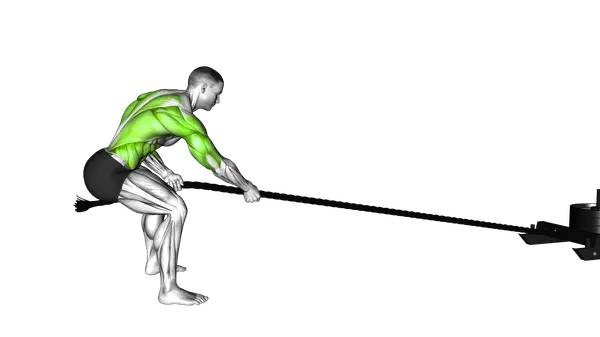
The Power Sled Pull stands as one of the most comprehensive and challenging exercises in any serious athlete's arsenal. This advanced movement targets multiple major muscle groups simultaneously, creating a full-body conditioning experience that few other exercises can match. As you drive against the resistance of the weighted sled, your hamstrings and glutes activate powerfully, serving as the primary engines that generate the force needed to overcome inertia.While your lower body works overtime, your upper body isn't just along for the ride. Your biceps engage significantly as you grip and pull the handles or straps, while your lats provide crucial stability and power through each movement phase. Perhaps surprisingly to newcomers, your core muscles: particularly your abs, work continuously to maintain proper posture and transfer force efficiently between your upper and lower body, essentially serving as the critical link in this kinetic chain.The beauty of the Power Sled Pull lies in its versatility for training objectives. Athletes seeking endurance benefits can lighten the load and perform higher-rep distances, challenging their cardiovascular system while building muscular stamina that transfers to sports and daily activities. Conversely, those prioritizing raw strength can load the sled heavily and focus on explosive, shorter-distance pulls that develop maximum power output and fast-twitch muscle fiber recruitment.What truly distinguishes this exercise is its functional carryover to real-world movements and sport-specific demands. Unlike isolated machine exercises, the Power Sled Pull replicates the mechanics of pulling, dragging, and overcoming resistance: movements fundamental to many sports and everyday tasks. The exercise also offers remarkable scalability, making it appropriate for experienced athletes while remaining adaptable as strength and conditioning progress.For those committed to comprehensive fitness development, few exercises deliver the combination of metabolic demand, muscle activation, and functional strength that the Power Sled Pull provides: making it an invaluable component of any advanced training program.

Strength
Hyrox
Crossfit
+1
Other
Sandbag Lunges

Sandbag Lunges

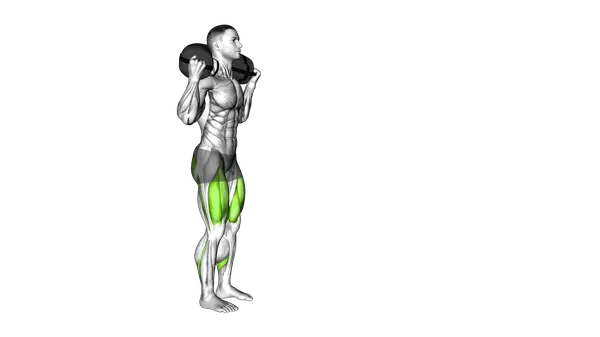
Sandbag lunges represent a challenging progression in lower body training, combining the instability of a sandbag with the functional movement pattern of a lunge. This advanced exercise significantly engages multiple muscle groups simultaneously, with primary emphasis on the glutes, quads, and hamstrings. The shifting weight of the sandbag creates an additional stabilization challenge that traditional weighted lunges can't replicate, forcing your core to work overtime throughout the movement.What makes sandbag lunges particularly effective is their ability to build both strength and endurance concurrently. The constantly shifting center of gravity of the sandbag mimics real-world lifting scenarios, making this exercise exceptionally functional for athletes and fitness enthusiasts alike. Your body must continuously adjust to the sand's movement within the bag, recruiting more muscle fibers and burning additional calories compared to static resistance exercises.The beauty of sandbag training lies in its versatility and practicality. Unlike rigid weights, sandbags conform to your body during movement, reducing joint strain while still providing substantial resistance. This makes them particularly valuable for those looking to build resilience and functional strength that translates to everyday activities and athletic performance. The uneven distribution of weight challenges your proprioception: your body's awareness of its position in space: further enhancing your overall athletic development.For those seeking to break through training plateaus, sandbag lunges offer a novel stimulus that can shock muscles into new growth and adaptation. The exercise builds mental toughness alongside physical strength, as maintaining proper form with an unstable load requires significant focus and determination. Regular incorporation of this movement can lead to impressive gains in lower body power, enhanced core stability, and improved overall athletic performance, making it a valuable addition to any advanced training regimen.

Strength
Hyrox
Crossfit
+2
Other
Bodyweight Full Squat With Overhead Press

Bodyweight Full Squat With Overhead Press

The Bodyweight Full Squat With Overhead Press combines lower body power with upper body pushing strength in one fluid movement, creating an efficient full-body exercise that elevates your heart rate while building functional strength. This intermediate-level compound movement simultaneously targets your quadriceps, glutes, and front deltoids, making it perfect for those looking to maximize their workout efficiency. This versatile exercise fits seamlessly into various training methodologies including HIIT circuits, bodybuilding routines, and CrossFit workouts. The dynamic nature of combining a squat with an overhead press creates a cardiovascular demand that burns calories while developing both strength and muscular endurance throughout your entire body. What makes this movement particularly valuable is how it mimics everyday functional patterns: the kind of integrated movement you might use when lifting objects from the ground and placing them on a high shelf. By training these movement patterns together, you're enhancing your body's natural coordination systems while developing practical strength that translates to daily activities. The full squat component engages your entire lower body kinetic chain, activating the quadriceps as primary movers while recruiting the glutes, hamstrings, and core stabilizers. Meanwhile, the overhead press portion develops shoulder strength and stability, particularly in the anterior deltoids, while engaging your triceps and upper back muscles as synergists. For those focused on metabolic conditioning, this exercise delivers impressive results by recruiting large muscle groups simultaneously, significantly elevating oxygen consumption and caloric expenditure. The compound nature makes it particularly effective for those with limited workout time who need maximum benefits from minimal exercises. Regular incorporation of the Bodyweight Full Squat With Overhead Press can lead to improved posture, enhanced core strength, better overhead mobility, and increased lower body power—all critical components for athletic performance and daily function. Whether you're focused on building strength, enhancing endurance, or improving overall fitness, this exercise delivers comprehensive benefits in a single, efficient movement.

Strength
Endurance
HIIT
Bodybuilding
+1
Bodyweight exercises