Hyrox Sled Pull
Muscles Worked: Hyrox Sled Pull
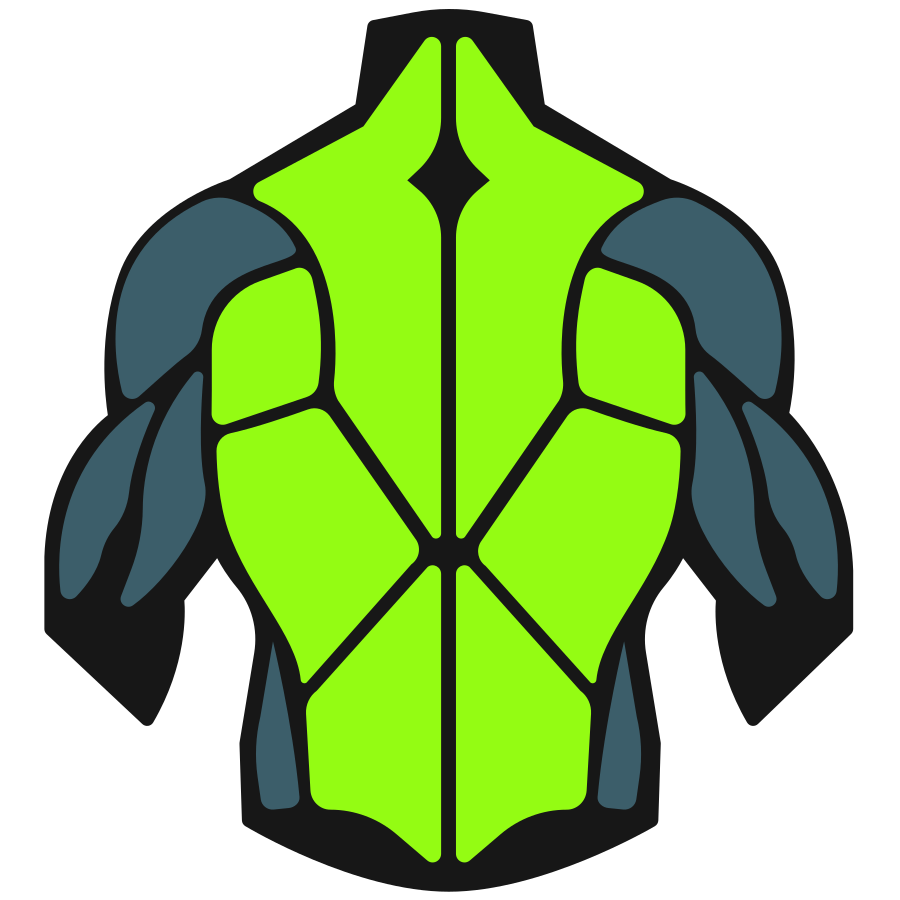
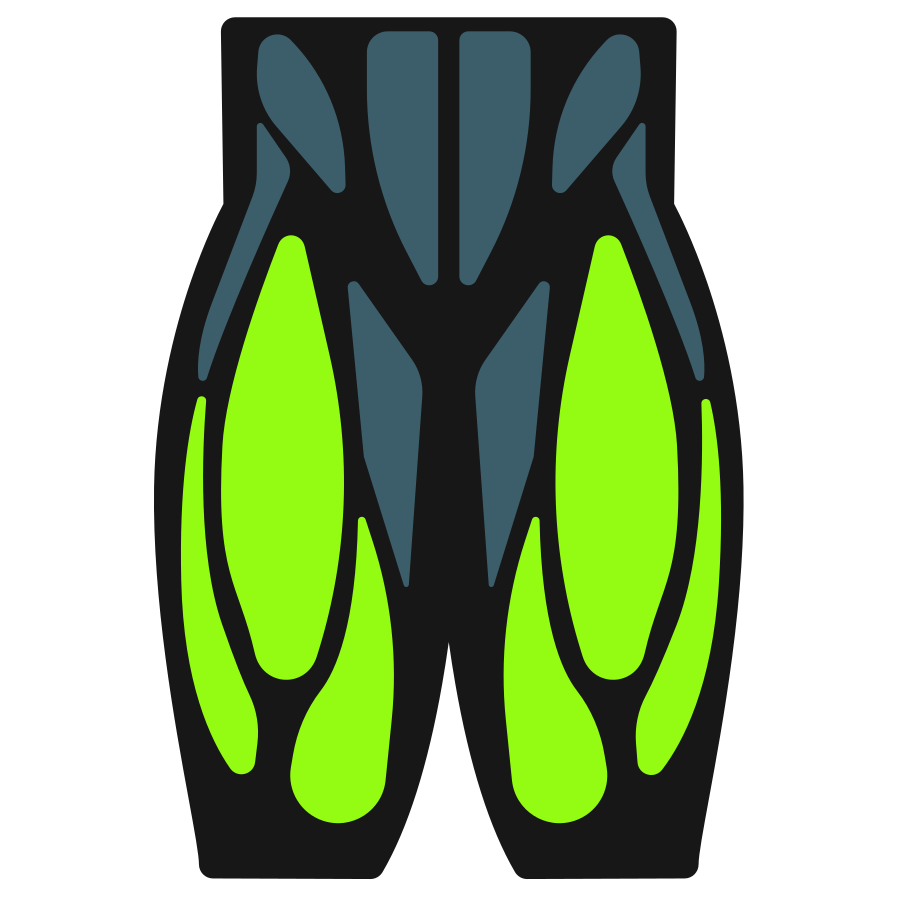
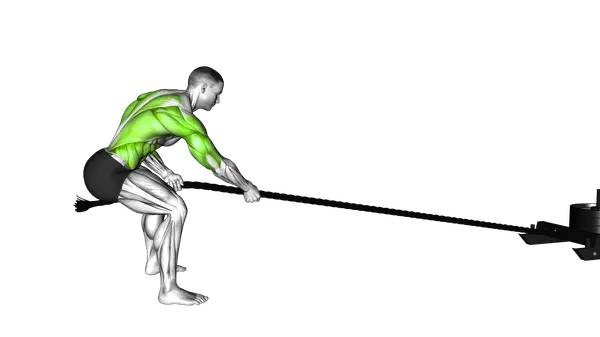
The Hyrox Sled Pull mainly trains your back, with your lats and upper back producing the pulling force on every hand grab. Your biceps assist by flexing the elbow as you pull the rope toward your hip, and your forearms and grip work nonstop to hold onto the rope under load. Your core braces hard to keep your torso stable so the pulling force transfers into the sled instead of rocking your body. Because every grab is a fresh pull with no eccentric phase, your back stays under constant concentric tension from start to finish.
Built for progress
Take the guesswork out of training
Get a personalized workout plan built around your goal, equipment and schedule. Train smarter, track every rep and keep moving forward, one workout at a time.






Technique and form
How to perform the Hyrox Sled Pull
Arm-pull version
- Attach a long rope to a loaded sled on a flat surface.
- Walk the rope out to its full length and face the sled, standing with feet shoulder-width apart and knees slightly bent.
- Brace your core and sit your hips back slightly to create a stable pulling position.
- Grab the rope with one hand, pull it toward your hip, then immediately reach forward with the other hand and repeat — alternating hand over hand.
- Keep your torso upright or leaning slightly back. Drive each pull from your lats and upper back, not just your arms.
- Continue pulling until the sled reaches you, then walk the rope back out and repeat for the prescribed sets.
Backward-step version
- Attach a long rope to a loaded sled on a flat surface.
- Walk the rope out to its full length and face the sled, gripping the rope with both hands.
- Brace your core, sit your hips low, and lean slightly back.
- Take 3-4 short, powerful steps backward to drag the sled toward you, then quickly re-grip the rope further along and repeat.
- Drive through your heels and keep your weight low — your quads and glutes should be doing most of the work.
- Continue until the sled reaches you, then walk the rope back out and repeat.
Important information
For the arm-pull version, keep your feet planted and pull from your back — avoid leaning back and using bodyweight to drag the sled. For the backward-step version, keep the steps short and explosive. The goal is powerful leg drive, not long strides. Adjust the weight based on your goals: heavier for strength, lighter for conditioning and speed. Start with shorter distances (15-20 meters) until you develop proper technique for either variation.

Is the Hyrox Sled Pull good for muscle growth?
Yes. The Hyrox Sled Pull can build muscle in your lats, upper back, biceps, and forearms because it loads the pulling pattern with sustained tension across dozens of hand grabs per set. A heavy sled-pull training block has been shown to improve force production and sprint performance, which tells us this movement drives real training adaptations (Edwards et al., 2023).
- High pulling volume without soreness — Because there is no eccentric (lowering) phase, you can accumulate a lot of back and bicep work without the delayed muscle soreness you get from rows or pull-ups. That makes it easy to add pulling volume on top of your regular back training without wrecking your recovery.
- Grip and forearm builder — Every hand grab is a maximal grip effort against a heavy load. Over a full set of 15-25 meters, that adds up to serious forearm and grip work that most isolation exercises cannot match.
- Two ways to pull — The main version is hand-over-hand rope pulling, which targets your back and arms. You can also do it by gripping the rope and taking short backward steps, which shifts the work to your quads and glutes. Pick the version that matches what you want to train, or alternate between both.
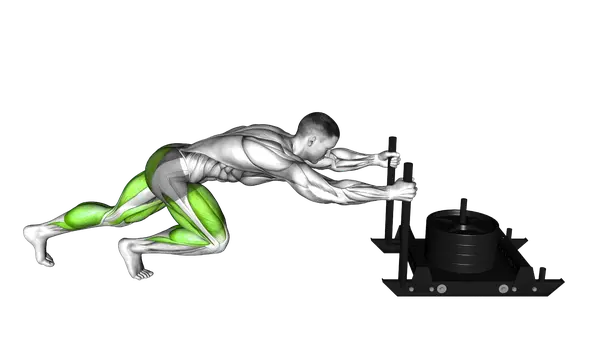
- Pairs well with pushing — Combining sled pulls with Hyrox Sled Push covers both pulling and pushing patterns in one session, which is how Hyrox athletes typically structure their training.
Programming for muscle growth
Do 4-6 sets of 15-25 meters with a load that forces you to pull hard on every hand grab. Rest 90-150 seconds between sets. Train 1-2 times per week after your main back work or on a separate conditioning day. If grip gives out before your back does, use chalk or straps on later sets to keep the pulling volume high.
Alternative Exercises
FAQ - Hyrox Sled Pull
The biggest mistake is using too much arm and not enough back. Focus on pulling with your lats and squeezing your shoulder blades together, not just yanking with your biceps. Also, avoid leaning too far back - maintain a strong, slightly forward-leaning posture. Keep your core tight throughout the entire movement to protect your lower back.
You can do both! Walking backwards while pulling works your legs more and covers more distance, making it great for conditioning. Staying in one spot and pulling hand-over-hand focuses more on upper body strength. Choose based on your goals - backwards walking for full-body conditioning, stationary pulling for focused upper body strength.
For strength: 3-4 sets of 15-30 meters with heavier weight. For conditioning: 4-6 sets of 30-50 meters with moderate weight. For endurance: 2-3 sets of 50+ meters with lighter weight. Rest 2-3 minutes between sets for strength, or 1-2 minutes for conditioning work.
Start light: beginners should use 20-45 kg to learn proper form. Intermediate users can handle 45-90 kg, while advanced athletes may use 90+ kg. The weight should allow you to maintain good posture and complete your desired distance without your form breaking down. You should feel challenged but still be able to pull smoothly.
The Hyrox Sled Pull is a full-body exercise that primarily targets your back muscles (lats, rhomboids, rear delts), biceps, and core. It also works your legs for stability and power, particularly your glutes, hamstrings, and calves. This exercise is excellent for building pulling strength and improving posture.
Scientific References
Edwards T, Piggott B, Banyard HG et al. · Journal of strength and conditioning research (2023)
Sources are peer-reviewed academic publications from PubMed.
Hyrox Sled Pull
Thank you for your feedback!
Thank you for your feedback!