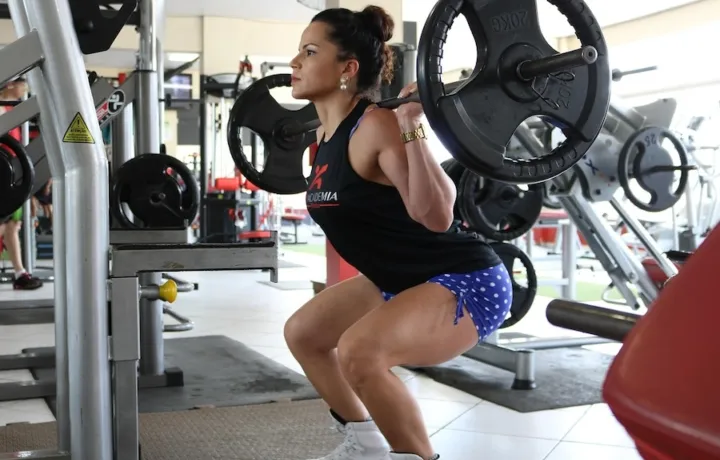
Controlled lower-body training with constant tension
Leg exercises with cable
Cable leg exercises provide a unique approach to lower-body training by delivering constant tension throughout the movement. Unlike free weights, cables maintain resistance across the entire range of motion, making them especially effective for targeted muscle activation and controlled strength development. Cable-based leg training is often used to complement heavier compound lifts, improve mind–muscle connection, and refine posterior-chain strength with minimal joint stress.
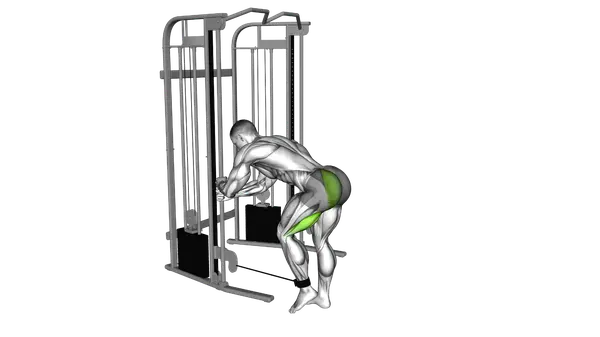
Cable Donkey Kickback
The Cable Donkey Kickback is a cable-based isolation exercise that targets the glutes with constant tension and controlled hip extension.
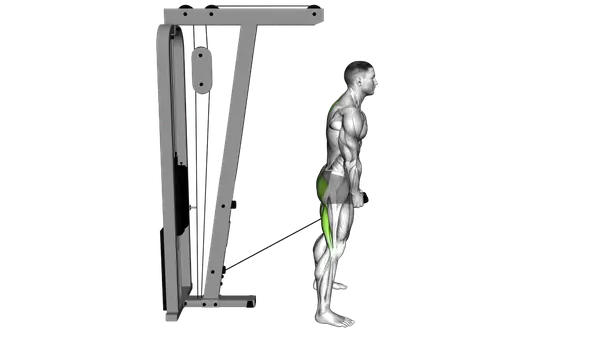
Cable Pull Through
The Cable Pull Through is a cable-based hip hinge exercise that trains the glutes and hamstrings with constant tension and low spinal load.
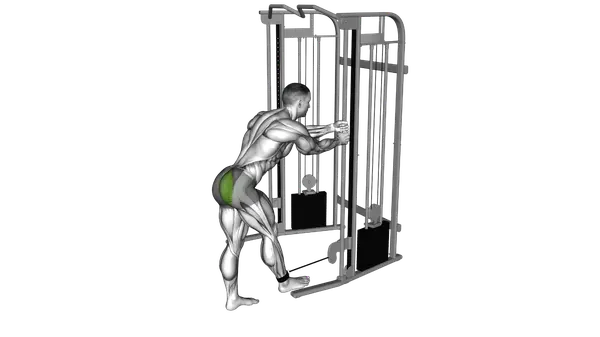
Cable Standing Hip Extension
The Cable Standing Hip Extension is a cable-based exercise that isolates the glutes and builds controlled hip strength with steady resistance.
Precision, control and continuous resistance
Why train legs with cables
Cable machines allow precise load adjustments and consistent tension, making them ideal for focused leg training and injury-aware programming.
Key advantages:
- Constant resistance through the full range of motion
- High level of muscle control and activation
- Reduced joint stress compared to heavy free weights
- Excellent for posterior-chain isolation
- Easy load adjustments for progressive training
Focused movements for lower-body development
Core cable leg exercises
The following exercises represent the most effective cable-based movements for leg training. Together, they emphasize hip extension, glute activation, and controlled strength output.
- Cable pull through: A hip-dominant exercise that targets the glutes and hamstrings while reinforcing proper hinge mechanics.
- Cable standing hip extension: A controlled isolation movement focused on glute activation and posterior-chain development.
- Cable donkey kickback: A targeted glute exercise that emphasizes peak contraction and continuous tension for muscle engagement.
Exercise overview
| Exercise | Primary focus | Training goal |
|---|---|---|
| Cable pull through | Glutes & hamstrings | Posterior-chain strength |
| Cable standing hip extension | Glutes | Muscle activation |
| Cable donkey kickback | Glutes | Isolation & control |
Supporting strength and movement quality
Programming cable leg exercises
Cable leg exercises are best used as accessory movements within a broader leg training program. They pair well with barbell or dumbbell lifts and are particularly effective during warm-ups, hypertrophy-focused sessions, or recovery-oriented training blocks. Due to their controlled nature and lower systemic fatigue, they can be trained more frequently while supporting movement quality and muscle balance. Create your personal training program in the app tailored to your goals, fitness level, and schedule.
Built for progress
Take the guesswork out of training
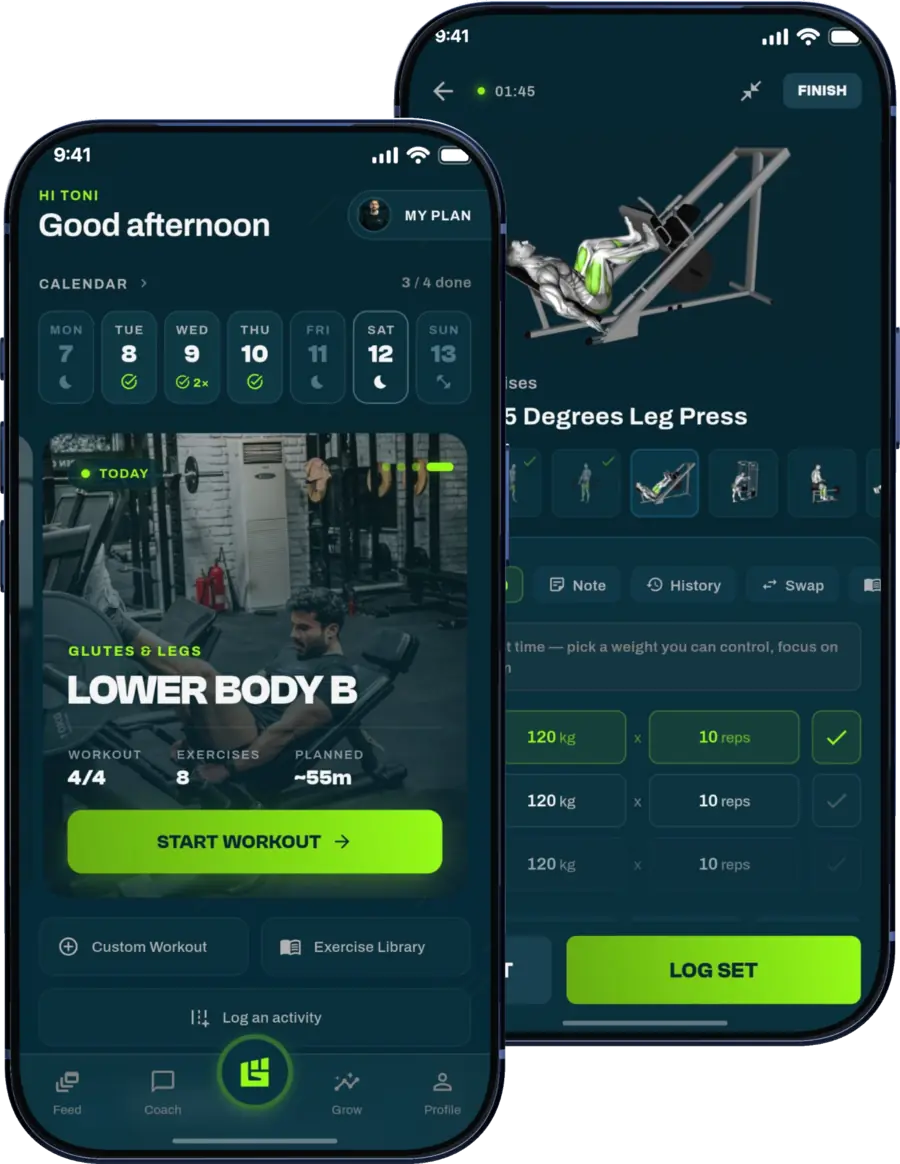
Get a personalized workout plan built around your goal, equipment and schedule. Train smarter, track every rep and keep moving forward, one workout at a time.




Frequently asked questions about cable leg exercises
Cables provide consistent resistance throughout the movement, whereas free weights rely more on gravity and momentum.
They primarily train the glutes and hamstrings, with secondary involvement of stabilizing muscles.
Yes. The constant tension provided by cables makes them especially effective for hypertrophy and muscle activation.
Most people can include them two to four times per week, depending on overall training volume.
They are best used as a complement rather than a replacement for compound free-weight lifts.