Back
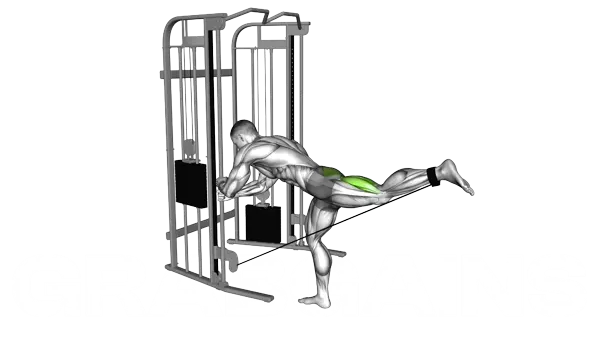
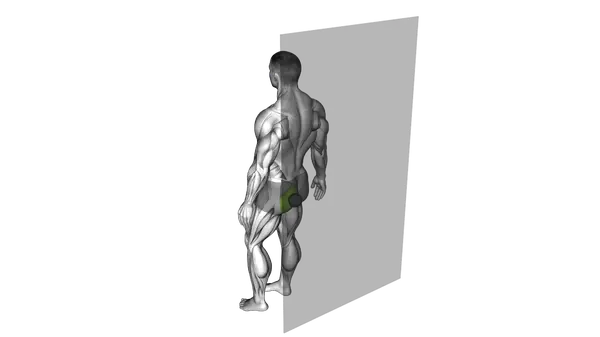
Cable Donkey Kickback
Add to Workout

Cable Donkey Kickback

Build

How to Perform

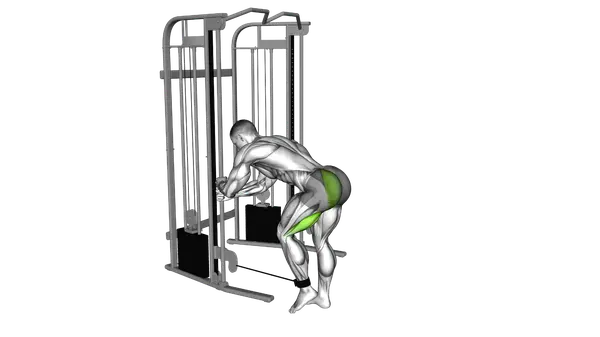
  1. Attach an ankle cuff to a low cable pulley and secure it around your ankle, then position yourself on all fours facing away from the cable machine with your hands directly under your shoulders and knees under your hips.
  2. Engage your core and maintain a neutral spine position while ensuring your working leg is in line with the cable and your knee is bent at 90 degrees.
  3. Exhale as you extend your working leg backward and upward in a controlled motion, focusing on contracting your glutes throughout the movement.
  4. Keep your working foot flexed (toes pointing down toward the floor) and maintain your hip angle without rotating your pelvis during the extension.
  5. Extend your leg until it forms a straight line with your torso, or slightly higher depending on your flexibility, but avoid overarching your lower back.
  6. Hold the contracted position for 1-2 seconds at the top of the movement, focusing on maximum glute engagement.
  7. Inhale as you slowly return your leg to the starting position in a controlled manner, maintaining tension in your glutes and core.
  8. Complete all repetitions on one side before switching the ankle cuff to the opposite leg and repeating the exercise.

Important information

  • Keep your supporting knee directly under your hip and your hands under your shoulders throughout the entire movement to maintain proper alignment.
  • Avoid tilting your pelvis or rotating your hips during the kickback, as this reduces glute activation and places stress on your lower back.
  • Focus on initiating the movement with your glutes rather than using momentum or lower back extension to lift the leg.
  • If you experience lower back pain, reduce the weight and check that you're maintaining a neutral spine position throughout the exercise.

Exercise Details

Primary Muscles

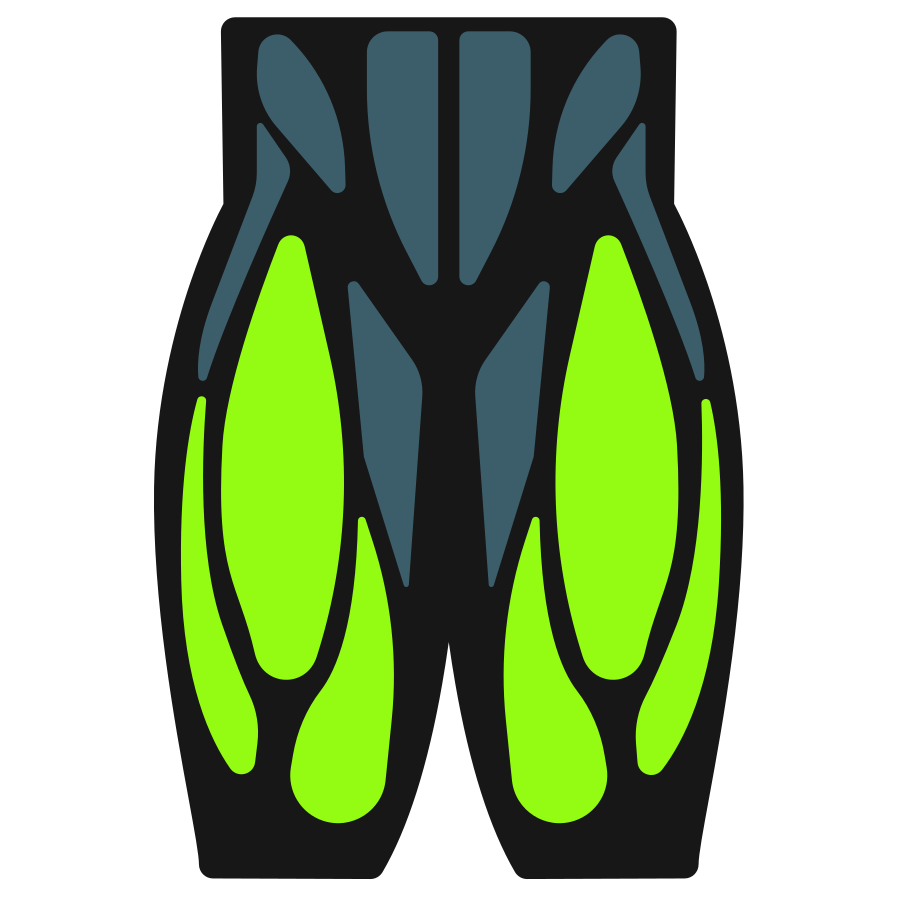
Glutes Hamstrings

Muscle Groups

Glute exercises Leg exercises

Mechanic

Isolation

Risk Areas

Glutes Hamstrings

Built for progress

Take the guesswork out of training

Create personalized AI-powered workout plans that evolve with you. Train smarter, track every rep and keep moving forward, one workout at a time.

Be among the first to join!
GrabGains workout plans

The Cable Donkey Kickback stands as a powerhouse movement for those looking to build impressive lower body strength and definition. This intermediate-level exercise primarily targets the glutes and hamstrings, making it an excellent addition to both bodybuilding routines and high-intensity interval training programs.

When incorporated into a consistent training regimen, the Cable Donkey Kickback helps develop functional strength while sculpting those posterior muscles that contribute to an athletic physique. The resistance provided by the cable system creates constant tension throughout the movement, which is something free weights simply cannot replicate with the same efficiency.

Many fitness enthusiasts gravitate toward this exercise after mastering basic glute movements, as it allows for precise isolation and progressive overload. The controlled nature of the Cable Donkey Kickback makes it particularly effective for hypertrophy goals, while the dynamic movement pattern can elevate heart rate when performed with minimal rest periods during HIIT sessions.

What sets this exercise apart is its versatility across training objectives. Bodybuilders appreciate how it can be used to refine muscle symmetry and address imbalances between the left and right sides. Meanwhile, those focused on strength development benefit from the stability challenges and the opportunity to strengthen the posterior chain in a biomechanically advantageous position.

The Cable Donkey Kickback also offers scalability through adjustable resistance, making it suitable for various phases of a periodized training program. As you progress, increasing the weight challenges your glutes and hamstrings to adapt and grow stronger, while maintaining strict form remains crucial for optimal results and injury prevention.

For anyone serious about developing lower body strength, enhanced athletic performance, or aesthetic improvements to their physique, the Cable Donkey Kickback delivers exceptional value as a targeted exercise that effectively bridges the gap between foundational movements and advanced training techniques.

FAQ - Cable Donkey Kickback

What muscles does the Cable Donkey Kickback target?

The Cable Donkey Kickback primarily targets the gluteus maximus (main glute muscle), while also engaging the hamstrings and lower back as secondary movers. The constant tension from the cable system ensures deeper muscle fiber recruitment than many free-weight alternatives.

How can I ensure proper form during Cable Donkey Kickbacks?

Position yourself facing the cable machine, attach the ankle strap to your working leg, and maintain a slight bend in your standing leg throughout the movement. Keep your core engaged, spine neutral, and focus on driving through your heel rather than your toes when extending your leg backward.

How often should I include Cable Donkey Kickbacks in my routine?

For optimal results, incorporate Cable Donkey Kickbacks 2-3 times weekly with at least 48 hours between sessions to allow for adequate muscle recovery. If you're targeting glute hypertrophy specifically, perform 3-4 sets of 10-15 reps per side at a weight that becomes challenging in the final few repetitions.

What are common mistakes to avoid with this exercise?

Avoid bending your elbows to compensate for limited shoulder mobility, as this negates the stretching benefits. Don't rush through repetitions or use momentum—move slowly and deliberately. Also, never force the movement beyond the point of mild discomfort, as this could lead to shoulder strain.

How can I modify the Cable Donkey Kickback based on my fitness level?

Beginners should start with lighter resistance and focus on mastering the movement pattern before progressively increasing weight. Advanced lifters can intensify the exercise by adding a brief pause at peak contraction, incorporating slow negatives, or performing drop sets to maximize glute activation and muscle fatigue.
Alternative Exercises

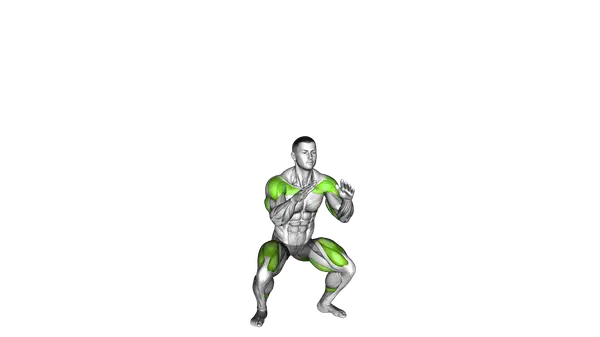
Bodyweight Full Squat With Overhead Press

Bodyweight Full Squat With Overhead Press

The Bodyweight Full Squat With Overhead Press combines lower body power with upper body pushing strength in one fluid movement, creating an efficient full-body exercise that elevates your heart rate while building functional strength. This intermediate-level compound movement simultaneously targets your quadriceps, glutes, and front deltoids, making it perfect for those looking to maximize their workout efficiency. This versatile exercise fits seamlessly into various training methodologies including HIIT circuits, bodybuilding routines, and CrossFit workouts. The dynamic nature of combining a squat with an overhead press creates a cardiovascular demand that burns calories while developing both strength and muscular endurance throughout your entire body. What makes this movement particularly valuable is how it mimics everyday functional patterns: the kind of integrated movement you might use when lifting objects from the ground and placing them on a high shelf. By training these movement patterns together, you're enhancing your body's natural coordination systems while developing practical strength that translates to daily activities. The full squat component engages your entire lower body kinetic chain, activating the quadriceps as primary movers while recruiting the glutes, hamstrings, and core stabilizers. Meanwhile, the overhead press portion develops shoulder strength and stability, particularly in the anterior deltoids, while engaging your triceps and upper back muscles as synergists. For those focused on metabolic conditioning, this exercise delivers impressive results by recruiting large muscle groups simultaneously, significantly elevating oxygen consumption and caloric expenditure. The compound nature makes it particularly effective for those with limited workout time who need maximum benefits from minimal exercises. Regular incorporation of the Bodyweight Full Squat With Overhead Press can lead to improved posture, enhanced core strength, better overhead mobility, and increased lower body power—all critical components for athletic performance and daily function. Whether you're focused on building strength, enhancing endurance, or improving overall fitness, this exercise delivers comprehensive benefits in a single, efficient movement.

Strength
Endurance
HIIT
Bodybuilding
+1
Bodyweight exercises
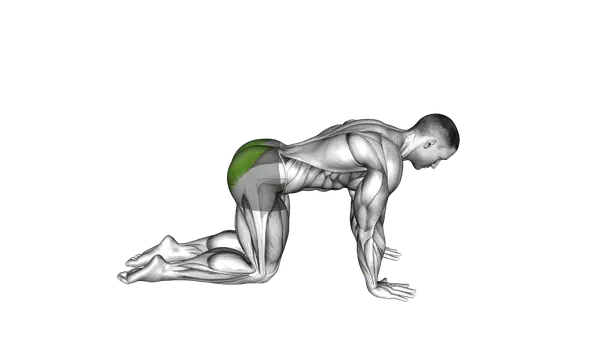
Bent Knee Glute Kickback

Bent Knee Glute Kickback

The Bent Knee Glute Kickback stands as a targeted isolation exercise that has earned its place in the arsenal of intermediate fitness enthusiasts looking to develop stronger, more defined glutes and hamstrings. This movement has gained popularity in bodybuilding circles and rehabilitation programs alike for its ability to effectively engage the posterior chain without placing excessive stress on the lower back. Unlike compound movements that distribute tension across multiple muscle groups, the bent knee variation creates a more concentrated stimulus directly on the gluteus maximus while simultaneously recruiting the hamstrings as secondary movers. The bent knee position is particularly valuable as it reduces hamstring involvement compared to straight-leg variations, allowing for more precise glute targeting: something essential for both aesthetic development and functional strength. For those in recovery phases or dealing with certain lower back conditions, this exercise provides a safer alternative to more demanding hip extension movements. The controlled nature of the kickback makes it ideal for rehabilitation protocols while still delivering enough resistance to stimulate muscle growth when properly loaded. The exercise becomes especially effective when incorporated into high-repetition finisher sets designed to create metabolic stress in the glutes. Strength athletes increasingly recognize the value of isolated glute work for improving performance in compound lifts. The bent knee glute kickback helps address posterior chain weaknesses that might limit progress in deadlifts, squats, and Olympic movements. By strengthening these muscles in isolation, athletes often find improved power generation and stability in their primary lifts. When programmed strategically: typically for 3-4 sets of 12-15 repetitions, this exercise proves valuable for hypertrophy-focused training splits and as an activation movement before heavier lifting sessions. The mind-muscle connection developed through this focused movement translates to better recruitment patterns during more complex exercises, making it not just an aesthetic builder but a performance enhancer for intermediate lifters seeking balanced posterior chain development.

Strength
Bodybuilding
Recovery
Bodyweight exercises
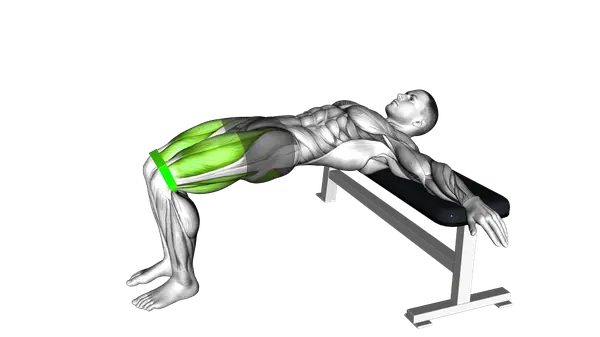
Banded Hip Thrusts

Banded Hip Thrusts

Banded Hip Thrusts stand as a powerful intermediate-level glute and hamstring developer that fitness enthusiasts across bodybuilding and HIIT communities have embraced for its strength-building potential. This variation adds variable resistance to the traditional hip thrust, creating maximum tension at the top of the movement where your glutes are fully contracted. The beauty of this exercise lies in its accessibility and remarkable effectiveness. By adding a resistance band, you challenge your posterior chain throughout the entire range of motion, particularly intensifying the stimulus when your hips reach full extension. This accommodating resistance pattern makes banded hip thrusts particularly valuable for athletes and lifters looking to break through plateaus in glute development and posterior chain strength. While appearing straightforward, banded hip thrusts require proper attention to engagement patterns and positioning to deliver their full benefits. The exercise targets primarily the gluteus maximus the largest muscle in your body, while simultaneously recruiting the hamstrings as critical synergists. This compound movement pattern mirrors many athletic movements, making it functionally relevant for both performance athletes and physique-focused individuals. For strength enthusiasts, progressive overload can be achieved by using bands of increasing resistance, altering band placement, or combining bands with free weights. The exercise fits seamlessly into various training protocols—whether you're programming it as a heavy strength movement (6-8 reps) or incorporating it into metabolic conditioning circuits with higher repetitions. Research consistently highlights hip thrusts as one of the most effective exercises for glute activation and development. The banded variation enhances this effect by maintaining tension throughout the movement and creating a unique stimulus that conventional loading methods can't replicate. This makes it particularly valuable for addressing common postural issues stemming from glute weakness and hamstring tightness in our increasingly sedentary society.

Strength
Bodybuilding
HIIT
Resistance Band
Glute Rolling With Ball

Glute Rolling With Ball

Glute Rolling With Ball is a versatile recovery and mobility technique that targets the often-overlooked gluteal muscles, which play a crucial role in lower body movements and core stability. This intermediate-level exercise effectively addresses both the glutes and engages the abdominal muscles as stabilizers during the movement, making it a comprehensive approach to lower body care. Unlike traditional strength training, this rolling technique falls into the intersection of HIIT and bodybuilding methodologies, serving as an excellent active recovery component between intense training sessions. Athletes and fitness enthusiasts incorporate glute rolling to enhance tissue quality and improve movement patterns before or after their workouts. The beauty of this technique lies in its dual benefit of increasing strength potential while simultaneously improving mobility in the posterior chain. By applying controlled pressure to the gluteal muscles, you're essentially performing a self-myofascial release that helps break up adhesions and trigger points that can limit your performance in squats, deadlifts, and other compound movements. Regular implementation of glute rolling can contribute to better movement mechanics and potentially reduce injury risk by addressing muscle imbalances and tightness. Many physical therapists and strength coaches recommend this practice as part of a comprehensive approach to glute activation and hip mobility work. What makes this exercise particularly valuable is its adaptability across different fitness levels and goals. While classified as intermediate, the pressure can be modified by adjusting your body position and weight distribution on the ball. This technique serves as an excellent complement to both high-intensity interval training protocols and traditional bodybuilding regimens. The fusion of strength and mobility benefits makes glute rolling with a ball a time-efficient addition to any fitness routine. By improving the function of these powerful muscles, you're essentially creating a more solid foundation for athletic performance while simultaneously addressing the recovery needs that intensive training demands.

Strength
Mobility
HIIT
Bodybuilding
Other