Lever Lateral Wide Pulldown
Reviewed by Tim Renting, Physiotherapist
The Lever Lateral Wide Pulldown is a machine-based pulling exercise designed to build upper-back width with a wide, stable movement path.


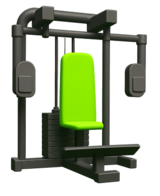
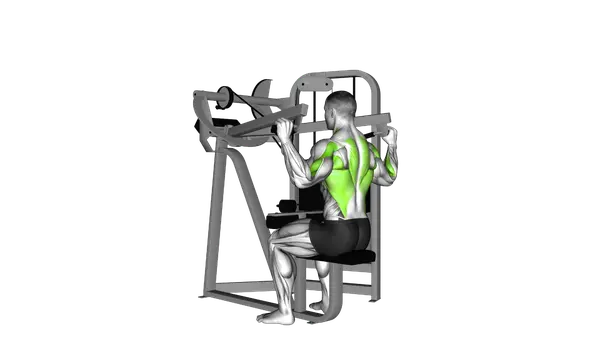
Lever Lateral Wide Pulldown
Muscles Worked: Lever Lateral Wide Pulldown
The Lever Lateral Wide Pulldown mainly trains your back, especially the lats, because they drive the elbows down and in toward your sides against the machine’s resistance. Your biceps help bend the elbows and keep the pull moving through the hardest part of each rep, while the upper back and rear side of the shoulders help keep the arms and shoulder blades in a strong path. You should feel the work in the sides of your upper back more than your hands or neck, and exercise choice matters because different pulling patterns can shift which muscles do more of the work.
Built for progress
Take the guesswork out of training
Get a personalized workout plan built around your goal, equipment and schedule. Train smarter, track every rep and keep moving forward, one workout at a time.






Technique and form
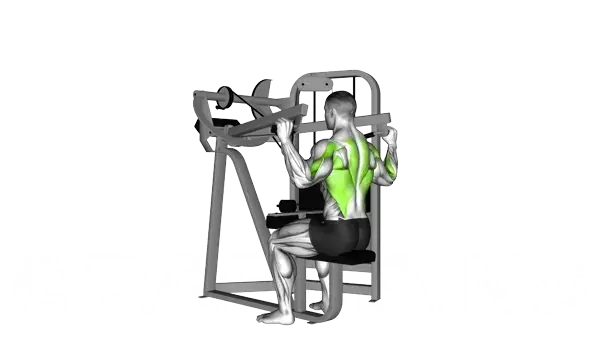
How to perform the Lever Lateral Wide Pulldown
- Sit facing the lever lateral wide pulldown machine adjust the seat, to the height that you're arms are fully extended
- Grasp the handles with a pronated (palms facing down) grip, hands placed slightly wider than shoulder-width apart on the bars.
- Sit tall with your back straight, core engaged, and feet flat on the floor for stability; this is your starting position.
- Take a deep breath in and initiate the movement by pulling your shoulder blades down and back.
- Pull the handles down in an arcing motion by driving your elbows toward your sides until the handles reach chest level, exhaling during the exertion.
- Maintain a neutral spine position throughout the movement and avoid leaning back to generate momentum.
- Pause briefly at the bottom of the movement, focusing on the contraction in your lats and upper back muscles.
- Slowly return to the starting position with controlled movement while inhaling, allowing your arms to fully extend without letting the weight stack touch down completely.
Important information
- Keep your chest pressed firmly against the pad throughout the entire exercise to maintain proper form and isolate the target muscles.
- Focus on pulling with your back muscles rather than your arms; think about driving your elbows down and back rather than pulling with your hands.
- Adjust the range of motion based on your flexibility and strength level – quality of movement is more important than pulling the handles as far down as possible.
- Avoid jerking or using momentum to move the weight, as this reduces effectiveness and increases injury risk.
Is the Lever Lateral Wide Pulldown good for muscle growth?
Yes. The Lever Lateral Wide Pulldown is a strong muscle-building exercise for your lats because it lets you load a vertical pull in a stable setup, so your back can do more of the work without your lower body limiting the set. Exercise selection changes which muscles get the biggest training effect, so using a wide pulldown gives your back a different growth stimulus than row-based options (Bourne et al., 2017; Maeo et al., 2024).
- Stable setup for harder back work — The machine fixes the path, which makes it easier to focus on driving your elbows down instead of balancing the weight. That usually means cleaner reps and a better chance of taking the lats close to failure safely.
- Wide arm path changes the feel — A wider grip usually reduces how much your biceps can dominate the pull, so more tension stays on the upper lats and upper back. If regular pulldowns turn into an arm exercise for you, this version often feels more direct.
- Easy to progress without guesswork — Pin-loaded machines make small jumps simple, so progressive overload is easy to track. Add a little weight, add a rep, or pause briefly at the bottom before moving on to harder sets.
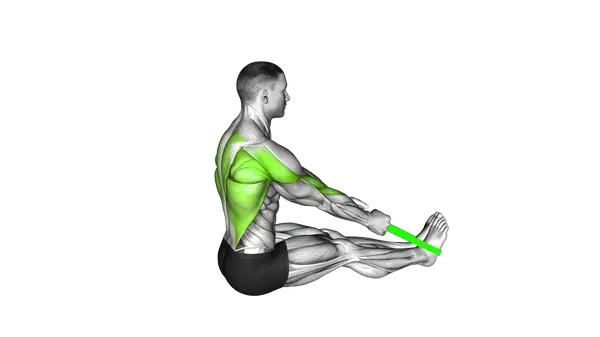
- Useful next to other back patterns — This pairs well with a row or a stretch-focused move like the Dumbbell Pullover because each one challenges the back differently. If you need a lighter option for extra volume, the Resistance Band Seated Row can fill that gap.
Programming for muscle growth
Do 3-4 sets of 8-12 reps with 75-120 seconds rest. Train it 1-2 times per week, usually after your first heavy back movement or as your main vertical pull. Use a load that leaves 1-2 reps in reserve on most sets, and once you hit the top of the rep range on all sets, increase the weight slightly.
Alternative Exercises
FAQ - Lever Lateral Wide Pulldown
The Lever Lateral Wide Pulldown primarily targets the latissimus dorsi (lats) while also engaging the side deltoids, rhomboids, and teres major. The wide grip particularly emphasizes outer lat development, which is crucial for developing that coveted V-taper physique.
Sit with your chest against the pad, feet flat on the floor, and grasp the handles with a wide grip. Keep your chest up, shoulders back, and initiate the movement by driving your elbows down and back while maintaining a slight arch in your lower back. Avoid leaning too far back or using momentum to complete the movement.
Increase difficulty by implementing a slower eccentric (lowering) phase of 3-4 seconds, adding a brief pause at the bottom of the movement, or incorporating drop sets. For advanced lifters, try unilateral variations by working one arm at a time to address strength imbalances.
Incorporate this exercise 1-2 times weekly as part of your back or pull-focused training days. It works well as a main row when your lower back is fatigued from heavy deadlifts or bent-over variants, or as a second row after a heavier compound pull. Program 3-4 sets of 8-12 repetitions for hypertrophy, with 48-72 hours recovery between sessions that target the same muscle groups.
Avoid bending your elbows to compensate for limited shoulder mobility, as this negates the stretching benefits. Don't rush through repetitions or use momentum—move slowly and deliberately. Also, never force the movement beyond the point of mild discomfort, as this could lead to shoulder strain.
Scientific References
Impact of exercise selection on hamstring muscle activation.
Bourne MN, Williams MD, Opar DA et al. · British journal of sports medicine (2017)
Maeo S, Balshaw TG, Nin DZ et al. · Medicine and science in sports and exercise (2024)
Sources are peer-reviewed academic publications from PubMed.
Reviewed by

Physiotherapist
Highlights Physiotherapist at GrabGains: Brings specialized clinical expertise to verify exercise content and ensure safe, effective movement guidance across the platform. Licensed Physiotherapist: Registered in the Dutch BIG Register (BIG: 59930315504) as a…
Lever Lateral Wide Pulldown
Thank you for your feedback!
Thank you for your feedback!