Lever Standing Calf Raise
Reviewed by Tim Renting, Physiotherapist
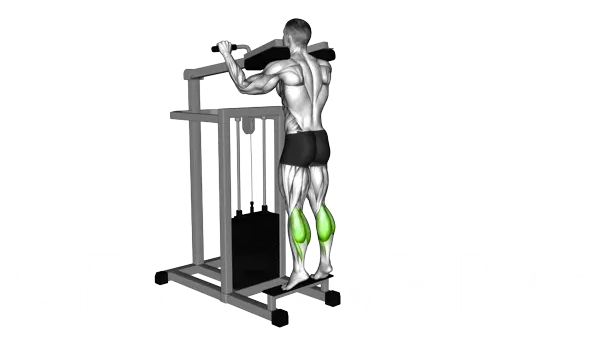
The Lever Standing Calf Raise is a machine exercise that strengthens the calves by lifting your heels while standing in a stable setup.
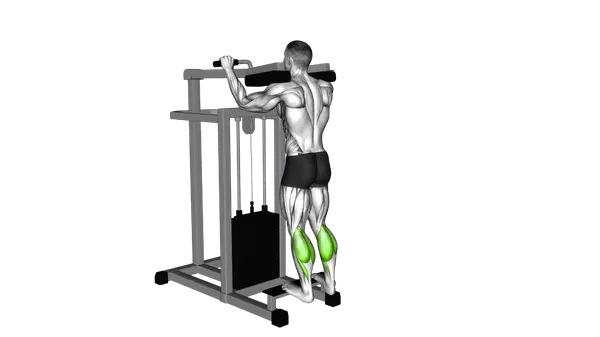
Lever Standing Calf Raise
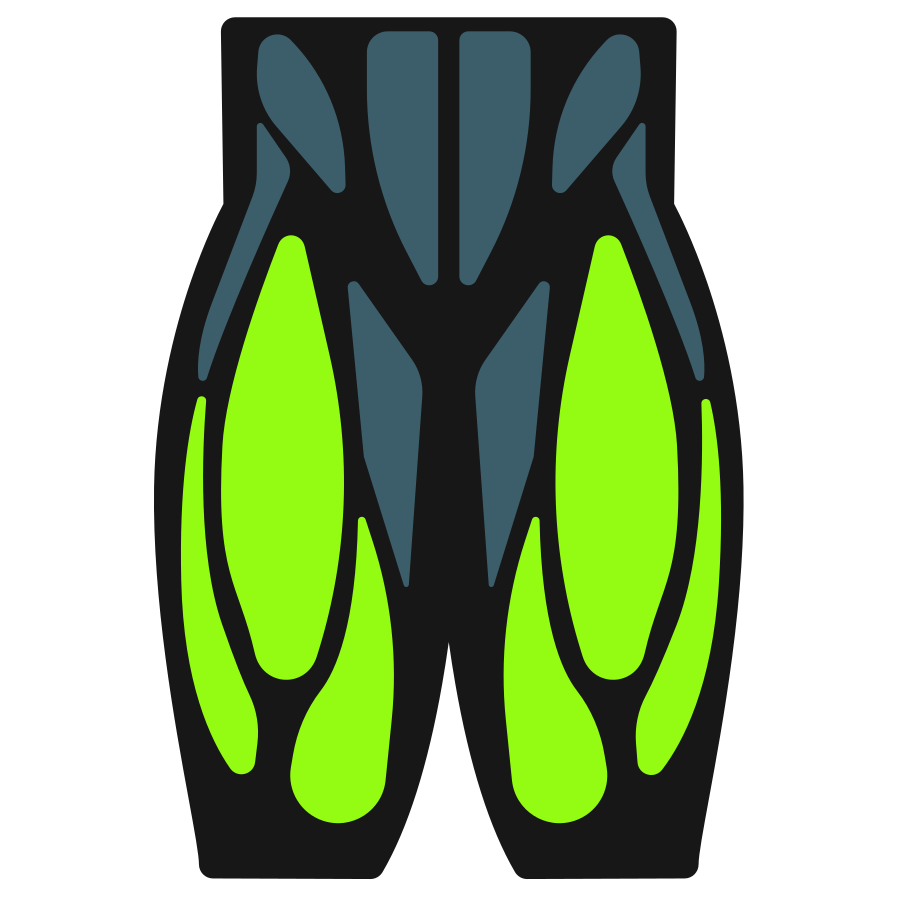
Muscles Worked: Lever Standing Calf Raise
The Lever Standing Calf Raise mainly trains your legs, with the calves doing almost all of the work. Your calf muscles drive the rep by pushing your heels up and controlling the lowering phase as your ankles move through a full range of motion. Because you’re standing, the movement also loads the lower legs in an upright position, and greater standing calf-raise strength has been associated with better sprint and jump ability in elite youth soccer players (Kadlubowski et al., 2024). Focus on feeling the calves shorten hard at the top and stretch at the bottom, not bouncing through reps.
Built for progress
Take the guesswork out of training
Get a personalized workout plan built around your goal, equipment and schedule. Train smarter, track every rep and keep moving forward, one workout at a time.






Technique and form
How to perform the Lever Standing Calf Raise
- Position yourself under the lever of the standing calf machine with your shoulders directly beneath the pads and your feet hip-width apart on the platform with only the balls of your feet and toes on the edge.
- Grasp the machine handles firmly for stability and stand tall with your core engaged, knees slightly bent to prevent locking.
- Release the safety mechanism and slowly lower your heels toward the floor until you feel a stretch in your calf muscles, breathing in during this eccentric phase.
- Maintain a neutral spine position with your head aligned with your torso, avoiding any forward lean or hunching.
- Push through the balls of your feet to raise your heels as high as possible, contracting your calf muscles fully as you exhale during this concentric phase.
- Pause briefly at the top position with your calves fully contracted, maintaining tension throughout your lower legs.
- Control the descent as you lower your heels back down, maintaining proper alignment with your knees tracking over your toes.
- Complete your desired number of repetitions while maintaining consistent control and tempo throughout the movement.
Important information
- Keep your knees slightly soft throughout the exercise to focus the work on your calf muscles rather than locking out the joints.
- Ensure your feet remain parallel and pointing forward to evenly distribute the load across both calves.
- Focus on a full range of motion, allowing your heels to drop below the level of the platform for a complete stretch before rising to the maximum height.
- If you experience any unusual pain in your Achilles tendon, reduce the range of motion or consult with a fitness professional.
Is the Lever Standing Calf Raise good for muscle growth?
Yes. The Lever Standing Calf Raise is a strong choice for building bigger calves because it lets you load the movement safely, train through a long range of motion, and progress in small jumps over time. In elite youth soccer players, greater standing calf-raise strength was also associated with better sprint and jump performance, suggesting this pattern is relevant to useful lower-leg force production (Kadlubowski et al., 2024).
- Easy progressive overload — The machine makes balance less of a limit, so your calves can do the work instead of your whole body trying to stay organized. That usually means cleaner reps and a clearer path to adding weight week to week than with a bodyweight raise.
- Better top-and-bottom tension — This setup makes it easier to get a hard squeeze at the top and a deep stretch at the bottom. Calves respond well when you use the full range instead of doing short, bouncy reps that skip the hardest part.
- Useful for force production — In elderly men, calf-raise training improved rapid force output and balance in research, which supports the calves’ role in pushing off the floor during lower-body movement (Ema et al., 2017). That makes this more than a cosmetic exercise.
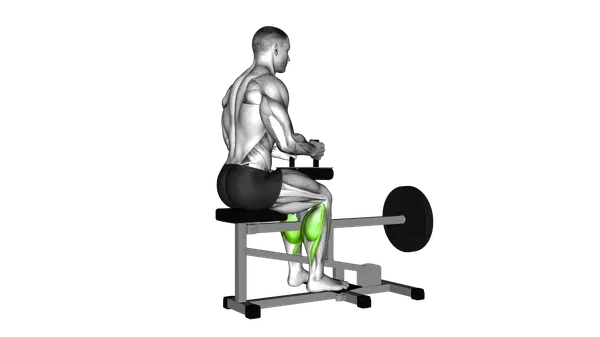
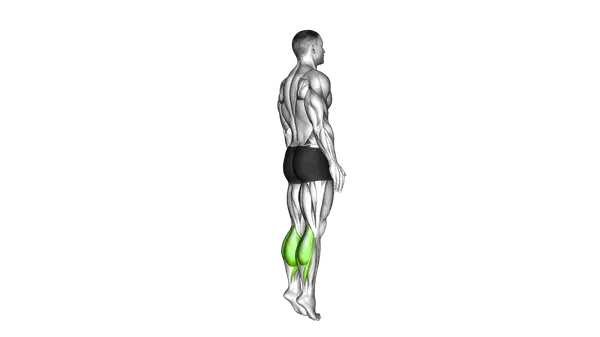
- Simple to pair with other calf work — Use this as your heavier standing pattern, then add a different angle like lever-seated-calf-raise-plate-loaded or a simpler finisher like bodyweight-standing-calf-raise. That combination gives you heavy reps plus extra volume without beating up the rest of your workout.
Programming for muscle growth
Do 3-5 sets of 8-15 reps with 60-90 seconds rest, 2-3 times per week. Use a 1-second pause at the top and lower the weight slowly for 2-3 seconds so the calves stay loaded the whole rep. When you can hit the top end of the rep range with full depth and no bouncing, add a small amount of weight.
Lever Standing Calf Raise vs. Other Calves Exercises
Want to know how the Lever Standing Calf Raise compares to other calf exercises? These comparisons break down loading potential, range of motion, difficulty, and which option fits best for strength, muscle growth, or lower-leg endurance.
Lever Standing Calf Raise Variations
Alternative Exercises
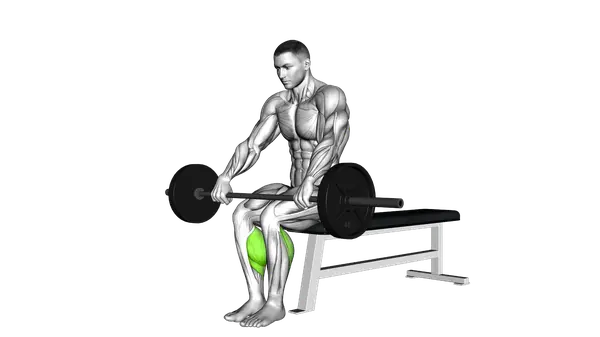
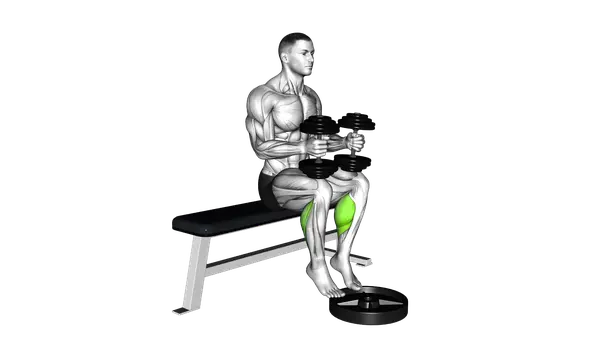
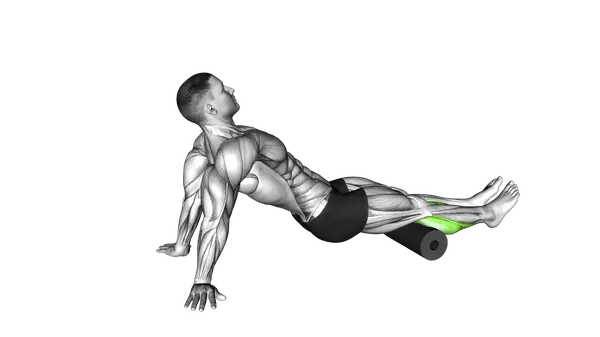
FAQ - Lever Standing Calf Raise
The Lever Standing Calf Raise primarily targets the gastrocnemius (the larger, more visible calf muscle) and secondarily works the soleus (the deeper calf muscle). When performed with proper form, it also engages stabilizing muscles in the ankles and feet.
For optimal calf development, train them 2-3 times per week with at least 48 hours between sessions to allow for recovery. Since calf muscles are used frequently in daily activities, they can handle higher training frequencies than larger muscle groups, but still require adequate recovery time.
The most common mistakes include flattening your lower back too aggressively or over-arching excessively instead of maintaining a small natural lumbar arch, letting your hips shift or rotate out of position, rushing through the movement, and losing upper-back tightness. Focus on keeping a stable, natural spine, moving with control, and maintaining full-body tension rather than forcing your back into an unnaturally flat position.
To increase difficulty, try slowing down the eccentric (lowering) phase to 3-4 seconds, implementing single-leg variations, or adding pause holds at the top and bottom positions. You can also experiment with foot positioning (toes straight, inward, or outward) to target different areas of the calf muscles.
Calf development is often limited by genetics and inadequate training intensity. To overcome this plateau, ensure you're implementing progressive overload, training through a full range of motion, and using sufficient volume (12-20 reps per set). Additionally, calves respond well to both heavy weight/low rep and lighter weight/high rep approaches, so varying your protocols can be beneficial.
Scientific References
Effect of calf-raise training on rapid force production and balance ability in elderly men.
Ema R, Ohki S, Takayama H et al. · Journal of applied physiology (Bethesda, Md. : 1985) (2017)
Kadlubowski B, Keiner M, Wirth K et al. · Sports (Basel, Switzerland) (2024)
Sources are peer-reviewed academic publications from PubMed.
Reviewed by

Physiotherapist
Highlights Physiotherapist at GrabGains: Brings specialized clinical expertise to verify exercise content and ensure safe, effective movement guidance across the platform. Licensed Physiotherapist: Registered in the Dutch BIG Register (BIG: 59930315504) as a…
Lever Standing Calf Raise
Thank you for your feedback!
Thank you for your feedback!