Shoulder exercises with medicine ball
Medicine ball chest exercises focus on power, coordination, and dynamic upper-body strength. Unlike traditional resistance training, medicine ball movements emphasize acceleration, force transfer, and control through instability. This makes them especially valuable for athletes, functional fitness enthusiasts, and anyone looking to improve explosive pushing strength. When programmed correctly, medicine ball exercises complement traditional chest training by developing speed, stability, and coordination alongside muscular strength.
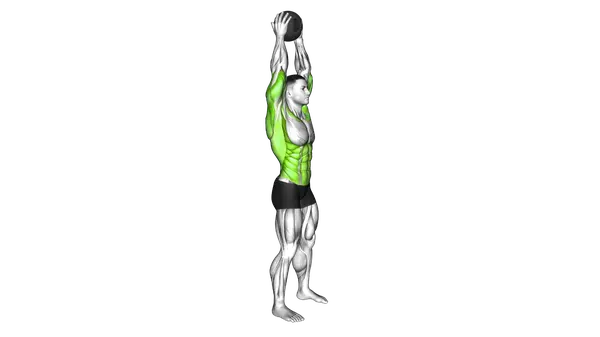
Medicine Ball Overhead Slam
The Medicine Ball Overhead Slam is a powerful full-body exercise that builds explosive strength, core stability, and conditioning.

Single-Arm Medicine Ball Push-Up
The Single-Arm Medicine Ball Push-Up is a push-up variation that challenges strength, balance and control by using one arm.
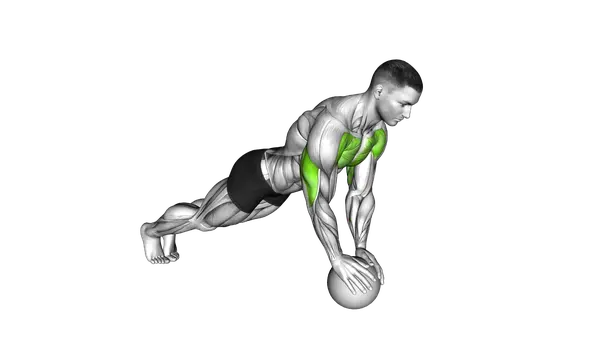
Two Arm Medicine Ball Push-Up
The Two Arm Medicine Ball Push-Up is a bodyweight exercise that builds chest, triceps and core strength while challenging stability.
Why medicine balls add a unique stimulus
Benefits of chest training with a medicine ball
Medicine ball chest exercises challenge the body in ways that free weights and machines cannot. The combination of dynamic loading and instability increases neuromuscular demand while reinforcing proper movement patterns.
Key advantages:
- Improves explosive pressing power
- Enhances shoulder and core stability
- Encourages coordinated upper-body movement
- Supports athletic and functional performance
- Adds variety without heavy joint stress
Best placement in your training plan
When to use medicine ball chest exercises
Medicine ball chest exercises work well in warm-ups, power-focused sessions, conditioning workouts, or athletic training blocks. They are often used early in a workout when speed and coordination are the priority. Because loading is typically lighter, these movements can be performed more frequently without excessive fatigue, making them a valuable addition alongside barbell or dumbbell chest training.
Foundational movements for power and control
Key chest exercises with a medicine ball
The following exercises form the core of effective chest training with a medicine ball. Each movement emphasizes explosive force, stability, or dynamic pressing strength.
- Single-Arm Medicine Ball Push-Up: A unilateral pressing movement that challenges chest strength, shoulder stability, and core control while addressing left-to-right imbalances.
- Two-Arm Medicine Ball Push-Up: A dynamic push-up variation that increases range of motion and instability, forcing the chest and shoulders to work harder through each repetition.
- Wall Balls: A full-body movement that integrates chest, shoulders, legs, and core while reinforcing explosive upper-body pushing under fatigue.
Exercise overview
| Exercise | Primary focus | Training goal |
|---|---|---|
| Single-arm medicine ball push-up | Chest + shoulders | Stability and unilateral strength |
| Two-arm medicine ball push-up | Chest + shoulders | Dynamic strength and control |
| Wall balls | Chest + full body | Power and conditioning |
Programming for performance and progression
How to integrate medicine ball chest exercises
Medicine ball chest exercises are most effective when paired with traditional strength work. Use them to develop speed and coordination before heavier presses or as part of conditioning-focused workouts. Unilateral movements help improve balance and stability, while dynamic push-ups and wall balls support endurance and explosive output. Together, these exercises create a well-rounded approach to chest development beyond pure hypertrophy. Create your personal training program in the app tailored to your goals, fitness level, and schedule.
Built for progress
Take the guesswork out of training
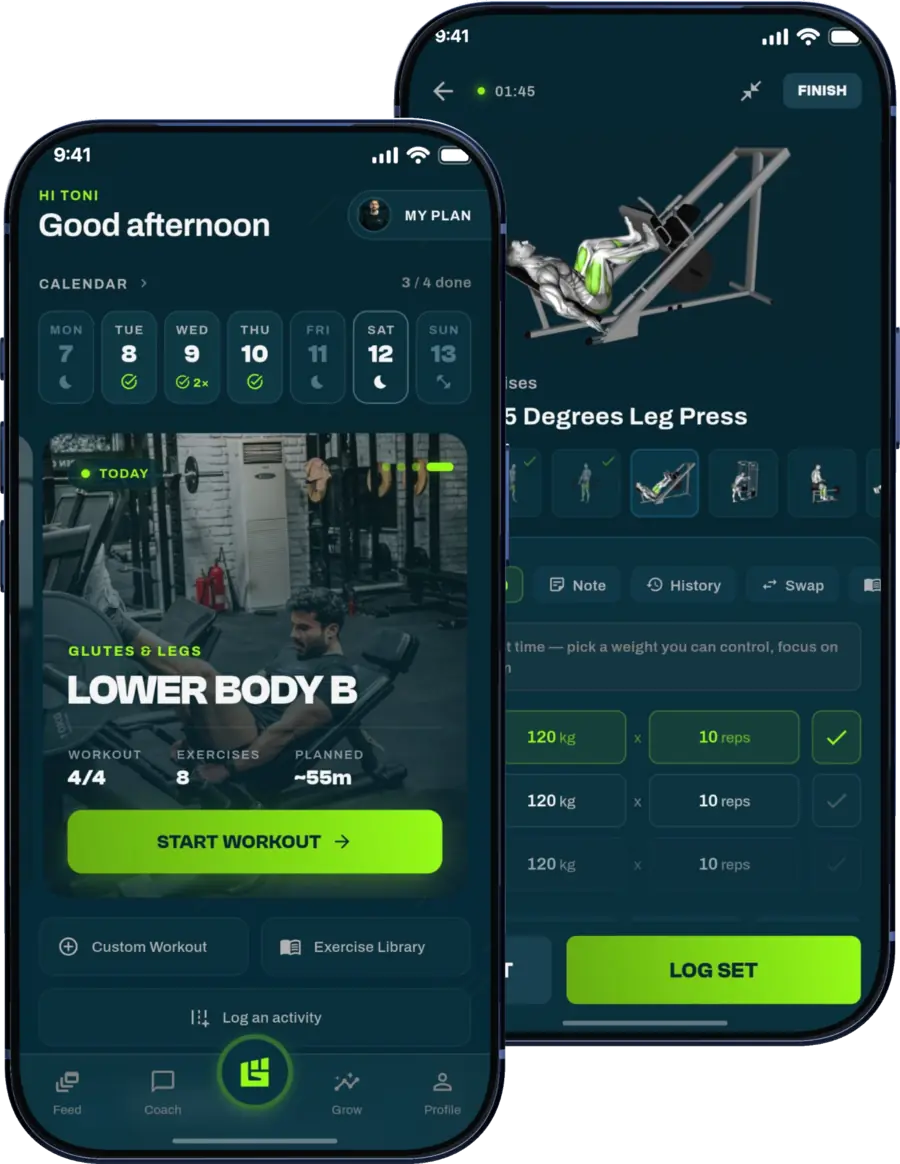
Get a personalized workout plan built around your goal, equipment and schedule. Train smarter, track every rep and keep moving forward, one workout at a time.




Frequently asked questions about chest exercises with medicine ball
Yes, when scaled appropriately. Two-arm push-up variations are often suitable for beginners, while single-arm movements are better suited for more advanced users.
These exercises can be performed one to three times per week, depending on intensity and overall training volume.
Medicine ball exercises complement traditional training but do not fully replace heavy presses for maximal strength or hypertrophy.
Focus on controlled power, stable positioning, and consistent execution. Quality movement matters more than speed alone.
Medicine ball chest exercises primarily target the pectoral muscles, with strong involvement from the shoulders, triceps, and core. Instability increases overall muscle activation.