Bodyweight vs weights: a guide to your best physique
Debating bodyweight vs weights? This guide breaks down muscle growth, strength gains, and fat loss to help you choose the right training for your goals. The timeless fitness debate comes down to a simple choice: do you use your own body for resistance or do you lift external weights like dumbbells and barbells? One path offers unparalleled convenience and focuses on skill mastery, while the other provides a direct, measurable route to building maximum strength and muscle.
So, which one is right for you? The answer depends entirely on your goals. Are you looking for a flexible routine you can perform anywhere, anytime? Or is your main objective to build as much muscle as possible in the most efficient way?
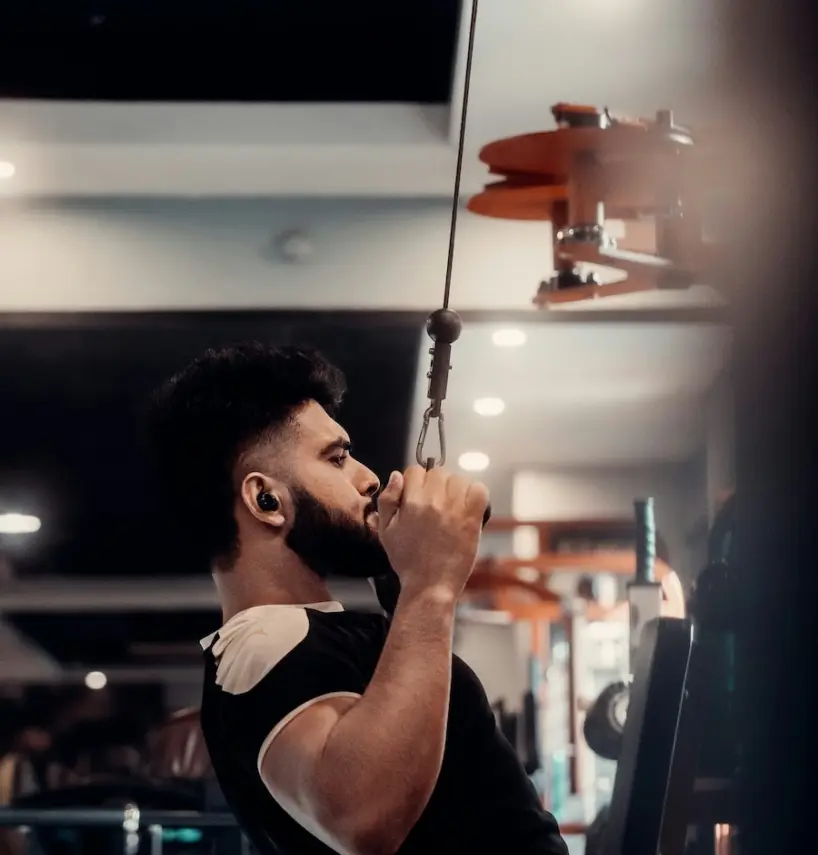
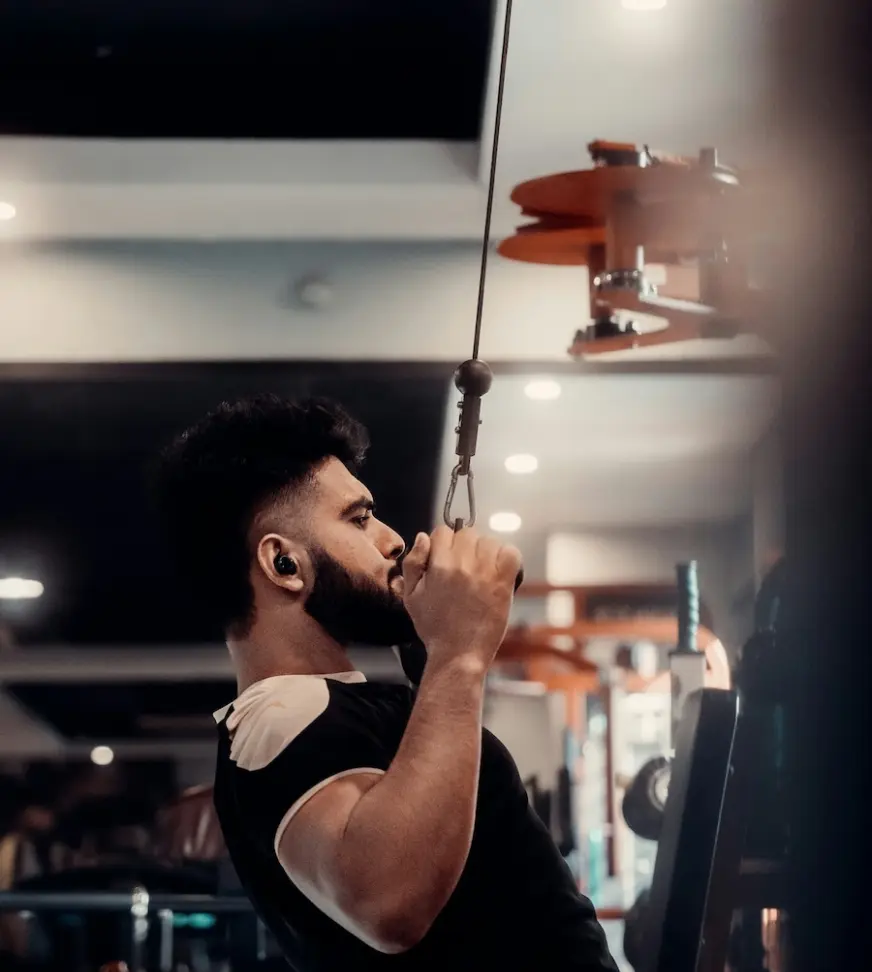
Choosing your path: bodyweight or weights
The "bodyweight vs weights" debate is a classic for a reason. Both methods will make you strong, but they do so in fundamentally different ways. The best approach isn't a one-size-fits-all solution; it's the one that aligns with your goals, budget, and, most importantly, your lifestyle.
Bodyweight training, also known as calisthenics, is the art of mastering movement using your own body as resistance. Your muscles don't differentiate between a dumbbell and your body weight—they only understand tension. This makes bodyweight exercises incredibly effective for building functional strength, enhancing coordination, and developing impressive muscular endurance. Its greatest advantage? It costs nothing and offers complete freedom. You can get a phenomenal workout anywhere.
Weight training, on the other hand, provides a clear and simple path for progressive overload, which is the cornerstone of getting bigger and stronger. To progress, you just add more weight to the bar. It’s a straightforward, measurable method to force your body to adapt, making it an highly efficient tool for building pure muscle mass and absolute strength.
Built for progress
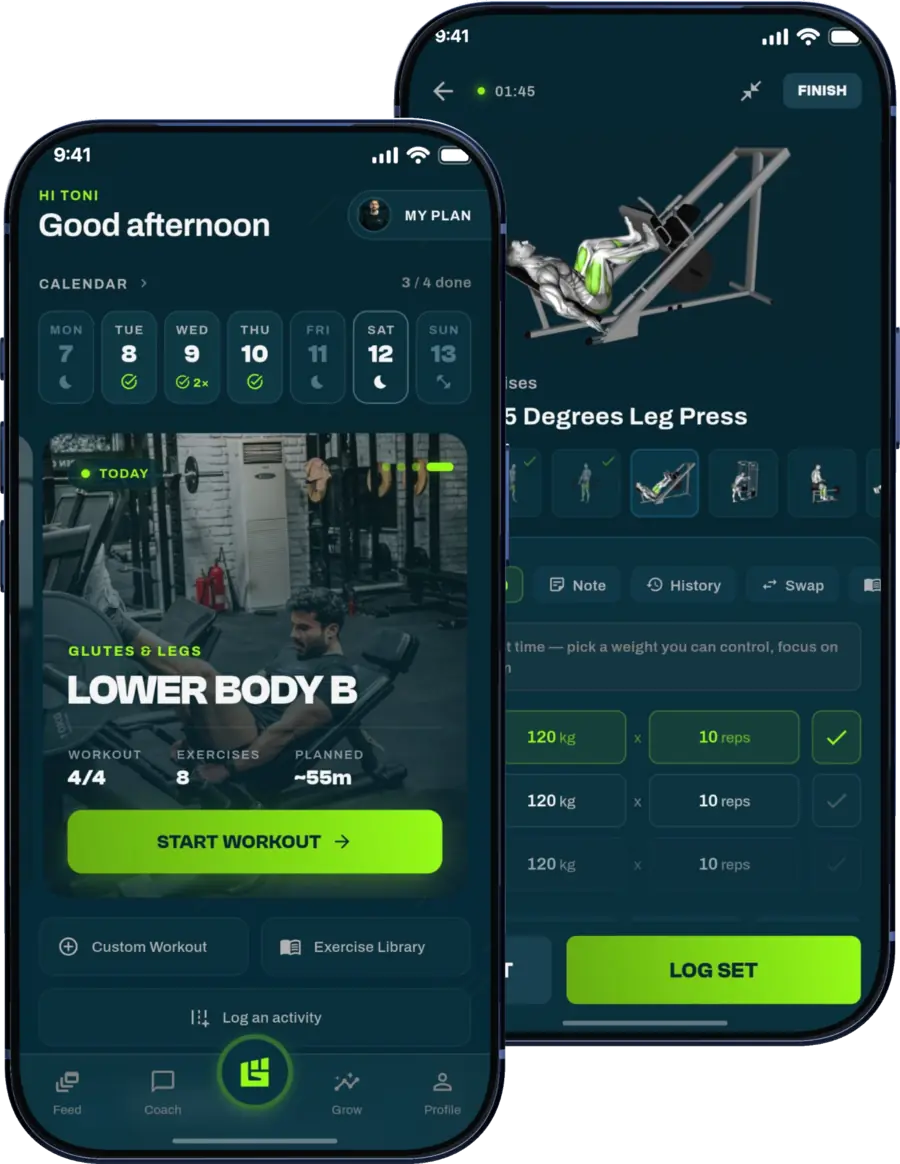
Take the guesswork out of training
Get a personalized workout plan built around your goal, equipment and schedule. Train smarter, track every rep and keep moving forward, one workout at a time.






Quick comparison: bodyweight training vs weightlifting
To make an informed decision, it helps to see the two methods side-by-side. This table breaks down the core differences to help you choose where to begin.
| Attribute | Bodyweight Training | Weight Training |
|---|---|---|
| Accessibility & Cost | Do it anywhere, no cost involved. | Requires a gym membership or buying equipment. |
| Progressive Overload | Skill-based (harder variations, more reps, slower tempo). | Load-based (simply add more weight). |
| Hypertrophy Potential | Good, but can be harder to scale for advanced lifters. | Excellent, and easily scalable for all experience levels. |
| Absolute Strength | Moderate, ultimately limited by your own body mass. | Excellent, with virtually unlimited potential for growth. |
| Skill & Coordination | High skill ceiling; mastering your body is a key goal. | Lower skill floor for many basic lifts. |
| Injury Risk (Beginner) | Generally lower, as the load is fixed to your body weight. | Higher risk if form is poor or you lift with your ego. |
Ultimately, the differences between these methods matter less than your commitment.
The most effective workout is the one you actually stick with. Whether you choose bodyweight, weights, or a blend of both, consistency is what will bring you results.
As you explore resistance training, you'll discover nuances within each category, such as the ongoing discussion around resistance bands vs free weights. Every tool has its place. The key is understanding where each method excels so you can create the most effective routine for your specific goals.
The real impact on muscle growth
When it comes down to it, the central question in the bodyweight vs weights debate is about building muscle, or hypertrophy. Can push-ups really deliver the same results as a bench press? The answer isn't a simple yes or no; it depends on how effectively you apply the two main drivers of muscle growth: mechanical tension and metabolic stress.
At the end of the day, both training styles can absolutely trigger muscle growth. Your muscles don't know if you're lifting a dumbbell or your own body; they just respond to the challenge you present. The key is to ensure that challenge is intense enough to force them to adapt and grow.
Can calisthenics compete with weights for hypertrophy?
For years, conventional wisdom held that you needed heavy iron to build serious muscle. However, we're now seeing that the playing field is much more level than previously thought.
It all comes down to training volume and intensity. A landmark eight-week study directly comparing push-ups and the bench press found no significant difference in muscle gains between the two groups. Both experienced solid chest growth and some triceps development, demonstrating that as long as you push yourself close to failure, your muscles will grow.
This doesn't mean bodyweight training is superior, but it confirms it is a completely valid method for building muscle, particularly for the upper body. Exercises like pull-ups, dips, and advanced push-up variations provide more than enough resistance to build a powerful back, chest, and arms.
The idea that you can't build muscle with bodyweight exercises is just that—a myth. The real question isn't if you can, but how you program your workouts to keep challenging your muscles as they get stronger.
Regardless of your chosen path, incorporating smart supplements for muscle growth and fat loss can support your hard work and help accelerate your results.
Where weights have a clear advantage
While you can build an impressive upper body with calisthenics, your legs are a different story. This is where weights have a distinct advantage for anyone serious about adding size.
Your legs contain some of the largest and strongest muscles in your body. To stimulate growth in your quads, hamstrings, and glutes, you need to challenge them with heavy loads. Bodyweight squats and lunges are excellent starting points, but your leg muscles adapt to your body weight relatively quickly.
This is where progressive overload becomes much easier with weights.
- Barbell Squats: Nothing compares to heavy barbell squats for packing on overall leg mass.
- Deadlifts: These build incredible strength and size throughout the entire posterior chain, from your calves to your traps.
- Leg Presses: This machine allows you to load up the weight to isolate your quads and glutes with less strain on your back.
Advanced bodyweight movements like pistol squats and Nordic hamstring curls can build functional strength, but they are also highly technical skills. They may not provide the raw, heavy stimulus needed for maximum hypertrophy as effectively as a loaded barbell. For most individuals seeking to build bigger legs, weights are essential.
Building pure strength: which method wins?

Muscle size and strength are related, but they are not the same. Pure strength is your nervous system's ability to recruit as many muscle fibers as possible to move a maximal load. When we compare bodyweight training to weights for building this kind of absolute strength, one method has a clear and undeniable edge.
If your primary goal is to lift the heaviest weight possible—as seen with powerlifters and strongman athletes—then weight training is supreme. This is not up for debate. The reason is simple and comes down to the single most important principle of getting stronger: progressive overload.
With weights, applying this principle is straightforward and almost infinitely scalable. Want to get stronger? Add another plate to the bar. This allows for precise, measurable increases in load, which is the clearest signal you can send your body to build not just muscle, but true neurological power.
The clear advantage of external loads
When strength is the primary objective, the ability to control the load is paramount. Bodyweight exercises are limited by a fixed resistance: you. While you can make calisthenics more difficult, you cannot simply add a few pounds to the "weight" as you can with a barbell.
This limitation becomes apparent once you move beyond the beginner stage. Push-ups will make a novice much stronger, but an intermediate who can already perform 30 perfect reps is building endurance, not maximal strength, by doing more.
To continue gaining strength with bodyweight training, you must progress to more difficult skills that alter your leverage, such as transitioning from a standard push-up to a one-arm push-up. While this is an effective progression, it represents a massive leap in both intensity and skill, not the small, manageable 2-5% increase that is ideal for consistent strength gains.
For building maximal strength, nothing beats the direct, quantifiable challenge of adding more weight to the bar. It’s the most reliable way to force the neurological adaptations you need to boost your one-rep max (1RM).
What the science says about strength gains
The evidence consistently supports free weights for superior strength development. When measuring raw strength and muscle gains over structured training periods, weight training almost always proves more effective.
One revealing eight-week study examined university-age men training with either free weights, machines, or just their bodyweight. The results were stark: the free weight group saw significant gains in lean mass and a reduction in body fat. In contrast, the bodyweight-only group showed no measurable strength improvements in the same timeframe. Researchers attributed this to the difficulty of quantifying and progressing the load. You can explore the details in this comparative strength training study.
This gets to the core of the bodyweight vs weights debate: for pure strength, the stimulus from weights is more direct and far easier to manage for steady, long-term progress.
The verdict on building raw power
If your mission is to become as brutally strong as possible—to deadlift twice your bodyweight or achieve an impressive bench press—the path forward is clear. Weight training provides the tools you need to pursue those numbers without compromise.
Here’s a brief summary of why weights win for pure strength:
- Measurable Progression: Adding 5 lbs to your squat is a simple, repeatable step forward. There is no guesswork.
- Unlimited Ceiling: You are not limited by your own body mass. You can continue adding load for years.
- Optimal Intensity: It allows you to train consistently in the low rep ranges (1-5 reps) that are proven to build maximal neural strength.
While bodyweight training builds an impressive foundation of functional capacity, it operates by a different set of rules. For the single-minded pursuit of absolute strength, the barbell will always be your most valuable ally.
The most effective path to fat loss
When it comes to fat loss, the conversation often shifts to cardio versus lifting. However, in the bodyweight vs weights debate, both are forms of resistance training. Both will help you change your body composition, but the true magic lies not just in the calories burned during your workout, but in what happens to your body afterward.
Ultimately, fat loss comes down to a calorie deficit: you must burn more calories than you consume. The type of exercise you choose, however, influences the kind of weight you lose. The goal is not merely to see the number on the scale decrease; it’s to burn body fat while preserving the metabolically active muscle you've worked hard to build.
This is where resistance training, in any form, surpasses cardio.
Both intense bodyweight circuits and heavy lifting sessions burn a significant number of calories. A high-rep bodyweight routine can feel like a lung-busting cardio session, elevating your heart rate dramatically. But heavy weight training has a secret weapon.
The power of the after-burn effect
This "secret weapon" is the after-burn effect, or excess post-exercise oxygen consumption (EPOC). It refers to the extra calories your body burns for hours after you have finished training. Your metabolism remains elevated as your body works to repair muscle fibers, replenish energy stores, and return to a state of balance.
While high-intensity interval training (HIIT) with bodyweight exercises creates a decent EPOC, heavy resistance training almost always produces a longer, more sustained effect. Lifting heavy weights creates more significant micro-trauma in the muscles, which demands a great deal of energy for repair over the next 24-48 hours. Essentially, you burn more calories while you rest.
While both methods elevate your metabolism, the deep muscular repair required after heavy lifting typically creates a greater and longer-lasting after-burn. This makes it an incredibly efficient way to increase your total daily energy expenditure.
Preserving muscle is the real goal
Here is where the debate has a clear winner. When you lose weight without resistance training, you lose both fat and muscle. Losing muscle is a metabolic disaster. Muscle tissue burns more calories at rest than fat tissue, so every pound of muscle you lose lowers your resting metabolic rate. This makes it harder to continue losing fat and much easier to regain it later.
This is precisely where weight training demonstrates its superiority for fat loss. A landmark 2012 study found that a resistance training group not only lost significant fat but also gained lean muscle mass. This holy grail of body recomposition—losing fat and building muscle simultaneously—is most effectively driven by progressive resistance. The ability to methodically add a few more pounds to the bar makes this process much more manageable. For a deeper dive into the science, you can read the full comparison of calisthenics and weights for fat loss on BodySpec.com.
- Weight Training in a Deficit: The heavy stimulus signals to your body that your muscle is essential and should not be broken down for fuel. It prioritizes muscle preservation above all else.
- Bodyweight Training in a Deficit: This is also effective for preserving muscle, especially for beginners. However, more advanced lifters may struggle to create enough stimulus to retain all their muscle mass without adding external weight.
The verdict on sculpting a lean physique
For pure fat loss and building a lean, defined physique, weight training holds the edge. It is simply the most reliable way to preserve—and even build—precious, calorie-burning muscle while you are in a calorie deficit.
This ensures the weight you are shedding comes from fat stores, not muscle. The result is a higher metabolism and the "toned" or sculpted look most people desire. Bodyweight training is still an incredible tool, particularly for HIIT-style circuits to maximize your in-workout calorie burn. But when the primary goal is to reshape your body by losing fat and keeping muscle, lifting weights offers a more direct and powerful path.
How to program progression for long term results
Your body will not get stronger or bigger just by showing up. It adapts only when you provide a clear reason to, and that reason is called progressive overload. It is the non-negotiable rule of training: you must consistently make your workouts harder over time.
Without this challenge, your body hits a plateau. The principle is the same whether you are lifting iron or your own body, but how you apply it is where the two methods truly diverge. With weights, the path is direct. With bodyweight training, it is more of an art form.
Progressing with weights the direct approach
Progressing with weights is all about the numbers. It is a system of small, measurable changes that force your muscles to adapt, leading to significant results over the long term. You have a few simple levers to pull.
The most obvious method is to increase the load. If you squatted 150 pounds for 8 reps last week, hitting 155 pounds for 8 reps this week is a perfect example of progressive overload. This simple, linear path is why weight training is so incredibly effective for building raw strength and muscle.
But adding plates to the bar is not the only way. You can also manipulate other factors:
- Increase Reps: Lifting the same weight for more repetitions, such as moving from 8 reps to 10 reps with 150 pounds.
- Increase Sets: Doing more total sets of an exercise. Bumping your bench press from 3 sets to 4 sets increases your total workload.
- Improve Form: Executing the lift with more control, a deeper range of motion, or a slower tempo. This increases time under tension and makes the same weight feel harder.
This level of granular control makes it easy to track your progress and ensures you are always moving forward.
With weight training, progression is a numbers game. The ability to make small, measurable increases in load or volume is its greatest strength, offering a clear and direct path to getting stronger.
Progressing with bodyweight the creative approach
How do you add five pounds to a push-up? You cannot, at least not directly. This is where bodyweight progression becomes a creative practice rooted in physics and skill. Instead of adding external weight, you learn to manipulate your own body to make an exercise harder.
Once you can comfortably perform 20 standard push-ups, simply doing more reps will primarily build endurance, not strength or size. To continue driving adaptation, you must increase the intensity by changing the exercise itself. This is where calisthenics excels, building not just strength but also impressive skill and coordination.
Here is how you make bodyweight exercises harder:
- Change the Leverage: This is the heart of calisthenics. Altering your body position changes how much of your own weight you are lifting. Moving from an incline push-up (easier) to a flat push-up, and eventually to a decline push-up (harder), is a systematic way to increase the load.
- Progress to Unilateral Movements: Training one limb at a time is a game-changer. A standard bodyweight squat might feel easy, but a pistol squat forces one leg to support your entire body. It demands a huge amount of strength, balance, and mobility.
- Increase Time Under Tension (TUT): Slow things down. Adding a three-second pause at the bottom of a pull-up or taking five seconds to lower yourself in a dip can make a familiar exercise feel brutally effective.
- Decrease Stability: Performing an exercise on an unstable surface, like doing push-ups on gymnastic rings, activates all your smaller stabilizer muscles. This builds functional strength and promotes healthier, more resilient joints.
This approach is less about just lifting and more about mastering your own body. It may not be as direct as adding another plate to the bar, but it builds a unique kind of athleticism that pays off in real-world movement.
Making the right choice for your goals
The entire "bodyweight vs weights" argument is not about finding a single winner. It is about selecting the right tool for the job. The best training method will always be the one you consistently follow. Your goals, lifestyle, and access to equipment are what will truly guide you toward a plan that delivers long-term results.
For some people, the answer is clear. If you want to be a powerlifter and chase a massive one-rep max, you need free weights. It is non-negotiable. Conversely, if you are completely new to training, bodyweight exercises are a much safer starting point. They allow you to master fundamental movement patterns before you even consider adding an external load.
Matching the method to your lifestyle
Your training must fit into your life, not complicate it. If you travel frequently for work or have an unpredictable schedule, a routine built around calisthenics is ideal. It eliminates the "I can't get to the gym" excuse and allows you to get a solid workout in anywhere, anytime.
This decision tree illustrates the two main paths for training progression, helping you see how each choice branches out into different specialties and outcomes.

As you can see, both paths lead to real progress. The journey and the skills you develop along the way, however, are completely different. The goal is not to lock yourself into one method for life, but to build a flexible system that serves you.
The most powerful approach is almost always a hybrid one. Combining the raw strength-building power of weights with the skill and convenience of bodyweight exercises creates a well-rounded, resilient physique.
Building your personalized and sustainable system
In the end, it all comes down to you. Are you driven by watching the numbers on the bar increase, or do you value the freedom of a routine you can do anywhere? Be honest about the factors we have discussed:
- Your Primary Goal: Is it maximum strength, muscle mass, skill acquisition, or simply convenience?
- Accessibility: Do you have reliable access to a decent gym?
- Cost: Are you prepared to invest in a gym membership or home equipment?
- Injury History: Do you have past injuries that would benefit from lower-impact, self-limiting exercises first?
Answering these questions will point you in the right direction. For anyone seeking a truly personalized plan that adapts as you progress, the GrabGains workout builder can design a hybrid routine that incorporates the best of both worlds. The "bodyweight vs weights" debate is resolved once you realize you do not have to choose—you can use both to build a stronger, more capable version of yourself.
Frequently asked questions
When it comes to training, a few common questions always arise. Let's clear the air on the bodyweight vs weights debate so you can focus on what truly matters: getting results.
Can I build big legs with only bodyweight exercises?
Honestly, building seriously big legs with just your bodyweight is very challenging. A beginner will certainly see some initial size from bodyweight squats and lunges, but your leg muscles are powerful and adapt to your own weight quickly. For substantial growth, you need the kind of heavy mechanical tension that is difficult to generate without an external load.
Advanced movements like pistol squats and Nordic hamstring curls can build impressive strength and a solid base. However, they demand a high level of skill, and for many people, they simply will not provide enough of a challenge to sustain gains once you are past the beginner stage. If mass is your goal, you cannot beat barbells for squats and deadlifts.
Is bodyweight training safer than weight training?
For someone walking into a gym for the first time, bodyweight training is generally a safer option. The resistance is limited to your own body mass, so you do not have the risk of dropping a heavy weight you cannot handle. It is the perfect way to master fundamental movement patterns before you even consider adding a barbell.
However, that does not mean it is foolproof. Poor form in calisthenics can easily lead to repetitive strain injuries over time. Conversely, weight training performed with good technique and a smart progression plan is also incredibly safe. The real danger comes from "ego lifting"—piling on more weight than you can handle with proper form.
At the end of the day, safety isn't about the tool you use. It's about executing every rep with proper form, listening to your body, and following an intelligent plan.
Should I combine bodyweight and weight training?
Absolutely. For almost everyone, a hybrid routine that blends both is the key to a well-rounded, genuinely capable physique. It allows you to get the best of both worlds.
You can use heavy compound lifts like squats, deadlifts, and bench presses to build your foundation of raw strength and mass. Then, integrate bodyweight exercises such as pull-ups, dips, and planks to improve muscular endurance, control, and skill-based strength. This is the exact approach many functional fitness athletes use, and it offers incredible flexibility. You can have your heavy gym days and still get in a great workout with just your body when you are at home or traveling.
Ready to take the guesswork out of your training? The GrabGains fitness platform designs personalized workout plans that adapt to your performance in real time. Whether you’re all-in on bodyweight, weights, or a hybrid plan, our app builds the right routine for your goals.
Get inspired and motivated