Why recovery matters more as you get stronger
Learn why recovery matters more as you get stronger. We explain the science of adaptation, signs of under-recovery, and smart strategies to maximize your gains. The worst advice strong lifters absorb is also the most flattering. Train harder. Add more. Push through. Earn your rest.
That mindset works for a while because beginners can recover from a lot of bad decisions. The weights are lighter, the skill demands are lower, and the total stress of a session usually isn't large enough to punish sloppy recovery right away. They can miss sleep, eat inconsistently, stack hard days together, and still improve.
Then strength climbs, and the rules change.


A stronger athlete doesn't just produce more force. They create a bigger disruption that the body has to repair and adapt to. Think of training stress like digging a hole. A new lifter uses a hand shovel and makes a shallow hole. A stronger lifter uses heavy equipment and digs much deeper. Both athletes trained, but the second athlete now needs more time, more resources, and better planning to fill that hole back in and come out stronger.
That's why recovery matters more as you get stronger. Recovery is where the adaptation happens. Exercise creates microscopic muscle damage, while repair and strengthening occur during rest and sleep. When recovery falls short, athletes can end up with depleted glycogen, persistent soreness, and poorer performance in the next session, as explained by UCHealth's overview of rest and recovery.
Sleep sits at the center of that process. If you want a simple companion resource on improving sleep through exercise, that connection matters because better training can support better sleep, and better sleep improves your ability to recover from hard training.
Built for progress
Take the guesswork out of training
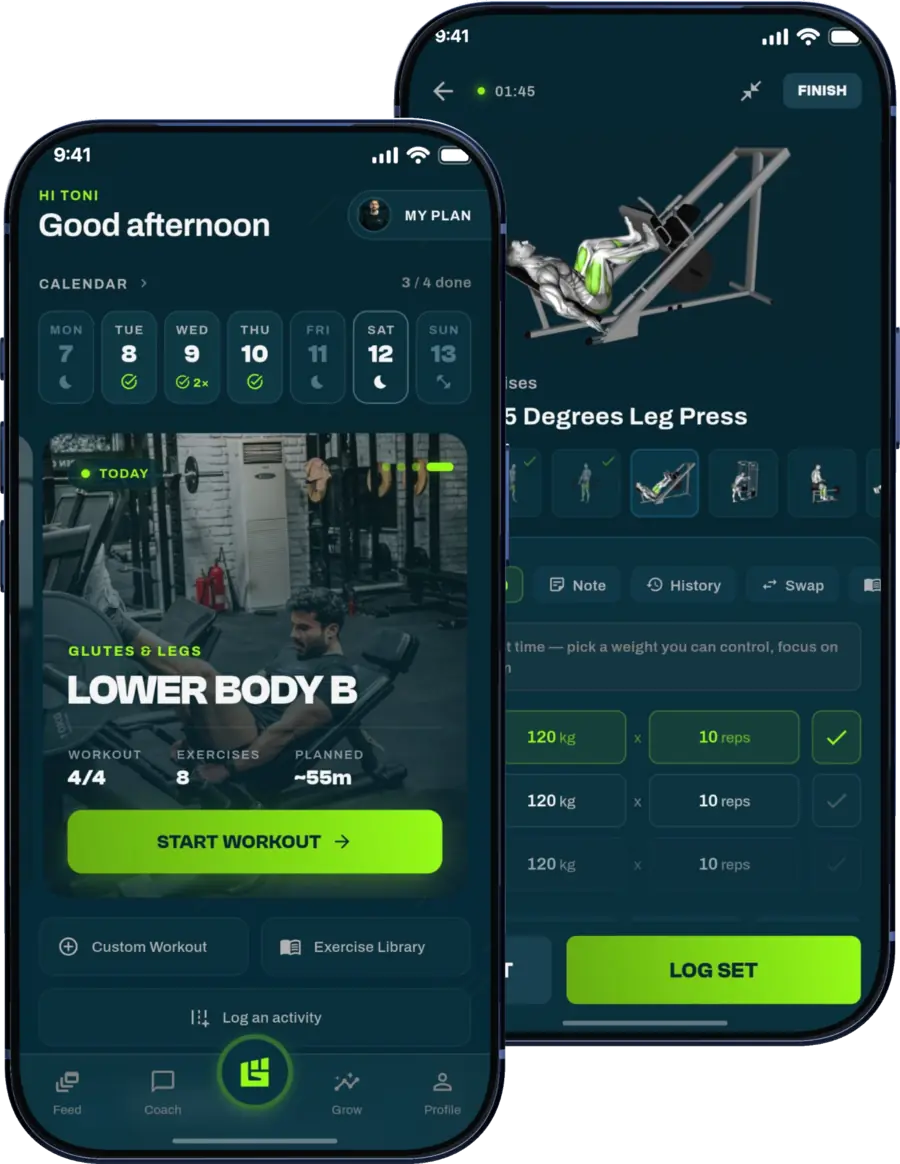
Get a personalized workout plan built around your goal, equipment and schedule. Train smarter, track every rep and keep moving forward, one workout at a time.






The paradox is simple. The stronger you get, the less useful “just work harder” becomes. Progress depends more on the full cycle: stimulus, recovery, adaptation.
Introduction
Strength training culture often treats recovery like a reward. Finish enough brutal sessions, then maybe you've earned a day off.
That's backward.
Recovery isn't the break from progress. It's the phase that turns training stress into usable strength. If you ignore that, your program becomes a long string of hard workouts with no real adaptation attached to them. You keep sending a signal, but the body never gets enough space to answer it.
Why stronger lifters hit a different wall
A novice can improve with almost any reasonable plan because the bar for adaptation is low. The training stimulus is new, the loads are manageable, and their recovery debt stays small enough that normal life often covers it.
A strong intermediate or advanced lifter lives in a different world. The loads are heavier, the sets cost more, and each hard session takes a bigger bite out of muscle tissue, coordination, and readiness.
Bigger lifts don't just demand more effort in the moment. They demand more restoration after the session is over.
That's why progress starts to feel less linear over time. It's not because your body stopped responding. It's because the cost of each useful training stimulus rose faster than your recovery habits did.
The recovery debt most lifters miss
If your training creates stress faster than your body can resolve it, you build recovery debt. A little debt is normal. That's part of productive training. Too much debt turns good programming into self-sabotage.
You see it in athletes who keep adding sets when their performance is already flattening. You see it in lifters who think soreness means growth, or who assume a bad week just means they need more motivation.
Usually, they don't need more hype. They need enough recovery to absorb what they already did.
The strength paradox why bigger lifts demand smarter rest
The strongest athletes often look the most disciplined in training. What separates them long term, though, is usually their discipline outside training. They respect how expensive heavy work becomes.
The simplest model for this is the stimulus-recovery-adaptation curve. You train, performance drops temporarily because of fatigue, then the body rebuilds and adapts. Time the next hard session well, and strength trends up. Interrupt that process too early, and fatigue piles up faster than adaptation.

Why stronger athletes pay a higher cost per session
A hard set isn't just “hard.” Its impact depends on how much force, control, and tissue stress the athlete can create.
A stronger lifter moves loads that expose more of the body to stress at once. Heavy squats, deadlifts, presses, carries, and explosive work don't just challenge one muscle. They demand output from the nervous system, trunk, connective tissue, and coordination under fatigue. That's why two athletes can both say they did “five hard sets,” while one recovers in stride and the other needs much more restoration before quality returns.
A 2024 systematic review in Sports Medicine - Open found that training to failure, higher training volumes, and exercises with higher eccentric torques often increase recovery demands. It also noted that lower-volume squat and bench-press sessions at 80% of 1RM produced less fatigue and faster recovery than higher-fatigue alternatives, which helps explain why stronger lifters have to manage recovery more carefully as performance rises in the review on resistance training recovery demands.
The hole gets deeper faster than most lifters expect
The beginner's problem is usually insufficient stimulus. The advanced lifter's problem is often excessive fatigue relative to recovery capacity.
That mismatch shows up in a few common ways:
- Failure addiction means every set becomes a test instead of a tool. Training to failure has a place, but using it everywhere drives up fatigue fast.
- Volume creep sneaks in when lifters add “just one more” accessory, one more backoff set, one more finisher. The session expands, but the adaptation doesn't always improve with it.
- Exercise selection mistakes matter more when you're strong. Movements with a big eccentric load and long muscle lengths can be effective, but they also raise the recovery bill.
Coaching rule: As your capacity to create stimulus rises, your ability to recover from that stimulus becomes the bottleneck.
The subtle signs that the bill is coming due
Under-recovery rarely starts with a dramatic collapse. It usually starts with quiet friction.
Performance signs often appear first. Warm-ups feel heavier than they should. Bar speed drops before the work sets get serious. Reps disappear at loads that were recently manageable.
Then the physiological signs creep in. Soreness lingers too long. Sleep gets lighter or more broken. You finish sessions feeling drained instead of trained.
Psychological signs matter too. Lifters under-recovered from repeated hard training often lose sharpness before they lose toughness. Focus slips. Motivation gets erratic. Small frustrations feel bigger than they should.
Those aren't character flaws. They're often recovery signals.
Key warning signs of under-recovery
Most athletes wait too long to address recovery because they only look for extreme signals. They expect under-recovery to announce itself with obvious pain or a total performance crash.
It usually doesn't.
More often, it shows up as a widening gap between what your program asks for and what your body is ready to deliver. That gap can sit there for weeks while you call it stress, a rough patch, or “just being busy.”
Start with the non-negotiables
Before you reach for advanced fixes, check the basics. If these are unstable, everything else becomes less effective.
- Sleep quality: If you're in bed long enough but wake up unrefreshed, recovery is already compromised.
- Food consistency: Hard training without enough fuel often feels like a motivation problem when it's really a restoration problem.
- Session spacing: Hammering the same muscle groups or movement patterns too close together can keep fatigue levels high.
- Daily stress: Work pressure, poor sleep, travel, and life chaos all compete with recovery.
If you want an additional checklist, GrabGains insights on recovery gives practical examples of what poor recovery can look like in real training.
Recovery status check
| Metric / Area | Sign of Under-Recovery | Sign of Optimal Recovery |
|---|---|---|
| Training performance | Loads that should feel routine feel unusually heavy | Warm-ups feel normal and work sets match expectations |
| Reps and output | You lose reps early or technique breaks down sooner than usual | You can repeat quality efforts with stable form |
| Muscle soreness | Soreness hangs around and changes how you move | Mild soreness fades and doesn't limit training quality |
| Energy | You drag into sessions and need extra hype to start | You feel ready to train without forcing it |
| Sleep | You fall asleep poorly, wake often, or don't feel restored | Sleep feels deeper and you wake more refreshed |
| Mood | Irritable, flat, or mentally scattered | Stable mood and better focus |
| Motivation | You dread sessions you'd normally enjoy | You feel engaged, even when the work is hard |
| Recovery between sessions | Fatigue carries over and stacks up | You can train hard, recover, and hit the next session with purpose |
What works and what doesn't
When athletes notice these signs, they often respond the wrong way.
What doesn't work is adding stimulants, chasing soreness, or treating every bad session like a grit problem. That's like driving a car with the gas pedal down while the engine warning light is on.
What works is reducing friction at the source.
- Protect sleep first. If sleep is unstable, the rest of your recovery plan is built on soft ground.
- Trim training stress before you collapse. Sometimes the fix is fewer hard sets, not better willpower.
- Use deloads on purpose. Don't wait until your body forces one on you.
- Auto-regulate. If readiness is low, adjust load, volume, or exercise selection instead of pretending the plan exists in a vacuum.
Good recovery doesn't always feel dramatic. Often it feels boring, steady, and repeatable. That's exactly why it works.
Evidence-backed recovery strategies for serious lifters
Most recovery advice fails because it treats every tactic as equally important. They aren't. Serious lifters do better when they think in layers.
The bottom layer carries almost everything. The top layer can help, but it can't rescue bad fundamentals.

The base layer that actually moves the needle
Start with the habits that support adaptation whether you train for strength, hypertrophy, or mixed performance.
Foundational guidance from the Mayo Clinic recommends resting one full day between exercising each specific muscle group and notes that many people can see significant strength improvements with just two or three 20- or 30-minute sessions per week in its strength training guidance. Oklahoma.gov also advises 7 to 9 hours of sleep nightly to support muscle repair and hormone balance, which is discussed alongside sleep needs in this article from Full Circle Function & Fitness.
For serious lifters, that doesn't mean minimal training is always enough. It means adaptation still depends on recovery principles even when your programming is more advanced.
Three habits matter most:
- Sleep: This is the anchor habit. If your sleep is inconsistent, your training quality and recovery quality usually follow it down.
- Nutrition: Hard sessions need enough total food and enough protein to support repair. Under-eating often hides behind “clean eating.”
- Hydration: A dehydrated athlete often feels flat, tight, and less coordinated before they realize what's off.
The middle layer that sharpens recovery
Once the basics are stable, strategic programming becomes the next lever.
A scheduled deload is not backing off because you're weak. It's a way to lower fatigue before it starts controlling your performance. Some lifters need full reductions in volume. Others benefit from keeping movement patterns in place while dialing back effort.
Auto-regulation is just as useful. On paper, a workout can be perfect. In real life, your readiness changes. Sleep, life stress, soreness, and accumulated fatigue all affect what you can productively do that day.
Here's a simple side-by-side way to think about recovery monitoring methods:
| Method | What it looks like | Main advantage | Main limitation |
|---|---|---|---|
| Subjective tracking | Notes on soreness, mood, energy, sleep, and motivation | Easy and free | Can be distorted by emotion or habit |
| Objective performance tracking | Reviewing reps, loads, technique quality, and session trends | Tied directly to training output | Requires consistent logging |
| Biometric tracking | Wearables and readiness tools such as sleep and HRV trends | Adds another layer of context | Can create noise if you overreact to single-day readings |
That's where tools can help. If you want a structured approach to evidence-based recovery for athletes, combining training logs with daily readiness notes gives you far more useful insight than relying on memory.
The top layer that supports but doesn't replace the basics
Mobility work, easy cardio, walking, gentle movement, massage tools, and light restoration sessions can all help. They improve how you feel, reduce stiffness, and keep you moving without adding much stress.
But they only work as support.
If you're sleeping poorly, under-eating, and training too hard too often, no recovery gadget will save the week.
Use the extras after the foundation is in place. That order matters.
How to monitor your recovery status like a pro
Most lifters say they listen to their body. In practice, many of them listen only when the body starts yelling.
That's too late.
Recovery monitoring works best when it catches drift early. You don't need a lab. You need a consistent system that shows whether your readiness is stable, improving, or slipping.

Subjective tracking is simple and underrated
A short daily check-in can reveal more than people expect. Rate your sleep quality, soreness, stress, mood, and willingness to train. Keep it brief enough that you'll do it.
The value is pattern recognition. One rough day means very little. Several days of poor sleep, rising irritability, and declining enthusiasm tell you that recovery debt may be accumulating.
This method is accessible and fast. Its weakness is bias. Some lifters minimize every warning sign. Others catastrophize normal fatigue.
Performance markers tell the truth fast
Your training log is one of the best recovery tools you already own.
If warm-up sets feel slow, technique degrades early, or your normal working weights feel unusually costly, something is off. Performance markers matter because they are hard to argue with. You either handled the load well, or you didn't.
Useful things to watch include:
- Bar speed trends: If the same loads move slower across sessions, fatigue may be rising.
- Rep quality: Sloppy reps often appear before outright missed lifts.
- Session tolerance: If your capacity for productive work shrinks, recovery may be lagging behind training stress.
Biometric tools add context, not certainty
Wearables can provide another layer of information, especially when they track sleep trends or heart rate variability. The key is to use them as a compass, not a judge.
HRV can be useful, but it's also affected by many variables beyond training. If you want a plain-language overview of factors impacting heart rate variability, that broader context helps prevent overreacting to a single low reading.
A single metric rarely makes the decision for you. Good coaching comes from matching data with context.
For busy people, this is where an organized system matters. Logging readiness, workout performance, and recovery trends by hand is possible, but it takes discipline and time. An adaptive platform such as GrabGains can analyze logged sets, reps, weight, and workout difficulty, then adjust future training based on how you're responding rather than assuming you're always ready for the original plan.
That matters because the strongest athletes don't guess well. They monitor well.
Personalizing recovery with an adaptive plan
Strong lifters don't just need hard training. They need the right amount of hard training at the right time.
That sounds obvious, but managing it gets messy fast. Work stress changes. Sleep quality drifts. Some weeks your lifts are crisp. Other weeks the same loads feel like a grind. A static plan can't account for that unless someone is reviewing your data and adjusting the program.
Where personalization actually helps
An adaptive plan is useful when it does more than hand you a template. It should respond to performance trends, not just the calendar.
That means looking at what you completed. Sets, reps, loads, exercise choices, consistency, and difficulty all tell part of the recovery story. If your output drops or fatigue appears to be building, the next week may need lower volume, different exercise selection, or a lighter exposure rather than another aggressive progression.
For people comparing adaptive coaching tools with static templates, this breakdown of AI workout plan vs free program is a practical starting point.
The point isn't less training
The point is better timing.
A good adaptive system helps you stay in the productive zone where training is hard enough to drive progress but not so costly that every week becomes a recovery problem. That's especially useful for busy professionals and stronger athletes, because both groups have less room for wasted fatigue.
Conclusion
The stronger you get, the more expensive each productive session becomes. That's why recovery matters more as you get stronger. Not as a nice extra, but as a performance driver.
The lifters who keep progressing aren't always the ones who suffer the most in training. They're often the ones who recover with the most discipline, adjust before fatigue spills over, and treat rest as part of the plan.
Train hard. Recover on purpose. Let adaptation catch up.
If you want a training system that accounts for performance, fatigue, and progression instead of forcing you through a static template, download GrabGains on iOS or Android and explore a more recovery-aware way to build strength.
Get inspired and motivated