Signs you’re recovering poorly
Signs you’re recovering poorly - Identify 8 signs you're recovering poorly, from performance plateaus to mood swings. Get tips to fix your recovery and break. When “training hard” becomes “hardly training,” the shift often goes unnoticed at first. You're showing up, logging sessions, pushing sets, and doing what disciplined athletes are supposed to do. But your numbers stop moving. Your body feels heavy. Workouts that used to feel challenging now feel strangely flat, and outside the gym you're more drained than you should be.
That's usually not a motivation problem. It's often a recovery problem.
Good training only works when your body has enough time, fuel, sleep, and nervous system bandwidth to adapt. If recovery falls behind, the stress from training keeps piling up while the payoff gets smaller. At that point, more effort doesn't fix it. Better recovery does.
This matters even more for busy professionals and hybrid athletes who stack lifting, conditioning, work stress, poor sleep timing, and inconsistent meals into the same week. One hard session rarely causes trouble. A repeated pattern does. That's why many of the most useful signs you're recovering poorly aren't dramatic. They show up as subtle drifts in performance, resting heart rate, sleep quality, mood, and motivation.
If that sounds familiar, you're not broken. You're probably under-recovered.
Built for progress
Take the guesswork out of training
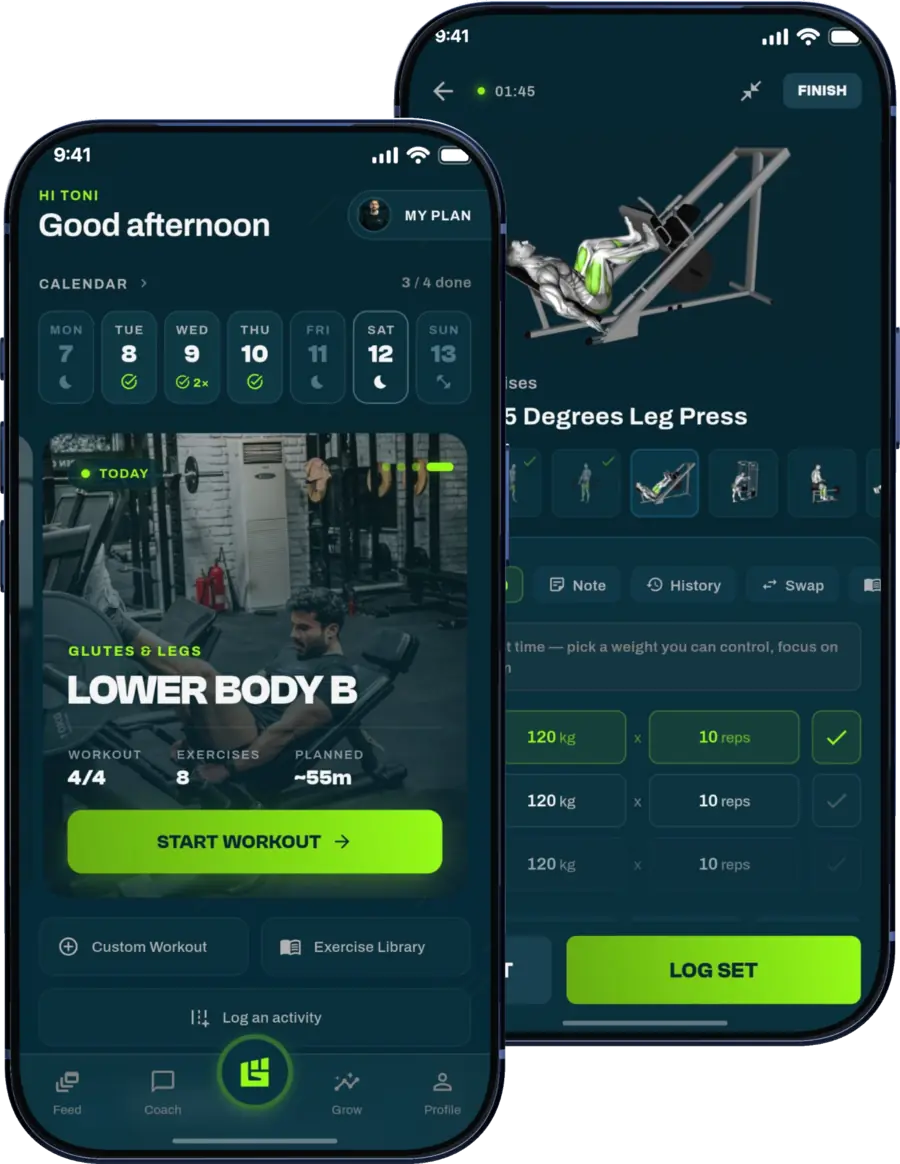
Get a personalized workout plan built around your goal, equipment and schedule. Train smarter, track every rep and keep moving forward, one workout at a time.






Below are eight signs your body is throwing up a warning flag, plus what to do when you spot them. If burnout is also part of the picture, Dr. Valencia Root on athlete burnout gives useful context on how physical and mental overload can overlap.
1. Persistent plateau in strength or performance metrics

A plateau by itself doesn't always mean poor recovery. Sometimes your programming is stale, your exercise selection is off, or your goal needs more time. But when your lifts stall while effort stays high and the rest of your system feels worse, recovery is one of the first places to look.
I see this most often in lifters who keep pushing load while ignoring the quality of the sessions around it. A squat that's been stuck for weeks, HYROX station times that won't budge, or rep quality that drops even though motivation is still there usually means adaptation isn't catching up to training stress.
A practical example is the busy trainee who logs every workout in GrabGains, stays consistent, and still notices that the same weights feel harder week after week. That's not laziness. That's a signal.
What the plateau usually means
Muscle and nervous system adaptation happen between sessions, not during them. If sleep is poor, calories are too low, stress is high, or training density is too aggressive, your body can maintain effort for a while without progressing.
In this context, trend data helps. Visual progress tracking is far more useful than memory. If your top sets, rep quality, pace, or session readiness are drifting down, use that data to diagnose and fix plateaus before you assume you just need more intensity.
Practical rule: If performance is flat and the sessions feel harder than they should, earn the right to push again by recovering better first.
A few adjustments usually work better than forcing another hard week:
- Use your logs: Review your recent training history for stalled lifts, failed rep targets, or declining work capacity.
- Pull volume back temporarily: A deload often helps when fatigue has masked fitness.
- Check your food intake: If you're training hard and under-eating, the plateau may be nutritional as much as physical.
- Let the program adapt: If your app is showing repeated stagnation, adjust exercise difficulty, frequency, or total load instead of repeating the same failed setup.
2. Chronic fatigue and lack of energy between workouts

You finish Monday's session, sleep a normal number of hours, and by Wednesday you still feel flat. The warm-up feels heavy. Work feels harder. You need more caffeine just to feel functional. That pattern points to poor recovery, not a lack of discipline.
Short-term tiredness after hard training is expected. Ongoing fatigue between workouts is different. It usually shows up outside the gym first. Focus drops, patience gets shorter, and low-effort tasks start feeling like they require far too much energy.
For serious trainees, objective tracking helps. If your training log in GrabGains shows normal or rising workload while your session notes, readiness, or perceived effort keep getting worse, that mismatch matters. You may still be completing workouts, but the cost of each session is climbing.
What chronic fatigue usually means
Recovery debt builds from more than training alone. Hard sessions, poor sleep timing, low calorie intake, high work stress, and too little low-intensity movement can all stack together. A program that looks reasonable on paper can still be too much in the context of real life.
I see this often with lifters who assume the answer is better motivation. It usually is not. If energy is low for days at a time, the body is failing to absorb the stress you are giving it.
That changes the decision-making. Adding more stimulants, extra conditioning, or another high-effort session often digs the hole deeper.
Chronic fatigue is a load-management problem first. Treat it that way.
A better response is simple and measurable:
- Audit the pattern: Check whether low-energy days line up with poor sleep, missed meals, high-stress workdays, or stacked hard sessions.
- Trim training stress for a week: Reduce volume, remove failure work, or cut one demanding session. Small reductions often restore energy faster than pushing through.
- Match food to output: If bodyweight is dropping, hunger is high, or performance feels shaky, under-fueling may be the main issue.
- Accept app feedback fully: If GrabGains suggests lighter work or a lower target, accept it. Adaptive programming only helps if you stop overriding it.
- Watch recovery trends, not one bad day: One sluggish session is normal. Repeated fatigue across the week is the signal.
If you want a clearer framework for what your body is trying to repair between sessions, read this guide on how to optimize muscle recovery.
If you're unsure whether fatigue has crossed into a bigger recovery problem, this guide on how to prevent overtraining injuries is a useful next step.
3. Elevated resting heart rate and poor heart rate recovery

This is one of the few recovery markers that gives you something objective instead of relying on mood or guesswork.
A sustained rise in resting heart rate compared with your personal baseline is a practical warning sign that your system is under strain. Experience Life recommends recording resting heart rate periodically and comparing it over time, and CrossFit Sanitas notes that if your morning resting heart rate rises by 5 to 10 beats per minute, it can signal that you're not recovering properly.
That matters because many athletes still perform “fine” for a while. The body can hide fatigue before it fully breaks down.
How to use heart rate data without overthinking it
Measure under the same conditions. First thing in the morning often works best. What matters isn't someone else's normal. It's your normal.
If a lifter usually wakes up with a low, steady resting heart rate and then starts seeing a consistent jump during a high-stress training block, I take that seriously, especially if sleep, mood, and performance are also slipping. A HYROX athlete can get away with hard conditioning for a while, but the nervous system keeps score.
A wearable can help if you use it correctly. Don't obsess over one bad reading. Watch the trend.
- Track baseline, not isolated days: A pattern matters more than one noisy morning.
- Compare it with real life: Higher resting heart rate plus poor sleep and flat training is much more meaningful than heart rate alone.
- React early: Shift that day's session to easier work, mobility, or recovery instead of insisting on intensity.
- Use it with other signals: Heart-rate variability, sleep quality, and session feel together are more useful than any one metric.
If you want a deeper look at what your body is doing after hard training, this breakdown on how to optimize muscle recovery helps connect the physiology to the decisions you make in your program.
4. Increased susceptibility to illness and slow immune recovery

If you keep catching every cold going around, or if a minor illness lingers longer than it used to, don't ignore it. Poor recovery often shows up in the immune system before people admit training is becoming a problem.
CrossFit Sanitas connects poor recovery with getting sick more often, alongside insomnia, mood changes, reduced performance, and increased resting heart rate. It also highlights a blind spot many athletes miss. Poor recovery isn't always about training too hard. Low energy availability, under-eating, poor sleep timing, psychosocial stress, illness, and alcohol can all mimic or worsen under-recovery, and the RED-S framework emphasizes that inadequate energy intake relative to expenditure can impair performance, mood, immune function, and injury risk even when training load is not extreme, as outlined in its discussion of signs of poor recovery.
That's why “I'm only training four days a week” doesn't automatically mean recovery is fine. If those four days sit on top of poor sleep, a calorie deficit, travel, and high work stress, your immune system may still take the hit.
What serious trainees get wrong here
A lot of people train through the first signs of illness because they don't want to lose momentum. That usually backfires. The body already has a job to do. Adding more stress rarely speeds the process.
If you're sick more often than usual, ask whether your training is helping your health or borrowing from it.
A better response looks like this:
- Pull training down quickly: If symptoms are building, reduce load instead of negotiating with yourself.
- Prioritize food and sleep: Many athletes assume volume is the problem when under-fueling is the core problem.
- Watch timing: Illnesses that repeatedly follow hard blocks or poor-sleep weeks are telling you something.
- Return gradually: Feeling “mostly better” isn't the same as being ready for full intensity.
5. Emotional irritability, mood swings, and increased stress sensitivity
This sign catches people off guard because it doesn't feel athletic. But mood is one of the fastest ways to spot recovery trouble.
When recovery slips, emotional regulation often goes with it. Small inconveniences feel bigger. You get less patient with coworkers, training partners, or family. You feel wired, flat, or unusually pessimistic. Many athletes don't connect that to recovery because they assume stress is only psychological. It isn't. Hard training, poor sleep, low fuel intake, and life pressure all feed the same system.
For busy professionals, this can be the first obvious clue. They're still making sessions happen, but they snap at small things, struggle to focus, and don't feel like themselves.
How to tell normal stress from under-recovery
Look for clustering. If irritability shows up together with poorer sleep, flat performance, and a higher morning resting heart rate, it's probably not random. It's part of a recovery pattern.
That pattern-based approach matters. Easton BJJ points out that many articles focus on soreness and fatigue but miss the more useful question of how to tell normal training stress from under-recovery when performance still looks acceptable. It highlights objective drift in metrics like resting heart rate, HRV, sleep quality, and training load trends over time, and notes that wearables are becoming practical monitoring tools even though many athletes still don't know how to interpret them.
Here's what tends to help most:
- Track mood briefly each day: One sentence in your notes is enough if you're consistent.
- Ask someone close to you: A partner or friend often notices your patience changing before you do.
- Reduce intensity fast: Mood shifts are often an early warning, not a late one.
- Separate training stress from life stress: If work is unusually heavy, the gym may need to give a little.
A hard truth for serious trainees is that emotional instability isn't weakness. It's often accumulated fatigue wearing different clothes.
6. Joint pain, tendon issues, and increased injury frequency
Muscles usually recover faster than connective tissue. That's why poor recovery often shows up in joints and tendons before it shows up as a dramatic crash.
You add weight to pressing, keep squatting through stiffness, or pile volume onto running and sled work. At first it feels manageable. Then the shoulder keeps talking back. The elbow starts barking on every push variation. The knee that only hurt during warm-ups now hurts walking downstairs.
That isn't always a programming error. Often it's a tissue recovery problem.
The pattern to watch
Acute soreness after a hard session is normal. Pain that hangs around, returns every week, or gets triggered by the same movement pattern is different. It usually means the tissue never got enough time or support to calm down and remodel well.
I see this a lot in people who are disciplined enough to stay consistent but not flexible enough to adjust. They think changing the plan means losing ground. In practice, continuing to irritate a tendon is what costs progress.
Pain that repeats is feedback. Listen while it's still cheap.
A practical response is usually simple:
- Reduce aggravating volume early: Don't wait until pain becomes your new normal.
- Swap movements, not effort: If barbell pressing hurts, a different angle or variation may let you train around the issue.
- Use form review: Video libraries and movement demos can help clean up obvious loading mistakes.
- Space sessions better: The same joint may need more time between hard exposures than your muscles do.
- Stop chasing exact plan fidelity: The best program on paper is useless if your tendons can't tolerate it.
If pain persists or worsens despite backing off, that's where a qualified clinician earns their keep. Recovery work is training. It just isn't glamorous.
7. Insomnia, sleep disruption, and poor sleep quality
You finish a hard evening session, eat, shower, and feel spent. Then midnight hits and your body refuses to power down. You are tired, but not sleepy. Or you fall asleep fast, wake up at 2 a.m., and spend the next hour half-awake. For serious trainees, that pattern is a recovery warning sign, not a random bad night.
Poor recovery often shows up in sleep before it shows up anywhere else you can measure clearly in the gym. The body stays too activated to settle well. You get enough hours on paper, but the next morning still feels flat.
That matters because bad sleep does not stay contained to bedtime. It usually drags into the next session through slower reaction time, worse training output, poorer food choices, and a higher sense of effort at loads that should feel routine. If you track recovery with wearables or inside a training log like GrabGains, this is one of the easiest places to connect subjective feedback with objective markers. A rough sleep week often shows up beside higher resting heart rate, weaker session performance, and a rising need to cut loads or reps.
The trade-off is practical. Late training fits real schedules. For some athletes, it works fine. For others, hard intervals, heavy compounds, or high-stim evening sessions push arousal too high and too late. If the same workout time keeps lining up with poor sleep, the schedule is part of the problem.
Use a short checklist before you blame motivation or discipline:
- Track sleep quality, not just hours: Waking often, vivid stress dreams, or feeling unrefreshed count.
- Compare sleep against training timing: Look for patterns after your hardest evening sessions.
- Check morning markers: Resting heart rate, energy, and training readiness often confirm what the night already suggested.
- Reduce late intensity first: Keep evening sessions for technique work, easier cardio, or accessories when possible.
- Keep sleep and wake times stable: Irregular weekends can wreck recovery just as fast as one hard session can.
A lot of recovery problems improve when athletes stop treating sleep as background maintenance and start treating it like training data. If your numbers and your sleep notes both keep trending the wrong way, adjust volume, intensity, or session timing early. That is cheaper than waiting for a bigger performance drop.
If you need help tightening up the basics, these New Zealand Bed Company sleep tips pair well with smarter programming changes.
8. Loss of motivation, training dread, and decreased enjoyment of fitness
One of the most overlooked signs you're recovering poorly is that training stops feeling like training and starts feeling like obligation.
This is different from a normal low-motivation day. Everyone has those. The warning sign is when dread becomes the default. You put off the session, resent opening your program, or feel mentally tired before the warm-up even starts. Athletes often interpret that as laziness and try to crush it with discipline. Usually that makes it worse.
When recovery is working, hard training can still feel hard, but it retains some sense of purpose. When recovery isn't working, everything feels expensive.
What to do when the drive disappears
Don't moralize it. Loss of motivation is often useful information, not a character flaw.
A strength athlete who used to care about PRs but now feels indifferent may be under-recovered. A busy professional who used to like checking off GrabGains sessions but now dreads even short workouts may be carrying more fatigue than they realize. A HYROX athlete who feels anxiety instead of excitement before sessions is often telling you the same thing.
Here's the response that tends to work best:
- Shrink the training week: Less volume and fewer hard exposures can restore buy-in quickly.
- Choose movements you enjoy: This is not the moment to insist on the most mentally draining version of every session.
- Keep sessions shorter for a while: Finishing a good short workout beats avoiding a long one.
- Train for feel, not numbers: A brief reset away from constant output metrics can help motivation return.
- Look outside the gym too: Work burnout and training burnout often overlap more than people admit.
That overlap matters. If you're feeling drained far beyond your sessions, THERAPSY's guide to work burnout signs and recovery is worth reading alongside your training adjustments.
8-Point Comparison: Signs of Poor Recovery
A comparison section only helps if it sharpens decisions. If it repeats the eight signs without adding a practical filter, it becomes clutter.
Use this as a quick diagnostic grid. Match what you are seeing in training, daily life, and wearable data, then decide what kind of response the sign usually needs. That is the main value here. Some problems respond fast to a small reduction in load. Others need a longer reset, medical input, or a change in programming. If you log workouts in GrabGains and track markers like resting heart rate, session performance, sleep notes, and pain patterns, this kind of summary becomes far more useful because you can compare trends instead of relying on memory.
| Sign | How easy it is to spot | What to track | Typical first response | What usually improves first | Main caution |
|---|---|---|---|---|---|
| Persistent plateau in strength or performance metrics | Moderate. Plateaus can come from programming errors, poor recovery, or both | Top sets, rep quality, bar speed, repeated missed lifts, weekly output trends | Reduce fatigue before changing the whole program. Trim volume, keep some intensity, review food and sleep | Session quality and rep sharpness | Do not assume every plateau means you need to push harder |
| Chronic fatigue and lack of energy between workouts | Moderate. Daily stress can hide the pattern | Energy across the day, appetite, motivation to train, soreness that lingers too long | Add recovery margin. Fewer hard sessions, more sleep opportunity, enough calories | Day-to-day energy and willingness to train | Caffeine can hide fatigue without fixing it |
| Elevated resting heart rate and poor heart rate recovery | Easy if you measure it consistently | Morning RHR, post-session heart rate recovery, sleep duration, illness symptoms | Pull back on volume and conditioning load. Recheck over several days, not one reading | Resting heart rate trend and post-session recovery | A single high reading means little. A pattern matters |
| Increased susceptibility to illness and slow immune recovery | Moderate | Frequency of minor illness, duration of symptoms, missed sessions, sleep quality | Stop trying to train through it. Rest, eat enough, and return gradually | General energy and symptom resolution | Repeated illness needs a broader look at stress, nutrition, and total training load |
| Emotional irritability, mood swings, and increased stress sensitivity | Moderate. Many trainees dismiss it | Mood notes, patience, work stress tolerance, desire to be around other people | Lower training stress for a week and clean up sleep timing | Mood stability and tolerance for normal stress | Do not separate gym fatigue from life stress. They stack |
| Joint pain, tendon issues, and increased injury frequency | Easy to notice, harder to solve well | Pain location, movement triggers, warm-up response, flare-ups after sessions | Remove aggravating exercises, reduce loading, and modify range or tempo | Pain during training and next-day irritation | Rest alone is rarely enough if the loading pattern stays the same |
| Insomnia, sleep disruption, and poor sleep quality | Moderate | Time to fall asleep, wake-ups, total sleep, late training, alcohol, screen use | Adjust session timing, reduce late high-intensity work, tighten sleep routine | Sleep onset and fewer night wakings | More effort in the gym often worsens this sign |
| Loss of motivation, training dread, and decreased enjoyment of fitness | Easy to recognize if you are honest | Skipped sessions, dread before training, drop in effort, loss of interest in goals | Shorten sessions, lower volume, and bring back training you actually want to do | Buy-in and consistency | Do not confuse burnout with laziness |
The pattern matters more than any single signal.
One flat workout is normal. A hard training block can raise fatigue for a few days. What deserves attention is clustering. Strength stalls, RHR runs high, sleep gets worse, and motivation drops at the same time. That combination usually points to recovery debt, not bad luck.
Objective tracking helps here because memory is unreliable when you are tired. A coach can spot this from a log in minutes. A self-coached athlete can do the same if the basics are recorded consistently. GrabGains, a simple training log, or wearable trend data can all work if you review them and adjust training based on what they show.
Turn recovery into your superpower
Most athletes wait too long to act on recovery problems because the early signs don't look dramatic. They look ordinary. A few flat sessions. Worse sleep. A shorter temper. A nagging tendon. Less excitement to train. On their own, each one is easy to dismiss. Together, they usually tell a very clear story.
That's the true skill. Noticing patterns early.
Good recovery is not passive. It's not what happens only when you stop training. It's a set of decisions that determine whether training works. Sleep timing, food intake, training volume, exercise selection, rest days, and stress management are all part of the program, even if they don't show up as sets and reps.
Serious trainees also need to accept the trade-off that matters most. You can chase the feeling of working hard every day, or you can build the capacity to improve for a long time. Those are not always the same thing. Many people protect their identity as someone who never backs off, then wonder why performance stalls and injuries stack up. The better approach is to treat recovery as part of performance, not a break from it.
Objective data helps. A training log, trend lines for performance, resting heart rate, sleep notes, and session quality are often enough to catch under-recovery before it turns into a bigger problem. You don't need perfect technology. You need consistent feedback and the willingness to respond to it.
That's one reason platforms like GrabGains are useful in this context. If you're already tracking workouts, using adaptive routines, reviewing progress trends, and checking tools like a 1RM calculator or macro calculator, you're in a much better position to spot recovery drift before it derails progress. The point isn't to outsource judgment to an app. It's to make better decisions with clearer information.
Recovery changes how training feels. Of greater significance, it changes what training produces.
If your body has been giving you signals, take them seriously now. Pull back where needed. Sleep more consistently. Eat enough. Train with intent instead of ego. Then build back up gradually. The athletes who progress for years aren't always the ones who tolerate the most stress. They're the ones who recover well enough to adapt to it.
If you want a smarter way to track performance trends, adjust training load, and build recovery-aware workouts around your real schedule, take a look at GrabGains. It's built for lifters, hybrid athletes, and busy professionals who want structured training without ignoring the signals their body is sending.
Get inspired and motivated