What happens during muscle recovery?
What happens during muscle recovery? Uncover the science of muscle repair, key phases, and expert strategies to optimize recovery for faster gains.


You finish a hard workout feeling proud, then a few hours later your legs feel heavy, your stairs feel steeper, and you start wondering what's happening inside your body. Is soreness proof that the workout worked? Or is it a sign you pushed too far?
Training is often treated like dead time between workouts. That's the wrong lens. Muscle recovery is when your training turns into results. The workout is the signal. Recovery is the response.
If you want better strength, more muscle, steadier energy, and fewer stalled weeks, it helps to know what happens during muscle recovery. Not in a vague “rest more” way, but in a practical, step-by-step way that tells you what your body needs today, tomorrow, and over the next few days.
Built for progress
Take the guesswork out of training
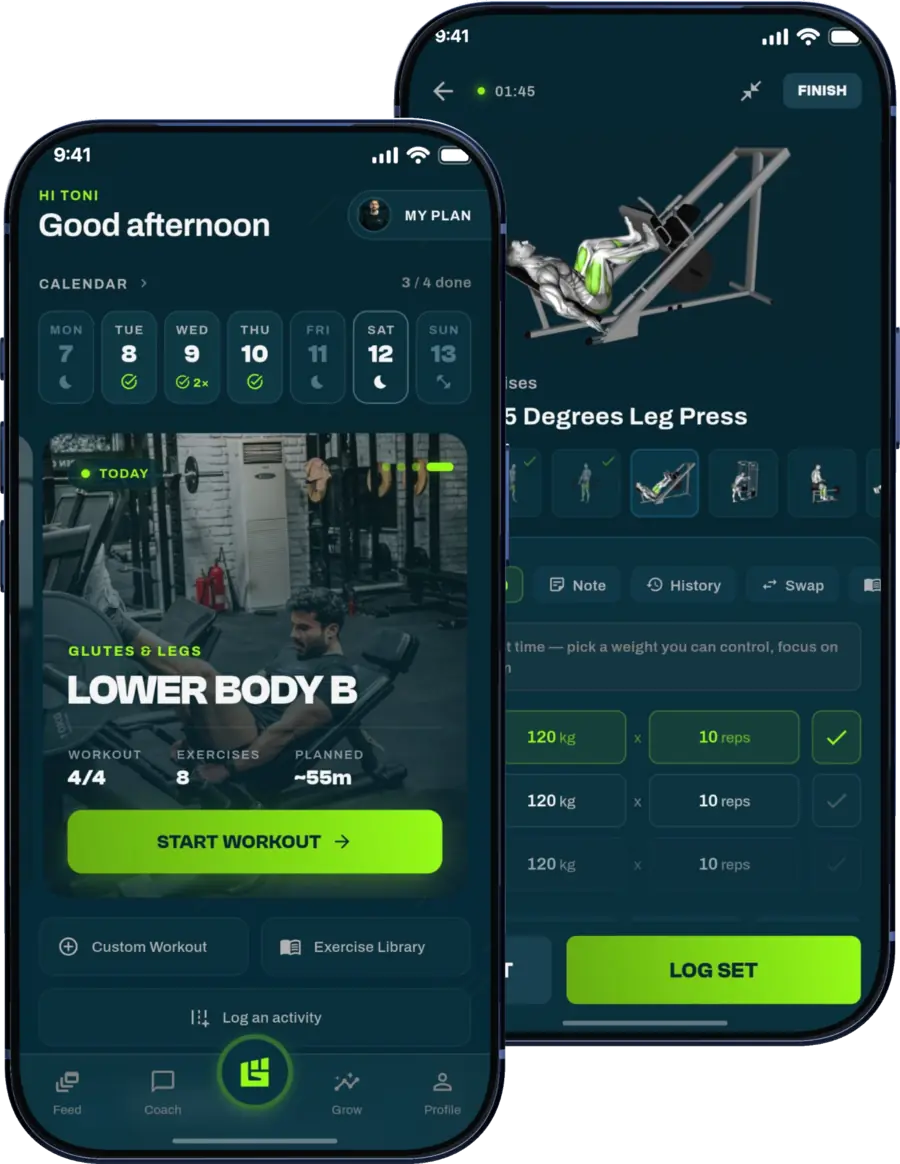
Get a personalized workout plan built around your goal, equipment and schedule. Train smarter, track every rep and keep moving forward, one workout at a time.






View the process through this lens. Training represents the demolition and design phase. Recovery is when the crew comes in, clears the mess, rebuilds the weak spots, and upgrades the structure so it can handle more next time. If that crew doesn't get enough time, fuel, sleep, and circulation support, the next workout lands on an unfinished job site.
That's why two people can do the same session and get very different results. One adapts and comes back stronger. The other stays sore, flat, and frustrated.
Recovery isn't the opposite of training. It's part of training.
A smart plan doesn't just tell you what to lift or how hard to push. It respects the timeline your body follows after that stress. Once you understand that timeline, your choices get easier. You'll know when to move, when to eat, when to sleep, and when to back off before fatigue starts stealing progress.
The feeling after a tough workout we all know
You crush a leg day on Monday. By Tuesday morning, sitting down feels fine. Standing back up is another story. Your quads are tight, your glutes feel worked over, and you're walking with that half-athlete, half-robot posture.
That feeling is familiar because almost everyone who trains has lived it. A beginner gets it after their first real squat session. A runner gets it after hills. An experienced lifter gets it after adding tempo reps or a new movement pattern. The body notices unfamiliar stress fast.
What confuses people is what soreness means. Soreness can be a normal response to training, especially when the session is hard, new, or heavy on lowering movements. But soreness itself isn't the goal. The goal is adaptation. You don't get stronger because you hurt. You get stronger because your body repairs the stress from training well enough to be more prepared next time.
Why the post-workout dip can feel so misleading
Right after a session, you might feel accomplished and energized. Later, fatigue shows up. That lag can make recovery seem mysterious, but it's not random. Your body has to clear byproducts from hard work, manage tissue disruption, coordinate immune activity, and rebuild damaged fibers.
That is why "just rest" is incomplete advice. Sometimes complete rest helps. Sometimes light movement helps more. Sometimes the primary bottleneck is sleep, food, stress, or trying to train the same muscle hard again before it's ready.
A practical example makes this easier. If you do a demanding upper-body session on Monday and your pressing strength is still down on Wednesday, your body is telling you the repair job isn't finished yet. If you ignore that signal every week, progress gets noisy. If you respond to it, training gets more productive.
What recovery really means in practice
Recovery isn't only about feeling less sore. It's about getting back to a state where you can perform well again and adapt upward over time.
Here's the shift that typically helps:
- After training, don't ask only “Am I sore?” Ask whether you feel capable, stable, and ready to produce effort again.
- Don't chase soreness as proof. Chase quality sessions stacked consistently over weeks.
- Treat recovery like a skill. Your cool-down, meals, hydration, sleep routine, and training schedule all shape what happens next.
Once you see recovery as an active process, not passive waiting, your whole approach changes.
The science behind the soreness from microtears to growth
When you train hard, especially with resistance exercise, you create small amounts of disruption in muscle tissue. That isn't failure. It's the point. Your body reads that stress as a message: this tissue needs to become more capable.
A useful way to picture it is a construction site. The workout is the storm that damages a few parts of the building. Not total destruction, just enough wear and strain to force an upgrade. Then the repair crew arrives.
The construction crew inside your muscles
The “crew” includes satellite cells, which help repair damaged muscle fibers, and the process called muscle protein synthesis, often shortened to MPS. According to this explanation of muscle recovery physiology, MPS peaks within 24–48 hours post-exercise, and satellite cells fuse with damaged fibers to rebuild them stronger, especially after eccentric work like lowering a weight under control.
That matters because training doesn't automatically produce growth. Your body is always balancing breakdown and rebuilding. For muscle gain to happen, muscle protein synthesis has to exceed muscle protein breakdown. When that balance tips in the right direction, the muscle adapts with increased size and strength.
Why food matters right after the signal
Many motivated people undercut their own work at this stage. They train hard, but they don't provide the raw materials needed for repair. Amino acids are part of that supply chain. If you want a practical overview of what to look for in a supplement, this clean amino acid powder guide is a helpful starting point.
Think of protein and amino acids like bricks arriving at the construction site. The foreman can't rebuild much without materials.
Coach's rule: If you train hard and under-eat protein, you're asking your body to renovate without supplies.
What this means in the gym
This science changes how you interpret your sessions:
- Harder isn't always better. A workout only helps if you can recover from it.
- Lowering phases matter. Eccentric work often creates a bigger repair demand.
- Your post-workout choices count. Protein intake, food quality, and total daily intake help determine whether the body builds back stronger.
The big takeaway is simple. The workout starts the process. Recovery completes it.
The four phases of muscle recovery
Muscle recovery doesn't happen all at once. It unfolds across a sequence. If you expect your body to be fully ready the morning after a demanding session, you'll often misread normal recovery as poor fitness or bad luck.
The clearest way to understand what happens during muscle recovery is to follow the timeline.

Based on the recovery model described by Australian Sports Physiotherapy, muscle recovery unfolds in four phases over 72+ hours. In that model, Phase 1 is 0–24 hours, Phase 2 is 24–48 hours, Phase 3 is 48–72 hours, and Phase 4 begins at 72+ hours. The same source notes that protein synthesis rates are 2–3x baseline in Phase 3, and that adequate sleep boosts HGH by 300–500% during deep stages.
Phase 1 in the first day
The first phase runs through the 0–24 hour period. Your body starts clearing metabolic waste and begins restoring order after the training stress.
This is why a gentle cool-down or easy walk often feels better than collapsing immediately after a hard session. Circulation supports cleanup. The body is shifting from effort to repair mode.
Your best focus here is simple:
- Light movement to avoid stiffening up completely
- Fluids and food so recovery has support
- Avoid stacking another brutal session on the same area too soon
Phase 2 when repair signals rise
The 24–48 hour window is where many people notice the most soreness. This phase includes an inflammatory response. That word scares people, but in this context, acute inflammation is part of the healing signal.
Immune activity rises, and satellite cells get activated. That means the body is no longer just cleaning up. It's organizing the rebuild.
A good practical move during this phase is to reduce ego. If your legs are deep in this stage, a technical max-out session usually isn't the smart call. Mobility work, easier cardio, or training a different muscle group often makes more sense.
Your body isn't “falling apart” during this phase. It's deciding how to rebuild.
Phase 3 when rebuilding gets serious
In the 48–72 hour period, repair is in full swing. The source above notes that protein synthesis rates are 2–3x baseline during this time. The body is laying down and organizing new protein to repair the training-related damage.
This is one reason sleep is so powerful. If repair is active but your sleep is poor, you're making a demanding biological job harder than it needs to be.
Phase 4 when adaptation shows up
At 72 hours, remodeling and longer-term structural adaptation continue. The body settles into a stronger baseline if recovery has gone well.
This doesn't mean every muscle is magically fresh at the same exact hour. It means the process has moved from immediate repair into longer-term upgrading. Your readiness depends on workout type, intensity, training age, food, sleep, and stress.
The 4 phases of muscle recovery at a glance
| Phase | Typical timeline | What's happening | Your focus |
|---|---|---|---|
| Phase 1 | 0–24 hours | Metabolic waste is being cleared | Cool down, hydrate, eat, move lightly |
| Phase 2 | 24–48 hours | Inflammatory signaling rises and satellite cells activate | Respect soreness, manage load, keep movement easy |
| Phase 3 | 48–72 hours | Protein synthesis is elevated to repair microtears | Prioritize sleep, protein, and smart session timing |
| Phase 4 | 72+ hours | Structural remodeling supports adaptation and strength gains | Return to harder work when performance feels back |
Once you understand the phase you're in, your choices get sharper. You stop reacting emotionally to soreness and start responding strategically.
Key factors that speed up or slow down recovery
Recovery follows a timeline, but your habits decide whether that timeline moves smoothly or drags. The big levers are sleep, nutrition, hydration, stress, and training load. None of them work in isolation.
Sleep is the multiplier
If training is the stimulus and food is the material, sleep is the time your body gets to run the repair program with fewer interruptions. Deep sleep is especially important for the hormonal side of recovery and for how restored you feel the next day.
Poor sleep doesn't just make you tired. It can make normal soreness feel worse, reduce training quality, and blur your read on whether you're ready for another hard session.
Nutrition provides the raw materials
Protein helps support repair. Carbohydrates help restore spent energy stores. Fluids help circulation and transport. If one of those is missing, recovery often feels slower and flatter.
A practical way to think about meals after training is this:
- Protein supports rebuilding
- Carbohydrates support refueling
- Hydration supports delivery and function
You don't need a perfect routine. You need a repeatable one.
Stress and training volume can clog the process
Your body doesn't separate gym stress from life stress as neatly as you do. Long workdays, poor sleep, missed meals, and back-to-back hard sessions can pile onto the same system.
That's when people say, “My workouts look fine on paper, but I'm not bouncing back.” Usually the issue isn't motivation. It's total load.
Practical rule: If your life stress goes up, your recovery capacity often goes down, even if your program stays the same.
Small choices change the next session
Recovery isn't won by one magic method. It's shaped by a string of ordinary decisions.
Here are the habits that usually matter most:
- Protect sleep consistency: Get to bed at a reliable time when you can.
- Eat soon enough after training: Don't leave a hard session unsupported for hours.
- Keep water visible: A bottle on your desk works better than a vague intention.
- Match your training week to real life: Busy week at work? That may not be the time for your highest-volume block.
When these pieces line up, the same workout produces better adaptation.
How to listen to your body and monitor recovery
The best recovery plan isn't just something you do. It's something you observe. Your body gives signals every day. The skill is learning which ones matter and what to do with them.
Start with simple subjective markers
You don't need lab equipment to get useful feedback. Start by paying attention to a few repeatable questions each morning:
- How sore am I? Mild stiffness is different from deep soreness that changes how you move.
- How's my energy? Flat, wired, normal, or ready to go?
- What's my mood like? Irritability and low motivation can show up before performance drops.
- Do I feel springy or sluggish in warm-ups? Your first sets often tell the truth.
Write it down in a notes app, training log, or spreadsheet. Patterns show up quickly when you track the same markers for a few weeks.
Use performance as a recovery dashboard
Your workouts themselves are a powerful feedback tool. If a weight that normally feels manageable suddenly feels unusually heavy, that means something. If your reps drop for no clear reason, or your coordination feels off, recovery may be lagging.
That doesn't always mean you should skip training. It may mean you should adjust the session. Reduce volume. Leave more reps in reserve. Swap the main lift for technique work.
A lot of lifters wait until they're run down before responding. It's smarter to catch the drift early. If you want more context on that line between productive fatigue and too much load, these smart recovery tips for busy professionals are worth reading.
Blend feeling with data
Wearables and readiness metrics can help, but they shouldn't override common sense. A fancy score doesn't beat the experience of terrible sleep, low motivation, and a body that feels beat up.
The sweet spot is combining both:
- Subjective check from soreness, mood, and energy
- Performance check from warm-ups and recent sessions
- Objective check from any device data you already use
If your body feels off, your warm-ups feel off, and your performance is trending down, believe the pattern.
That kind of awareness turns recovery from guesswork into decision-making.
Evidence-based strategies for smarter recovery
The recovery world is full of gadgets, hacks, and dramatic claims. Athletes and fitness enthusiasts rarely need more options. They need better filters. The best strategies are the ones that match the biology of recovery and fit into real life.

Start with what has the strongest support
According to a meta-analytic review on recovery methods, massage is the most validated technique for reducing both DOMS and inflammatory markers, including creatine kinase with SMD = −0.37, interleukin-6 with SMD = −0.36, and C-reactive protein with SMD = −0.38. The same review found that active recovery and compression garments can decrease DOMS, while evidence for cryotherapy is weak and inconclusive.
That doesn't mean everyone needs regular massage appointments. It means if you're choosing between popular recovery tools, some have stronger support than others.
What gives the best return for most people
Before you spend money on recovery trends, lock in the basics that keep paying off:
- Sleep first: If your sleep is poor, don't expect expensive tools to save your progress.
- Eat enough protein and carbs: Repair and refueling both matter.
- Use active recovery wisely: Easy walking, cycling, or mobility can help you feel less stiff than total stillness.
- Program easier weeks on purpose: You shouldn't wait until your body forces one.
That last point matters more than people think. Planned reductions in workload let fatigue drop so adaptation can catch up. If you tend to push until performance stalls, read more about how planned recovery prevents lifting plateaus.
A practical hierarchy that works
If you're busy, use this order:
- Protect your sleep window
- Eat a recovery-supportive meal after training
- Add a brief cool-down or easy walk
- Use massage, foam rolling, or compression as add-ons
- Treat fads with skepticism
Foam rolling and mobility work can be useful because they help you move better and feel less restricted. They just shouldn't distract from the bigger wins.
Cryotherapy is a good example of where marketing often outruns the evidence. It may feel refreshing. That's different from proving it meaningfully improves repair.
Recovery methods should earn their place by helping you train better next week, not just feel impressive today.
The smartest recovery strategy is the one you'll repeat, and that has enough evidence behind it to justify the effort.
Putting it all together with personalized programming
The hardest part of recovery isn't understanding one concept. It's putting all the moving pieces together while you still have a job, a schedule, and a life outside the gym.
That's where personalized programming matters. A good plan doesn't only tell you what exercise to do. It adjusts based on how your body is responding.
A simple example makes this clear. If your lower-body performance drops after a demanding squat session and your legs are still heavy the next day, an intelligent program might switch your next day toward upper body, mobility, or light conditioning instead of forcing another hard lower-body effort. That isn't backing off. That's timing stress correctly.
Why active recovery belongs inside the plan
Active recovery works best when it's built into training, not added randomly when you feel guilty for resting. A landmark 1996 study summarized by NASM's recovery science overview found that active recovery led to lactate returning to baseline 20–30% quicker and supported a 15–20% faster return to homeostasis compared with passive rest.
That's useful in real life because many people either go too hard on “easy” days or do nothing at all. The middle ground often works better. Light cycling, easy walking, or other low-effort movement can help your body shift out of the session more efficiently.
Personalized recovery is more realistic than perfect recovery
You don't need to behave like a full-time athlete to train well. You need a system that adapts when life changes.
That means a personalized program should account for things like:
- Performance dips: Fewer reps at the same load may signal a need to reduce volume
- Session spacing: Hard work for the same muscle group usually needs room to recover
- Lifestyle strain: Bad sleep, travel, or a heavy workweek can change readiness
- Recovery support: Better sleep habits can be worth more than squeezing in another accessory block
If sleep is your weak point, improving it can raise the value of every workout you already do. For a practical read on that, Golden Dreams for better sleep offers useful ideas you can apply without overcomplicating your nights.
Train the body you have today
The biggest mindset shift is this. Recovery isn't a break from progress. It's the mechanism that makes progress possible.
When you align training with your current readiness, you stop forcing sessions your body can't use well. You make better calls on hard days, easier days, and everything between. If you're building a stronger routine, it also helps to browse exercises for muscle growth so your program has enough variation to train hard without hammering the same patterns thoughtlessly.
What happens during muscle recovery? Your body clears, signals, repairs, rebuilds, and adapts. Your job is to support that process instead of interrupting it.
If you want a simpler way to apply all of this, GrabGains helps you train with smarter structure, adaptive programming, and recovery-aware planning so you can make steady progress without guessing what your body needs next.
Get inspired and motivated