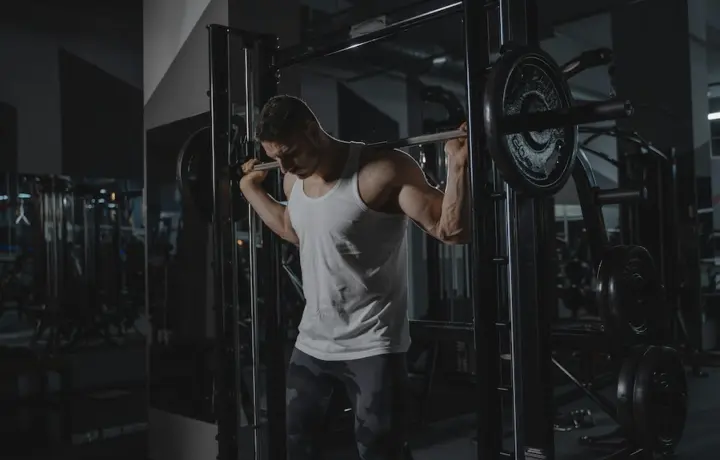
Behind the Neck Press: build strong, safe shoulders
Learn how to safely perform the behind the neck press. Get expert tips on form, programming, & alternatives to build shoulder strength & size. Most advice on the behind the neck press is lazy. One camp calls it a shoulder killer. The other treats it like a secret weapon everyone should use. Both miss the point.
This lift isn’t automatically dangerous, and it isn’t automatically right for you. It’s a high-demand press that rewards the lifter who has the mobility, control, and patience to earn it. If those pieces are missing, it turns into a bad trade.
The Real Story on the Behind the Neck Press
The behind the neck press has a reputation problem. A lot of lifters hear “bar behind the head” and stop thinking after that. The lift gets thrown into the same bucket as every other exercise people perform badly, load too quickly, and then blame.
That framing ignores what the movement does well.

Built for progress
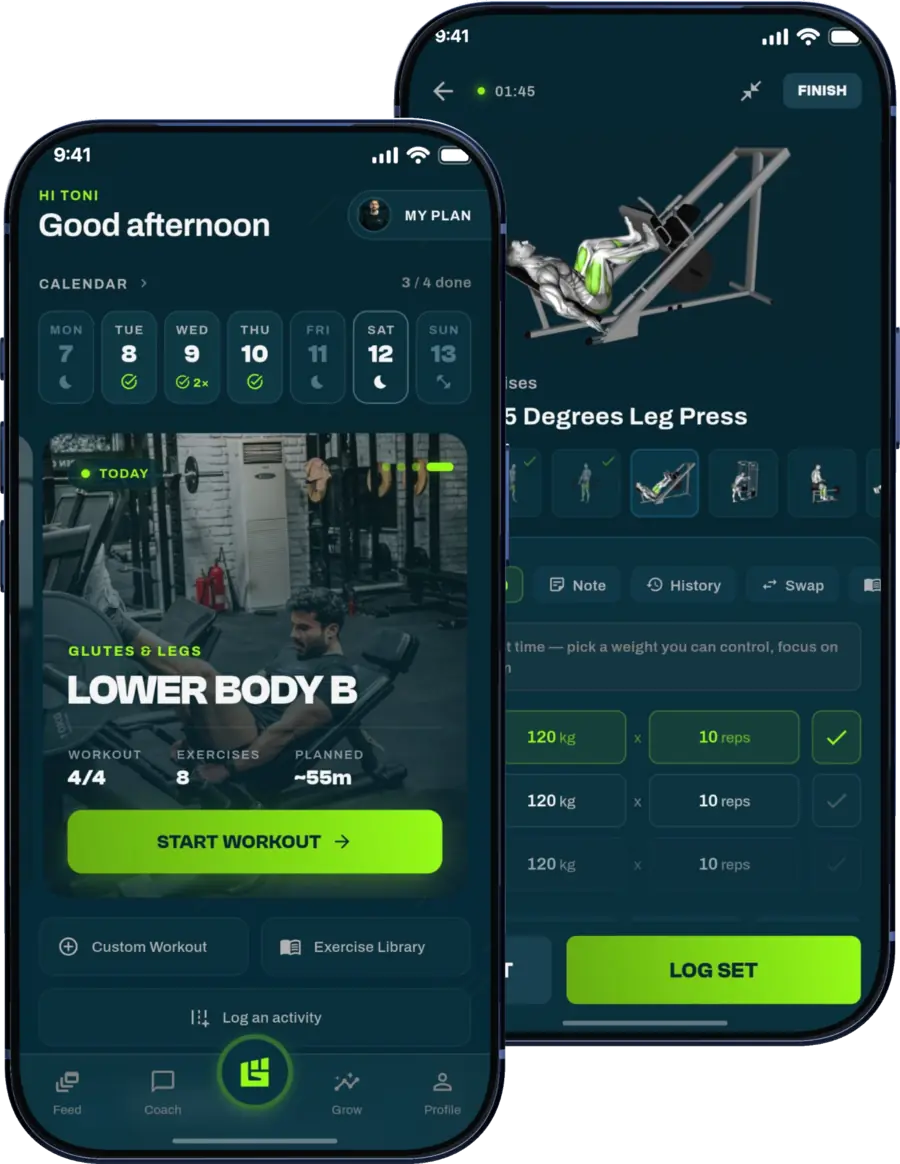
Take the guesswork out of training
Get a personalized workout plan built around your goal, equipment and schedule. Train smarter, track every rep and keep moving forward, one workout at a time.






Why lifters still use it
The best reason to keep the behind the neck press in the conversation is muscle recruitment. Electromyography research shows the behind the neck press creates significantly higher activation in the side and rear delts than a traditional overhead press, while front delt involvement stays about the same, which is why it stands out for balanced shoulder development and upper back work according to Legion Athletics' comparison of the behind the neck press and overhead press.
That matters because many lifters already hammer their front delts with benching, incline pressing, and standard overhead work. The medial and posterior delts usually need more direct attention, not less. The behind the neck press can fill that gap with a heavy compound pattern instead of relying only on raises and fly variations.
The real trade-off
The problem isn’t that the exercise is evil. The problem is that it asks for more from the shoulder complex than a front-loaded press.
The bar starts in a less forgiving position. Your thoracic spine has to extend well. Your shoulders need enough external rotation and upward rotation to keep the bar path clean. Your upper back has to stay organized while the bar moves. If any of that breaks down, the lift gets ugly fast.
Practical rule: Judge the behind the neck press like a coach judges a snatch grip movement. By position quality first, then by load.
For the right lifter, it can be one of the best tools for building capped shoulders and strong overhead mechanics. For the wrong lifter, it becomes a forced range of motion exercise with a barbell in a bad spot.
Tool versus user
That’s the middle ground most articles skip. A movement can be effective and still be a poor fit for some people. The behind the neck press belongs in that category.
Use it if:
- Your mobility supports it: You can get the bar behind the head without neck jutting, rib flare, or elbow chaos.
- You control the eccentric: The lowering phase is smooth and deliberate, not a drop onto the traps.
- You have a reason to use it: You want more side and rear delt emphasis, or you need better overhead stability in sport.
Skip it, at least for now, if:
- Your shoulders pinch in the setup: That’s not a sign to push through.
- You need to compensate to clear the bar: Leaning, craning, and over-arching are red flags.
- You already get what you need from safer options: A standard overhead press, dumbbell press, or landmine press may fit better.
The behind the neck press isn’t a test of toughness. It’s a test of whether your body can own the position.
Test Your Mobility Before You Press
Before you worry about sets, reps, or shoulder size, answer a simpler question. Can you get into the position cleanly?
That matters more than the debate around the lift itself. Most discussion still swings between “dangerous” and “great for hypertrophy,” but rarely gives beginners or stiff lifters a way to assess readiness. Healthline also notes that Olympic weightlifters have used the movement heavily for decades without increased injury rates, which points back to individual mobility rather than blanket fear in its review of behind the neck press safety and mobility context.
Test one with your back on the wall
Stand with your upper back and glutes against a wall. Keep your ribs down. Raise both arms overhead and bend the elbows as if you’re setting up for a behind the neck press.
You pass this screen if you can reach the position without your lower back peeling hard off the wall or your head pushing forward to make room. You fail it if the movement turns into a backbend.
What this test tells you:
- Thoracic extension quality: Your upper back must open enough to support overhead work.
- Shoulder position under control: You’re checking whether the shoulder can rotate into the position without cheating.
- Rib control: If your ribs flare early, your spine is creating motion your shoulders don’t own.
Test two with a PVC or empty bar
Use a PVC pipe, broomstick, or very light training bar. Take a grip slightly wider than shoulder width and move it from overhead to behind the head with slow control.
This isn’t a flexibility circus trick. The goal is to see whether you can keep the shoulders centered and the neck relaxed while the object travels.
A clean rep looks like this:
- Smooth path: No jerking or sudden hitch as the object moves behind the head.
- Stable torso: Your chest stays tall, but you don’t lean back to fake range.
- No sharp discomfort: Mild stiffness is one thing. Pinching is another.
If the PVC feels sketchy, a loaded barbell won’t fix it.
Test three with the press pattern itself
Set an empty bar on the rack and place it on the upper traps. Don’t press yet. Just hold the start position and breathe.
Then perform a partial range rep to a comfortable height. If the setup itself feels unstable, you already have your answer. If the partial range is smooth, you may be ready to build from there.
This test is useful because some people pass general mobility drills but lose position once the bar sits on the traps. The exercise has its own demands, and your body has to tolerate them.
What to do if you don’t pass
Failing a screen doesn’t mean you’re broken. It means you need a progression.
Start with:
- Thoracic extension drills: Bench-supported upper back opening and controlled overhead reaches.
- Scapular control work: Wall slides, prone trap work, and light overhead holds.
- Cuff and upper-back prep: Focused rotator cuff strengthening exercises can help build the stability that pressing behind the neck demands.
One useful primer is the elbows-on-bar behind-head position with no heavy load. Sit tall, place the arms where they need to be, and own the shape before you try to press from it. Then retest.
The standard that matters
The lift doesn’t care whether you want it to work. It cares whether you can hold the right shape under a bar.
A good self-check is simple. If you can’t set the bar behind the neck with calm breathing, neutral head position, and no urge to rush out of the bottom, you’re not ready for full-range behind the neck pressing yet. Build the position first. Then load it.
How to Execute the Behind the Neck Press Flawlessly
Good behind the neck presses look controlled from the first second. Bad ones usually fall apart at the unrack.
This lift rewards lifters who can create the right position, hold it under load, and stay disciplined about range. That is the middle ground people skip. The exercise is not automatically reckless, and it is not automatically right for every shoulder. If you passed the setup and mobility checks in the previous section, the next job is to make every rep look repeatable.
Set the bar where the rep can start cleanly
Rack height matters. Set the J-hooks around shoulder height so you can stand up with the bar instead of shrugging into it or half-squatting it out of the rack.
Take a grip slightly wider than shoulder width for most builds. Then place the bar on the upper traps, at the base of the neck, not on the cervical spine. That setup gives the shoulders room to press and keeps the start stable.
A few details decide whether the rep has a chance:
- Grip too narrow: the shoulders get forced into a position they may not control well
- Grip too wide: the press loses force and the wrists often drift out of line
- Elbows drifting too far behind the bar: the bar starts from a weak, unstable slot
- Loose upper back: the bar feels heavy before the press even begins
If the rack setup feels awkward, fix that first. Lifters often blame the movement when the problem is a rushed unrack and a poor start position.
Press up without changing your torso
Brace before the bar leaves the traps. Then press straight up.
The bar should travel over your midline, with the ribs stacked and the head kept neutral. Do not poke the chin forward to make room. Do not turn the rep into an incline press by leaning back.
At the top, finish in a strong overhead position with control. Full lockout is fine if you can reach it without losing your rib position or shrugging into a mess. Near-lockout is also acceptable if that is where you can still own the shape.
I usually coach this as a "stack and drive" press. Stack the ribs over the pelvis. Drive the bar vertically. If the bar swings forward, the shoulder loses its best line of force and the rep gets harder on the way up and messier on the way down.
Control the descent and earn your depth
The lowering phase is where smart lifters separate themselves from impatient ones.
Lower the bar under control to the depth you can hold without pain, neck jutting, or the elbows dumping backward. For many lifters, that means the bar returns to around ear level or the upper traps. Some can go a little deeper without losing position. Many should not.
The goal is not to force the deepest possible bottom. The goal is to repeat a bottom position you can stabilize.
Use this rule. If the last inch of descent makes you rush, twist, flare the ribs, or feel the shoulder slide forward, that inch is not yours yet.
Seated and standing are different lifts in practice
Both versions can work well. They expose different problems.
Seated behind the neck press
Seated pressing reduces help from the lower body and makes shoulder output more obvious. It is usually the better choice if the goal is strict delt work and clean feedback on range.
Use it if you want:
- More direct shoulder loading
- Less compensation from the legs
- Clearer feedback on whether the bottom position is solid
Skip it if the bench forces you into a reclined posture or pushes your head forward. That changes the press and usually makes the bottom position worse.
Standing behind the neck press
Standing asks more from the trunk, glutes, and balance. It can be a strong option for athletes and experienced lifters who can stay stacked while the bar moves overhead.
Use it if you can:
- Keep the ribs down and pelvis under control
- Press vertically instead of leaning back
- Unrack and rerack without turning the set into a circus
Standing also gives lifters more room to cheat. If the reps keep turning into a standing incline press, go back to seated or lower the load.
A clean rep checklist
Before you add weight, run through this:
| Checkpoint | What you want |
|---|---|
| Bar position | Resting on upper traps |
| Grip | Slightly wider than shoulder width |
| Head | Neutral, not reaching forward |
| Torso | Ribs stacked over pelvis |
| Bar path | Vertical over midline |
| Top position | Controlled overhead finish |
| Bottom position | Only as deep as you can stabilize |
A good rep looks calm. The bar leaves the traps smoothly, tracks straight, and returns to the same position without panic. If every set feels like a rescue, the load is too heavy, the range is too deep, or this variation is not the right choice for your shoulders right now.
Programming for Your Specific Fitness Goals
How you program the behind the neck press should match why you’re using it. This isn’t the kind of exercise that belongs everywhere. It works best as a deliberate choice inside a shoulder-building or overhead-strength plan.
If your only reason for doing it is that it looks hardcore, pick another exercise.
Strength benchmarks that give the lift context
The behind the neck press is demanding enough that many lifters benefit from seeing where they stand before chasing load. Fitness Volt’s strength standards list the average male behind the neck press one-rep max at 143 pounds, which qualifies as Intermediate. For a 180-pound male, Intermediate is 142 pounds, while Advanced is 199 pounds at 1.11 times bodyweight, placing that lifter in the top 20% according to Fitness Volt’s behind the neck press strength standards.
Those numbers are useful as a reference, not a requirement. They tell you the lift is not a casual accessory, demanding serious consideration. It’s a technical press with real loading potential once the position is solid.
For hypertrophy
The behind the neck press shines when you want more work from the side and rear delts without turning the session into endless isolation work.
For muscle gain, use it in a way that keeps technique clean:
- Moderate reps: Stay in controlled working sets rather than grinding singles.
- Stable tempo: A slower lowering phase makes the exercise safer and more effective.
- Earlier in the session: Place it before fatigue wrecks your shoulder position.
This version works well for lifters who already front press a lot and want a different stimulus. It also fits as the main shoulder press on a day built around delt development, especially if paired with rear delt or upper-back assistance later.
Training takeaway: If the goal is shoulder size, chase quality tension, not a dramatic max.
For strength
If you’re using the behind the neck press to build overhead strength, treat it like a secondary strength movement, not a circus lift. The bar should move with authority, but your positions still need to hold.
Strength-focused programming works best when:
- Reps stay low enough to preserve form
- Sets stop before technique slips
- The lift supports your broader overhead work instead of replacing all of it
For most lifters, the standard overhead press remains the more stable base movement for long-term strength development. The behind the neck press can still play a valuable supporting role if your shoulders tolerate it and your mobility stays sharp.
A practical way to place it in training
Here’s a simple way to understand:
| Goal | Best role for the behind the neck press | What to prioritize |
|---|---|---|
| Hypertrophy | Main shoulder press or early accessory | Tempo, range control, delt tension |
| Strength | Secondary overhead movement | Position quality, repeatable bar path |
| Athletic carryover | Supplemental overhead stability work | Strict form, low fatigue slop |
The biggest mistake in programming this lift is pretending it’s mandatory. It’s not. It’s useful when it gives you a stimulus you can’t get as well elsewhere, and when your body can express that stimulus safely.
Common Mistakes and Corrective Drills
Most behind the neck press problems come from trying to force a shape the body doesn’t own. The fix usually isn’t more aggression. It’s better positioning and a smarter entry point.
Lowering the bar too deep
This is the mistake that shows up most often. Lifters chase extra range by pulling the bar far below the level they can control. That turns the bottom into a vulnerable position instead of a productive one.
Fix it by setting a clear stopping point at ear or trap level. Use an empty bar and pause there for a beat on every rep until the position feels automatic.
Turning the rep into a backbend
If the rib cage flares hard and the torso leans to clear the bar, the shoulders aren’t doing the work they should. The spine is stealing motion.
A simple correction drill is the wall-seated press pattern with a dowel or PVC. Sit tall against a wall, keep the ribs down, and practice the path without loading it. If you can’t own that pattern, heavy pressing won’t clean it up.
If your lower back does the mobility work, your shoulders never learn the job.
Elbows drifting into a bad path
Some lifters start with the elbows in a strong position, then let them flare or roll as they descend. That usually creates instability and changes where the stress lands.
Use a light load and film from the side and rear. Focus on keeping the elbows organized under the bar instead of letting them fly outward as fatigue builds. A slow eccentric is the best drill here because it exposes exactly where the position breaks.
Bouncing the bar off the traps
That’s not control. It’s a shortcut that removes the very thing that makes the exercise useful.
The fix is a tempo reset:
- Pause the bar briefly on the traps between reps if needed
- Use lighter loads until you can lower smoothly
- End the set when the descent speeds up on its own
Unracking like the set already started
A sloppy unrack puts the shoulders in a bad position before the first press. If the bar swings, you start chasing stability instead of creating it.
Correct this by practicing the setup separately. Unrack, step back or settle into the bench, hold the start position, then re-rack. Do that until the unrack feels boring and repeatable.
Smart and Safe Pressing Alternatives
Some lifters should use the behind the neck press. Some shouldn’t. A smart program doesn’t force one exercise into every body.
If your shoulders don’t like the position, or if your goals are better served by a more stable pattern, choose an alternative and move on. You’re not losing progress. You’re choosing a better tool.

When the standard overhead press makes more sense
The barbell overhead press is still the default answer for many lifters because it’s more stable and easier to load progressively. Enkiri Elite Fitness notes that many lifters eventually handle about 85% of their front overhead press weight on the behind the neck press after adapting, while the standard overhead press remains a top option for overall width and strength because of its stability and lower horizontal shear in its article on whether to use the BTN press.
That’s the key comparison. The behind the neck press may offer a distinct stimulus, but the standard overhead press is usually easier to train hard and consistently.
Best alternatives by need
Here’s how I’d break it down in practice.
- Barbell overhead press: Best when you want a primary strength lift for the shoulders. It’s versatile, easier to standardize, and usually the first press to build.
- Dumbbell shoulder press: Best when your shoulders prefer a freer path. Dumbbells let you adjust wrist and elbow position naturally, and they expose side-to-side differences quickly.
- Landmine press: Best when overhead mobility is limited. The pressing angle is friendlier, and beginners can learn to press without forcing a pure vertical line.
- Push press: Best when you want more load and athletic carryover. It builds overhead power, but it’s not a replacement for strict shoulder work.
If you want a broader menu of shoulder training options, GrabGains keeps a useful library of shoulder exercises that can help you match the movement to your equipment and current ability.
A simple decision guide
| If you need | Better choice |
|---|---|
| Maximum stability and straightforward progression | Barbell overhead press |
| More natural joint freedom | Dumbbell shoulder press |
| Shoulder-friendly pressing with limited mobility | Landmine press |
| Power emphasis | Push press |
| More side and rear delt bias with high mobility demands | Behind the neck press |
The right alternative isn’t the one with the toughest reputation. It’s the one you can train hard, recover from, and repeat for months.
Frequently Asked Questions About the Behind the Neck Press
Is the Smith machine version a good option
It can be. For some lifters, the fixed path makes it easier to learn the groove without worrying about balance. For others, the machine path locks them into a line that doesn’t fit their shoulders well. If you use a Smith machine, keep the same standards for setup, controlled descent, and pain-free range.
How should a beginner start
A beginner shouldn’t start by loading the full movement aggressively. Start with the mobility checks, then an empty bar or light training bar. If the setup position feels cramped or unstable, build pressing strength with front-loaded variations first and revisit later.
Is the behind the neck press better than the military press
Not across the board. It can bias the side and rear delts more, but the military press is usually the simpler choice for overall pressing strength and repeatable progress. One isn’t morally superior. They solve different problems.
What if I only feel it in my traps
That usually means one of three things. Your grip may be off, your shoulders may not be staying organized, or the load may be too heavy for your current control. Reduce the weight, clean up the bar path, and make sure you’re not shrugging your way through the press.
Are there other vertical pressing options worth using
Yes. If you want a broader look at movement choices for shoulder training, Cartwright Fitness vertical push recommendations offer a practical round-up of presses and related patterns that can fit different needs and equipment setups.
Final answer on whether you should do it
Use the behind the neck press if you can earn the position, keep the reps controlled, and recover well from it. Skip it if you have to fake the setup or dread the bottom position every time. Good training is about fit, not bravado.
GrabGains helps you turn advice like this into a plan you can follow. With GrabGains, you can build goal-based workouts, track your progress, and use guided exercise support to train with more clarity whether you're focused on strength, muscle, conditioning, or mobility.
Get inspired and motivated