Substitute for Pull Ups: Master 8 Alternatives
Struggling with pull-ups? Find your ideal substitute for pull ups! Explore 8 powerful alternatives like lat pulldowns & bodyweight rows to build strength.
Can’t do a pull-up yet? That’s normal, and it’s not a sign that you’re weak or behind. The pull-up is one of the clearest tests of relative upper-body strength, and most adults aren’t starting from a place where they can knock out clean reps. Historical and modern benchmarks suggest the average untrained adult male manages about 5 to 8 strict pull-ups, while the average female manages about 1 to 3, according to Ativafit’s overview of average pull-up ability. That gap is exactly why a smart substitute for pull ups matters.
The mistake I see most often is people treating the pull-up like a test they should repeat until it magically improves. They jump to the bar, fail a few reps, get frustrated, then move on. That approach doesn’t build the specific back strength, scapular control, grip endurance, and body positioning the movement demands.
A better path is boring in the best way. You train the pattern with easier variations, strengthen the same muscles with controlled loading, and then layer in exercises that teach you to own the top, middle, and lowering phases. That’s how one often gets their first rep.
Built for progress
Take the guesswork out of training
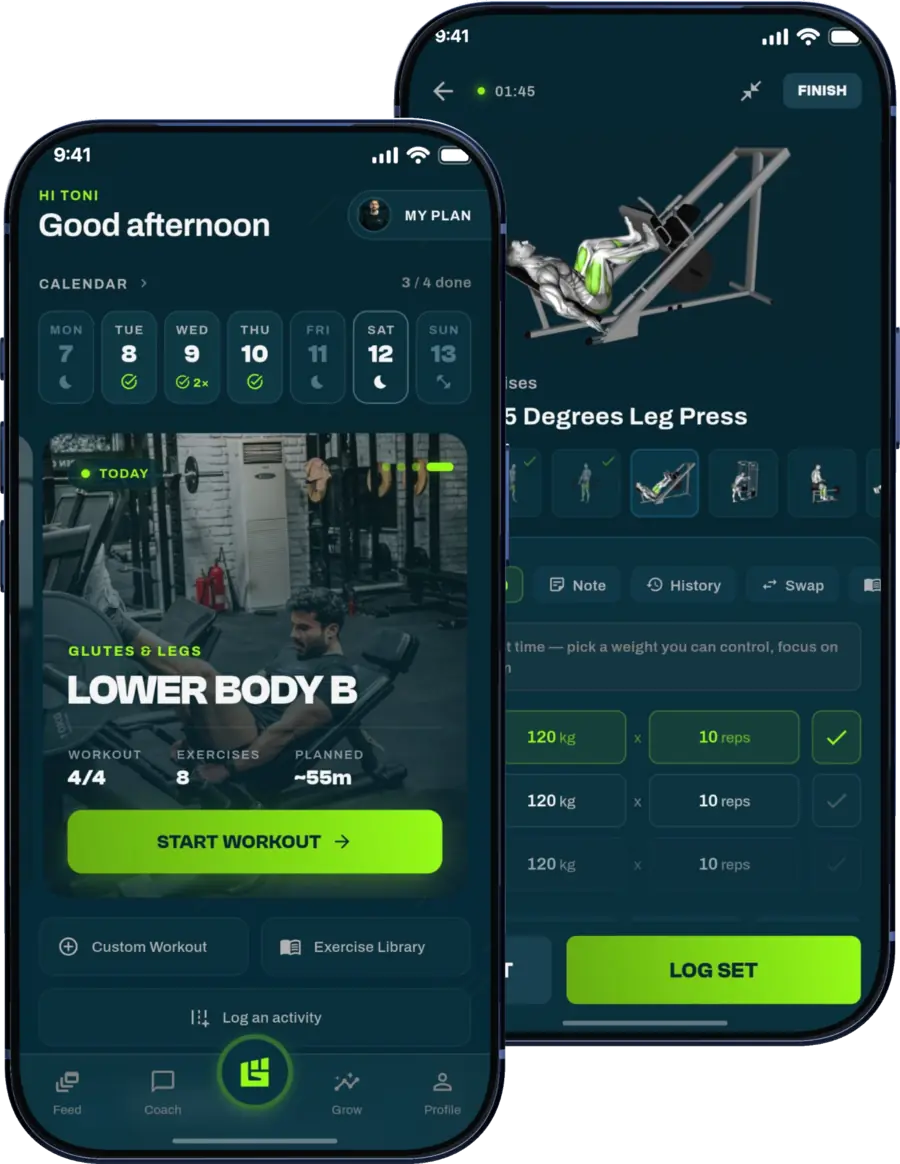
Get a personalized workout plan built around your goal, equipment and schedule. Train smarter, track every rep and keep moving forward, one workout at a time.






If you train at home, in a full gym, or in a rushed lunch-hour session, there’s a practical option here for you. Some of these exercises mimic the pull-up directly. Others fill in the weak links that hold people back. Used together, they form a progression instead of a random list.
If you’re building a home setup or trying to understand what equipment opens up the most options, this ultimate fitness center equipment list is a useful reference.
1. Lat pulldown machine
The lat pulldown is the closest strength-builder to a pull-up that individuals can load and progress with confidence. It keeps the vertical pulling pattern, lets you choose a manageable weight, and removes the all-or-nothing challenge of lifting your full bodyweight from day one.
Research summarized by Zing Coach’s pull-up substitute guide notes that lat pulldowns can activate 80 to 90% of latissimus dorsi fibers, which is why they’re such a reliable substitute for pull ups when your goal is direct carryover.

If you train in a commercial gym, you’ll usually see Hammer Strength or Life Fitness stations. If you train at home, a cable tower or selectorized pulley setup can do the same job. If you want more options to pair with this movement, browse these back exercises.
How to make lat pulldowns transfer to pull-ups
Technique matters more than load here. Sit tall, lock your thighs under the pad, keep your chest slightly up, and pull your elbows down toward your sides instead of yanking the bar with your hands. If you lean way back and turn it into a row, you lose the point of the exercise.
Use a controlled lowering phase. Don’t let the stack slam. Pull-ups punish people who can’t control the eccentric, so your pulldown should teach that control.
Practical rule: If your shoulders shrug up and your torso swings back, the weight is too heavy to build a better pull-up.
A few setups work especially well:
- For beginners: Use a medium grip and pull to the upper chest with smooth reps.
- For arm-dominant lifters: Narrow the grip slightly and focus on driving elbows down.
- For lat connection: Pause briefly near the bottom and feel the shoulder blades move.
Best programming for strength and muscle
For hypertrophy and pull-up carryover, 3 sets of 8 to 10 reps works well. Pick a load that challenges the last few reps without forcing body English. If your gym machine feels different from week to week, judge effort by form first and weight second.
This is one of the easiest movements to progress. Add a small amount of weight when every rep stays clean. For busy people, it’s also efficient. Warm up, do your work sets, and you’re done in minutes without needing a spotter or complicated setup.
What doesn’t work is treating pulldowns like a posture exercise with feather-light weight forever. They need intent. If you want a pull-up, the pulldown has to become a real strength movement.
2. Assisted pull-up machine
The assisted pull-up machine is often the fastest bridge between “I can’t do one” and “I’m close.” Unlike rows and pulldowns, it keeps the actual pull-up path, the hanging position, and the bar relationship. That specificity matters.
The machine helps by reducing the amount of bodyweight you have to move. In the verified data, assisted machines are noted as useful because they allow precise incremental overload, including small assistance drops such as 10 to 20 pounds per session when appropriate. That kind of control is hard to match with bodyweight-only training.
Why this machine works so well
You kneel or stand on the platform, grab the handles, and perform a real pull-up pattern with support. The biggest advantage is consistency. A band changes tension through the rep. A machine gives predictable help every time.
That makes it easier to answer the question that drives progress. Are you stronger this week than last week?
Use it when you want the movement to look and feel like a pull-up, but you still need support in the middle and top portions. In a commercial gym, the Hammer Strength and Life Fitness versions are common. In some functional fitness facilities, you’ll also find machine-assisted systems built into rack stations.
How to progress without stalling
Individuals improve faster when they stop chasing max reps and start owning crisp sets. A strong starting point is 3 sets of 5 to 8 reps with assistance that lets you move smoothly and finish the set with effort, not panic.
Then progress one variable at a time:
- Reduce assistance: Lower the help when all sets are solid.
- Slow the lowering: Use a 3 to 4 second descent to build control.
- Keep one weekly reality check: Try a few fresh unassisted reps before the machine work.
The best assisted pull-up set looks almost boring. No kicking, no neck reaching, no collapsing at the bottom.
What usually fails on this machine is ego loading. People remove too much assistance, grind half reps, and turn every set into a struggle. That teaches compensation, not strength. If you can’t start from a dead hang and finish with your chin clearly over the bar, add back a little help and make the rep honest.
If your goal is your first strict pull-up, this machine deserves a place near the center of your plan, not as an afterthought.
3. Resistance band pull-ups
Bands are popular because they’re cheap, portable, and easy to use in a home gym or park. They also let you practice the exact movement instead of replacing it with something else. For many people, that makes them the most realistic substitute for pull ups outside a full gym.
The trade-off is that band assistance isn’t even through the whole rep. The band helps most near the bottom, where it’s stretched the most, and helps less at the top. Verified data notes that resistance band pull-ups can reduce effective bodyweight by up to 50 to 70% depending on band thickness, which is useful, but it also explains why bands can feel oddly easy at the bottom and suddenly hard near lockout.

Rogue Monster Bands, Serious Steel bands, and basic loop bands all work if they’re in good condition. The exact brand matters less than choosing a resistance level you can repeat consistently.
When bands are a smart choice
Bands work best when you already have access to a bar and want a low-cost way to train the pull-up path. They’re also useful for people who travel, train outdoors, or don’t have room for a large machine.
To set them up, loop the band over the bar and place a foot or knee in the lower loop. Start from a dead hang, brace lightly through the midsection, and pull without swinging.
Use these simple rules:
- Choose the right band: Pick one that gives you 5 to 8 controlled reps before form breaks.
- Record the exact setup: Note band color, brand, and whether you used one foot or one knee.
- Replace worn bands: Cracked or overstretched bands aren’t worth the risk.
The mistake most people make with band work
They stay with the same heavy band for too long. A thick band can turn the exercise into a momentum drill if you bounce off the bottom and let the elastic do the work. That looks like progress, but it often stalls your actual pull-up.
A better approach is to treat bands as temporary help. Once your reps become smooth, switch to a lighter band or pair band work with negatives and rows. If needed, use fewer reps and higher-quality sets instead of chasing fatigue.
Band pull-ups are effective, but they’re not magic. They work when you use them as a stepping stone, not a comfort zone.
4. Negative pull-ups
If I had to pick one exercise that teaches people what a pull-up should feel like, it would be the negative. You start at the top, then lower yourself under control. That strips away the hardest part for beginners, the initial upward pull, while keeping the exact positions that matter.
Verified data points to negative pull-ups as a strong way to build eccentric strength, using controlled descents of 3 to 5 seconds. That eccentric work is where many people make fast early improvements in coordination and confidence.

How to do them well
Use a box, bench, or small jump to get your chin over the bar. Set your shoulders down, keep your ribs from flaring, and descend under control until your arms are straight. Then step back up and repeat. Don’t turn it into a drop.
A good negative feels active the whole way down. Your elbows extend gradually, your shoulders stay organized, and your body stays tight instead of folding.
If you can’t lower with control, you’re not building a pull-up. You’re just surviving gravity.
Programming negatives without frying your recovery
Negatives are demanding. They don’t look brutal, but they create a lot of muscular stress. Keep volume modest. Three to five sets of three to five reps is generally plenty, especially if each rep includes a deliberate descent.
You can progress negatives in two ways:
- Add time: Start around a 3-second descent and gradually extend it toward 5 seconds.
- Improve shape: Keep the same time, but make the lowering smoother and stricter.
This is also where people overdo it. They perform too many reps, lose control halfway down, and then wonder why elbows and forearms feel beat up. Leave a little in the tank. Quality matters more than chasing exhaustion.
Negative pull-ups fit especially well for someone who can nearly do a rep, someone training in a simple rack setup, or someone who wants a highly specific movement without relying on a machine. If you’re serious about your first pull-up, these deserve regular practice.
5. Dumbbell and barbell rows
Rows don’t look like pull-ups, but they build many of the muscles and positions that support them. Strong lats, rhomboids, traps, rear delts, and biceps all matter, and rows let you load those areas hard without needing to hang from a bar.
Military-style training recommendations discussed in the verified data specifically point to bent-over dumbbell rows as useful equivalents because they hit the same back and grip musculature while also exposing left-right differences. That unilateral element matters more than people think.
Why rows belong in almost every pull-up plan
Pull-ups expose weak links fast. One side may pull harder. Your shoulder blade may not move well. Your grip may fail before your back does. Dumbbell rows let you slow down, stabilize, and feel those issues instead of masking them.
Barbell rows are great for overall loading and back thickness. One-arm dumbbell rows are better when you want to correct side-to-side imbalance or train around lower back fatigue. Chest-supported rows can be a smart compromise if your hinge position gets sloppy under fatigue.
A few real-world examples:
- For home gyms: A bench and a pair of adjustable dumbbells cover a lot.
- For crowded gyms: One-arm rows are easier to set up than waiting on a pulldown station.
- For athletes: Heavy rows build the upper back density that helps every pull feel more stable.
How to row for pull-up carryover
Don’t yank the weight and rotate your whole torso. Keep your spine neutral, pull through the elbow, and control the lowering. Verified data notes that a 1 to 2 second hold at peak contraction can increase time under tension compared with standard pulling. That pause is worth using when the goal is better back engagement, not just moving load.
Program 3 to 4 sets of 6 to 10 reps for heavier row work. Use enough weight that the set feels substantial, but not so much that body position falls apart.
What doesn’t work is treating rows as random accessory filler after everything else. If pull-ups are your target, rows should be trained with intent. They don’t replace the pull-up pattern by themselves, but they often build the strength reserve that makes the bar finally move.
6. Inverted rows
You set up under the bar, pull hard, and your body moves. That matters.
Inverted rows are one of the best bridge exercises between machine-based pulling and a real pull-up. They teach full-body tension, shoulder blade control, and body positioning in a way lat pulldowns and supported rows cannot. If someone can row their body cleanly from a straight line, they usually have a much easier time learning how to organize a strict pull-up later.
They also solve a practical problem. A lot of people are not weak everywhere. They just are not ready to pull their full bodyweight vertically yet. Inverted rows let you scale the challenge without changing the movement pattern every week.
Why they work so well
The setup is simple and the progression is built in. Use a Smith machine, suspension trainer, rings, or a bar set in a rack. Raise the bar to make the exercise easier. Lower it to make it harder. Raise the feet once standard reps are solid.
That makes inverted rows useful in almost any training situation. At home, they work with minimal equipment. In a busy gym, they are often faster to set up than waiting for an assisted pull-up station. For lifters chasing their first pull-up, they give you a repeatable way to practice pulling your body through space without guessing how much assistance you need.
A 2017 ACE exercise study comparing pull-up variations found that suspension trainer inverted rows produced high activation in the back and arm muscles involved in pulling, which supports their value as a pull-up substitute and builder of upper-body pulling strength in ACE's analysis of bodyweight pulling exercises.
How to do them well
Set the bar around hip height to start. Lie underneath it and grab the bar just outside shoulder width. Keep your body straight from head to heel, brace your abs, and pull your chest toward the bar.
A few coaching cues matter here:
- Keep the ribs down and glutes tight so the body stays rigid
- Lead with the chest, not the chin
- Pull the elbows back instead of shrugging up
- Lower under control and keep tension at the bottom
Ring rows deserve a quick mention. They usually feel tougher than fixed-bar rows because the handles move freely and expose shaky shoulder control fast. That makes them useful, but only if you can keep each rep clean.
How to program inverted rows for pull-up progress
A lot of articles stop at “do some rows.” That is not enough if the goal is your first pull-up.
Use inverted rows based on your current level:
- True beginner: 3 to 4 sets of 8 to 12 reps with a high bar and bent knees
- Building strength: 4 sets of 6 to 10 reps with straight legs and a lower bar
- Closer to a pull-up: 3 to 5 sets of 5 to 8 hard reps with feet raised or rings
Leave 1 to 2 reps in reserve on most sets. If your hips drop, your neck cranes forward, or the last reps turn into partials, the variation is too hard.
For carryover, pair them with one vertical pulling movement from earlier in the article. A simple example looks like this:
- Assisted pull-ups or band pull-ups: 3 to 5 sets
- Inverted rows: 3 to 4 sets
- Dead hangs or scapular pull-ups: 2 to 3 sets
That combination works because each piece covers a different gap. Vertical pulling builds specificity. Inverted rows build volume and body control. The hanging work improves comfort on the bar and shoulder positioning.
Inverted rows are not flashy, but they are reliable. For a lot of lifters, they are the exercise that turns pull-ups from “someday” into a plan.
7. Cable machine rows and face pulls
If your shoulders feel cranky, your posture falls apart under fatigue, or your upper back is lagging, cable rows and face pulls earn their spot fast. They won’t replace the pull-up pattern on their own, but they clean up a lot of the issues that keep the pattern weak.
Seated cable rows give you steady resistance and a controlled path. Face pulls train the upper back and rear shoulder area that helps keep the shoulder joint organized during pulling. Together, they’re excellent support work.
Where these fit better than other options
Cable rows are great when you want quality reps without fighting setup complexity. In a commercial gym, a Life Fitness cable station or seated row machine makes this easy. In a home gym, a compact cable tower can handle both movements with a handle change.
Face pulls are especially useful for lifters who spend most of the day at a desk, press a lot, or feel their neck and upper traps dominate every pulling session. They teach a cleaner shoulder blade motion and often make other back exercises feel better.
Use them like this:
- Cable rows: Moderate weight for 10 to 12 controlled reps
- Face pulls: Lighter load with strict form and smooth reps
- Attachments: V-handle, straight bar, single handle, and rope all change the feel slightly
Common mistakes to avoid
The biggest mistake in cable rows is turning each rep into a torso swing. Stay upright, pull with the back, and don’t let the lower back do the work. On face pulls, don’t pile on weight and shorten the movement. If your elbows drop and the rope never reaches face level, you’re missing the point.
These are ideal assistance lifts after your main pull-up substitute. They add useful volume without the same recovery cost as repeated heavy negatives or all-out assisted pull-ups. If your shoulders need a little extra care, they can make the rest of your training feel more stable.
8. Scapular pull-ups and dead hangs
A lot of people fail pull-ups before the actual rep even starts. They hang passively, lose shoulder position, and then try to yank themselves upward with the arms. Scapular pull-ups and dead hangs fix that first inch.
Dead hangs build comfort under the bar, grip tolerance, and basic shoulder stability. Scapular pull-ups teach you to depress and organize the shoulder blades without bending the elbows much. That sounds small, but it changes the entire feel of a pull-up.
Why these basics matter more than they seem
When someone says, “I can row fine and pulldown fine, but pull-ups still feel impossible,” weak setup mechanics are often part of the problem. They don’t know how to create tension from a hang.
Start by hanging from the bar for short holds with active hands and controlled breathing. Then add scapular pulls by moving the shoulder blades down and slightly back, lifting the body just a little without turning it into a half rep.
A simple sequence works well:
- Dead hangs first: Short holds with full-body control
- Scapular pulls second: Small, clean reps
- Then your main movement: Assisted pull-ups, negatives, or rows
How to use them without wasting time
Keep them brief and frequent. A few sets at the start of a session is often sufficient. You’re practicing control, not trying to annihilate your grip before the main work begins.
If hanging bothers your shoulders, shorten the hold, use a more secure grip, or train on neutral handles if available. The movement should feel demanding, not sketchy.
These drills aren’t exciting, and that’s exactly why many people skip them. Then they wonder why their pull-up start position always feels unstable. If you want a stronger first rep, own the hang first.
8-Point Comparison of Pull-Up Substitutes
| Item | 🔄 Implementation Complexity | ⚡ Resource Requirements | 📊 Expected Outcomes & Quality ⭐ | Ideal Use Cases | 💡 Key Advantages |
|---|---|---|---|---|---|
| Lat Pulldown Machine | Moderate, guided setup, easy technique | Gym/cable machine; not portable | ⭐⭐⭐⭐, controlled lat hypertrophy & strength | Beginners, hypertrophy-focused trainees, busy pros | Precise progressive overload; low learning curve; safe for novices |
| Assisted Pull-Up Machine | Moderate, set assistance, progressive adjustments | Specialized gym machine; not portable | ⭐⭐⭐⭐, direct carryover to unassisted pull-ups | Users progressing to full pull-ups, athletes | Mimics pull-up pattern; adjustable assistance; motivating progression |
| Resistance Band Pull-Ups | Low, simple setup, minimal technique | Very low cost; highly portable | ⭐⭐⭐, good transfer to pull-ups; less precise metrics | Travelers, home trainees, budget-conscious users | Portable and cheap; retains natural movement; flexible resistance |
| Negative Pull-Ups (Eccentric) | Low, simple but requires controlled tempo | Pull-up bar only; minimal gear | ⭐⭐⭐⭐, rapid strength gains; limited hypertrophy | Time‑pressed strength builders, motivated trainees | High strength per rep; time-efficient; minimal equipment |
| Dumbbell & Barbell Rows | Moderate, technical for heavy loading | Free weights (dumbbells/barbell); bench optional | ⭐⭐⭐⭐, excellent hypertrophy & heavy strength | Hypertrophy enthusiasts, home/free‑weight users | Heavy loading capability; strong back mass carryover |
| Inverted Rows (Bodyweight) | Low, easily scalable by body angle | Low bar or TRX; portable | ⭐⭐⭐, builds pulling foundation and stability | Beginners, rehab, mobile professionals | Very scalable; safe; builds scapular control and endurance |
| Cable Machine Rows & Face Pulls | Moderate, multiple attachments and angles | Cable machine; gym-dependent | ⭐⭐⭐⭐, consistent hypertrophy & shoulder health | Gym-based trainees, rehab, accessory work | Constant tension; versatile variations; excellent for posture |
| Scapular Pull-Ups & Dead Hangs | Low, basic technique focus | Pull-up bar only; minimal cost | ⭐⭐, foundational grip & stability; low hypertrophy | Complete beginners, rehab, climbers | Builds scapular control and grip; ideal no‑cost starting point |
Putting it all together your sample pull-up progression plan
Knowing the right substitute for pull ups is useful. Programming them well is what gets you over the bar. Success often requires a mix of foundational control, sufficient muscle and strength work to build the back, and a specific bridge into the complete movement.
A simple two-day structure works well because it’s realistic. You can run it on non-consecutive days, such as Monday and Thursday, and still recover well if your other training is hard. This setup also fits busy schedules better than trying to force extra pull-up work into every gym visit.
For the first two weeks, focus on the pieces that make the pattern stable. Start with dead hangs for 3 sets of 20 to 30 second holds, then perform inverted rows for 3 sets of 10 to 12 reps. On the second session of the week, do scapular pull-ups for 3 sets of 8 to 10 reps and lat pulldowns for 3 sets of 8 to 10 reps. Keep every rep crisp.
That opening phase matters because it solves common beginner problems. You build comfort hanging from a bar, teach the shoulder blades to initiate the pull, and strengthen the back with a movement you can load in a predictable way. If your pull-up has always felt like an upper-body panic move, this phase calms it down.
For weeks three and four, shift toward more specific strength. On workout A, use negative pull-ups for 3 sets of 3 to 5 reps, aiming for a controlled 3 to 5 second descent. Follow that with dumbbell rows for 3 sets of 6 to 8 reps per side. On workout B, perform assisted pull-ups with a band or machine for 3 sets of 5 to 8 reps, then finish with face pulls for 2 sets of 15 to 20 reps.
That second phase works because each movement has a job. Negatives teach the exact pattern under tension. Assisted pull-ups let you practice complete reps with support. Rows give you heavier back work without overloading the joints, and face pulls help your shoulders stay happy while overall pulling volume increases.
After four weeks, test a fresh unassisted pull-up near the start of a session. Try one or two honest attempts, not ten sloppy ones. If you get your first rep, great. If you’re close, repeat the later phase with slightly less assistance, stronger negatives, or cleaner rows. The point is progression, not drama.
A few practical rules keep this moving:
- Leave some reps in reserve: Grinding every set usually slows technical progress.
- Respect recovery: Eccentric work and assisted pull-ups can add up fast.
- Track what you did: Band level, machine assistance, rep quality, and hang times all matter.
- Keep one main goal per session: Don’t try to max out every variation at once.
If you like having everything logged in one place, GrabGains is one relevant option because it includes exercise guidance, progress tracking, and tools that can help organize structured training. That’s useful when you’re trying to see whether you’re reducing assistance, improving hang times, or adding cleaner reps over time.
Nutrition and recovery still matter here. If you’re trying to improve relative strength, body composition can influence how pull-ups feel, and your overall eating pattern supports recovery from the extra pulling volume. If that’s part of your bigger plan, this coffee low carb diet guide for lifters gives more context.
The big takeaway is simple. Don’t judge your progress only by whether today’s unassisted rep happens. Judge it by whether your substitutes are getting stronger, cleaner, and more specific. That roadmap guides trainees to their first pull-up and then beyond it.
If you want a simple way to organize your pull-up progression, GrabGains can help you log assistance levels, track reps and hang times, and follow adaptive workout planning built around your actual performance.
Get inspired and motivated