Underhand Lat Pulldown: your guide to a bigger back
Learn how to perform the underhand lat pulldown with perfect form. This guide covers muscles worked, common mistakes, and how to build a powerful V-taper back. You’re probably doing what most lifters do on back day. You hit pull-ups, then wide-grip pulldowns, maybe a row or two, and leave feeling worked but not convinced your back is changing where you want it to. The upper back gets attention. The arms get fried. But the lower portion of the lats still doesn’t look as developed as the rest of your frame.
That’s usually not a work ethic problem. It’s a movement selection problem.


A lot of lifters rely on one vertical pull pattern and expect it to build a complete back. It rarely does. Different grips change elbow path, shoulder motion, and which part of the back gets the strongest training stimulus. If your goal is a fuller back from top to bottom, not just more fatigue, the underhand lat pulldown deserves a permanent place in your rotation.
This lift isn’t just a variation to keep training interesting. It’s a practical way to train the lats through a different line of pull, load the movement hard, and chase the part of back development many people miss.
The Back-Building puzzle you might be missing
A common pattern shows up in experienced lifters. Their upper back looks decent from the front in a shirt. Their pull numbers aren’t bad. But from the rear, the back still lacks that downward sweep toward the waist that makes the whole torso look wider and more complete.
Built for progress
Take the guesswork out of training
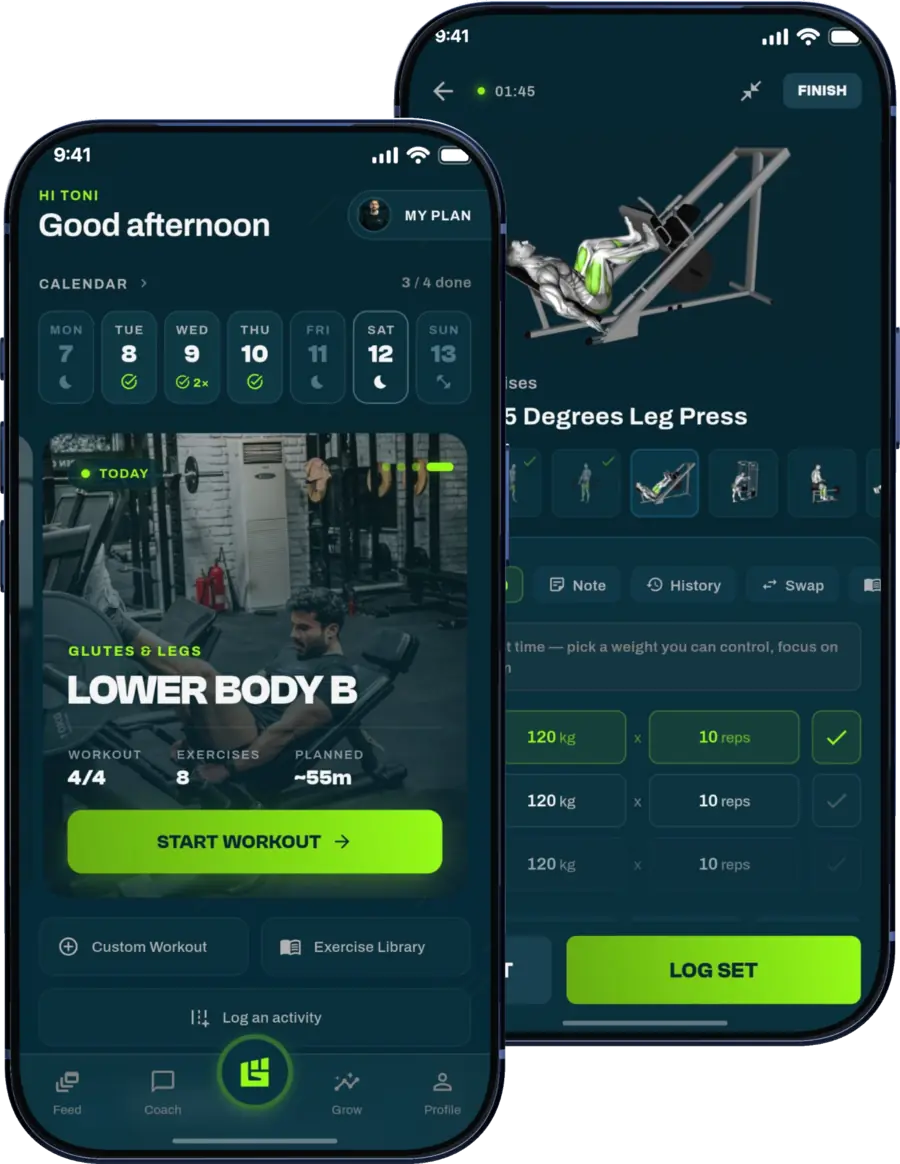
Get a personalized workout plan built around your goal, equipment and schedule. Train smarter, track every rep and keep moving forward, one workout at a time.






That’s where the underhand lat pulldown often changes things.
The issue usually starts with over-relying on wide grips and flared elbows. Those tools have a place, but they don’t solve every back problem. If your elbows always travel out, your training will bias a different area than if they travel close to the torso. Small technical details add up over months.
What the missing piece usually looks like
If any of these sound familiar, this lift is worth your attention:
- Your back looks wide up top but flat lower down. You’ve built some upper-lat and upper-back mass, but the lower portion of the lats doesn’t stand out.
- You feel pulldowns mostly in your arms. That often means the setup or grip is pushing the work away from the lats instead of into them.
- Pull-ups are hard to progress consistently. A machine-based vertical pull gives you more control over loading and cleaner rep quality.
- Your shoulders don’t love very wide grips. Some lifters tolerate the underhand path better because the arm stays in a friendlier position.
Practical rule: When a back exercise keeps missing the area you want to build, don’t just add more sets. Change the grip and elbow path first.
The underhand lat pulldown gives you a cleaner way to drive the elbows down and back while staying tight through the torso. That makes it useful for hypertrophy, for technique work, and for lifters who want a more complete V-taper instead of a back that looks developed only from one angle.
Why This Pulldown Belongs in Your Routine
The underhand lat pulldown earns its spot because it changes the mechanics of the pull in a useful way. With a supinated grip and a shoulder-width hand position, most lifters naturally keep the elbows closer to the body. That shifts the movement toward shoulder extension and changes where the lats work hardest.
According to RitFit’s comparison of underhand and overhand pulldowns, the underhand grip distinctly targets lower lats and biceps over the overhand grip's upper lat emphasis, making it especially useful for building the back “sweep” that supports a V-taper look.

The lower-lat advantage is real
A lot of lifters think every pulldown is basically the same. In practice, the grip decides a lot.
With the underhand version, the elbows tuck more naturally and travel in a path that lets many people contract the lower and mid-lats harder. That matters if your back already has some upper width but still lacks the visual taper toward the waist. You’re not replacing other vertical pulls. You’re covering territory they don’t hit as well for you.
The biceps helping is not a flaw
Some lifters avoid reverse-grip pulldowns because they think biceps involvement somehow ruins the exercise. That’s the wrong way to look at it.
The biceps are more involved here, and that can be an advantage. More assistance from the arms often lets you use more load while still training the lats hard. For hypertrophy, that matters. Mechanical tension is one of the main reasons this variation works well for back growth.
Here’s the trade-off. If your technique is sloppy, the set turns into an arm exercise with the lats along for the ride. If your setup is tight and your elbows drive properly, the extra arm contribution helps you overload the movement without losing the back stimulus.
Why many lifters feel a better contraction
The underhand setup often gives a deeper, cleaner bottom position. For a lot of people, it’s easier to bring the bar into the upper chest or top of the rib cage without cranking the shoulders into a compromised position. That tends to produce a stronger peak contraction.
A few practical benefits stand out:
- Better lower-lat emphasis for lifters who already do plenty of overhand work
- More direct biceps involvement, which can support heavier loading
- A joint-friendlier path for some shoulders compared with a wide pronated grip
- More obvious mind-muscle connection for lifters who struggle to feel their lats
The underhand lat pulldown works best when you treat it like a back exercise first and an arm-assisted pull second.
When it’s especially useful
This movement tends to shine for three groups:
| Lifter | Why it helps |
|---|---|
| Physique-focused trainees | It supports lower-lat development that improves overall shape |
| Beginners | The machine setup makes the pattern easier to learn than strict bodyweight pulling |
| Busy lifters | It’s efficient, easy to load, and simple to progress without a long setup |
If your back training has been built almost entirely around wide overhand pulling, adding the underhand lat pulldown is often the fastest way to make your back look more complete instead of just more tired.
Mastering Your Form Step by Step
Good underhand pulldowns don’t look dramatic. They look controlled. The torso stays organized, the elbows follow a tight path, and the bar moves because the lats are pulling it, not because the body is swinging under it.
The basic execution is simple. Grip the bar underhand at shoulder width, brace the core, set the shoulder blades, pull the bar toward the upper chest, and control the return. Gym-Mikolo’s technique guide also notes that controlling the eccentric over 2 to 3 seconds is critical for hypertrophy.

Build the setup before you pull
Start by adjusting the machine so the thigh pad locks you in. If your body lifts when the bar gets heavy, the setup is wrong before the rep even starts. Feet stay flat, chest stays tall, and the spine stays neutral.
Use a shoulder-width underhand grip. Not ultra narrow. Not excessively wide. Shoulder width usually gives the cleanest elbow path and the least unnecessary wrist stress.
Then set your upper body:
- Brace your trunk so the rib cage doesn’t flare and the low back doesn’t overextend.
- Pull the shoulder blades down and slightly back. A useful cue is to tuck them into your back pockets.
- Lean back slightly, just enough to create a straight bar path to the upper chest.
That small lean matters. Too upright and the bar path gets awkward. Too far back and you’ve turned the movement into a row.
Think of your hands as hooks. If your forearms and biceps are doing all the thinking, your lats usually aren’t doing enough of the work.
Drive the pull with the elbows
The best cue on this exercise is usually elbow-based, not hand-based. Don’t think about dragging the bar down with your arms. Think about driving your elbows down and back.
That cue cleans up a lot at once. It stops you from curling the bar. It keeps the elbows from drifting wide. And it puts the shoulder in a path that usually lines up better with lower-lat recruitment.
A good rep usually looks like this:
- The chest stays lifted
- The neck stays neutral
- The elbows skim close to the torso
- The bar comes to the upper chest or top of the rib cage
- The bottom position includes a brief squeeze, not a bounce
At the bottom, pause long enough to feel the lats shorten. You don’t need a theatrical hold. Just make sure you own the position before reversing the rep.
The return is where a lot of growth is earned
Most lifters do the hard part down and throw away the easy part up. That’s a mistake.
The return should be slow and deliberate. Let the arms travel upward while maintaining tension through the lats. Don’t fully relax, and don’t let the shoulders shrug all the way to the ears the moment the bar leaves your chest.
The goal is near-full extension without losing position. That keeps the lats loaded through the stretch instead of turning the top into a rest stop.
A few cues help here:
- Inhale on the way up
- Take the full 2 to 3 seconds
- Keep the torso fixed
- Reach without collapsing
This is one of the easiest ways to separate effective reps from junk reps. If the eccentric is rushed, the set gets shorter in quality even if the rep count stays the same.
A simple checklist for every rep
Use this quick audit during your set:
| Checkpoint | What you want |
|---|---|
| Grip | Underhand, shoulder-width, wrists straight |
| Torso | Slight lean, core braced, chest up |
| Elbows | Driving down and back, close to the body |
| Bottom | Bar to upper chest, clear lat squeeze |
| Top | Controlled stretch, no collapse |
What a good set should feel like
You should feel the lats working from the first few reps, with the biceps assisting rather than dominating. If all you notice is forearm fatigue and elbow flexion, the load is probably too heavy or the elbow path is wrong.
One practical adjustment works well when the movement feels too arm-heavy. Lower the weight, keep the chest proud, and exaggerate the “elbows to hips” cue for the next set. Most lifters immediately feel the difference.
How to Fix Common Underhand Pulldown Mistakes
The underhand lat pulldown is easy to make messy. Most errors come from trying to move more weight than the rep quality can support. The fix usually isn’t complicated, but you have to know what to look for.

Swinging the torso to move the stack
This is the classic problem. The lifter leans back harder every rep until the pulldown turns into a half-row. More plates move, but the target muscle gets less direct work.
Fix it: reduce the load and set your body angle before the first rep. Keep that angle fixed for the entire set. If your torso keeps changing shape, the weight is choosing your technique for you.
Letting the shoulders ride up
When the shoulders shrug toward the ears during the pull, the rep usually loses lat tension and feels cramped. The upper traps take over, and the movement gets noisy instead of strong.
Try this sequence before each rep:
- Set the chest
- Pull the shoulder blades down
- Start the pull only after that position is set
If your neck feels busy during pulldowns, your upper back is probably doing work your lats should be doing.
Flaring the elbows too far out
An underhand grip only helps if the elbows follow a useful path. If they flare wide, the movement stops looking like the version you intended and starts drifting toward a different emphasis.
Fix it: think “elbows toward the ribs” on the way down. Don’t pin them unnaturally hard, but don’t let them wander. A close, clean path usually gives the best contraction.
Cutting the range of motion short
Partial reps can sneak in two ways. Some lifters stop short at the bottom and never finish the contraction. Others rush the top and skip the loaded stretch.
Use this rep standard instead:
| Problem | Better standard |
|---|---|
| Too short at the bottom | Bring the bar to the upper chest with control |
| Too short at the top | Return to near-full extension without losing tension |
If you can’t hit both ends of the rep, the stack is too heavy for the quality you want.
Programming for Maximum Back Growth
The underhand lat pulldown fits well as either a primary vertical pull or a secondary back movement after a heavier compound. Where it works best depends on your goal and what else is in the session.
Its biggest programming advantage is load potential. According to Fitness Volt’s reverse-grip lat pulldown strength standards, an intermediate 180 lb male lifter can aim for a 207 lb one-rep max, which places him in the 50th percentile for that lift and exceeds the average standard pulldown benchmark. That tells you something useful. This variation often lets lifters train heavier than they can with a standard overhand pulldown.
Use it according to the job you want done
If your priority is hypertrophy, this movement does best when the reps are controlled and the lats stay loaded from top to bottom. If your priority is strength within machine work, it can also handle harder loading well because of the grip and elbow mechanics.
A practical split looks like this:
- For muscle gain
- Place it early in the workout if lower-lat development is a major goal
- Use controlled reps and a clear squeeze at the bottom
- Pair it with a horizontal row later in the session
- For strength-focused back work
- Run it after your first major pull, or make it your main vertical pull on a separate day
- Keep technique strict so heavier loading doesn’t turn into body English
- Track progression carefully, not just the stack number
A useful weekly approach
Many lifters do better when they stop repeating the same vertical pull in every session. Alternating grip emphasis across the week gives the shoulders a break and broadens back development.
Here’s a clean setup:
| Session | Vertical pull choice | Why |
|---|---|---|
| Back day A | Overhand pull-up or overhand pulldown | Biases a different elbow path |
| Back day B | Underhand lat pulldown | Emphasizes lower-lat and biceps-assisted overload |
That kind of structure lines up well with broader strength and conditioning principles that prioritize movement balance, recovery, and progressive overload instead of repeating near-identical stressors.
Progression that actually works
Progress doesn’t always mean adding more weight. Sometimes the smartest upgrade is earning better reps with the same weight. Other times it means extending the eccentric, owning the stretch, or getting more work from the lats and less from momentum.
A practical order of progression looks like this:
- Clean up rep quality first
- Add reps within your target range
- Increase load once those reps stay clean
- Refine tempo before chasing sloppy overload
If you want a simple way to organize that progression inside a wider plan, Fully customized workouts can help you map exercise order, progression, and recovery without guessing from week to week.
Where lifters usually get it wrong
The main mistake is burying the exercise late in the session after too much redundant pulling. If you’ve already done several vertical pulls and your elbows are smoked, the underhand pulldown becomes an arm-finisher instead of a lat-builder.
Put it where your focus is best. Then treat every set as skill work under load.
Smart Variations and Effective Substitutions
You don’t always have the ideal machine open. Sometimes your wrists need a break. Sometimes you need a new stimulus without losing the training effect you want. That’s where smart variations help.

Variations that keep the same basic intent
The best variation is usually the one that preserves the elbow path and lat focus while solving a practical problem.
- Single-arm underhand pulldown
This is excellent when one side does more work than the other. It also gives some lifters a cleaner range of motion because the shoulder can move more naturally. - Close-grip supinated cable pulldown with an attachment
This can feel better on the wrists than a fixed straight bar. It’s a useful swap if the classic bar setup irritates your elbows. - Band underhand pulldown
For home training, this keeps the general pattern alive. It won’t feel identical to a cable stack, but it’s good enough to practice the movement and chase a high-quality contraction.
Substitutions when the machine is taken
Not every replacement does the same job. Some come close. Some only share the category of “pulling exercise.”
Choose substitutions by matching the movement pattern, not by choosing any random back exercise.
Here’s how the common options compare:
| Exercise | Best use | Main trade-off |
|---|---|---|
| Chin-up | Strong bodyweight substitute with similar grip pattern | Harder to standardize load and technique |
| Supinated machine row | Good when you want extra control and support | Changes the pull from vertical to horizontal |
| Seal row | Great for strict upper-back work without body swing | Doesn’t replace vertical pulling mechanics |
If the goal is specifically lower-lat focused vertical pulling, the chin-up is the closest athletic substitute. If the goal is a productive back session when the pulldown station is busy, a supported row can still keep training quality high without waiting around.
Your Blueprint for a Stronger, Wider Back
The underhand lat pulldown is one of the most useful lifts for lifters who want more than generic back work. It gives you a different elbow path, a strong contraction, and a practical way to train the lats hard without turning every session into a test of bodyweight pulling.
It also forces a useful standard. If you can keep the torso stable, drive the elbows properly, and control the return, the exercise rewards you with the kind of tension that builds muscle. If you rush it, swing it, or let the arms dominate, it stops doing its job.
That’s the key difference with this movement. It’s not magic. It’s precise.
Use it when lower-lat development matters. Use it when you want a shoulder-friendly vertical pull. Use it when your current back training feels busy but incomplete. Then stay patient enough to make strict reps your default. That’s how a good exercise becomes a productive one.
If you want a simpler way to turn lifts like the underhand lat pulldown into a results-focused training plan, GrabGains helps you build personalized workouts, track progress, and train with more structure whether you’re chasing size, strength, or better overall performance.
Get inspired and motivated