Getting bigger arms: an evidence-based guide for 2026
Your complete guide to getting bigger arms. Learn the best exercises, programming, nutrition, and recovery strategies backed by science to build serious muscle. A common approach to bigger arms involves adding more curls. That's usually the wrong fix.
If your sleeves haven't changed, the problem usually isn't effort. It's strategy. Lifters pile volume onto biceps, ignore the muscles that add most of the size, pick exercises that don't fit their structure, and then expect isolated arm work to overcome weak programming and poor recovery.
Getting bigger arms comes from a system. You need the right anatomy-based priorities, exercise selection that matches your build, enough weekly work to drive growth, and nutrition that supports total-body muscle gain. When those pieces line up, arm training starts working a lot better. When they don't, you get a pump, maybe some soreness, and very little measurable progress.
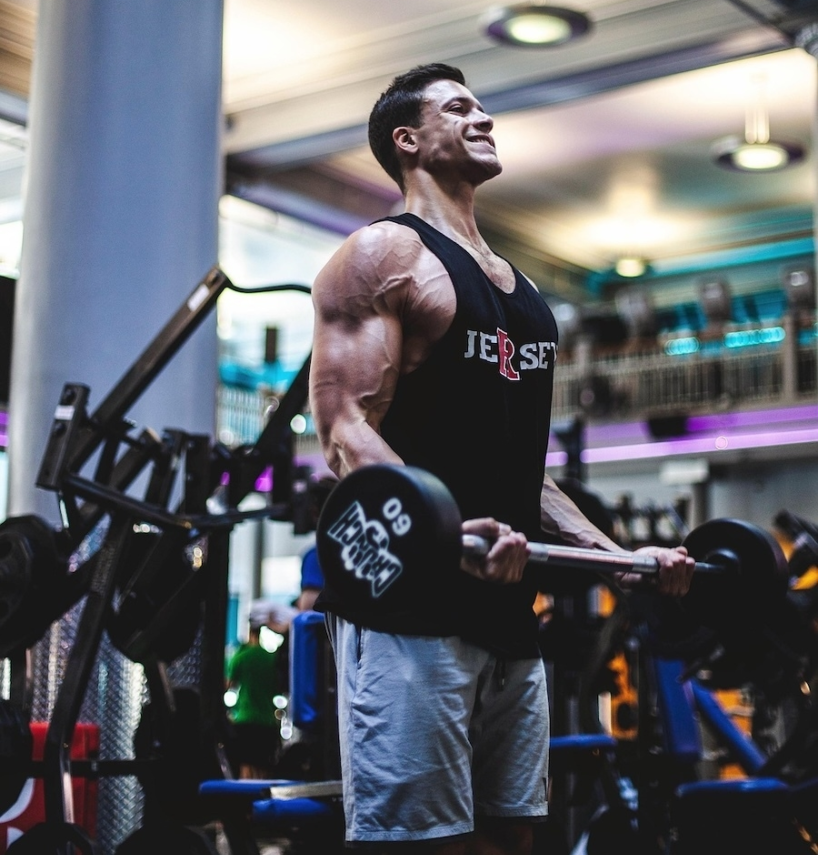
Why your arm workouts are not working
The biggest mistake in arm training is thinking effort alone solves the problem. It doesn't. You can train arms hard for months and still stay stuck if the work is lopsided, repetitive, or disconnected from progression.
A lot of routines fail for simple reasons. The exercise menu is too narrow. The loading never improves. The same workout gets repeated long after it stops producing adaptation. And many lifters treat arm growth like a cosmetic problem instead of a muscle-building problem.
The curl trap
Curls aren't useless. They're just overused.
Built for progress
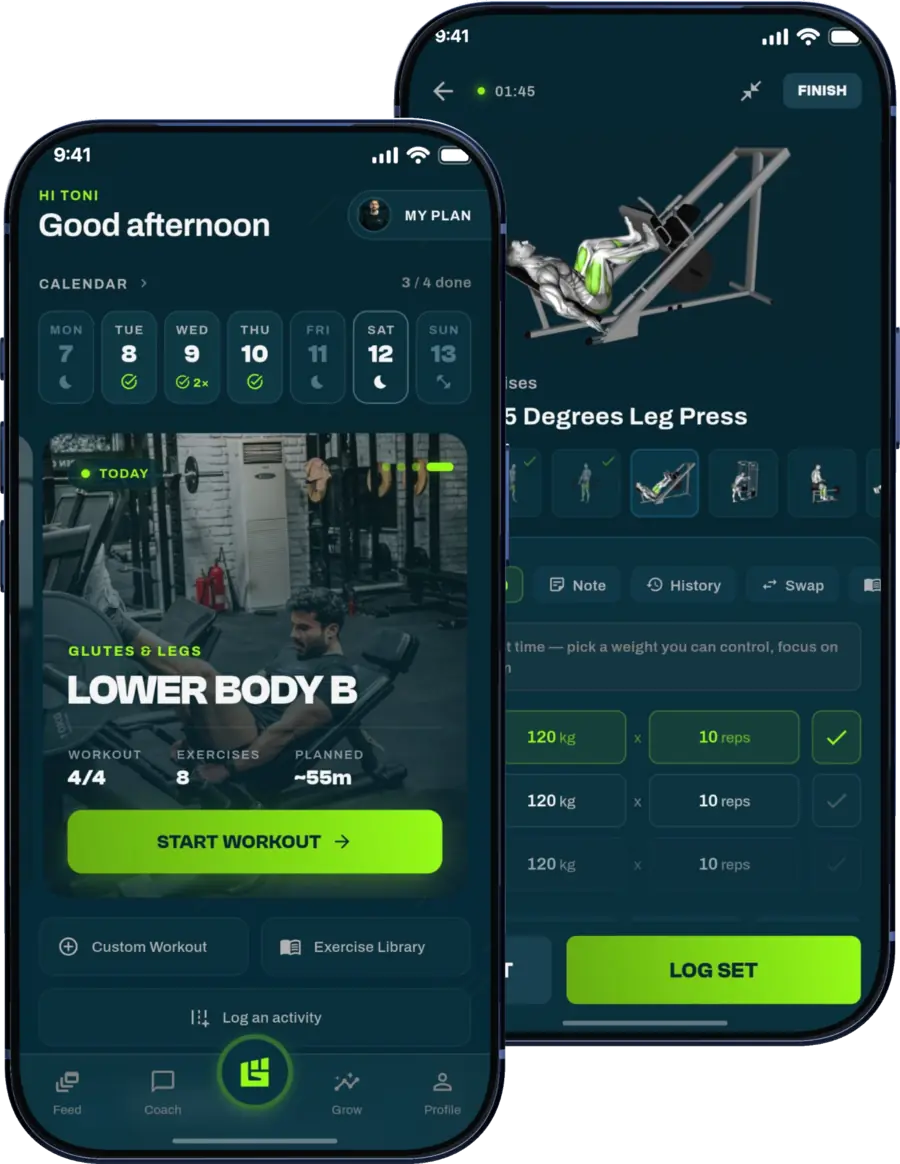
Take the guesswork out of training
Get a personalized workout plan built around your goal, equipment and schedule. Train smarter, track every rep and keep moving forward, one workout at a time.






If most of your arm training revolves around standing curls, cable curls, and more curls, you're biasing the most visible muscle instead of the muscle groups that drive upper-arm size. That creates the classic plateau. Good pump. Minimal long-term change.
Practical rule: If your arm plan is mostly biceps work, it isn't an arm plan. It's a partial plan.
Another issue is that many lifters train arms only when they "feel like it," usually after chest or back. That makes frequency inconsistent and quality low. By the end of the session, elbows are tired, form slips, and the last few sets become junk volume.
What actually changes arm size
Arms grow when training does four things well:
- Targets the whole upper arm: Biceps matter, but triceps and elbow flexor support muscles matter too.
- Uses progressive overload: Weight, reps, sets, control, or exercise difficulty need to improve over time.
- Fits your structure: Limb length changes what movements feel productive.
- Supports growth outside the gym: Food and recovery determine whether hard training turns into new tissue.
Most stalled lifters don't need more motivation. They need a better plan.
Understanding the Anatomy of Your Arms
Arm training gets better the moment you stop thinking in terms of "just biceps" and start thinking in terms of function and contribution to size.
The upper arm has several players, but one fact changes training priorities fast. Triceps comprise approximately 66% of upper arm mass, while biceps account for only one-third, and research reviewed by Dr. Wolf indicates triceps are about 2.5 times larger than biceps in practical arm-building terms, which is why direct triceps work is essential if your goal is size, not just shape (Men's Health UK review of the science).
That means a curls-only approach leaves a huge amount of growth potential untouched.
Biceps do more than flex the elbow
The biceps brachii has two heads, and it is commonly known as the front-of-the-arm muscle that shows when you flex. Its big jobs are elbow flexion and forearm supination. In plain language, it helps you bend the arm and turn the palm upward.
That's why grip and shoulder position matter so much during curls. Different setups change how much tension you feel and where in the range the movement gets hardest.
Triceps create most of the size
The triceps has three heads. Together they straighten the elbow, but each head contributes a little differently depending on arm position.
If you want the arm to look thick from the side and back, triceps need direct work. Pressing helps, but presses alone rarely give complete development. Pushdowns, dips, and overhead extensions cover different functions and expose the muscle to tension from multiple angles.
Big arms usually come from lifters who train triceps with at least as much intent as biceps.
The forgotten contributors
The brachialis sits beneath the biceps and helps push the arm outward visually when it grows. The brachioradialis runs through the upper forearm and adds thickness near the elbow while supporting elbow flexion.
These muscles don't get enough attention in average arm routines, but they matter. Hammer curl patterns, reverse-grip work, and pulling variations can help fill that gap.
A simple way to think about it is this:
| Muscle group | Main role | Why it matters for size |
|---|---|---|
| Triceps | Elbow extension | Adds most of the upper-arm mass |
| Biceps | Elbow flexion and supination | Creates front-arm peak and flexed look |
| Brachialis and brachioradialis | Elbow flexion support | Add thickness and complete the arm |
If your goal is getting bigger arms, anatomy isn't trivia. It tells you where most of the size comes from and why balanced programming works better than popular gym habits.
The best exercises for arm growth
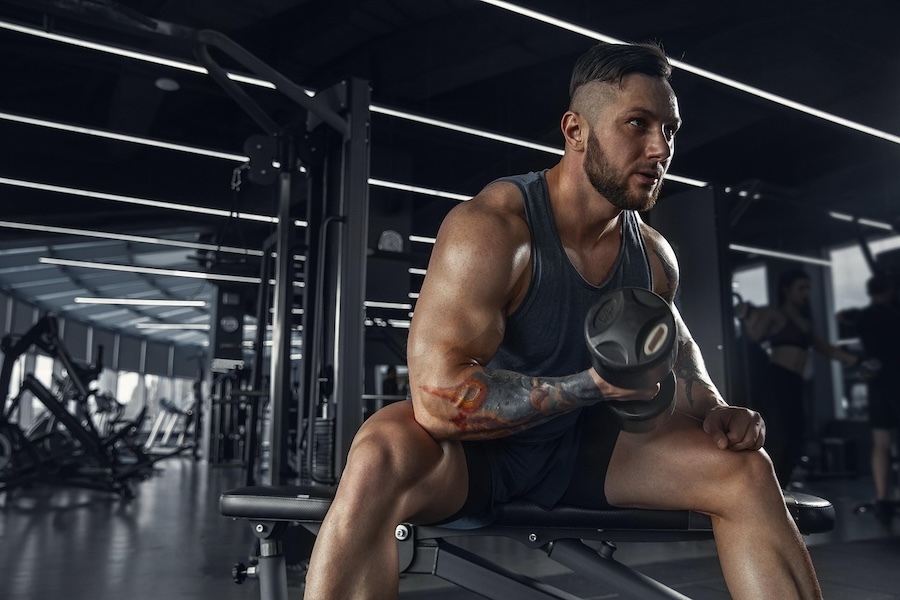
Good arm exercises do one of two jobs. They either let you overload a lot of tissue with stable mechanics, or they let you isolate a target muscle in a position where it has to work hard through a meaningful range.
You need both.
Start with compounds that carry over
Compound lifts don't replace direct arm work, but they give you a strong base. They let you use more load, train the elbow through real effort, and build strength that makes later isolation work more productive.
My short list looks like this:
- Close-grip pressing: Useful for loading the triceps with heavy, repeatable reps.
- Chin-ups: A strong option for elbow flexors, especially if you control the lowering and use full range.
- Dips: Effective for many lifters if the shoulders tolerate them well.
- Rows with intent: Not an arm exercise first, but they can support biceps and brachioradialis development when done with controlled elbow flexion.
These lifts shouldn't dominate the whole plan, but they belong in a serious arm-building phase.
Isolation work builds complete arms
Isolation lifts let you direct fatigue instead of sharing it across several muscle groups. That's where a lot of visible arm growth comes from.
For biceps, the most useful patterns are the ones that let you feel tension without swinging your torso or losing the bottom position. Good options include:
- Incline dumbbell curls
- Preacher curls
- Concentration curls
- Cable curls that keep tension on the bottom
- Hammer curls for brachialis and brachioradialis
For triceps, choose movements that don't all train the same pattern:
- Pushdowns for stable lockout-focused work
- Overhead extensions to challenge the long head in a stretched position
- Skull crushers or lying extensions if elbows tolerate them
- Single-arm cable extensions when you need cleaner mechanics
Match the exercise to the muscle
The best exercise isn't the one that looks hardest. It's the one that loads the target muscle where you're trying to grow it.
That means your arm menu should include:
- a heavy elbow-flexion pattern,
- a controlled curl with stretch,
- a neutral-grip option,
- a stable pushdown or press variation,
- and an overhead triceps movement.
These points address the basics without turning training into random variety.
If every curl feels the same, your setup is probably doing the work. Not the muscle.
Arm length changes what works best
Generic arm advice often falls short. Two lifters can use the same curl, the same load progression, and the same weekly effort, but not get the same result because their biomechanics differ.
Individuals with longer arms face biomechanical disadvantages, requiring 20-30% more force for the same movements. A 2023 study found that long-armed trainees gained 18% less biceps thickness with standard curls, but switching to lengthened-position partials yielded 25% greater growth by optimizing mechanical tension (Built With Science summary).
That has real coaching implications.
If you have longer arms
Standard standing curls often become less rewarding. The movement can feel awkward, the hardest point may not line up with where you need tension, and fatigue builds before the target muscle gets high-quality work.
Better choices often include:
- Incline curls
- Cable curls with tension at longer lengths
- Lengthened-position partials
- Strict preacher variations
- Overhead triceps work with careful control
Long-armed lifters usually benefit from slower lowering phases, better bracing, and less ego loading. Momentum hides poor mechanics fast when the lever is long.
If you have shorter arms
You may find standard curl patterns more forgiving and easier to overload. That doesn't mean every exercise will be ideal, but it often means more variations feel productive.
Shorter-armed lifters still need structure. They just have a little more room to use traditional setups without losing tension.
Gym tools versus home tools
You don't need a perfect commercial gym to build bigger arms, but equipment changes your options.
A cable stack gives smooth tension and makes it easier to bias stretched positions. Dumbbells give freedom and comfort. Bands are useful when you need portable resistance and quick pump work. If you're training at home, a well-designed resistance bands biceps routine can help you keep elbow flexor work in rotation when dumbbell loading is limited.
What matters most is whether the setup lets you train hard with control.
A practical exercise menu
Use this as a filter when building your own plan:
| Goal | Strong exercise choices |
|---|---|
| Heavy biceps loading | Chin-ups, preacher curls, strict bar or cable curls |
| Stretch-focused biceps work | Incline dumbbell curls, cable curls from behind the body |
| Brachialis and forearm thickness | Hammer curls, reverse curls |
| Heavy triceps loading | Close-grip pressing, dips |
| Long-head triceps focus | Overhead cable or dumbbell extensions |
| Stable triceps isolation | Pushdowns, single-arm cable extensions |
Exercises don't build size because they're trendy. They build size when they load the right tissue, fit your structure, and stay in your program long enough to progress.
Building Your Arm Training Program
Most lifters don't need more arm exercises. They need better organization.
The difference between random hard work and productive hard work usually comes down to three things: weekly volume, frequency, and progression. If those aren't managed, even good exercises stop working.

Set up your week with intention
A useful arm plan spreads work across the week instead of stuffing it all into one marathon session. Performance usually improves when biceps and triceps get trained while fresh enough to produce quality reps.
Generally, that means attaching arm work to upper-body days or giving arms a dedicated slot that doesn't come after exhausting compounds every time.
A simple way to think about weekly structure:
- Lower frequency: Good for beginners who are still learning exercise execution
- Moderate frequency: Often the sweet spot for intermediates
- Higher frequency: Useful during short specialization phases when arms are the clear priority
Progressive overload means more than adding weight
Plenty of lifters stall because they only count progress if the dumbbells go up. That's too narrow.
Arms often grow well when you improve through smaller, cleaner progressions such as:
- adding a rep with the same weight,
- adding a set,
- improving range of motion,
- slowing the eccentric,
- or making the setup stricter so the target muscle does more of the work.
That matters even more on curls and extensions, where sloppy form can create the illusion of progress while reducing tension where you need it.
Coaching note: The best overload is the one you can repeat with control next week.
Use specialization when arms are lagging
If your arms are behind the rest of your physique, a short specialization block can work much better than casually throwing in a few extra sets after back day.
Short-term arm specialization is a proven method involving redirecting recovery capacity. A program might progress from 12 sets per week to 21 sets in Mesocycle 1, then up to 30 sets in later cycles, training arms 3-4 times per week (RP Strength arm specialization guide). The reason it works is straightforward. You reduce the workload for other body parts to maintenance levels and free up recovery resources for arm growth.
That approach is much more effective than trying to blast everything hard at once.
What a specialization block should look like
Instead of giving every training variable equal attention, pick one clear priority. During an arm-focused block, keep lower-body and torso work at maintenance and put your best effort into repeated, high-quality arm sessions.
A practical setup includes:
- Choose a limited menu of reliable lifts
Keep enough variety to cover the muscle groups, but not so much that nothing progresses. - Distribute volume across the week
Three or four smaller exposures often beat one giant session that wrecks elbows and drops rep quality. - Progress slowly, not recklessly
Extra sets only help if performance and recovery stay intact. - Deload on time
If your elbows ache, pumps disappear, and reps get sloppier, pushing harder usually makes the next week worse.
A programming checklist that works
Here is the filter I use when reviewing arm programs:
| Variable | What to look for |
|---|---|
| Exercise selection | At least one heavy pattern and one isolation movement for each side of the arm |
| Frequency | Repeated weekly exposure, not random add-ons |
| Volume | Enough direct work to matter, but not so much that quality collapses |
| Progression | Clear plan to add reps, load, sets, or execution quality |
| Recovery | Joint tolerance, soreness trends, and performance stability |
| Fit to the lifter | Movement choices that suit equipment, schedule, and limb length |
If you want help automating those decisions, tools that build and adjust training based on your performance can save time. Platforms such as Fully customized workouts can organize exercise selection, progression, and schedule changes around your goal instead of leaving you to patch together generic templates.
Keep the signal, remove the noise
Arm programs fail when they become cluttered. Too many exercises. Too much fatigue. Not enough repeatable progress.
A better plan is boring in the right way. It repeats productive movements, tracks real improvement, and changes only when there's a reason. That's how getting bigger arms becomes a training outcome instead of a weekly guess.
Fueling Growth and Maximizing Recovery
Hard training creates the demand for growth. Food and recovery decide whether your body can answer that demand.
Many arm plans often fall apart. Lifters train for hypertrophy, but eat like they're maintaining, sleep inconsistently, and assume a bigger pump means they're building tissue. It doesn't work that way.
Arm size comes from total muscle gain
The biggest reality check in arm training is that large changes in arm measurement usually come with large changes in overall muscular development.
Building one inch of arm size typically requires gaining approximately ten pounds of lean muscle mass across the entire body, which is why arms grow best with a disciplined caloric surplus and full-body resistance training rather than isolated arm work alone (Just Move Fitness explanation).
That's why someone can do endless curls and still struggle to add meaningful size. The body grows as a system.
What to prioritize in nutrition
You don't need a complicated diet strategy to support getting bigger arms. You need consistency.
Focus on these basics:
- Eat enough to support growth: If body weight never trends upward and gym performance stalls, you're probably under-eating.
- Center meals around protein-rich foods: Regular protein intake gives muscle repair the raw material it needs.
- Use carbs around training if they help performance: Better sessions usually mean better hypertrophy training.
- Keep the diet repeatable: The best bulking plan is the one you can run without constant friction.
Supplements can help at the margins, but they don't replace food, training quality, or sleep. If you're sorting through options, this guide to muscle building supplements is a useful overview of what tends to earn a place in a practical setup.
Recovery is part of the program
Arm muscles recover faster than larger muscle groups in some contexts, but connective tissue doesn't always keep up. Elbows, forearms, and wrists often become the limiting factor before biceps or triceps do.
Good recovery habits keep that from derailing progress:
- keep at least some separation between hard arm sessions,
- rotate exercises when joints complain,
- reduce volume before form falls apart,
- and take deloads seriously when fatigue accumulates.
Better sleep won't replace smart programming, but poor sleep can ruin good programming fast.
If your appetite, performance, motivation, and rep quality all dip at once, the answer usually isn't another finisher. It's better recovery.
Sample Routines and Smart Adaptation
Most readers don't need more theory. They need something they can run this week.
Templates help, but every template has limits. Skill level, recovery, equipment, schedule, and limb structure all change what a good arm plan looks like in practice.
Beginner routine
A beginner doesn't need complexity. The priority is learning to load the target muscles with control and building consistency.
Gym version
- Close-grip press
- Lat pulldown or chin-up progression
- Dumbbell curl
- Rope pushdown
- Hammer curl
Home version
- Push-ups with narrow hand position
- Band or backpack curls
- Overhead band triceps extensions
- Hammer-style dumbbell or band curls
- Chair or bench-supported triceps work if shoulders tolerate it
Keep the exercise list small and repeat it long enough to improve execution.
Intermediate routine
Intermediate lifters usually need more direct work and better distribution across the week.
A productive setup is two focused exposures:
- one day with heavier compounds and stricter curls,
- one day with more isolation and stretch-focused work.
A sample split could look like this:
| Day | Focus | Example work |
|---|---|---|
| Day 1 | Heavier loading | Close-grip press, chin-ups, preacher curls, pushdowns |
| Day 2 | Hypertrophy bias | Incline curls, hammer curls, overhead extensions, single-arm cable work |
This level is where exercise fit starts mattering a lot more. If a movement bothers elbows or never creates useful tension, replace it instead of forcing it.
Advanced routine
Advanced lifters usually need one of two things. Either they need a specialization block, or they need to remove junk volume and improve execution quality.
A stronger advanced setup often includes:
- multiple weekly arm exposures,
- one heavy elbow-flexion movement,
- one stretched-position biceps movement,
- one neutral-grip movement,
- one heavy triceps pattern,
- and one overhead triceps pattern.
The exact number of exercises matters less than whether performance is trending up and joints are staying usable.
The more advanced you get, the less useful random variety becomes. Precision matters more.
Smart adaptation beats static templates
Here's the problem with sample routines. They don't adjust.
A fixed plan can't know when your recovery is dropping, when your incline curls are improving faster than preacher curls, when your elbows need a variation change, or when your long-arm structure would respond better to more lengthened work. A real training system should adapt those variables instead of leaving you to guess.
That matters even more for busy professionals. Missed sessions, travel, home-only weeks, and uneven recovery are normal. A rigid program breaks under that pressure. An adaptive program changes exercise order, volume, and progression while keeping the goal intact.
The best use of templates is as a starting point. Run them, log your performance, and make decisions based on what your body and numbers are showing. That's how arm training stays productive instead of becoming another saved workout screenshot you outgrow in two weeks.
Common Arm Training Mistakes to Avoid
Most arm-training mistakes aren't dramatic. They're small errors repeated long enough to kill progress.
The good news is that each one has a straightforward fix.
Using weight you can't control
Ego lifting is one of the fastest ways to turn arm work into shoulder swinging and half reps. If the torso rocks and the elbows drift everywhere, the target muscle isn't getting the quality stimulus you think it is.
Use loads that let you own the rep. That means controlled lowering, a consistent path, and no panic at the top.
Training biceps like they're the whole story
A lot of lifters still organize arm day around curls first, curls second, and maybe a little triceps at the end. That's backward if size is the goal.
Give triceps equal or greater programming attention. Organize the session so they aren't always trained when you're already cooked.
Treating volume like a badge of honor
More sets aren't always better. Once rep quality falls, adding work often just adds fatigue.
Watch for obvious signs that volume is no longer productive:
- Performance drops: Loads and reps fall despite full effort.
- Joint irritation builds: Elbows and wrists complain before the muscle does.
- Pumps disappear: Sessions feel flat instead of targeted.
- Technique degrades: Every set turns into momentum.
When that happens, reduce noise before adding more work.
Changing exercises too often
Variety can help with joint comfort and motivation, but constant rotation makes progression hard to measure. If you swap every movement before it has time to improve, you never build momentum.
Stick with productive lifts long enough to earn adaptation. Change them when they stop fitting, not when you're bored for one session.
Ignoring execution details
Small form errors matter in arm training because the muscles are small and easy to bypass.
Clean up these basics:
- Keep elbows stable: Don't let shoulder motion take over curls.
- Use full useful range: Partial reps have a place, but accidental partials don't.
- Control the lowering: Fast drops waste tension.
- Match grip to goal: Supinated, neutral, and pronated grips each have a reason.
If you're serious about getting bigger arms, don't judge workouts by burn alone. Judge them by whether the right muscles are getting stronger, fuller, and more capable over time.
If you want a plan that adjusts to your schedule, equipment, and progress instead of forcing you into a static template, GrabGains is built for that. It creates personalized training around your goal, updates workouts based on performance, and gives you guided exercise instruction so your arm work stays specific, repeatable, and easier to progress.
Get inspired and motivated