Bench Press without a bench: build your chest at home
Bench press without a bench - No bench? Learn to bench press without a bench! Use floor presses, push-ups, and bands to build serious chest strength & size from You don't need a flat bench to build a stronger chest. This understanding often emerges under less-than-ideal circumstances, such as when every gym bench is occupied or when a home setup is limited to dumbbells, bands, and floor space.
That doesn't ruin chest training. It just changes the tools.
If your goal is a better-looking chest, stronger pressing, or more usable upper-body power, the key drivers are still mechanical tension, smart exercise selection, and progressive overload. A bench helps. It isn't the magic. The magic is applying enough resistance, with clean technique, often enough to force adaptation.
Why you don't need a bench to build a powerful chest
A lot of lifters overrate the bench and underrate the pattern.
The bench press is one way to train horizontal pressing. It is not the only way. Your chest still works when you press dumbbells from the floor, when you load push-up variations properly, and when you use standing press patterns that force the upper body and trunk to work together.
That matters because chest strength is worth chasing. According to StrengthLog's bench press strength standards, the average bench press is 220 lb for men and 104 lb for women, which classifies lifters at that level as intermediate. Those standards come from over 24,000 real training logs. In plain terms, even moderate pressing strength takes consistent work.
Built for progress
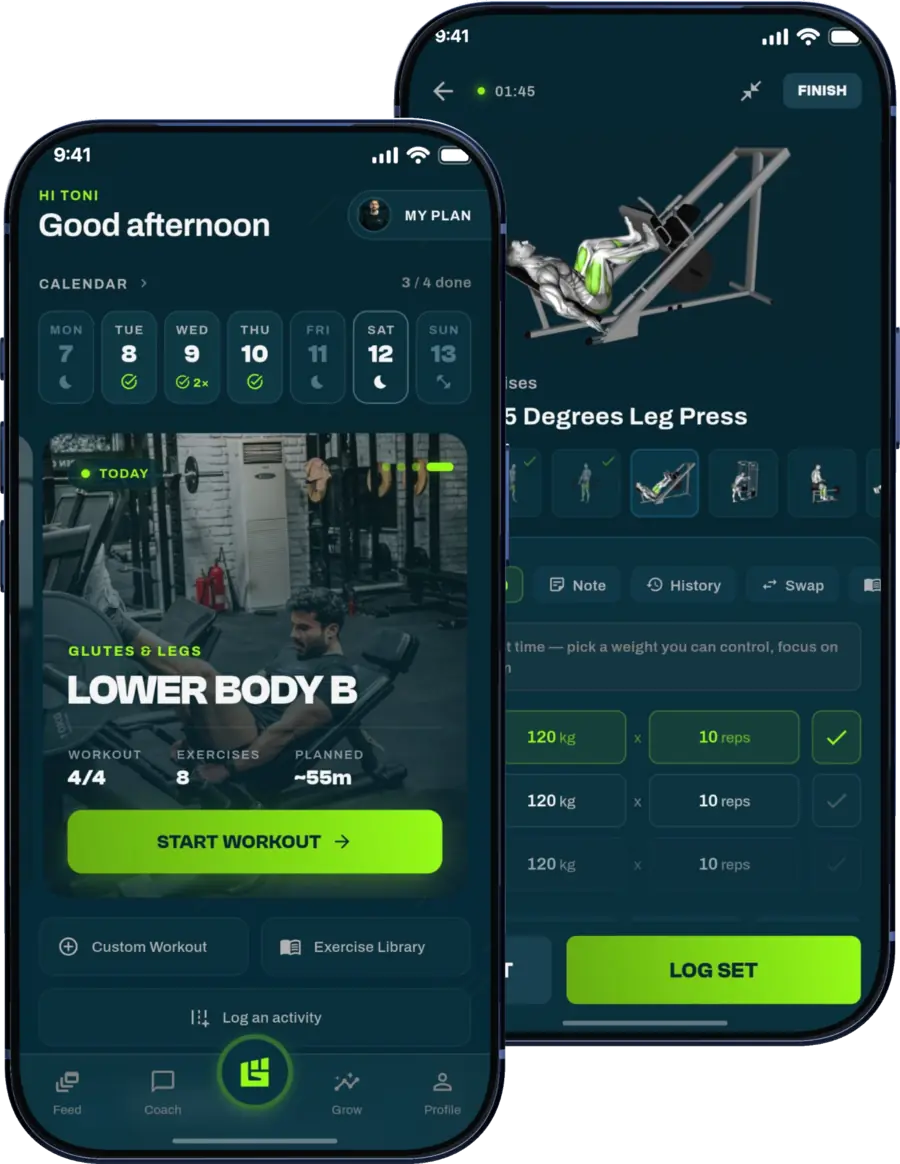
Take the guesswork out of training
Get a personalized workout plan built around your goal, equipment and schedule. Train smarter, track every rep and keep moving forward, one workout at a time.






Train the movement, not the furniture
If you want a practical framework for a bench press without a bench, keep these three ideas in mind:
- Use exercises that let you push hard. Floor presses and loaded push-ups do this well.
- Pick variations you can progress. If you can't add load, reps, range, or control, the exercise stalls.
- Match the tool to the goal. Heavy floor pressing is better for raw strength than endless easy push-ups.
Most chest training mistakes happen because people chase novelty instead of progression. They do random push-up challenges, light dumbbell flyes, or unstable circus work before they've built any base. That's backwards.
What actually grows the chest
Your pecs don't know whether you're on a competition bench, a living room floor, or push-up handles. They respond to tension and effort.
That gives you a lot of room to work with if equipment is limited. A solid benchless setup can include:
- A heavy press such as a dumbbell floor press.
- A higher-rep press such as weighted or deficit push-ups.
- A finish movement that keeps tension on the chest without beating up the shoulders.
Practical rule: If an exercise feels clever but doesn't let you train hard with control, it probably isn't your best main chest movement.
Joint position matters too. A lot of people trying to train chest at home are also stiff through the upper back and shoulders. If your pressing always feels jammed in the front of the shoulder, spend some time on thoracic extension and soft tissue work. This guide to improving posture and mobility with foam rollers is a useful place to start if your setup, desk work, or training history has you locked into a rounded posture.
The trade-off is real, but manageable
A bench gives you more range of motion on traditional barbell and dumbbell pressing. That's useful. But the floor gives you stability, clear stopping points, and often better control for people training alone.
For busy lifters, that's a good trade.
You don't need perfect equipment. You need a plan that lets you train the chest hard, recover, and repeat.
Mastering the Floor Press for Raw Strength and Size
If you want the closest thing to a true bench press without a bench, start with the floor press.
It doesn't do everything a bench press does. It doesn't need to. What it does well is let you press safely, load the triceps hard, and build serious top-end pressing strength without requiring a rack and bench setup.
According to Zing Coach's guide to bench press alternatives without a bench, the dumbbell floor press replicates 70-80% of maximal bench press load capacity and emphasizes triceps development because of its partial range of motion. The same source notes that 4 sets of 6-8 reps is a strong default for strength and hypertrophy.
Why the floor press works
The floor cuts off the bottom of the press. That changes the movement in three useful ways.
First, it limits shoulder extension. That's often a relief for lifters whose shoulders feel sketchy at the bottom of a deep dumbbell press.
Second, it removes the bounce and stretch reflex people often rely on. You have to produce force from a dead stop.
Third, it shifts more demand toward the triceps and the mid to top range of the press. If your lockout is weak, floor pressing usually exposes it fast.
Dumbbell floor press setup
This is the best starting point for home trainees.
Use this sequence:
- Set the weights beside you. Don't try to clean heavy dumbbells into position from a bad angle.
- Sit down, then roll back with the dumbbells close to your torso.
- Plant your feet flat and bend your knees. That gives you a stable base.
- Start with a neutral or semi-neutral grip if your shoulders are cranky.
- Keep your elbows around 45 degrees from your torso. Too flared and the shoulders take a beating.
- Lower under control until your upper arms contact the floor.
- Pause briefly, then press hard to lockout.
A few form cues matter more than the rest:
- Keep the wrists stacked over the elbows.
- Brace your midsection so the rib cage doesn't flare up.
- Drive through the floor with your feet for whole-body tension.
- Touch the floor softly with the triceps. Don't crash.
If the dumbbells slam into the floor, you're not controlling the lowering phase. The rep didn't end. You dropped it.
Common dumbbell floor press mistakes
Most errors come from trying to make the movement feel like a full bench press. It isn't one.
| Mistake | What it causes | Better fix |
|---|---|---|
| Elbows too wide | Front shoulder stress | Tuck slightly and keep the upper arm in a stronger path |
| Rushing the bottom | Loss of tension | Pause on the floor and press from control |
| Feet relaxed | Weak full-body stability | Push the feet into the floor the whole set |
| Overarching | Rib flare and sloppy pressing | Brace the abs and keep the torso organized |
Barbell floor press
If you have a rack or a safe way to get under the bar, the barbell floor press is excellent for strength.
The biggest advantage is load. You can usually push harder against a barbell than with a pair of dumbbells because stability demands are lower. That makes it useful when your main goal is pressing strength, not just chest fatigue.
The setup is simple in concept but less forgiving in practice.
How to do it well
- Lie under the bar with the eyes positioned for a clean handoff or unrack.
- Set the upper back hard against the floor.
- Grip the bar evenly and pull the shoulder blades together.
- Unrack carefully, then lower until the upper arms meet the floor.
- Let the floor stop the descent. Don't let the elbows crash.
- Press back up with the forearms vertical.
The barbell version rewards tightness. If your upper back, wrists, and elbows aren't lined up, the rep feels ugly fast.
Kettlebell floor press
Kettlebells add a different challenge. Because the load sits behind the hand, they demand more control at the wrist and shoulder.
That makes them useful for lifters who want pressing work with extra stabilization, especially one arm at a time.
Single-arm kettlebell floor press cues
- Start with the bell in a secure rack position.
- Lie down carefully and keep the non-working arm out for balance.
- Press the bell up while keeping the ribs down.
- Lower slowly until the upper arm contacts the floor.
- Avoid rotating through the torso.
This variation isn't the best choice for top-end strength. It is very good for shoulder control, anti-rotation, and side-to-side balance.
When to use each variation
Use the variation that matches the job.
- Dumbbell floor press fits most home gyms and gives a strong mix of chest and triceps work.
- Barbell floor press is the better choice when the target is maximal pressing strength.
- Single-arm kettlebell floor press works well for coordination, shoulder integrity, and unilateral control.
A simple decision guide helps:
| Goal | Best option | Why |
|---|---|---|
| Raw pressing strength | Barbell floor press | Easier to load heavily and repeat consistently |
| Size with limited equipment | Dumbbell floor press | Strong tension, simple setup, easy progression |
| Stability and asymmetry work | Single-arm kettlebell floor press | Challenges control without needing much space |
Programming the floor press
Don't bury this movement in the middle of a long chest workout. Put it early.
Ideally, the floor press should be your first or second upper-body movement of the day. It asks for focus, setup precision, and enough freshness to move load well.
Good uses include:
- Primary strength lift on upper-body days
- Main press in a home chest workout
- Supplemental lockout work if you also barbell bench elsewhere
If your goal is chest growth, pair floor presses with a movement that gives more stretch or more continuous tension, such as deficit push-ups or band-resisted push-ups. The floor press is strong at building force. It is less effective as a one-exercise solution for complete chest development.
Unlocking Chest Growth with Advanced Push-Up Variations
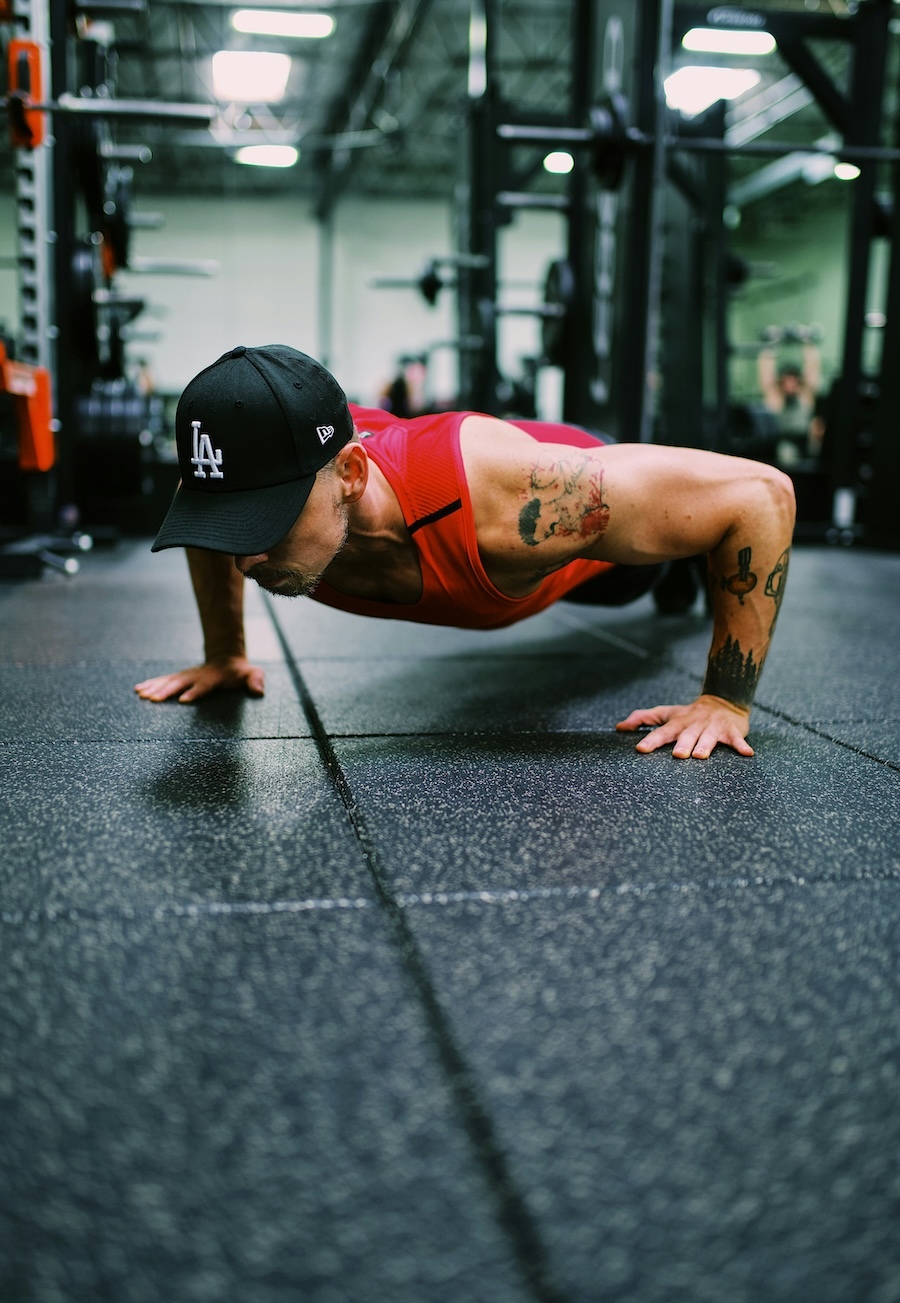
A lot of lifters stop progressing with push-ups because they never make them harder in a meaningful way.
They just do more reps. Then more reps. Then even more reps, until the movement becomes conditioning instead of muscle-building work.
That's not a push-up problem. That's a programming problem.
Progressive overload for bodyweight pressing
If you want push-ups to build your chest, you need to manipulate at least one of these:
- Load
- Range of motion
- Tempo
- Proximity to failure
- Exercise difficulty
That turns a basic movement into a real hypertrophy tool.
Push-ups also solve a problem floor pressing can't fully solve. They let your shoulder blades move more naturally around the rib cage. For some lifters, that makes them more comfortable for higher training volume.
If you want a broader menu of bodyweight exercises, that library is useful for finding variations that match your current level and equipment.
Deficit push-ups for chest stretch
If standard push-ups feel too easy, this is often the best next move.
Place your hands on stable handles, hex dumbbells, push-up bars, or low platforms so your chest can drop below hand level. That extra range gives the pecs more stretch and usually makes light bodyweight work feel much more productive.
Key form rules
- Keep the torso rigid from head to heel.
- Lower until the chest reaches a deep but controlled position.
- Don't dump into the shoulders at the bottom.
- Press up while thinking about bringing the upper arms toward the midline.
This variation is excellent for hypertrophy. It isn't ideal if your shoulder control is poor or if the bottom position feels unstable.
Weighted push-ups for straightforward overload
This is the closest thing to a "just add more iron" solution.
A weighted vest works best. A backpack can work if it sits high and tight and doesn't swing. Plates on the upper back can work too, but they usually require a partner and can turn a good set into a balancing act.
Coaching note: Weighted push-ups should still look like push-ups. If your hips sag, your neck reaches forward, or your elbows flare wildly, the load is too heavy.
Weighted push-ups are useful because they keep the movement pattern simple. You don't have to chase fancy progressions. You just add resistance and keep the reps honest.
Band-resisted push-ups for lockout and tension
Bands change the resistance profile. The press gets harder as you approach lockout.
That's useful for lifters who want more tension at the top without relying only on external load. It's also a practical option when dumbbells are limited.
To set it up, loop a resistance band across your upper back and anchor each end under your hands. As you press up, the band stretches and increases the demand.
This variation works well when:
- You need more challenge without heavy weights
- You want a hard chest and triceps finisher
- You train in short sessions and need efficient setup
It works less well when the band yanks you out of position. If the resistance is so aggressive that you lose your groove, use a lighter band and cleaner reps.
Mechanical drop sets with push-ups
This is one of the best ways to get more chest work from a small space and not much equipment.
Start with your hardest push-up variation, then reduce the difficulty without taking a long rest. For example:
- Feet-raised weighted push-ups
- Standard weighted push-ups
- Bodyweight push-ups
- Knee push-ups or incline push-ups
The chest gets a long, uninterrupted effort. That's a strong hypertrophy stimulus when used carefully.
Use this sparingly. It creates a lot of fatigue. It is a great finisher, not a reason to turn every workout into survival mode.
What works and what doesn't
Some push-up advice sounds good but falls apart in practice.
| Works well | Usually overrated |
|---|---|
| Adding load with a vest or band | Doing endless easy reps |
| Increasing range with deficit setup | Turning every set into sloppy burnout |
| Slowing the lowering phase | Speed reps with no control |
| Training close to failure with stable form | Unstable gimmick variations that limit tension |
For chest growth, advanced push-up training should feel deliberate. The reps need to load the pecs, not just exhaust your lungs.
Best use cases
Different variations fit different lifters.
- Minimal equipment. Use deficit push-ups and tempo work.
- Home gym with a vest or plates. Weighted push-ups should be a staple.
- Short workouts. Band-resisted push-ups give a lot of return quickly.
- Joint-friendly volume. Standard and slight-deficit push-ups often tolerate more weekly work than heavy pressing.
If your chest training has stalled, don't assume you need a bench. You may just need push-ups that are hard enough to matter.
Building Functional Power with Standing and Unstable Presses
Floor presses and push-ups are great for direct chest work. They don't cover everything.
Athletes, hybrid trainees, and anyone who cares about movement outside the gym benefit from pressing patterns that involve the hips, trunk, and shoulder in a more integrated way. That doesn't replace chest work. It rounds it out.

How these presses differ from floor-based work
A floor press gives you a stable base and a narrow job. Press the weight. Keep tension. Build force.
Standing and unstable presses ask for more. Your feet have to organize the body. Your trunk has to resist movement. Your shoulder has to press while the rest of you stays connected.
That makes them less pure for chest hypertrophy, but often better for usable power and coordination.
Landmine press
The landmine press sits in the sweet spot between horizontal and vertical pressing. The bar travels in an arc, which many lifters find more shoulder-friendly than straight overhead work.
It also gives you a strong upper-chest and anterior shoulder stimulus without the awkwardness some people feel on incline pressing.
Use it when you want:
- A pressing pattern that spares irritated shoulders
- Core involvement without excessive instability
- An athletic press that feels smooth and repeatable
Single-arm landmine pressing is especially useful. It forces the trunk to resist rotation while the pressing arm drives upward and forward.
Stability ball dumbbell press
This one gets abused a lot.
Used well, it can be a smart accessory. Used poorly, it becomes a balancing trick that limits useful loading. The point is not to wobble for the sake of wobbling. The point is to create a moderate instability demand while still pressing with control.
A good setup matters:
- Place the upper back on the ball, not the low back.
- Keep the hips lifted.
- Set the feet wide enough to make the base stable.
- Press dumbbells with a path you can control.
This variation is best for moderate loads and controlled reps. It is not a replacement for your heaviest chest work.
Use unstable pressing as assistance work. If the surface forces you to go so light that the chest barely works, you've gone too far toward balance training.
Side-by-side comparison
| Exercise | Best for | Main limitation |
|---|---|---|
| Landmine press | Athletic pressing and shoulder-friendly power | Less direct chest loading than horizontal pressing |
| Stability ball dumbbell press | Core involvement with moderate chest stimulus | Hard to load heavily without losing quality |
| Single-arm overhead variations | Unilateral control and trunk stiffness | More shoulder dominant than chest dominant |
Where these fit in a program
These lifts work best after your main press, not before it.
A practical order looks like this:
- Main press for strength or hypertrophy
- Functional press for integration and athletic carryover
- Isolation or high-rep finisher if needed
For HYROX-style or general functional fitness training, standing presses help because they teach force transfer through the whole body. For pure chest size, they support the program but shouldn't become the main event.
How to Program Your Workouts for Consistent Gains
Many trainees don't need more exercises. They need a better reason for each exercise they already have.
A good bench press without a bench plan starts by choosing a primary goal. Strength training looks different from hypertrophy work. A minimalist plan looks different from a mixed home gym plan. If you blur all of that together, progress gets muddy.
A useful benchmark keeps motivation high too. According to this discussion of bench press benchmark rarity, about 0.075% of the world's population can bench press 225 lbs, and bench-less methods like the floor press can handle 90-95% of bench loads. That matters because it shows a serious point. Strong pressing doesn't disappear just because you don't own a bench.
Program by outcome, not by exercise list
Start by asking one question.
What are you trying to improve first?
If the answer is pressing strength, your program needs lower reps, more rest, and repeat exposure to heavy floor pressing. If the answer is chest size, you need more total working sets, more variation in resistance profile, and more work near muscular failure.
Here's a simple comparison:
| Goal | Main driver | Best benchless tools |
|---|---|---|
| Strength | Heavier loading and repeatable technique | Floor press variations |
| Hypertrophy | Sufficient volume and hard sets | Floor press plus advanced push-ups |
| Minimalist consistency | Simplicity and progression with little setup | Push-ups, bands, and one press pattern |
A strength-focused weekly template
Use this if your main goal is better pressing numbers.
Day one
- Primary lift. Heavy floor press variation
- Second press. Lighter press for extra volume
- Upper back work. Rows or pull-ups to keep the shoulders balanced
- Triceps assistance. A simple extension or close-grip pressing variation
Day two
- Speed or moderate floor press work
- Single-arm press variation
- Push-up variation for clean volume
- Rear delt or scapular work
The principle is simple. Keep one press heavy, one press supportive, and enough pulling in the week to keep the shoulders working well.
A hypertrophy-focused weekly template
This works better for people chasing visible chest development.
Session A
- Dumbbell floor press as the first movement
- Deficit push-ups in moderate to high reps
- Band-resisted push-ups as a finisher
Session B
- Slightly lighter floor press variation with slower lowering
- Weighted push-ups
- Chest-focused finisher such as squeeze work or high-tension push-ups
This setup spreads chest stress across different types of loading. The floor press handles heavier mechanical tension. Push-up variations add stretch, continuous tension, and extended effort.
A minimalist plan that still works
If your setup is bands and bodyweight, don't overcomplicate it.
Use three pieces:
- A hard push-up variation
- A second push-up variation with a different resistance feel
- A small amount of shoulder and upper-back support work
That can be enough for months if you progress it consistently.
Ways to progress without more equipment:
- Add reps
- Slow the lowering phase
- Pause at the bottom
- Raise the feet
- Add a band
- Reduce rest carefully
How to know when to progress
The easiest rule is performance quality.
If you hit the top of your target rep range with clean reps and could still repeat that next week, increase the challenge. That might mean more load, a harder variation, a longer pause, or another set.
Don't progress every variable at once. Pick one.
The fastest way to stall is to add load, volume, and complexity in the same week because you're motivated. Good programming leaves room for next month.
Keep your training honest
A lot of home trainees undershoot effort because they don't have the atmosphere of a gym. Others overshoot because every workout turns into a max-out.
Both are mistakes.
You want hard, repeatable work. The kind you can recover from and build on. That's one reason people do well with a Personalized strength training app. It removes a lot of the guessing around exercise selection, progression, and weekly balance.
Consistency beats random intensity. Every time.
Common Questions About Training Chest Without a Bench
Can floor presses replace the bench press completely
For many people, yes.
If your goal is general strength, chest growth, or home training practicality, floor presses can cover a lot of ground. They are especially useful when you train alone or want a more shoulder-friendly press. If your sport or testing standard specifically involves a bench press, then you still need some bench practice eventually.
Should my elbows touch the floor hard on floor presses
No.
Your upper arms should meet the floor under control. The floor is a stopping point, not something to bounce off. A soft contact keeps tension on the press and protects the shoulder and elbow from sloppy impact.
Can you build a big chest with push-ups alone
You can build a solid chest if the push-ups are hard enough and progressed over time.
Many trainees fail with push-ups because they never add difficulty. Weighted, deficit, band-resisted, and tempo-based push-ups can take you much further than standard high-rep sets.
What's the best option if I only have resistance bands
Use bands with push-ups first, then add standing presses and fly-style accessory work if your setup allows it.
Bands work best when they increase difficulty on movements you can already perform well. They are less useful when they create awkward resistance that pulls you out of position.
How do I target the upper chest without an incline bench
Use landmine presses, feet-raised push-up variations, and pressing angles that move slightly upward rather than straight across.
No single exercise isolates the upper chest perfectly, but those variations usually do a better job than flat-only pressing.
Are unstable presses better for chest gains
Usually not.
They are better for coordination, trunk involvement, and athletic carryover. For pure chest size and pressing strength, stable positions usually win because they let you apply more force and accumulate more useful volume.
How often should I train chest without a bench
Most lifters do well training chest-focused pressing multiple times per week if recovery is managed.
The key is balancing heavy work with higher-rep volume and keeping shoulder comfort in check. If your pressing quality drops every session, you're probably carrying too much fatigue.
If you want your workouts to adjust around your equipment, schedule, and progress instead of forcing you into a generic template, the GrabGains app is worth a look. It helps you build smarter training plans for strength, muscle, conditioning, and recovery, whether you're training in a full gym or figuring out a bench press without a bench at home.
Get inspired and motivated