5 Day Split: The ultimate guide to build your plan [2026]
Ready to get serious? Learn how to build an effective 5 day split for muscle growth, strength, or HYROX. Our step-by-step guide covers everything you need. Most advice about the 5 day split is too simplistic. One side says the classic body-part split is outdated. The other treats it like the only serious way to train. Both miss the point.
A 5 day split is a framework, not one fixed routine. It can be built for hypertrophy, strength, hybrid performance, or home training. What matters is how you organize volume, exercise selection, fatigue, and recovery around your actual goal.
That’s why some people thrive on a 5 day split and others stall on it. The split itself isn’t magic, and it isn’t broken. The quality of the design decides the result.


Why the 5 day split is still a powerhouse
The 5 day split keeps working for one simple reason. It solves a practical problem that shows up once training gets serious. Hard training for multiple goals in the same session often turns into rushed sets, watered-down exercise selection, and sloppy later work. A good 5 day setup gives each session a clearer job.
That matters whether your goal is size, strength, HYROX, or making limited home equipment work harder. Five training days give you enough slots in the week to organize stress with intent. You can give big lifts proper attention, place conditioning where it will not sabotage leg performance, or build extra work around weak points without turning every workout into a two-hour grind.

Built for progress
Take the guesswork out of training
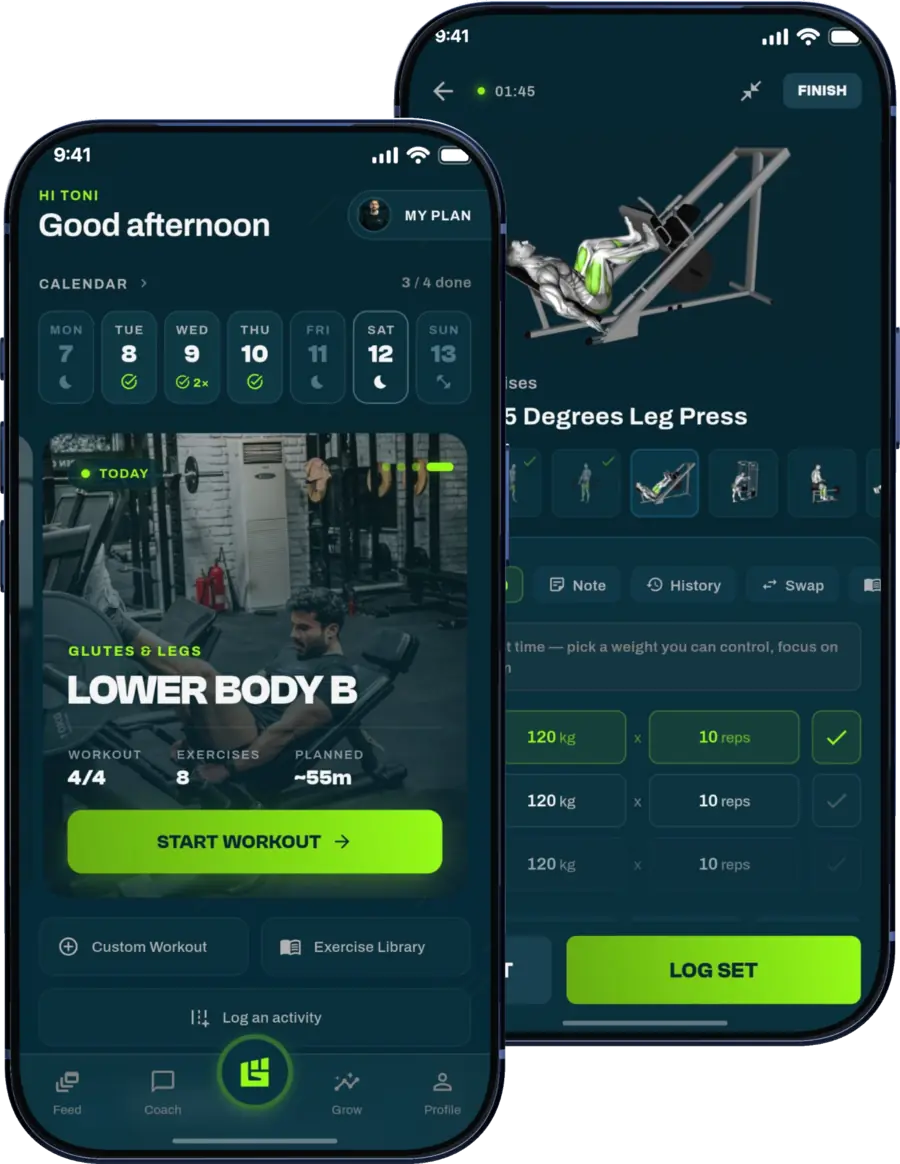
Get a personalized workout plan built around your goal, equipment and schedule. Train smarter, track every rep and keep moving forward, one workout at a time.






The advantage is session quality
A narrower session target usually improves execution. You get more out of your main lifts when you are not asking your body to cover everything at once.
For intermediate and advanced lifters, that often means better reps, more stable performance across working sets, and cleaner technique on demanding exercises. It also makes fatigue easier to place. A hypertrophy-focused lifter can push chest and delts hard without wondering whether deadlifts later in the workout will suffer. A strength-focused lifter can protect bar speed and setup quality by giving priority lifts their own space in the week.
I see this constantly in practice. Lifters do not usually stall because the split has the wrong name. They stall because the weekly plan asks for too much high-quality work in the wrong sessions.
Practical rule: If a split helps you repeat hard sets with good technique, honest effort, and predictable recovery, it is doing its job.
It adapts to different goals
A 5 day split is not one routine. It is a layout you can shape around the outcome you want.
You can build it around:
- Hypertrophy, with more total sets and targeted isolation work
- Strength, with more exposure to primary lifts and tighter fatigue control
- HYROX or hybrid performance, with lifting, engine work, and running placed to limit interference
- Home training, with smart exercise rotation, unilateral work, and higher-rep sets
- Weak-point specialization, where one or two areas get extra weekly attention
That flexibility is why the format has lasted. The useful question is not whether the 5 day split works. The useful question is which version fits your goal, your recovery, and the equipment you have.
Who usually does well with it
This setup tends to work best for people who can train consistently, recover reasonably well, and benefit from more structure across the week. It is especially effective once you have enough lifting skill to make targeted sessions productive.
It can work for beginners, but only if the plan stays simple. Newer lifters often grow faster on less total work, not more days for the sake of more days.
There is a trade-off. Five training days give you more precision, but they also give you more chances to mismanage fatigue. If your sleep is poor, your schedule changes every week, or you miss sessions often, a simpler split usually performs better in practice. If you can show up and recover, a 5 day split gives you room to train with purpose instead of just fitting everything wherever it can go.
The core principles of an effective training split
If you don’t understand the moving parts, every split turns into guesswork. Good programs are built on four things. Volume, frequency, intensity, and recovery. Change one, and the others need to make sense around it.
Think of them like the four controls on a soundboard. If you crank one up without adjusting the others, the output gets messy.
Volume is the main driver
For those training for muscle, volume is the first variable to get right. In simple terms, volume is how much hard work a muscle gets across the week.
The most useful practical target is 10 to 20 hard sets per muscle group weekly. A hard set means a set performed with focus and enough effort that it creates a real training stimulus. Half-hearted warm-up sets don’t count.
Here’s what that looks like in practice:
| Muscle group | Low end | Middle ground | High end |
|---|---|---|---|
| Chest | 10 hard sets | 14 to 16 hard sets | 20 hard sets |
| Back | 10 hard sets | 14 to 16 hard sets | 20 hard sets |
| Quads | 10 hard sets | 12 to 16 hard sets | 20 hard sets |
| Delts | 10 hard sets | 12 to 16 hard sets | 20 hard sets |
Use the low end if you’re newer, busy, dieting, or slow to recover. Use the high end only if you’ve earned it and your performance stays stable.
Frequency is how you distribute the work
Frequency means how often a muscle gets trained. People argue about frequency constantly, but the practical question is simpler. Can you distribute your weekly work in a way that keeps performance high?
A 5 day split can train a muscle directly once per week, or indirectly more often through overlap. Chest day also trains front delts and triceps. Pulling work hits biceps and rear delts. A “once weekly” direct stimulus doesn’t mean the muscle disappears for six days.
If weekly volume is appropriate and the work is hard enough, frequency becomes a tool for organizing quality, not a religion.
Intensity is effort, not ego
Lifters often confuse intensity with load selection alone. In real coaching, intensity is about how demanding the set is.
A hard set of eight with a dumbbell row can be extremely productive. So can a set of five on the bench press. What matters is whether the set creates tension, control, and effort without wrecking the rest of the session.
A few simple rules work well:
- Compounds first: Put squats, presses, rows, deadlift variations, and pull-ups early.
- Isolation second: Add curls, lateral raises, flyes, leg extensions, and similar work after the big lifts.
- Leave some reps in reserve: Most hard work should stop short of ugly failure, especially on compounds.
- Match reps to the exercise: Lower reps usually suit big technical lifts. Moderate to higher reps often suit machine and isolation work better.
Recovery determines whether training works
A 5 day split only delivers if recovery matches the workload. Recovery isn’t passive. It’s the reason the stimulus turns into adaptation.
Three recovery checks tell you almost everything:
- Performance trend. Are reps, load, or execution improving?
- Session readiness. Do you feel capable of training the target muscle hard?
- Residual fatigue. Are soreness and joint stress fading in time for the next session?
If all three are bad, the split isn’t “hardcore.” It’s badly calibrated.
How the four principles fit together
When people say a split “works,” this is usually what they mean:
- Volume is sufficient
- Frequency fits the schedule
- Intensity is high enough
- Recovery keeps pace
Miss one, and the rest start to wobble. Get all four roughly right, and you can make many versions of a 5 day split productive.
Designing your personalized 5 day split template
A useful 5 day split starts with one question. What are you trying to get better at? Muscle size, raw strength, race-style work capacity, and home convenience all need a different layout.
That’s why copying a bodybuilder’s split rarely works for a HYROX athlete, and why a minimalist home routine often leaves a hypertrophy-focused lifter underdosed.

A high-volume, muscle-specific split has deep roots in physique training. According to Zing Coach’s overview of the 5 day workout split, 95% of professional bodybuilders use a similar approach to push through plateaus.
Template comparison at a glance
| Template | Best for | Main priority | Typical feel |
|---|---|---|---|
| Strength focus | Lifters chasing heavier numbers | Compounds, lower reps, repeat practice | Demanding neurologically |
| Hypertrophy master | Physique-focused trainees | More volume, more variation, targeted muscle work | High local fatigue |
| Athletic performance | HYROX and hybrid athletes | Strength plus conditioning | Balanced but tiring |
| Balanced home split | Minimal equipment training | Efficiency, consistency, movement quality | Flexible and practical |
Strength focus
This version is for the lifter who wants bigger lifts first and physique gains second.
Weekly layout
- Day 1: Squat focus
- Day 2: Bench focus
- Day 3: Pull and posterior chain
- Day 4: Overhead press and upper accessories
- Day 5: Lower accessory and speed work
- Rest days: Two days where your schedule allows
Sample structure
- Day 1
- Back squat
- Front squat or paused squat
- Romanian deadlift
- Leg curl
- Weighted plank
- Day 2
- Barbell bench press
- Close-grip bench or incline press
- Chest-supported row
- Triceps extension
- Rear delt raise
- Day 3
- Deadlift variation
- Pull-up or lat pulldown
- Barbell row
- Hip hinge accessory
- Biceps work
- Day 4
- Overhead press
- Dumbbell incline press
- One-arm row
- Lateral raise
- Triceps work
- Day 5
- Split squat or leg press
- Hamstring curl
- Calf raise
- Carries or jumps
- Core
Rep approach
- Main lifts live in lower rep ranges.
- Secondary compounds sit in moderate reps.
- Accessories clean up weak links and add enough volume to support growth.
This split works best when you keep the menu tight. Too many fluff exercises dilute the main goal.
Hypertrophy master
This is the classic 5 day split often imagined, but built with more discipline than the old “destroy one muscle and crawl out” approach.
Weekly layout
- Day 1: Chest
- Day 2: Back
- Day 3: Legs
- Day 4: Delts
- Day 5: Arms plus weak points
Sample structure
- Chest day
- Flat press
- Incline press
- Fly variation
- Machine press or dip
- Back day
- Pulldown or pull-up
- Chest-supported row
- Cable row
- Straight-arm pulldown
- Leg day
- Squat pattern
- Hip hinge
- Leg press or lunge
- Leg curl
- Calves
- Delt day
- Overhead press
- Lateral raise
- Rear delt fly
- Upright cable pattern if shoulders tolerate it
- Arms plus weak points
- Barbell or cable curl
- Incline curl
- Pressdown
- Overhead triceps extension
- Optional extra work for chest, back, or delts
Rep approach
- Most work sits in moderate to higher rep ranges.
- Compounds start the session.
- Isolation lifts finish the job and let you push local fatigue without trashing your joints.
Coaching note: Hypertrophy sessions should feel targeted, not chaotic. If every exercise is heavy and every set goes to failure, your weekly output usually drops.
This template suits lifters who like focused muscle work, enjoy exercise variety, and can recover from local soreness.
Athletic performance
A 5 day split for HYROX or hybrid fitness needs more restraint than bodybuilding plans. If you combine hard running, sled work, rowing, and lifting without structure, your legs and low back will tell you quickly.
Weekly layout
- Day 1: Lower strength
- Day 2: Upper strength
- Day 3: Engine and movement economy
- Day 4: Full-body power and accessories
- Day 5: Race-specific mixed session
Sample structure
- Day 1
- Squat or trap-bar deadlift
- Split squat
- Hamstring curl
- Core bracing work
- Day 2
- Bench or incline press
- Pull-up or row
- Overhead press
- Carries
- Day 3
- Steady conditioning
- Mobility
- Skill practice on erg, sled, or carries
- Day 4
- Power clean variation or jump
- Dumbbell press
- Single-leg work
- Pulling accessory
- Trunk rotation or anti-rotation
- Day 5
- Mixed intervals using runs and stations
- Controlled volume, not random punishment
Rep approach Keep the lifting crisp. Save the grinding for the event, not the gym floor. Strength work supports performance here. It doesn’t replace conditioning.
This split is ideal for athletes who need strength, durability, and pacing control at the same time.
Balanced home split
Home training changes exercise selection, not the training principles. If you have dumbbells, bands, a bench, a pull-up bar, or even just bodyweight options, you can still run a smart 5 day split.
Weekly layout
- Day 1: Push
- Day 2: Lower body
- Day 3: Pull
- Day 4: Full-body pump
- Day 5: Conditioning and core
Sample structure
- Push
- Push-up variation
- Dumbbell floor press
- Overhead press
- Lateral raise
- Triceps extension
- Lower
- Goblet squat
- Romanian deadlift
- Reverse lunge
- Glute bridge
- Calf raise
- Pull
- Pull-up or band pulldown
- One-arm dumbbell row
- Rear delt raise
- Curl variation
- Full-body pump
- Squat to press
- Row
- Push-up
- Split squat
- Arm finisher
- Conditioning and core
- Circuits, carries, step-ups, mountain climbers, planks
This version works because it respects equipment limits instead of pretending your living room is a powerlifting gym.
How to choose the right template
Pick the version that fits your real life, not your fantasy self.
- Choose strength focus if heavier barbell numbers drive your motivation.
- Choose hypertrophy master if your main goal is size, shape, and weak-point development.
- Choose athletic performance if you need lifting to support running, work capacity, and event prep.
- Choose balanced home split if equipment, travel, or schedule flexibility matters most.
If you want a planning tool that builds routines around your goal and updates them over time, Fully customized workouts can help organize that process.
Smart progression and long-term periodization
Most 5 day split problems don’t come from the first two weeks. They show up in month two, when the lifter keeps repeating the same sessions, chases fatigue instead of progress, and wonders why motivation drops.
Good training isn’t just a layout. It’s a sequence. You need a method for adding stress, a plan for managing fatigue, and enough flexibility to adjust when life gets messy.

Use double progression first
The simplest progression model is often the one people skip. Double progression works like this:
- Pick a rep range for the exercise.
- Keep the load steady until you hit the top of that range with solid form.
- Increase the load and build the reps back up.
Example:
- Dumbbell incline press for a target rep range
- Week to week, earn more reps before you add weight
This works especially well on hypertrophy accessories and moderate-rep compounds because it gives you a clear target without forcing jumps too early.
Rotate stress, not just exercises
Periodization sounds technical, but the practical version is straightforward. You don’t push every variable hard at the same time for months.
A useful approach with a 5 day split is to cycle emphasis:
- A block where you push volume
- A block where you push load
- A block where you reduce fatigue and sharpen execution
That doesn’t mean rewriting the whole program every few weeks. Often it means keeping the general split intact while changing exercise priority, rep focus, and how aggressively you push sets.
A two on one off structure can solve recovery issues
One of the cleaner ways to run a harder 5 day split is a two on, one off rhythm. Instead of packing five sessions into the same five weekdays no matter what, you use a repeating pattern that spaces fatigue better.
A common version looks like this:
| Sequence | Focus |
|---|---|
| Day 1 | Push |
| Day 2 | Pull |
| Day 3 | Off |
| Day 4 | Push variation |
| Day 5 | Pull variation |
| Day 6 | Legs |
| Day 7 | Off |
This structure often feels better for lifters who train hard but don’t recover well from long streaks of consecutive sessions. It also lets overlap muscles settle before they’re asked to contribute again.
Some lifters need more recovery spacing, not less ambition. Changing the weekly rhythm can fix more than changing the exercise list.
Deload before your body forces one
Deloads are where disciplined lifters separate themselves from stubborn lifters. If bar speed drops, joints ache, motivation falls, and pumps disappear, don’t keep adding stress and call it grit.
A deload can mean:
- fewer hard sets
- lighter loading
- stopping sets earlier
- reducing exercise count for a week
The goal isn’t to lose momentum. The goal is to clear fatigue so training starts working again.
The split has to fit your adherence
Coaching demands honesty: A perfect 5 day split on paper is worse than a slightly simpler plan you can follow every week.
According to BLK BOX GYM’s analysis of Chris Bumstead’s 5 day split blueprint, up to 50% of people fail to consistently follow a 5-day routine, and if compliance drops below 80%, moving to a 4-day split can produce better real-world results.
That’s not failure. That’s intelligent programming.
What long-term progress actually looks like
Long-term success on a 5 day split usually comes from repeating a few basics well:
- Hold onto your main lifts long enough to measure progress
- Swap accessory exercises when they stop delivering or beat up your joints
- Use planned easier weeks before burnout builds
- Adjust the split when work, sleep, or recovery changes
Lifters plateau when they either change everything too often or refuse to change anything at all. The middle ground is where progress lives.
Fuel and recovery to maximize your 5 day split
Training creates the stimulus. Food, sleep, and recovery determine whether that stimulus turns into muscle, strength, or just accumulated fatigue.
That matters on a 5 day split because the margin for error is smaller. You are asking your body to perform again before the previous session is fully forgotten. If recovery is poor, the problem usually shows up first as lower output, worse reps, and nagging soreness, not some dramatic crash.
Match nutrition to the version of the split you’re running
A bodybuilder-style 5 day split, a strength-focused setup, a HYROX hybrid plan, and a home-dumbbell routine do not all need the same fueling strategy. The principle stays the same, though. Your intake has to support the amount and type of work you are doing.
For hypertrophy, the goal is straightforward. Eat enough total calories and enough protein to recover from hard weekly volume and keep performance stable across sessions. For strength, carbohydrates matter even more around demanding lifting days because they support output and bar speed. For HYROX or other mixed conditioning goals, under-fueling is one of the fastest ways to stall because you are trying to recover from both lifting and endurance work.
Keep meals simple and repeatable:
- Center meals on protein: meat, eggs, dairy, soy, beans, or a shake all work
- Place carbs where they help training most: before and after hard sessions is the obvious starting point
- Include enough total food: low appetite does not change recovery needs
- Eat on rest days too: repair happens between sessions, not only after them
A 5 day split does not automatically build your physique. It gives you five chances per week to either support adaptation or interfere with it.
Sleep drives recovery harder than supplements do
Poor sleep can make a well-built split look badly programmed.
I see this constantly with lifters who insist their plan stopped working. Loads that felt manageable last week suddenly move slowly. Warm-ups drag on. Technique gets loose on later sets. They blame exercise order, rep ranges, or the split itself, when the underlying issue is three or four nights of poor sleep.
Aim for consistent sleep and wake times first. Then clean up the obvious problems: late caffeine, heavy meals right before bed, bright screens in bed, and a room that is too warm. If training five days per week leaves you feeling run down, check sleep before you change exercises.
Recovery work should make the next session better
Recovery is not about doing more for the sake of doing more. It is about arriving at the next workout ready to produce quality work.
That usually means basic, low-cost habits:
- Use a warm-up that matches the session: shoulder prep before pressing, hip and ankle work before squats, light ramp-up sets before heavy compounds
- Do easy movement on off days: walking, light cycling, or short mobility work can reduce stiffness without adding meaningful fatigue
- Keep cooldowns brief: a few minutes of easy movement or breathing is enough for many lifters
- Respect soreness signals: if a muscle is still heavily impaired, adjust exercise choice or effort instead of forcing the same stress again
This is one of the big differences between effective 5 day programming and the lazy “bro split” stereotype. Good splits are built around repeatable performance, not just making each workout feel hard.
Supplements can help, but they sit far behind sleep and food
Supplements are useful at the margins. They are not the foundation.
If you want a grounded overview of options people often consider for soreness, sleep support, and post-training recovery, this guide to muscle recovery supplements is a useful starting point.
Use supplements to support a solid plan, not to patch obvious recovery mistakes.
The recovery mistakes that usually stall progress
The pattern is predictable. Lifters try to run a 5 day split that their recovery habits cannot support.
Watch for these problems:
- Portions that do not match training demand
- Protein intake that is inconsistent from day to day
- Too many hard sets taken to failure
- Sleep that varies wildly across the week
- Off days filled with extra hard conditioning
- No adjustment when life stress rises
The fix is rarely complicated. Eat enough, sleep on a schedule, keep recovery days easy, and match the split to your real life. That is how a 5 day split stays productive for months instead of feeling impressive for two weeks.
Track your progress and stay motivated
Motivation gets too much credit. Systems matter more.
A 5 day split works best when you can see whether it’s working. That means tracking enough information to make decisions, without turning your training into a spreadsheet obsession.
Track what changes your next decision
You don’t need to measure everything. You do need to measure the things that tell you whether to push, hold, or adjust.
Track these consistently:
- Exercises performed: So you know what you repeated.
- Sets and reps: This shows whether volume and performance are moving.
- Load used: Essential for progressive overload.
- Body measurements or photos: Useful for physique goals when the mirror feels misleading.
- Notes on recovery: Energy, soreness, and joint feedback matter.
A notebook works. A notes app works. A training app works. The method matters less than consistency.
Use simple review rules
Review your log weekly and ask:
- Did performance improve on key lifts?
- Did target muscles get enough hard work?
- Did recovery support the plan?
- Am I still following the split as written?
If the answer to the last question is no for multiple weeks, fix your schedule before you fix your exercises.
Keep motivation tied to evidence
People stay motivated when they can see proof of progress. That proof might be more reps, smoother technique, better work capacity, or clearer physique changes.
If consistency is your biggest struggle, it helps to borrow strategies from outside the gym too. This article on how to stay consistent with goals offers practical behavior ideas that apply well to training, especially when motivation dips and routine has to carry you.
The most motivating thing in training is not hype. It’s evidence that your effort is working.
Build accountability into the plan
The easier it is to record a session, compare it to prior weeks, and adjust the next workout, the more likely you are to stay on course. Tools can help if they remove friction instead of adding noise.
That’s where some people prefer an app that combines workout planning, exercise demos, and progress analytics in one place rather than juggling screenshots, spreadsheets, and saved notes.
If you want one place to organize a 5 day split, log sessions, review progress, and adjust your plan over time, GrabGains is built for that kind of workflow.
Get inspired and motivated