
You’re busy, you want to get stronger, and you don’t have room for a training plan that falls apart the first time work runs late.
That’s where a 4 day push pull workout routine earns its place. It gives you enough weekly exposure to build muscle and strength, but it doesn’t demand that your life revolve around the gym. You get structure, repeatable progress, and enough flexibility to stay consistent when your schedule gets messy.
The biggest mistake I see with busy professionals isn’t lack of effort. It’s choosing routines that look impressive on paper and fail in real life. A plan only works if you can recover from it, repeat it, and keep it moving forward for months instead of days.
Built for progress
Take the guesswork out of training
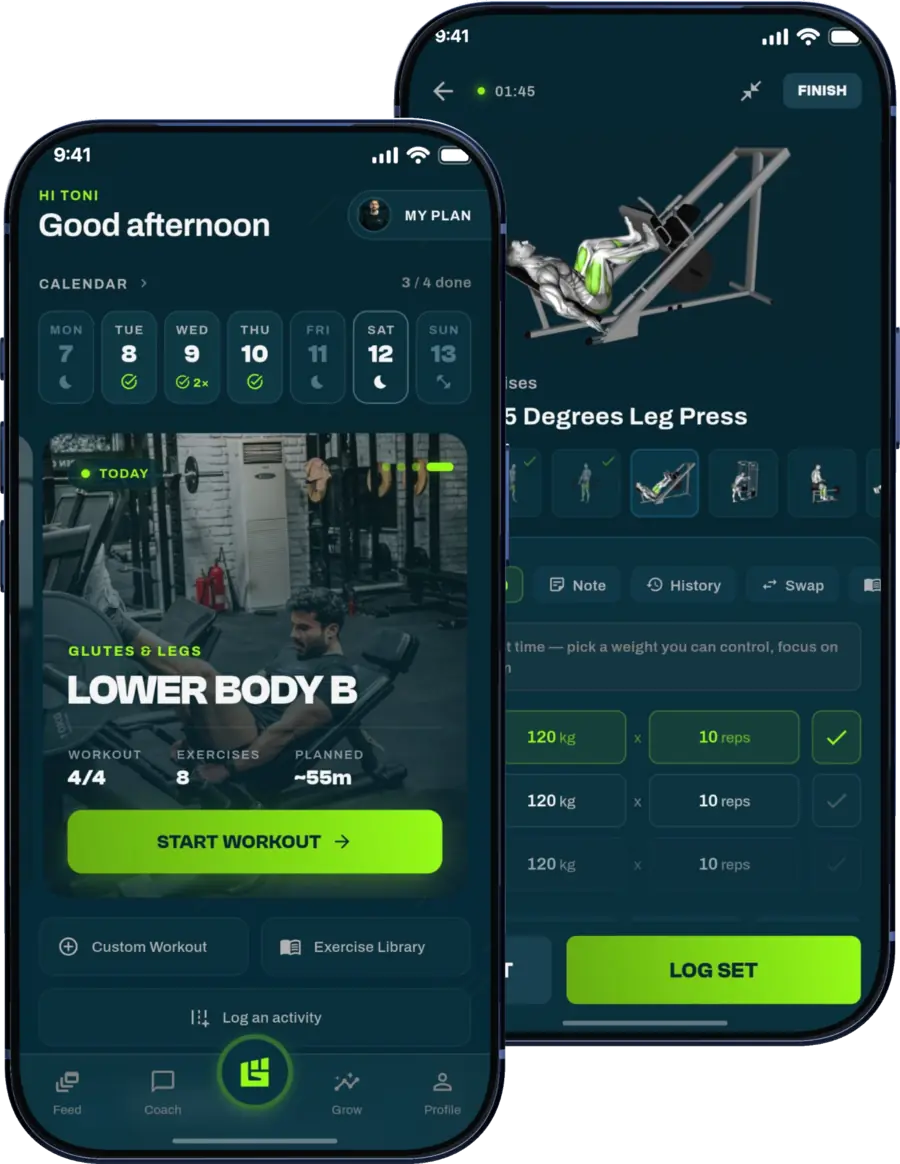
Get a personalized workout plan built around your goal, equipment and schedule. Train smarter, track every rep and keep moving forward, one workout at a time.






why this 4 day push pull routine delivers results
A good split has to solve two problems at once. It has to provide enough training stimulus to drive adaptation, and it has to leave enough recovery room that you can come back and perform again.
That’s why the 4 day push pull setup works so well. You alternate pushing patterns like presses, squats, and triceps work with pulling patterns like rows, hinges, pulldowns, and biceps work. That separation gives opposing muscle groups time to recover while keeping your weekly training frequency high.
A review of the 4-day push-pull structure notes that training a muscle group 2 to 4 times per week can increase muscle size by approximately 6.8% compared to lower-frequency approaches. That matters because the 4 day push pull workout routine naturally supports that frequency without pushing individuals into a recovery hole.
why it beats lower-frequency splits
A lot of people start with body-part splits that hammer one area once a week. Those routines can work, but they’re often a poor fit for anyone with a demanding schedule. If you miss chest day, that muscle might not get meaningful work again for another week.
With push-pull training, the week is more forgiving.
If you miss one session, the whole structure doesn’t collapse. You still have another push or pull session close by. That alone makes the plan more sustainable than many traditional bodybuilding splits.
Practical rule: The best routine for a busy professional is the one that gives you another chance to train a pattern later in the same week.
why it beats higher-frequency plans for most adults
On the other side, five- and six-day plans often look efficient until recovery, family commitments, travel, and poor sleep start stacking up. Then performance drops, sessions get skipped, and progress stalls.
A 4 day split usually lands in the sweet spot. You can train hard enough to make real progress, but you still have room for rest days, walking, and basic life stress. That balance is exactly why this structure keeps showing up in coaching practice. It’s demanding enough to work and realistic enough to survive contact with a normal calendar.
Here’s the simple logic:
- You train often enough: Each movement category gets repeated during the week.
- You recover well enough: Push and pull work don’t compete as aggressively session to session.
- You stay consistent: Four sessions is manageable for most working adults.
- You can progress longer: Sustainable routines beat heroic routines.
If your goal is strength and hypertrophy without wasting time, this split is hard to beat.
the complete 4 day push pull workout program
This program is built for lifters who want a repeatable weekly structure, clear exercise selection, and room to progress without turning each session into a marathon. The split uses two push days and two pull days, with slightly different emphases so you don’t just repeat the same workout four times.
example 4 day push pull weekly schedule
| Day 1 | Day 2 | Day 3 | Day 4 | Day 5 | Day 6 | Day 7 |
|---|---|---|---|---|---|---|
| Push A | Pull A | Rest | Push B | Pull B | Rest | Rest |
If your week is unpredictable, you can also place a rest day between each training day as long as the order stays intact.
push day a
This day emphasizes foundational pressing and quad-dominant lower-body work. Keep the first compound lifts controlled and honest. Don’t rush your warm-up sets.
| Exercise | Beginner | Intermediate/Advanced |
|---|---|---|
| Back squat or goblet squat | 3 sets of 6 to 8 reps | 4 sets of 5 to 8 reps |
| Barbell or dumbbell bench press | 3 sets of 6 to 8 reps | 4 sets of 5 to 8 reps |
| Leg press or split squat | 2 sets of 8 to 12 reps | 3 sets of 8 to 12 reps |
| Seated dumbbell shoulder press | 2 sets of 8 to 10 reps | 3 sets of 6 to 10 reps |
| Cable lateral raise | 2 sets of 12 to 15 reps | 3 sets of 12 to 15 reps |
| Rope pressdown | 2 sets of 10 to 15 reps | 3 sets of 10 to 15 reps |
How to run it well:
Start with the squat and bench because they demand the most coordination and focus. Use the later exercises to build volume without draining your nervous system early.
pull day a
This day focuses on a hinge pattern, vertical pulling, and supported back work. The goal is to train the back hard without turning every set into a lower-back endurance test.
| Exercise | Beginner | Intermediate/Advanced |
|---|---|---|
| Romanian deadlift | 3 sets of 6 to 8 reps | 4 sets of 5 to 8 reps |
| Lat pulldown or assisted pull-up | 3 sets of 8 to 10 reps | 4 sets of 6 to 10 reps |
| Chest-supported row | 3 sets of 8 to 12 reps | 4 sets of 8 to 12 reps |
| Seated or lying leg curl | 2 sets of 10 to 15 reps | 3 sets of 10 to 15 reps |
| Dumbbell rear delt raise | 2 sets of 12 to 15 reps | 3 sets of 12 to 15 reps |
| Dumbbell or cable curl | 2 sets of 10 to 15 reps | 3 sets of 10 to 15 reps |
Keep rows supported when possible if your hinge work is already heavy. That preserves output for the target muscles instead of letting your lower back become the bottleneck.
push day b
Push B shifts emphasis slightly toward upper chest, shoulders, and single-leg or machine lower-body work. This keeps the week balanced and reduces overuse from repeating the same exact pattern.
| Exercise | Beginner | Intermediate/Advanced |
|---|---|---|
| Front squat, hack squat, or leg press | 3 sets of 8 to 10 reps | 4 sets of 8 to 10 reps |
| Incline dumbbell or barbell press | 3 sets of 8 to 10 reps | 4 sets of 6 to 10 reps |
| Walking lunge or Bulgarian split squat | 2 sets of 8 to 10 reps per side | 3 sets of 8 to 10 reps per side |
| Machine chest press or weighted dip | 2 sets of 8 to 12 reps | 3 sets of 8 to 12 reps |
| Lateral raise variation | 2 sets of 12 to 15 reps | 3 sets of 12 to 15 reps |
| Overhead triceps extension | 2 sets of 10 to 15 reps | 3 sets of 10 to 15 reps |
pull day b
Pull B adds a second row pattern and a different hamstring emphasis. It should feel like a complement to Pull A, not a duplicate.
| Exercise | Beginner | Intermediate/Advanced |
|---|---|---|
| Trap bar deadlift, hip hinge machine, or back extension | 3 sets of 6 to 8 reps | 4 sets of 5 to 8 reps |
| Pull-up, neutral-grip pulldown, or machine pulldown | 3 sets of 8 to 10 reps | 4 sets of 6 to 10 reps |
| One-arm dumbbell row or cable row | 3 sets of 8 to 12 reps | 4 sets of 8 to 12 reps |
| Hamstring curl variation | 2 sets of 10 to 15 reps | 3 sets of 10 to 15 reps |
| Face pull or rear delt row | 2 sets of 12 to 15 reps | 3 sets of 12 to 15 reps |
| Hammer curl or incline curl | 2 sets of 10 to 15 reps | 3 sets of 10 to 15 reps |
how to keep sessions efficient
Most busy professionals don’t need more exercises. They need better sequencing and fewer wasted sets.
Use these rules:
- Lead with compounds: Put the most technically demanding work first.
- Limit overlap: Don’t stack too many presses on one push day or too many unsupported rows on one pull day.
- Stop chasing variety: Small changes between A and B days are enough.
- Leave the gym with energy: You want productive fatigue, not total destruction.
weekly intent by training level
Beginners should treat this plan as a skill-building phase. Learn stable setup positions, full ranges of motion you can control, and how to finish sets with solid technique.
Intermediate and advanced lifters should use exercise selection more strategically. One push day can emphasize chest while the other gives more room to shoulders. One pull day can be hinge-heavy, while the other gives more attention to upper back and lats.
That approach keeps the routine progressing without making it complicated.
how to customize your routine and select exercises
The best program isn’t the one with the fanciest exercise list. It’s the one you can run in your actual gym, with your actual joints, on your actual schedule.

A breakdown of 4-day split variations highlights how flexible this structure is, including a Push-Pull-Legs-plus-Accessory setup and hypertrophy-focused versions using 10 to 15 reps with 45 to 90 seconds of rest. That adaptability is one of the biggest reasons the split works so well across different goals and experience levels.
use movement intent, not exercise loyalty
Every exercise has a job. When you substitute, preserve the job.
If the original movement is a horizontal press, replace it with another horizontal press. If it’s a hip hinge, replace it with another hinge. Don’t swap randomly just because two exercises use the same equipment.
Here’s a practical substitution table:
| If you planned | Good substitute | Why it works |
|---|---|---|
| Barbell bench press | Dumbbell bench press or machine chest press | Same push pattern with different stability demands |
| Back squat | Goblet squat, hack squat, or leg press | Keeps quad emphasis with less setup complexity |
| Romanian deadlift | Dumbbell RDL, machine hinge, or back extension | Preserves the hinge pattern |
| Pull-up | Lat pulldown | Same vertical pull with easier loading control |
| Barbell row | Chest-supported row or cable row | Same pull intent with less lower-back strain |
| Walking lunge | Split squat or step-up | Single-leg pattern remains intact |
customize around constraints that actually matter
Three factors should drive most modifications.
- Equipment limitations: A home gym might not have cables or machines. That’s fine. Dumbbells, a bench, bands, and a pull-up station can still cover most push and pull patterns.
- Joint history: If barbell pressing bothers your shoulders, dumbbells or converging machines often give you a cleaner path. If heavy hinges irritate your back, use supported rows and machine hamstring work more aggressively.
- Goal emphasis: If shoulders lag, let Push B carry more delt volume. If back thickness is the priority, build Pull B around rows instead of more pulldown work.
Don’t force a “best” exercise that your body hates. The best exercise is the one that trains the target muscles hard, lets you progress, and doesn’t beat up the joints you need next week.
adjust the split when your goal changes
The standard model is generally effective, but your emphasis can shift.
If your main goal is hypertrophy, use more controlled tempos, moderate rep ranges, and tighter rest periods on accessory work. If your goal is strength, keep the main lifts lower-rep and let accessories support them instead of compete with them.
If you want more direct lower-body or weak-point work, a targeted accessory day can make sense. For people who want help applying those adjustments without rebuilding the whole plan manually, Fully customized workouts can simplify that process.
smart progression and managing your training volume
A routine only produces results if it keeps moving. This is often where progress stalls. Individuals either do the same weights for weeks, or they add too much too soon and bury themselves in fatigue.

Progression should be boring enough to repeat and clear enough to track.
use double progression
For most lifters, the simplest model is double progression.
Pick a rep range for an exercise. Stay with the same load until you can hit the top of the range across all prescribed sets with solid form. Then increase the load slightly and work back up again.
Example:
| Exercise | Target range | What to do |
|---|---|---|
| Dumbbell bench press | 3 sets of 8 to 10 reps | Once you get 10, 10, and 10 cleanly, raise the weight next session |
| Lat pulldown | 3 sets of 8 to 12 reps | Add load only after all sets reach the top end |
| Lateral raise | 2 to 3 sets of 12 to 15 reps | Add reps first, then load |
This works because it gives you more than one path to improve. Some weeks you’ll add weight. Other weeks you’ll add reps, tighten execution, or reduce unnecessary rest.
what counts as real progression
Progress isn’t just more plates on the bar.
It also includes:
- Cleaner reps: Better control, depth, and joint position
- More output at the same weight: Extra reps with the same load
- Better density: The same work done with less downtime
- More stable execution: Less wobble, less compensation, less momentum
Coaching note: If your form gets worse every time the load goes up, you’re not progressing. You’re changing the problem.
avoid junk volume
One of the fastest ways to stall on a 4 day push pull workout routine is to cram too much work into a single session. A discussion of volume limits citing Dr. Milo Wolf points to approximately 10 to 11 total sets per muscle group per session as the threshold where returns begin to diminish and junk volume starts to accumulate. The same piece notes that a better approach is to spread volume across two weekly sessions, using roughly 5 to 6 sets per session for the same muscle group.
That principle matters a lot on push and pull splits.
If you try to crush chest with too many presses and fly variations in one workout, your later sets get worse, your shoulders and triceps get cooked, and recovery drags into the next training day. The same thing happens on pull days when you stack too many heavy rows, pulldowns, curls, and hinge patterns without a plan.
a practical volume framework
Use this simple filter:
- Main movement: Push or pull compound gets the freshest effort
- Secondary movement: Reinforce the pattern from a different angle
- Accessory work: Fill gaps, don’t duplicate fatigue
- Stop while quality is still high: If performance drops hard, more sets won’t rescue the session
Signs you need to pull volume back:
- Load or reps are flat for multiple weeks
- Joints feel worse instead of muscles feeling trained
- Sleep and appetite take a hit
- You dread sessions that used to feel manageable
- Accessory lifts are regressing because compounds took too much out of you
A deload helps here. Keep the same exercise menu, reduce the amount of hard work, and let fatigue come down. Then resume progression instead of trying to force it through exhaustion.
essential warm-ups and effective recovery protocols
You don’t need a complicated pre-lift ritual. You need a warm-up that raises temperature, opens the joints you’re about to use, and prepares the first working sets.

push day warm-up
On push days, focus on shoulders, upper back position, and lower-body readiness if you’re squatting.
Use this sequence:
- Brisk bike, treadmill, or rower work for a few minutes to get warm
- Band pull-aparts or light face pulls to wake up the upper back
- Arm circles and controlled shoulder rotations
- Bodyweight squats or split squats
- Push-ups or light dumbbell presses
- Ramp-up sets for your first compound exercise
The warm-up should make the first working set feel familiar, not shocking.
pull day warm-up
Pull days need thoracic mobility, hinge prep, and lat engagement.
Try this order:
- Light cardio to raise body temperature
- Cat-cow and thoracic rotations for upper-back movement
- Glute bridges or bodyweight hip hinges
- Dead hangs or scapular pulldowns
- Very light rows or pulldowns
- Ramp-up sets for the hinge or first pull
If your lower back tends to tighten up, don’t stretch aggressively right before pulling. Move it, brace it, and build into the pattern.
recovery that fits a real schedule
Recovery doesn’t need to look glamorous. It needs to happen consistently.
- Protect sleep: A hard training plan with poor sleep becomes a fatigue plan.
- Walk on rest days: Light movement helps feel better between sessions.
- Manage stress: High work stress changes how hard training feels, even if the program stays the same.
- Keep post-workout nutrition simple: Eat a meal you can repeat, not one you have to think about.
The lifters who last are usually the ones who respect recovery before they’re forced to.
fueling your workouts nutrition for busy professionals
Training is the signal. Nutrition gives your body the raw material to respond to it.

Busy professionals usually don’t fail because they know nothing about nutrition. They fail because their eating is reactive. They skip meals, train under-fueled, and then try to fix everything at night.
keep your nutrition simple enough to repeat
Start with these basics:
- Prioritize protein in each meal: A reliable protein source makes recovery easier.
- Eat carbs around training if performance matters to you: They’re practical workout fuel.
- Don’t fear convenience foods: Greek yogurt, rotisserie chicken, protein shakes, fruit, microwave rice, and frozen vegetables can keep you on track.
- Build repeatable meal templates: Protein, carb source, produce, and a fat source forms a highly adaptable structure.
pre-workout and post-workout eating
You don’t need perfection here.
Before training, eat something that digests well and gives you energy. After training, eat a meal that includes protein and enough total food to support recovery. The exact menu matters less than your ability to do it consistently on workdays.
A practical approach is to keep two default options for each window. One sit-down meal and one fast option. That removes decision fatigue.
meal prep without turning Sunday into a second job
The best meal prep strategy is partial prep, not chef mode.
Cook proteins in batches. Keep easy carb sources ready. Stock a few grab-and-go snacks. If you’re trying to improve body composition while keeping training performance stable, this resource on a smarter weight loss technique for busy lives is a useful complement because it speaks to the same real-world constraint that is common. Time.
A simple setup might look like this:
| Situation | Fast option |
|---|---|
| Breakfast before work | Greek yogurt, oats, fruit |
| Lunch between meetings | Chicken, rice, vegetables |
| Pre-workout on the go | Banana and protein shake |
| Dinner after training | Salmon or beef, potatoes or rice, vegetables |
If your nutrition works only on ideal days, it doesn’t work.
frequently asked questions about the 4 day split
can i add cardio to this routine
Yes, as long as cardio supports the goal instead of competing with it.
If strength and hypertrophy are the priority, keep cardio moderate and place it where it won’t ruin your lower-body performance. Shorter low-intensity sessions on rest days or after upper-body sessions usually fit well. If harder conditioning matters to you, watch your recovery closely and keep your lifting quality first.
what should i do on rest days
Rest days are for recovery, not punishment.
Walking, easy mobility work, light cycling, or nothing at all can all be appropriate. The right answer depends on how beat up you feel and what your work stress looks like that week. Low-intensity movement often proves beneficial, helping individuals feel looser without adding more fatigue.
what happens if i miss a workout
Don’t try to cram everything into the next day.
Just pick up where you left off. If you miss Push B, do Push B next. The structure works because it’s modular. One missed workout doesn’t erase the week unless you respond by making the next few sessions chaotic.
Missing one session is a scheduling issue. Missing the next three because you panicked and rewrote the week is a programming issue.
how long should i follow this program before changing it
Keep the plan as long as it’s producing progress, your joints feel good, and motivation is stable.
It's common for individuals to change routines too early. They confuse boredom with ineffectiveness. If your lifts are improving, your physique is changing, and the sessions still feel productive, keep running it. Change exercises when a movement stalls hard, aggravates something, or no longer fits your setup.
should beginners use a 4 day push pull workout routine
Yes, if recovery and schedule allow it.
Beginners don’t need endless variety. They need repeatable practice with the basics. A four-day split can work very well if the exercise list is restrained and the total workload stays sensible. The mistake is copying advanced-volume training before you’ve earned the ability to recover from it.
can i train at home with this split
Absolutely.
You can build a strong home version with adjustable dumbbells, a bench, resistance bands, and a pull-up bar. You may swap barbells and machines for dumbbell presses, goblet squats, split squats, dumbbell hinges, one-arm rows, and banded accessories. Keep the movement categories intact and the split still works.
should every workout feel hard
Every workout should feel purposeful. Not every workout should feel crushing.
Good training includes hard sets, but it also includes pacing. Some days you’ll feel sharp and push load or reps. Other days you’ll maintain performance and protect recovery. Long-term progress comes from stacking solid weeks, not from trying to set a personal record every time you walk in.
If you want a plan that adjusts to your goals, schedule, available equipment, and performance over time, the GrabGains app is worth a look. It helps you build smarter training around real life, not the other way around.
Get inspired and motivated