Home workout plan no equipment: build muscle & burn fat
Home workout plan no equipment - Start your fitness journey with a complete home workout plan no equipment. Get weekly templates, bodyweight exercises, & progre
You’re probably reading this because the usual fitness routine keeps breaking down.
The gym is too far, too crowded, too expensive, or too easy to skip after a long workday. You want a plan that fits real life, not a fantasy schedule built around unlimited time and motivation. A home workout plan no equipment stops being a backup option and starts becoming the practical answer in such situations.
Bodyweight training works when it’s programmed with intent. If you treat it like random exercise snacks, results stall. If you treat it like training, with clear progression, smart exercise choices, and enough recovery, you can build muscle, improve conditioning, and stay consistent for months instead of days.
Built for progress
Take the guesswork out of training
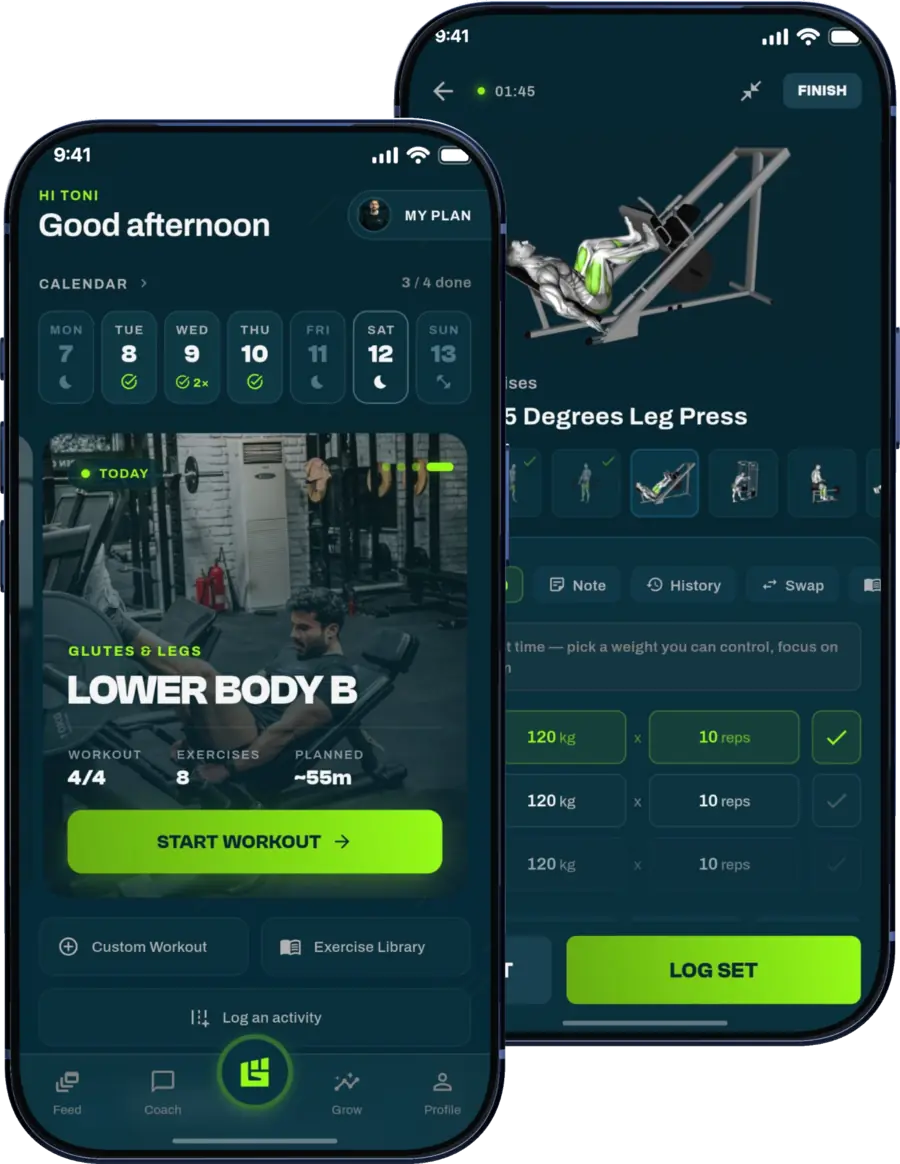
Get a personalized workout plan built around your goal, equipment and schedule. Train smarter, track every rep and keep moving forward, one workout at a time.






Why a No-Equipment Plan Is Your Most Powerful Fitness Tool
A lot of people think equipment is what makes training effective. It isn’t. Tension, effort, progression, and consistency make training effective.
That matters because bodyweight training removes the biggest barriers fast. You don’t need a commute, a membership, or a perfectly free evening. You need floor space, a plan, and a willingness to repeat basic movements well.
Convenience changes adherence
The strongest program on paper is useless if you can’t stick to it. A no-equipment setup solves the problem that wrecks many routines: friction.
When your workout is available in your bedroom, living room, office, hotel room, or backyard, the excuse list gets shorter. That doesn’t mean training becomes easy. It means getting started becomes easier, and that’s often the difference between progress and another missed week.
The shift that proved the model
This approach stopped looking “secondary” when people had no other option. During the Covid-19 pandemic, which began in early 2020, home workouts with no equipment surged globally, with a 300% increase in Google searches for "home workout" by April 2020, while lockdowns affected over 1.7 billion people worldwide, pushing bodyweight routines into the mainstream and proving they could maintain fitness without gym access, according to Nutrisense’s overview of no-equipment home workout plans.
That mattered for one reason. Millions of people learned that training without machines still trains the body.
Practical rule: If a workout removes excuses and keeps you training week after week, it beats the “perfect” plan you abandon after ten days.
What bodyweight training does well
A good home workout plan no equipment is especially strong for:
- Building movement skill through repeated practice of squats, push-ups, lunges, placing, bracing, and controlled transitions
- Improving general strength with harder variations, slower reps, and more total work
- Driving conditioning through circuits, density work, and interval training
- Supporting fat loss when paired with sensible nutrition and regular effort
- Keeping training consistent during busy seasons, travel, bad weather, or family-heavy weeks
The trade-off is simple. You won’t load a barbell at home if you don’t own one. However, many individuals asking for a no-equipment plan don’t need more options. They need a repeatable system.
That’s what you’re building here. Not a temporary patch. A reliable training method that can carry real results.
The Core Principles of Effective Bodyweight Training
Many individuals fail with bodyweight training for one reason. They repeat the same easy circuit until it stops working, then assume home workouts don’t build strength.
That’s not a bodyweight problem. That’s a programming problem.
Progressive overload still applies
Your muscles don’t care whether resistance comes from a dumbbell or your own body. They respond to challenge. If the work gets harder over time, adaptation follows.
A structured push-up program can increase upper body strength by 40 to 60% over 8 weeks in untrained adults, using progressive variations from wall push-ups to decline push-ups, as noted by Daily Burn’s no-equipment strength workout guide.
That tells you something important. Bodyweight training works when you progress the movement.
Four ways to make bodyweight exercises harder
If you can’t add external load, use these levers.
Reps
The most obvious tool is doing more repetitions with clean form. If you did eight solid push-ups last week and ten this week, that’s progress.
But reps alone don’t solve everything. Once a movement becomes too easy for very high reps, you need another method.
Sets
Adding a set increases total training volume. That’s useful when your technique is solid and your recovery is good.
Example:
- Week one, 2 sets of squats
- Week two, 3 sets of squats
Simple. Effective. Easy to track.
Tempo
Slowing the lowering phase changes the whole feel of an exercise. A squat with a controlled descent forces more tension than a rushed squat that drops and bounces.
Use tempo when a standard variation feels manageable but you’re not ready for the next progression yet.
Mechanical Advantage
This concept is a powerful tool in bodyweight training. Change the angle or the mechanical demand, and the exercise changes completely.
Examples:
- Wall push-up to incline push-up to floor push-up
- Split squat to reverse lunge to jumping lunge
- Regular squat to pause squat to single-leg variation
Form comes before intensity
Bad reps don’t count. They only inflate your ego and irritate your joints.
For most clients, I’d rather see fewer reps with full range, stable positions, and control than a sloppy set done for a screenshot. Quality creates the foundation for quantity later.
Slower, cleaner reps almost always beat faster, uglier reps when your goal is strength or muscle.
Match the method to the goal
Bodyweight training can target different outcomes, but you need to train for the result you want.
| Goal | What to emphasize | What to watch for |
|---|---|---|
| Strength | Harder exercise variations, slower reps, lower rep sets | Don’t rush progression before mastering form |
| Muscle growth | Moderate to high effort, enough weekly volume, close-to-failure sets | Don’t stop every set too early |
| Endurance | Circuits, shorter rest, repeated rounds | Don’t let cardio fatigue destroy exercise quality |
A good home workout plan no equipment uses all three at different times, but one usually leads the program.
What doesn’t work
Some common mistakes show up again and again:
- Random exercise selection with no plan for progression
- Too much novelty instead of repeating key patterns long enough to improve them
- Training too easy because the session “felt active”
- Advancing too soon before positions are stable
- Ignoring recovery and turning every day into a max-effort circuit
Bodyweight training rewards discipline. Keep the movement menu tight. Improve the basics. Track your reps. Earn the harder variations.
Your Weekly Workout Templates from Beginner to Advanced
Many individuals don’t need more exercises. They need a weekly structure they can follow without thinking too much about it.
The right split depends on training age, recovery, and how much quality work you can handle. If you’re newer, full-body sessions are efficient. If you’re more experienced, splitting the week lets you push harder without frying the same muscles every session.
Weekly no-equipment workout splits
| Level | Frequency | Weekly split example |
|---|---|---|
| Beginner | 3 days | Monday full body, Wednesday full body, Friday full body |
| Intermediate | 4 days | Monday upper, Tuesday lower, Thursday upper, Friday lower |
| Advanced | 5 days | Monday push, Tuesday pull, Wednesday legs, Friday push-pull mix, Saturday legs and conditioning |
Beginner template with three full-body days
This is an ideal starting point for many individuals. Three sessions per week gives you enough practice without burying you in soreness.
Use this if you’re new, returning after time off, or can’t yet recover well from frequent training.
Sample week
Day 1
- Squat pattern 3 sets
- Push-up variation 3 sets
- Reverse lunge 2 to 3 sets
- Plank 3 rounds
- Low-impact cardio finisher for a few rounds
Day 2
- Rest or easy walking
Day 3
- Pause squat 3 sets
- Incline or floor push-up 3 sets
- Glute bridge 3 sets
- Side plank 2 to 3 rounds per side
- Mountain climber or march-in-place intervals
Day 4
- Rest
Day 5
- Split squat 3 sets
- Shoulder tap push-up position hold 3 rounds
- Alternating lunge 2 to 3 sets
- Dead bug or hollow-body regression 3 rounds
- Short circuit finisher
The point here is repetition. You’re grooving the major patterns and building work capacity.
If you can’t finish the session with clean form, the plan is too hard. Regress the exercise, not your consistency.
A short mobility routine on off days can help. If you want a simple complement to strength sessions, this guide to yoga for beginners at home is a useful option for light recovery and movement practice.
Intermediate template with four focused days
Once you’ve built a base, splitting upper and lower body usually gives better training density. You can do more hard sets per movement pattern without every session turning into a slog.
Sample week
Day 1 upper
- Push-up variation
- Pike push-up or shoulder-focused press variation
- Floor triceps movement or close-grip push-up
- Plank series
Day 2 lower
- Bodyweight squat variation
- Reverse lunge
- Single-leg hip hinge pattern
- Calf raise
- Core carry substitute such as marching brace work
Day 3
- Rest or mobility
Day 4 upper
- Decline or harder push-up variation
- Shoulder tap or slow eccentric push-up
- Prone back extension
- Side plank or hollow hold
Day 5 lower
- Split squat
- Jump squat or squat pulse
- Glute bridge march
- Wall sit
- Conditioning finisher
This split works because it spreads local fatigue better. Your legs can recover while you train upper body, and vice versa.
If you want a tool that builds goal-based bodyweight plans and updates them based on performance, a Personalized strength training app can handle the progression logic while keeping the exercise selection organized.
Advanced template with five training days
Advanced trainees usually don’t need motivation. They need enough challenge without turning every session into junk volume.
A five-day split works well when you already own the basics and can create high effort from bodyweight variations.
Sample week
Day 1 push
- Hard push-up variation
- Pike or handstand progression
- Close-grip push-up
- Core compression work
Day 2 pull substitute and posterior chain
- Prone back extension
- Reverse snow angel
- Hip hinge pattern
- Glute bridge variation
- Isometric scapular control work
Day 3 legs
- Single-leg squat progression
- Walking lunge
- Jump lunge or squat jump
- Wall sit finisher
- Core brace series
Day 4
- Recovery or very light mobility
Day 5 mixed upper
- Push-up density work
- Shoulder stability circuit
- Tempo-focused pressing
- Trunk rotation control
Day 6 legs and conditioning
- High-rep lower-body circuit
- Sprint-in-place or high-knee intervals
- Burpee variation
- Core finisher
Day 7
- Full rest
The big trade-off at this level is pull training. If you have zero equipment, your vertical and horizontal pulling options are limited. You can still train the upper back with floor-based posterior work and strong scapular control, but pressing tends to be easier to load than pulling in a pure no-equipment setup.
That doesn’t mean the program fails. It means you should be honest about the limitation and program around it.
How to choose your starting point
Pick the template that matches your current recovery and exercise quality, not your ambition.
Choose:
- Beginner if your form breaks down quickly or your routine has been inconsistent
- Intermediate if you can recover from several hard sessions and already control the basics
- Advanced if you’ve trained bodyweight seriously before and know how to push close to your limit without losing form
Start one level lower if you’re unsure. That’s almost always the smarter move.
The Ultimate Bodyweight Exercise Library
Your weekly split only works if you know which exercises to plug into it and how to perform them well. This is often where home programs get messy. People know the names of movements, but not the details that make them effective.
Use this section like a working library. Return to it when you need a safer regression, a tougher variation, or a better technical cue.

Strength and hypertrophy movements
Bodyweight squat
The squat is the anchor of most no-equipment lower-body plans. It trains your quads, glutes, and core while improving coordination and control.
How to do it
- Stand with feet around shoulder width.
- Brace your midsection.
- Sit down and slightly back.
- Keep your full foot planted.
- Stand up by driving through the floor.
Common mistakes
- Heels lifting
- Knees collapsing inward
- Dropping too fast without control
- Cutting the range short to chase reps
Progressions
- Beginner: box or assisted squat
- Intermediate: pause squat
- Advanced: jump squat or single-leg progression
Push-up
No bodyweight movement delivers more value for upper-body strength than the push-up. It trains the chest, shoulders, triceps, and trunk at the same time.
How to do it
- Put your hands under or slightly outside shoulder width.
- Lock in a straight line from head to heel.
- Lower under control.
- Press the floor away without letting your hips sag.
Common mistakes
- Elbows flaring too wide
- Neck dropping
- Lower back sagging
- Half reps
Progressions
- Wall push-up
- Incline push-up
- Knee push-up
- Standard push-up
- Decline push-up
- Diamond push-up
Reverse lunge
Lunges train each leg separately, which exposes balance issues and helps build practical lower-body strength.
How to do it
- Step one leg back.
- Lower until both knees bend comfortably.
- Push through the front foot to return.
- Alternate sides or complete one side at a time.
Why it matters Reverse lunges are usually easier on the knees than forward lunges because the backward step gives many people better control.
Glute bridge
This movement teaches hip extension and gives your posterior chain work even when you have no weights.
Key cue Think about driving the hips up by squeezing the glutes, not arching the lower back.
Pike push-up
If your plan lacks overhead pressing, the pike push-up is one of the best ways to bias the shoulders.
Set your hips high, shift weight forward, and lower the head between the hands. The more vertical your body position, the more shoulder demand you create.
Cardio and endurance drills
Conditioning at home doesn’t need a treadmill. It needs the right movement choice and the right work-rest structure.
An 8-week study on short, equipment-free home HIIT sessions performed 3 times per week showed a 12% increase in VO2max and a 62% reduction in type 2 diabetes risk factors, according to this overview of home HIIT effectiveness from CAROL Bike. That’s why intervals remain one of the most efficient tools for busy schedules.
Burpee
Burpees are brutally effective because they combine a squat, plank transition, push pattern, and jump.
How to do it cleanly
- Stand tall.
- Squat down and place hands on the floor.
- Kick or step the legs back.
- Return the feet in.
- Stand up with intent, adding a jump if appropriate.
Don’t do this
- Round the spine carelessly on the way down
- Slam into the floor
- Let each rep become a survival flail
Burpees aren’t mandatory. They’re useful. If they turn into ugly reps, switch to squat thrusts or step-back burpees.
Mountain climber
This is one of the best small-space conditioning drills because it also challenges trunk stability.
Keep shoulders stacked over the hands. Drive one knee forward at a time without bouncing your hips all over the place.
High knees
Simple and effective. Use them when you need a lower-skill conditioning option.
Drive the knees with rhythm, stay tall, and keep the arms active. For beginners, marching fast in place often works better than trying to sprint badly.
Jump squat
Jump squats add power and heart rate demand quickly. They only belong in your plan if you can already squat and land cleanly.
Land softly. Reset. Don’t chase speed at the cost of joint control.
Hard conditioning only counts when you can repeat the movement with positions that still look athletic.
Mobility and recovery exercises
Training hard is easier when your body can get into decent positions. Mobility work doesn’t need to be fancy. It needs to address the places bodyweight trainees usually stiffen up.
Cat-cow
Good for spinal movement and warm-up flow.
Move slowly between a rounded back and an extended posture. Don’t force range. Explore it.
World’s greatest stretch
This is a practical option for hips, thoracic rotation, and general movement prep.
Step into a lunge, place a hand on the floor, rotate the chest open, then switch sides.
Hip flexor stretch
If you sit for work, this belongs in the weekly routine.
Squeeze the glute on the kneeling side and keep the ribs down. Many individuals miss the stretch because they lean forward without controlling the pelvis.
Child’s pose with reach
Useful after push-ups and plank-heavy sessions. Reach long through the arms and breathe into the upper back.
How to build sessions from this library
Think in categories, not random exercises.
A solid session usually includes:
- One lower-body strength pattern
- One upper-body push
- One unilateral leg movement
- One core stability movement
- One conditioning or mobility element
If your form needs work, video feedback helps. An exercise library with demonstrations can save time. GrabGains includes 350+ exercise videos with step-by-step guidance, which is useful if you’re training solo and want a clearer model for setup and technique.
How to Progress and Never Hit a Plateau
Plateaus don’t happen because you ran out of exercises. They happen because your body stopped getting a reason to adapt.
That’s why progression matters more than novelty. A lot of home trainees keep swapping workouts, hoping variety will replace overload. It won’t. You need a repeatable method for making the same patterns more demanding over time.

Use a progression system, not guesswork
The PLP method, short for Push-ups, Lunges, Pull-ups, applies overload by adding one rep per exercise each session, and following that for 8 to 12 weeks can yield 20 to 40% strength gains, matching weighted training for novices, according to this PLP progression overview tied to evidence on overload principles.
You don’t need to copy PLP exactly to benefit from the idea. A key lesson is this: Small increases done consistently beat dramatic changes done rarely.
A simple progression playbook
Master the baseline
Before you add reps, make the rep look right.
For a push-up, that means:
- Straight body line
- Full lowering under control
- No hip sag
- No craned neck
If those pieces aren’t there, progression is fake.
Add reps first
This is the easiest starting point. If a movement has a target range, work toward the top of it before making the variation harder.
Example:
- Week one, 3 sets of 6 push-ups
- Build toward 3 sets of 10 push-ups
- Then move to a harder variation
That’s the double progression model in plain English.
Add sets if recovery is solid
If your reps are stable and you still feel under-challenged, add a set.
This works well for squats, lunges, glute bridges, and core work. It also helps when a movement is too easy to progress by altering mechanical advantage right away.
Slow the tempo
A 4-second negative changes a standard rep into a strength-building rep quickly.
Try this on:
- Push-ups
- Split squats
- Squats
- Glute bridges
Lower slowly, pause briefly, then rise with control. Tempo builds tension without needing any gear.
Progress by variation, not ego
At some point, doing more reps becomes less useful than choosing a tougher version.
Move like this:
- Wall push-up to incline push-up to floor push-up
- Split squat to rear-foot-light split squat to jump lunge
- Plank to long-lever plank to harder anti-extension variations
This is often where people mess up. They jump to flashy progressions before they’ve earned them.
Coaching note: The next variation should challenge you, not turn every set into a compensation drill.
Track what you did
If you don’t record your reps, sets, rest, or exercise variation, it’s hard to know whether you’re improving or just working hard.
A notebook works. A notes app works. A structured training app works too. What matters is that your plan doesn’t reset to zero every Monday because you forgot last week’s numbers.
Track:
- Exercise used
- Sets completed
- Reps per set
- Tempo if relevant
- Rest periods
- How close you were to technical failure
Rotate with purpose
You don’t need constant variety, but you do need timely change.
Good reasons to change an exercise:
- You’ve clearly outgrown it
- It bothers a joint despite good form
- You need a new stimulus after steady progress stalls
Bad reasons:
- You got bored after two sessions
- Social media showed a harder move
- You want to feel advanced
Consistency beats novelty, but intelligent change beats stubborn repetition.
Fueling Your Workouts Nutrition and Recovery Essentials
Training creates the signal. Nutrition and recovery help your body respond to it.
A lot of home trainees work hard, then undercut their progress by eating too little protein, skipping meals, sleeping poorly, or treating warm-ups like optional fluff. Consequently, progress slows down.

Eat to support the goal
If you want muscle, your meals need to regularly include protein and enough total food to recover well. If fat loss is the goal, calorie control matters, but cutting too aggressively can make training feel flat and make adherence worse.
Keep it practical:
- Protein with each meal helps support muscle repair
- Carbohydrates around training can improve energy for harder sessions
- Fruits and vegetables daily support overall recovery and appetite control
- Hydration matters greatly, especially for at-home circuits that pile up sweat fast
If meal planning is what usually falls apart, a bank of simple high protein meal prep recipes can make consistency easier without overcomplicating your week.
Warm up before you train
A proper warm-up should raise your temperature, wake up the joints you’ll use, and rehearse the positions you’re about to load.
Try this sequence before most sessions:
- Arm circles to loosen the shoulders
- Leg swings for hips and hamstrings
- Marching or light jogging in place to raise heart rate
- Easy squat reps before harder squat work
- Incline push-up practice reps before your work sets
Keep it controlled. The warm-up should prepare you, not exhaust you.
Cool down and recover like it matters
You don’t need a long ritual after every workout, but you do need to shift out of go-mode.
A simple cooldown can include:
- Slow breathing for a minute or two
- Hip flexor stretch
- Child’s pose
- Chest-opening stretch
- Gentle spinal movement
Recovery also means sleeping enough, planning rest days, and not turning every session into a challenge workout. The body adapts between workouts, not during your fifteenth sloppy finisher.
Frequently Asked Questions About Home Workouts
Can I really build muscle with a home workout plan no equipment
Yes, if you apply progression and train close enough to your current limit. Muscle doesn’t care whether resistance came from a machine or a tougher bodyweight variation. What matters is tension, effort, volume, and recovery.
What if push-ups or lunges are too hard right now
Scale them down. Use wall or incline push-ups. Use assisted squats or shorter-range lunges. Regression is not a step backward. It’s the fastest path to doing the full movement well later.
How do I stay consistent when motivation drops
Remove decisions. Train on the same days each week. Keep the session structure simple. Track your workouts so you can see progress even when motivation is low.
Motivation is unreliable. Routine is more dependable.
How long should a workout take
Long enough to do focused work with good form. If you’re training hard, a shorter session can be more productive than dragging through extra sets with poor effort.
Do I need to do HIIT to lose fat
No. HIIT is one tool. It’s useful when time is tight and you can recover from it, but fat loss still depends heavily on your overall nutrition and consistency. Strength work, daily movement, and controlled eating often carry more of the load.
What’s the biggest mistake people make at home
They confuse movement with training. A random sweat session can feel productive, but results usually come from repeated patterns, measurable progress, and enough recovery to improve the next week.
If you want a simpler way to turn all of this into a repeatable system, the GrabGains app is a practical option. It builds adaptive workout plans around your goal and available equipment, includes form guidance through a large exercise library, and tracks your progress so your home training doesn’t stay random.
Get inspired and motivated