6 Day Workout Split: The ultimate guide for muscle growth
Is a 6 day workout split right for you? This guide covers the pros, cons, and top splits like PPL. Includes sample programs and tips for sustainable gains. You’re probably here because your current training is no longer moving the needle.
You lift consistently. You’re not skipping sessions. But strength has slowed, muscle gain feels inconsistent, and the usual fix of “just work harder” is not helping. That is often the point where lifters start looking at a 6 day workout split.
That can be a smart move. It can also be a bad one.
A 6 day workout split is not advanced because it looks serious on paper. It is advanced because it asks you to manage training frequency, exercise selection, recovery, and fatigue with much less room for error. Done well, it gives you more chances each week to train productively. Done poorly, it turns into six mediocre workouts and one day of trying to catch up.


Is a 6-Day Workout Split Right for You
A lot of lifters assume that more gym days automatically means more progress. That is not how this works.
In an 8-week study comparing split and full-body routines, researchers found no significant difference in muscle or strength gains between groups when weekly volume was matched. That matters because it cuts through a common myth. A 6 day workout split is not necessarily better than a simpler plan. It is just one way to organize enough quality work.

Built for progress
Take the guesswork out of training
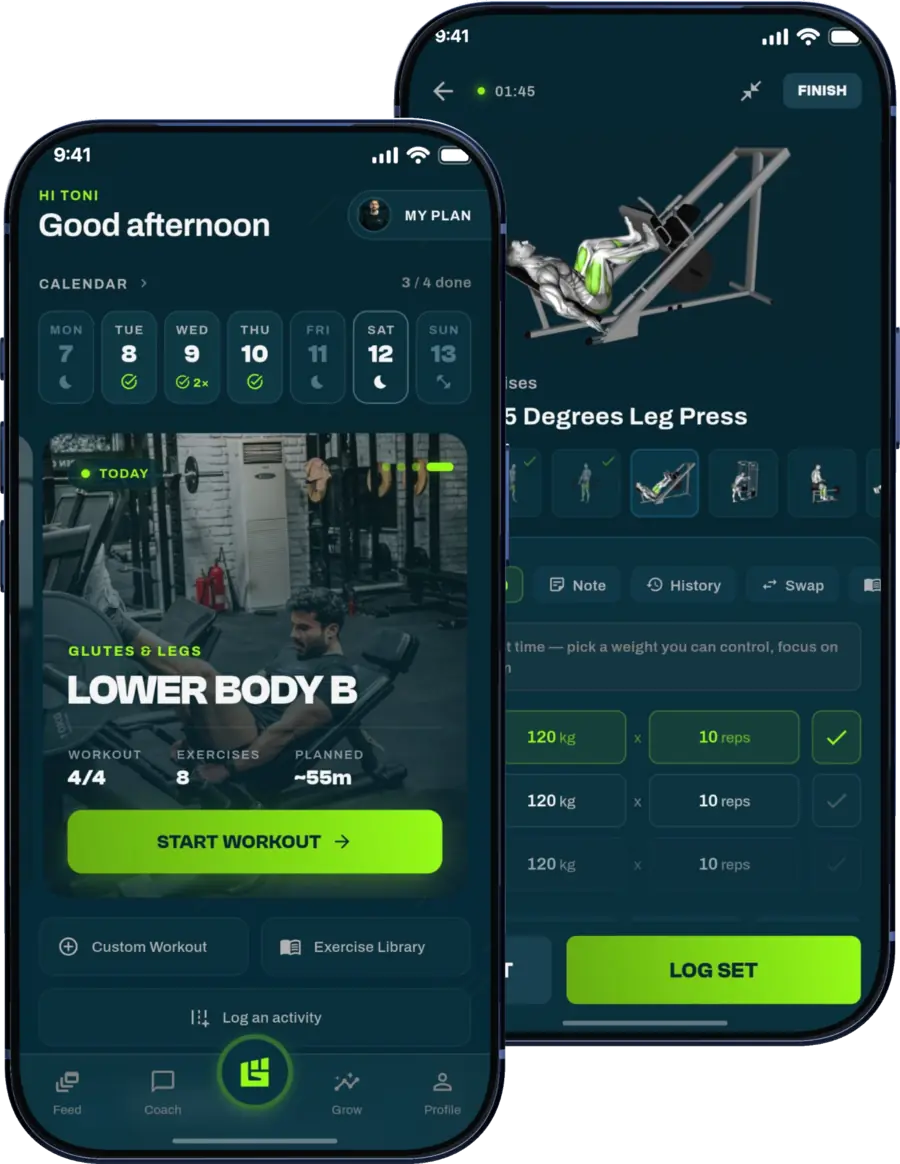
Get a personalized workout plan built around your goal, equipment and schedule. Train smarter, track every rep and keep moving forward, one workout at a time.






If your schedule is unpredictable, your sleep is inconsistent, or you still miss reps because your technique breaks down before the target muscle is challenged, six days is usually too much. You do not need more training days. You need better training quality.
Who usually does well with it
A 6 day workout split tends to work best for lifters who already have some consistency and can handle repeated exposure to the main patterns each week.
That usually includes:
- Intermediate lifters: You know your main lifts, can recover from hard sessions, and need more weekly training opportunities.
- Advanced hypertrophy-focused trainees: You want enough room in the week to spread volume out instead of cramming everything into a few long sessions.
- Busy people with short daily windows: Shorter sessions are often easier to sustain than a few marathon workouts.
Who should think twice
Some people force a 6 day workout split because it feels more committed. That is the wrong reason.
Be careful if this sounds like you:
- Beginners: You will usually grow well on fewer days if the program is well built.
- Shift workers or parents with volatile schedules: Missing one session in a 6-day plan can make the week feel scrambled.
- Anyone already feeling run down: More frequency does not fix poor recovery.
A good split should fit your life first. If the schedule constantly loses to your real week, it is not the right split.
If you want structure without hand-building each week, a Personalized strength training app can help organize training around your actual availability instead of an idealized one.
Understanding the Core Principles of a 6-Day Split
The main reason coaches use a 6 day workout split is simple. It lets you train muscle groups more often without making each session bloated.
A helpful way to think about it is watering a garden. Smaller, repeated waterings usually work better than dumping everything in one day. Training works similarly. Frequent, well-sized sessions tend to be easier to recover from than one oversized weekly beating for each muscle group.
Frequency matters
A 2021 meta-analysis found that training muscle groups twice per week led to roughly 38% faster muscle growth than training them once per week when total volume was equal (kahfitness.com). That is the key reason modern 6 day workout split setups often repeat movement categories or muscle groups across the week.
This does not mean every muscle needs endless work. It means most lifters do better when they revisit a muscle before a full week passes.
Volume still drives the result
Frequency helps, but it does not replace hard sets.
A good 6 day workout split gives you enough weekly work for each muscle group while keeping each individual session manageable. Instead of smashing chest, back, or legs in one huge workout, you divide the work across the week. That usually improves exercise quality, rep execution, and focus.
Why the split format helps
The big benefit of six training days is distribution.
You can spread work across the week in a way that makes sessions cleaner:
- Better effort on key lifts: You are fresher when you start.
- Less junk volume: You stop adding random exercises just because you only hit that muscle once per week.
- More skill practice: Repeating lifts or patterns more often usually sharpens execution.
What a productive week looks like
Most effective 6 day workout split plans share a few traits:
- Each major muscle gets trained regularly
- Session length stays controlled
- Compound lifts do most of the work
- Isolation lifts support, not dominate, the plan
The point of high-frequency training is not to stay sore all week. The point is to create repeatable, recoverable stimulus.
Where lifters go wrong is turning frequency into excess. If every day feels like a max effort day, the split stops working. Six days only makes sense when the workload is distributed well enough that you can come back and perform again.
Common 6-Day Workout Split Templates Compared
Most 6 day workout split plans fall into a few recognizable templates. The structure matters because it shapes recovery, exercise overlap, and how easy the plan is to run for months instead of two excited weeks.

Push pull legs
Push/pull/legs is the most common setup for a reason. It is organized, intuitive, and easy to repeat.
The split usually runs like this:
- Day 1: Push
- Day 2: Pull
- Day 3: Legs
- Day 4: Push
- Day 5: Pull
- Day 6: Legs
- Day 7: Rest
The logic is strong. Pushing movements and pulling movements use distinct kinetic chains, which allows one chain to recover while the other is being trained (YouTube explanation). In practice, that means less interference between sessions and cleaner performance on repeated training days.
PPL works especially well for hypertrophy-focused lifters who want a predictable rhythm and enough room for compounds plus accessories.
Best fit: balanced muscle gain, good gym frequency, clear session focus.
Upper lower
Upper/lower can also be stretched into six days, usually by rotating upper, lower, and a more specialized upper or lower emphasis day through the week.
Common examples include:
- Upper
- Lower
- Upper
- Lower
- Upper emphasis
- Lower emphasis
This format is practical for lifters who care about progressive overload on major compound lifts. It also works well for people who want a bit more flexibility in exercise choice than PPL sometimes allows.
The trade-off is that upper days can get crowded. You are asking chest, back, shoulders, and arms to share one session. That is manageable if programming is tight. It becomes messy if every upper day turns into a long list of exercises.
Best fit: strength-focused trainees, lifters who like bench, squat, hinge, and row progression.
Body part split
This is the classic bodybuilding-style structure. Each day has a narrower focus, often with one or two muscle groups featured.
A typical week might look like this:
- Chest
- Back
- Legs
- Shoulders
- Arms
- Legs or weak-point day
This can work, but it is less forgiving. If volume is not managed carefully, one session can become overloaded while another feels too light. It also requires more precision to ensure muscles are stimulated often enough and not just annihilated in one outing.
The upside is focus. If an advanced lifter wants to bring up delts, arms, upper back, or quads, a body part split can create room for targeted work.
Best fit: experienced lifters with clear weak points and strong recovery habits.
6-Day Workout Split Comparison
| Split Type | Primary Goal | Weekly Structure | Best For |
|---|---|---|---|
| Push/Pull/Legs | Balanced strength and hypertrophy | Push, Pull, Legs repeated twice | Lifters who want clear organization and steady recovery |
| Upper/Lower | Strength progression with hypertrophy support | Multiple upper and lower sessions across the week | Lifters prioritizing compound lifts |
| Body Part Split | Targeted hypertrophy and specialization | One or two muscle groups per day | Advanced trainees bringing up lagging areas |
Which one usually works best
PPL is often considered the cleanest 6 day workout split. It is easy to understand, easy to recover from when programmed sensibly, and easy to adjust.
Upper/lower is close behind if your priorities lean more toward strength work.
Body part splits can work well, but they usually reward experience. Beginners and lower intermediates often do better with a structure that repeats movement patterns more clearly.
The Pros and Cons of Training Six Days a Week
A 6 day workout split can be excellent. It can also expose every weakness in your recovery habits.
The upside is obvious once you run it well. The downside shows up when real life gets involved.
The upside
One of the clearest advantages is session quality.
Spreading work across the week often keeps workouts shorter, around 45 to 60 minutes, and less systemically fatiguing, which supports more frequent stimulation through the week while reducing the drain that comes with long sessions (outlift.com).
That creates practical benefits:
- Better focus: You are not trying to train half your body in one sitting.
- More quality reps: Performance usually holds up better in shorter sessions.
- Easier weekly volume management: You can add work without wrecking one day.
For hypertrophy, this is a real advantage. Muscles often respond well when you can train them hard, recover, and come back again without waiting too long.
The downside
The biggest problem is not the programming. It is the lifestyle mismatch.
Six training days sounds manageable until sleep drops, work stress climbs, or one missed day forces you to reshuffle the entire week. A 6 day workout split rewards structure. If your week is chaotic, the plan can become annoying fast.
There are also common failure points:
- Too much volume per day anyway: Some lifters take a 4-day workload and just spread it badly across 6 days.
- No real rest management: They train hard every day and call soreness progress.
- Poor exercise overlap control: Front delts, triceps, lower back, and elbows often take a beating if exercise selection is sloppy.
What usually works
A 6 day workout split works best when you keep each day narrow and purposeful.
That means:
- Pick a few main lifts.
- Add enough accessory work to support the goal.
- Stop before the session turns into a collection of extra exercises.
What usually fails
The worst version of this split is six emotionally satisfying workouts that are hard to recover from.
You know the type. Too many sets, too many failure attempts, too many similar exercises, and no thought for what tomorrow’s session needs from you.
If you cannot train well again in the next few days, today’s workout was probably too expensive.
The right question is not “Can I survive six days?” It is “Can I perform across six days, week after week?” That is the standard that matters.
Sample 6-Day Workout Programs for Different Goals
Templates are useful, but seeing a real week in practice can be helpful. Below are two practical examples.
These are starting points, not sacred text. Adjust exercise choices for equipment, injury history, and technical skill. If your nutrition goal includes body recomposition, this guide on how to burn fat and build muscle can help you align food intake with the workload.
Maximum muscle growth program
This version uses a push/pull/legs structure and keeps the focus on hypertrophy.
Day 1 push
- Barbell bench press, 4 sets of 6 to 8 reps
- Incline dumbbell press, 3 sets of 8 to 10 reps
- Seated dumbbell shoulder press, 3 sets of 8 to 10 reps
- Cable lateral raise, 3 sets of 12 to 15 reps
- Triceps pressdown, 3 sets of 10 to 12 reps
- Overhead triceps extension, 2 sets of 12 to 15 reps
Day 2 pull
- Pull-up or lat pulldown, 4 sets of 6 to 10 reps
- Chest-supported row, 3 sets of 8 to 10 reps
- One-arm cable row, 3 sets of 10 to 12 reps
- Rear delt fly, 3 sets of 12 to 15 reps
- Barbell or EZ-bar curl, 3 sets of 8 to 10 reps
- Hammer curl, 2 sets of 10 to 12 reps
Day 3 legs
- Back squat, 4 sets of 5 to 8 reps
- Romanian deadlift, 3 sets of 8 to 10 reps
- Leg press, 3 sets of 10 to 12 reps
- Leg curl, 3 sets of 10 to 12 reps
- Calf raise, 4 sets of 10 to 15 reps
- Hanging leg raise, 3 sets
Day 4 push
- Incline barbell press, 4 sets of 6 to 8 reps
- Machine chest press, 3 sets of 8 to 12 reps
- Arnold press, 3 sets of 8 to 10 reps
- Cable fly, 2 sets of 12 to 15 reps
- Dumbbell lateral raise, 3 sets of 12 to 15 reps
- Skull crusher or cable extension, 3 sets of 10 to 12 reps
Day 5 pull
- Barbell row or machine row, 4 sets of 6 to 8 reps
- Neutral-grip pulldown, 3 sets of 8 to 10 reps
- Seated cable row, 3 sets of 10 to 12 reps
- Face pull, 3 sets of 12 to 15 reps
- Incline dumbbell curl, 3 sets of 10 to 12 reps
- Preacher curl, 2 sets of 12 reps
Day 6 legs
- Front squat or hack squat, 4 sets of 6 to 8 reps
- Hip hinge variation, 3 sets of 8 to 10 reps
- Bulgarian split squat, 3 sets of 8 to 10 reps each side
- Leg extension, 3 sets of 12 to 15 reps
- Seated leg curl, 3 sets of 12 reps
- Calf raise, 4 sets of 12 to 15 reps
Day 7 rest
Walk, do easy mobility work, and leave the ego out of it.
Building functional strength program
This version uses an upper/lower structure with a stronger emphasis on compound lifts.
Day 1 upper strength
- Bench press, 5 sets of 3 to 5 reps
- Weighted pull-up or heavy pulldown, 4 sets of 4 to 6 reps
- Overhead press, 3 sets of 4 to 6 reps
- Barbell row, 3 sets of 5 to 6 reps
- Triceps accessory, 2 sets of 8 to 10 reps
Day 2 lower strength
- Back squat, 5 sets of 3 to 5 reps
- Romanian deadlift, 4 sets of 5 to 6 reps
- Split squat, 3 sets of 6 to 8 reps
- Calf raise, 3 sets of 10 to 12 reps
- Core carry or plank variation, 3 rounds
Day 3 upper volume
- Incline dumbbell press, 4 sets of 8 reps
- Chest-supported row, 4 sets of 8 reps
- Seated dumbbell press, 3 sets of 8 to 10 reps
- Pulldown, 3 sets of 10 reps
- Lateral raise, 3 sets of 12 to 15 reps
- Curl variation, 2 sets of 10 to 12 reps
Day 4 lower volume
- Front squat, 4 sets of 6 reps
- Hip thrust or glute bridge, 3 sets of 8 reps
- Leg press, 3 sets of 10 reps
- Leg curl, 3 sets of 10 reps
- Calf raise, 3 sets of 12 reps
- Ab wheel or cable crunch, 3 sets
Day 5 upper power and assistance
- Speed bench or paused bench, 6 sets of 3 reps
- Pull-up, 4 sets of 6 reps
- Push press or strict press, 3 sets of 3 to 5 reps
- Dumbbell row, 3 sets of 8 reps
- Rear delt raise, 3 sets of 12 reps
- Triceps and biceps, 2 sets each
Day 6 lower power and assistance
- Deadlift variation, 5 sets of 2 to 4 reps
- Box squat or paused squat, 3 sets of 3 to 5 reps
- Walking lunge, 3 sets of 8 steps each side
- Hamstring curl, 3 sets of 10 reps
- Loaded carry, 3 rounds
How to choose between them
Pick the hypertrophy version if your main goal is size and you recover well from moderate repetition work.
Pick the strength version if you care more about improving major lifts and want a clearer hierarchy between heavy work and assistance work.
Programming Progression and Managing Fatigue
A 6 day workout split does not usually fail in week one. It fails when lifters keep adding effort but never manage fatigue.
That is the part most online guides skip. Recovery and deloading guidance is often missing in discussions of 6 day splits, even though it is one of the most important parts of making high-frequency training sustainable.

Use simple progression
You do not need exotic loading methods.
A practical approach is double progression. Keep a rep range for each exercise. When you reach the top of that range with good form across all working sets, increase the load next session.
Example:
- Bench press target is 4 sets of 6 to 8
- Once you hit 8 reps on all 4 sets cleanly, add weight next time
- Build back up through the range again
This works especially well in a 6 day workout split because it keeps progress moving without forcing weekly max attempts.
Watch for fatigue drift
Individuals do not suddenly crash. Performance usually slides first.
Look for patterns such as:
- Loads stalling across multiple sessions
- Rep quality dropping before the muscle is challenged
- Motivation falling specifically for lifts you usually like
- Persistent soreness in joints rather than muscles
- Sleep getting worse while training stress rises
That is when you adjust. Not after three more hard weeks of denial.
If your performance trend is falling and your effort feels higher, recovery is no longer matching demand.
How to deload in practice
There is a clear content gap on exact deload structure, so the practical answer is to use a conservative model.
After several hard weeks, reduce training stress for a short period by doing one or more of the following:
- Cut sets: Keep the exercises but perform fewer working sets.
- Lower load: Use lighter weights while keeping technique sharp.
- Pull back from failure: Stop earlier on accessory work.
- Trim exercise count: Remove low-value fatigue from the week.
You do not need to turn a deload into complete inactivity. The point is to reduce accumulated stress while keeping movement quality and routine intact.
Recovery habits that matter
For six days per week, the basics stop being optional.
Pay attention to:
- Sleep consistency: A strong plan cannot outrun poor sleep.
- Food intake: Under-eating makes high frequency feel harder than it should.
- Exercise order: Put high-skill and high-load lifts first.
- Rest day behavior: Use the day off to recover, not to cram extra conditioning.
This matters even more for lifters trying to preserve lean tissue during body-composition changes. If that is relevant to you, this resource on maintaining muscle covers a related recovery and retention challenge.
For people who want help adjusting workouts based on performance and schedule, GrabGains offers AI-based workout planning that can structure a 6-day split, track progress, and update training based on how sessions are going over time.
Frequently Asked Questions About the 6-Day Split
Is a 6 day workout split good for beginners
Usually not as a first option.
Beginners tend to grow well with fewer weekly sessions because almost any solid training creates progress early on. A 6 day workout split can work for a beginner with excellent schedule control and conservative volume, but most beginners do better mastering technique and recovery on a simpler structure first.
How long should each workout be
Keep the sessions focused.
Shorter sessions generally work better on this kind of plan because you are training often. If a workout keeps stretching because you added too many exercises, the fix is usually to cut clutter, not to grind through it.
What should I do on the one rest day
Recover on purpose.
That usually means light walking, gentle mobility work, easy stretching, or nothing structured at all. The rest day is there to help you show up fresh enough for the next training week.
Can I do cardio with a 6 day workout split
Yes, but dosage matters.
Low-intensity cardio is usually easier to fit in than hard conditioning. If you add too much intense cardio on top of six lifting days, lower-body recovery often becomes the first problem.
How do I know if the split is working
Look at a few simple markers together:
- Performance: Are loads, reps, or rep quality improving?
- Recovery: Are you bouncing back between sessions?
- Consistency: Can you complete the week without constant rescheduling?
- Joint comfort: Are elbows, shoulders, hips, and low back tolerating the plan?
If progress is stable and recovery feels manageable, the split is likely doing its job.
What if I miss one day
Do not panic and do not try to force two full sessions into one giant workout.
Shift the remaining days forward, trim nonessential accessory work, and protect the main lifts. The program should serve your week, not the other way around.
Is a 6 day workout split better for muscle growth than a 4 day split
Not automatically.
It can be better if six days lets you distribute workload more effectively and recover well enough to maintain quality. If the extra frequency only adds fatigue, a 4-day split will often outperform it.
What is the biggest mistake people make
They confuse training more often with training better.
The common mistake is piling too much effort, volume, and exercise overlap into the week. The best 6 day workout split plans are usually boring in a good way. They are organized, repeatable, and sustainable.
If you want a 6 day workout split that adjusts to your schedule, tracks performance, and helps you manage progression without rebuilding your plan every week, GrabGains is a practical option to explore.
Get inspired and motivated