The science behind progressive overload: a complete guide
Unlock the science behind progressive overload to build muscle and strength. This guide explains the mechanisms, methods, and how to program for real results. You're probably doing more work than you were a few months ago. You show up, follow your split, sweat hard, and leave feeling like you trained well. But your lifts look the same, your muscles look the same, and your body has stopped giving you the feedback you want.
That stall frustrates a lot of people because it feels unfair. Effort should equal progress. In the gym, though, effort only moves the needle when your body has a reason to adapt. That's where the science behind progressive overload matters. It explains why a workout that once built strength and muscle can transition into maintenance.


Why your workout stopped working
At first, almost any decent program works. A beginner starts squatting, pressing, rowing, and pulling. Within a few weeks, the movements feel smoother. Weights that felt heavy start to feel normal. The body responds fast because the stimulus is new.
Then the pattern changes.
You keep doing the same three sets, the same weight, the same rest periods, and the same exercise order. Your body stops treating that session like a challenge. It treats it like a routine it already knows how to handle. The workout didn't become bad. It just stopped being demanding enough to force new adaptation.
Your body is built to adapt
Think of training like learning a language. In the beginning, every lesson demands focus. Later, the same lesson feels easy because your brain has already solved it. Muscles and the nervous system behave in a similar way. They adapt to repeated stress so the same task costs less effort over time.
That's why plateaus happen even when motivation is high. You may still feel tired after training, but fatigue alone isn't the goal. Adaptation is the goal.
Training hard isn't the same as training with a progression plan.
A lot of lifters hit this wall and assume they need a new supplement, a fancy split, or a more brutal workout. Usually, they need something simpler. They need a structured way to ask a little more from their body over time. If you want extra ideas for getting past a stall without overcomplicating your training, these natural strength training tips for athletes are useful because they keep the focus on repeatable habits.
What progressive overload really means
Progressive overload means gradually increasing the demand you place on your body so it has to keep adapting. That increase might come from more load, more reps, more sets, less rest, slower tempo, or a harder exercise variation.
It's not a bodybuilding buzzword. It's the basic rule behind continued progress. If the stimulus stays the same forever, the result usually does too.
The four pillars of muscle growth science
Muscle growth sounds complicated until you break it into a few drivers you can feel in training. When people talk about building muscle, they're usually talking about a mix of mechanical tension, muscle damage, metabolic stress, and neural adaptation.
This is the part many lifters miss. Progressive overload works because it changes one or more of those drivers.

Mechanical tension
Mechanical tension is the force your muscles produce when they contract against resistance. In plain language, it's the strain placed on muscle fibers when you lift, control, and stabilize a weight.
A useful image is to think of muscle fibers like thick ropes. The more meaningful tension you place on those ropes, the more reason the body has to strengthen them. Heavy compounds like squats, presses, rows, and deadlifts create a lot of this tension, especially when you use solid form and move through a full range of motion.
Mechanical tension matters for both size and strength, but it becomes especially important when your goal is to move heavier loads. It's one reason progression through load increases often fits strength-focused training so well.
Muscle damage
Muscle damage gets oversimplified online. It doesn't mean you need to destroy a muscle to make it grow. It refers to the small disruptions that happen in muscle tissue during hard resistance training. Your body responds by repairing that tissue and reinforcing it.
The key point is that damage is a signal, not the prize. Soreness can happen, but soreness isn't proof that a workout was effective. Good training creates enough disruption to trigger repair, then gives the body enough recovery to rebuild.
Coach's lens: Chase quality tension and recovery, not soreness for its own sake.
Nutrition affects this part more than is commonly understood. If training supplies the stimulus, food supplies the raw materials. That's why many lifters pair their training with personalized muscle gain meal plans so recovery supports the work they're doing in the gym.
Metabolic stress
Metabolic stress is the burn, swelling, and fatigue you feel during challenging sets, especially when reps climb and rest stays controlled. It comes from the buildup of byproducts during hard muscular work.
This is why moderate to higher-rep training often feels different from heavy triples or singles. The muscle stays under tension longer, and that sustained effort creates a strong growth signal. If you want a deeper primer on how muscles grow and recover, it helps to connect this feeling in the gym with what's happening in the tissue afterward.
A simple way to think about metabolic stress is this:
- Heavy, lower-rep work often emphasizes force production and mechanical tension.
- Moderate or higher-rep work often creates more sustained muscular effort and local fatigue.
- Both can build muscle if the training is challenging and progresses over time.
Neural adaptation
Not all early strength gains come from bigger muscles. A lot of them come from your nervous system getting better at recruiting the muscle you already have. That's why a new program can make you stronger before you look noticeably bigger.
A summary from StrengthLab360 on neural gains and hypertrophy timing notes that neural gains dominate the first 0-4 weeks, contributing to 20-30% strength increases, while myofibrillar growth becomes the primary driver after 8 weeks. That's the two-phase process most lifters experience. First, your body becomes more efficient at the skill of lifting. Then the tissue itself does more of the work.
How these pillars work together
These mechanisms aren't separate lanes. Most good training sessions hit more than one.
| Training style | Main driver | What it often feels like |
|---|---|---|
| Heavy sets with controlled form | Mechanical tension | Heavy, demanding, focused |
| Moderate sets through full range | Tension plus damage | Challenging with local fatigue |
| Higher-rep sets with shorter rest | Metabolic stress | Burn, pump, deep fatigue |
| Repeating lifts consistently | Neural adaptation | Better technique, smoother reps |
When you understand these pillars, programming gets clearer. You stop asking, “What's the best workout?” and start asking, “Which adaptation am I trying to drive?”
Five proven methods to apply progressive overload
The biggest mistake people make with progressive overload is assuming it only means adding more weight to the bar. That's one method. It's not the only one.
A 2024 Journal of Strength and Conditioning Research study found that progressing through load increases or rep increases produced nearly identical muscle growth over 8-12 weeks. Quadriceps cross-sectional area increased by 10.3% in the LOADprog group and 10.9% in the REPSprog group. That matters because it shifts the conversation from “Which method is magic?” to “Am I progressing in a measurable way?”

Increase the load
This is the classic version. You use the same exercise and similar rep target, but you lift more weight over time.
If you dumbbell bench press for 8 solid reps and eventually repeat that exercise with a slightly heavier pair of dumbbells for the same rep quality, you've applied overload through load. This method leans hard on mechanical tension and usually suits strength-focused lifters well.
Best use case: compound lifts, stable machines, and movements where form stays clean under heavier resistance.
Increase the volume
Volume means doing more total work. The simplest version is adding reps or sets while keeping the load the same.
Going from 3 sets of 10 to 3 sets of 12 is progression. So is adding a fourth set after you've handled the original workload well for a while. This method often builds a strong mix of tension and metabolic stress, which is why it's popular in hypertrophy training.
A practical example:
- Week one: 3 sets of 10 goblet squats
- Later progression: 3 sets of 12 goblet squats
- Next step: 4 sets of 10 with the same weight, or a heavier bell if execution stays sharp
Increase density
Density means doing the same amount of work in less time, or more work in the same amount of time. The easiest lever is rest periods.
If you perform the same rows, lunges, and presses but trim rest slightly while keeping form under control, the session becomes more demanding. This often raises local fatigue and challenges work capacity, making it useful for people training for general fitness, circuits, or event-style conditioning.
More work per minute is still overload, even if the dumbbells don't change.
Increase tempo
Tempo changes how long a muscle stays under tension during each rep. A slower lowering phase, a pause in the stretched position, or stricter control can make a familiar weight feel much harder.
This method is valuable when equipment is limited. A push-up with a slow lowering phase and a pause near the bottom can create a very different stimulus than a rushed set with loose control. Tempo tends to increase perceived difficulty, improve positioning, and reinforce technique.
Increase complexity
Sometimes the smartest progression is not more weight or more reps. It's a more demanding variation.
You might move from:
- Split squat to rear-foot raised split squat
- Push-up to deficit push-up
- Bodyweight row to feet-raised row
This form of progression works well for home trainees, calisthenics athletes, and anyone who's outgrown beginner variations. It also keeps training productive when loading options are limited.
Which method should you choose
Use the method your situation allows.
| If your goal or limitation is this | A strong overload choice is this |
|---|---|
| Build maximal strength | Load progression |
| Build muscle with moderate fatigue | Volume progression |
| Improve work capacity | Density progression |
| Train with light equipment | Tempo or complexity progression |
| Protect technique while still advancing | Rep progression before load |
Good programming doesn't force one tool onto every lifter. It picks the right lever for the lift, the goal, and the training environment.
Tailoring your progression to your fitness goal
Two people can use progressive overload and train very differently. That's not a contradiction. It's the whole point. The body adapts specifically to the stress you repeat most often, so your progression method should match the result you want.
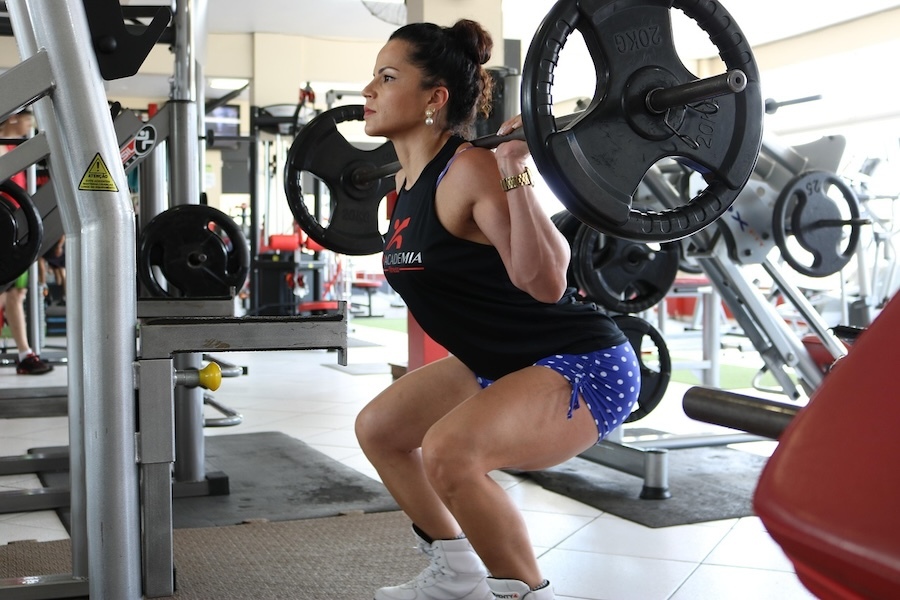
If your goal is muscle hypertrophy
For muscle size, your plan should usually give a lot of attention to volume, exercise quality, and enough effort to make the target muscle do real work. Adding reps, adding sets, refining tempo, and using stable exercises frequently prove most effective.
You're not trying to prove how much you can survive. You're trying to repeatedly expose a muscle to productive tension and fatigue, then recover well enough to do it again. Lifters who want more structure around food intake often use a macros for bulking calculator guide to line up their nutrition with that goal.
A hypertrophy-minded week often looks like this in practice:
- Choose exercises you can feel well. Machines, dumbbells, cables, and controlled barbell lifts all work.
- Progress reps before load on many accessories. That keeps technique stable.
- Keep the target muscle under honest tension. Don't rush through the easy part of the rep.
If your goal is maximal strength
Strength training is more skill-specific. You still need enough total work to improve, but the star of the show is usually load progression on key lifts.
A stronger squat, press, or deadlift comes from practicing those movement patterns under meaningful resistance with excellent form. Heavier loads teach the nervous system to coordinate force better, and they place high demands on mechanical tension.
This style of training usually works best when you:
- focus on a small group of primary lifts,
- progress load conservatively,
- and avoid turning every session into a fatigue contest.
Strength training rewards patience. The clean rep you own matters more than the ugly rep you survive.
If your goal is muscular endurance
HYROX athletes, circuit trainees, and functional fitness enthusiasts often need a different flavor of overload. They still benefit from resistance training, but they also care about how long they can sustain output and how well they recover between efforts.
For them, density progression, higher-rep work, and repeatable submaximal training often make more sense than chasing heavy singles. You might keep the same exercise selection and gradually shorten rest periods, extend work intervals, or increase total rounds while maintaining technique.
A good endurance-oriented plan often prioritizes:
- Repeatable effort instead of all-out sets.
- Movement economy so reps stay clean under fatigue.
- Balanced progression that improves capacity without wrecking recovery for running, rowing, or event work.
The smartest question to ask
Instead of asking, “What's the best overload method?” ask, “What adaptation am I trying to force?”
If the answer is bigger muscles, your progression should make muscles do more productive work. If the answer is more strength, your progression should improve force production. If the answer is endurance, your progression should help you sustain quality output longer.
How to track progress and avoid common pitfalls
Plateaus don't often occur because a program is awful. They typically arise from a failure to collect evidence. If you don't know what you lifted last week, how many reps you completed, or how your sets felt, you're guessing instead of progressing.
Tracking doesn't need to be obsessive. It just needs to be consistent. Write down the exercise, load, reps, sets, and a quick note on execution. That gives you enough information to decide whether to repeat, progress, or pull back.
Use the 10 percent rule as a guardrail
The fastest way to ruin good training is to progress too aggressively. According to NASM's progressive overload guidance, weekly increases in training variables should be limited to 10% or less to maximize adaptation while minimizing injury risk. The same guidance notes that after increasing reps, a lifter should increase weight by only 5-10% to return to the target rep range.
That rule matters because the body adapts best to stress it can recover from. A small, repeatable increase beats a dramatic jump that wrecks form or forces missed sessions.
Three mistakes that stall progress fast
A lot of stalled lifters make one of these errors:
- Ego lifting: They add load before they've earned it with control. The weight goes up, but range of motion shrinks and technique falls apart.
- Program hopping: They switch plans before the current one has enough time to produce adaptation.
- Ignoring fatigue signals: They confuse “more” with “better” and pile on stress when recovery is already lagging.
If you want a useful reference point for what progress should look like over time, the GrabGains guide to fitness results helps frame the signs that your training is moving in the right direction.
What to look for besides bigger numbers
Progress isn't only a heavier barbell. It can also show up as:
| Sign of progress | What it tells you |
|---|---|
| Cleaner reps | Skill and control are improving |
| More reps at the same load | Work capacity or strength-endurance is improving |
| Better stability | Positioning and coordination are improving |
| Less rest needed for the same work | Conditioning is improving |
Log the small wins. They often show up before the dramatic ones.
The best lifters don't just train hard. They train with enough feedback to make the next decision well.
Let AI handle the numbers with GrabGains
A lot of people understand progressive overload in theory but struggle with the boring part. They don't want to manually calculate every increase, remember every top set, or decide in real time whether today should be a load jump, a rep jump, or a repeat session.
That's where tools help.
GrabGains workouts are built around the idea that good training should adapt to your performance instead of forcing you to do all the planning yourself. If you're a busy professional, a hypertrophy-focused lifter, or someone training around travel and unpredictable schedules, that matters more than motivation speeches.
What smart tracking changes
An AI-driven system can handle the pieces lifters often miss:
- Workout history: It remembers what you did, not what you think you did.
- Adaptive planning: It adjusts sessions based on performance trends.
- Visual analytics: It helps you spot stalled lifts, improving lifts, and patterns in volume or consistency.
- Exercise guidance: Built-in demos and instructions help protect form while you progress.
That combination matters because progressive overload only works when the progression is accurate enough to repeat. If your plan always pushes too fast, you burn out. If it never pushes at all, you maintain.
Why this is useful in real life
Individuals often don't fail because they lack discipline. They fail because life gets messy. They miss a session, train in a different gym, swap equipment, or come in under-recovered and don't know how to adjust.
A system that tracks performance and updates the plan can keep progression moving without forcing you to become your own spreadsheet. That's the practical side of the science. Good adaptation needs good decisions, and good decisions get easier when the data is organized.
Frequently asked questions about progressive overload
Can you use progressive overload with bodyweight training
Yes. You don't need barbells to apply overload. You can add reps, add sets, slow the tempo, shorten rest, or move to a harder variation. A push-up can become a paused push-up, a deficit push-up, or a feet-raised push-up. The principle stays the same. The exercise just changes.
When should you switch from adding reps to adding weight
Switch when you can complete your current rep target with clean form and still have room to progress the movement meaningfully. Many lifters do well by building reps first, then adding a modest amount of load and working back up through the rep range. If the heavier weight ruins your execution, stay with rep progression a little longer.
Is progressive overload the same as training harder every session
No. Progressive overload means training with a plan, not trying to set a personal record every workout. Some sessions should feel steady and repeatable. The goal is long-term adaptation, not daily heroics.
What's the difference between progressive overload and deloading
Progressive overload increases training demand over time. Deloading is a temporary reduction in training stress so fatigue can come down and performance can rebound. They're not opposites. They work together. Good training pushes, recovers, then pushes again.
How long should you stay on a program
Stay on it long enough to judge whether it's working. If your technique is improving, your reps are climbing, your loads are gradually moving up, or your work capacity is better, the program is still doing its job. Change a plan because progress has stalled or your goal has changed, not because you got bored after a week.
Do you need to feel sore for overload to work
No. Soreness can happen, especially with a new exercise or a new range of motion, but it isn't the target. Productive training is measured by performance trends, quality of movement, and recovery, not by how hard it hurts to walk downstairs.
What if you miss a week
Don't panic and don't try to make up for lost time in one workout. Return with slightly lower expectations, rebuild rhythm, and let your performance guide the next progression. The lifters who make the best long-term progress are the ones who can resume calmly after interruptions.
If you want a simpler way to apply all of this without managing every set and progression by hand, GrabGains gives you adaptive workouts, progress tracking, and AI-guided planning that make progressive overload easier to use in real life.
Get inspired and motivated