Deload week explained: the ultimate guide to recovery, strength, and growth
Discover deload week explained: learn how planned recovery breaks plateaus, prevents burnout, and boosts gains. Think of a deload week as a planned, strategic pit stop in your training journey. It’s not a full stop, but a chance to refuel and come back stronger. In simple terms, it's a short-term, intentional drop in training volume and intensity.


What is a deload and why is it a secret weapon?

Every time you train hard, you're creating tiny tears in your muscle fibers and putting stress on your central nervous system. This is exactly what you want—it’s the signal that tells your body to adapt, rebuild, and get stronger. The problem is, if you constantly push at high intensity without enough recovery, you start to accumulate fatigue.
Think of your ability to recover like a bank account. Every tough workout is a withdrawal. Sleep, good nutrition, and rest days are your deposits. If you keep making withdrawals without making enough deposits, you eventually run into “fatigue debt.”
Paying down your fatigue debt
This isn't just about feeling a little tired. This debt can grind your progress to a halt, elevate your risk of injury, and completely drain your motivation to even step into the gym.
Built for progress
Take the guesswork out of training
Get a personalized workout plan built around your goal, equipment and schedule. Train smarter, track every rep and keep moving forward, one workout at a time.






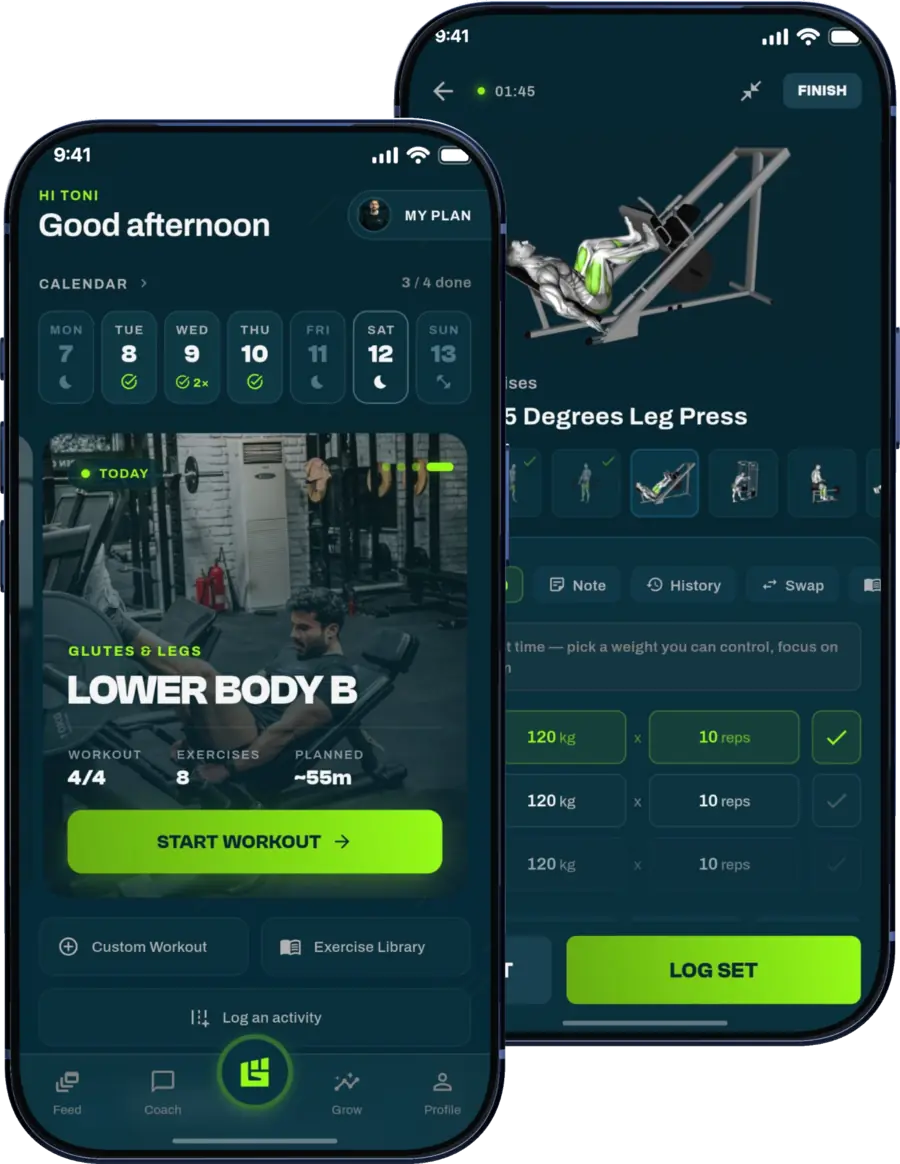
A deload week is your opportunity to balance the books. By strategically easing off the gas, you finally give your body the time and resources it needs to fully repair, adapt, and clear out all that lingering fatigue.
This proactive approach to recovery pays off in a few huge ways:
- Physical Recovery: It lets your muscles, tendons, and ligaments fully heal from the micro-damage of hard training.
- Nervous System Recharge: It gives your central nervous system (CNS)—the command center for every muscle contraction—a much-needed break from high-stress signals.
- Mental Refresh: It helps prevent mental burnout and can bring back that excitement and drive for your next training block.
A deload isn't a break from your program; it's a critical part of your program. This planned period of active recovery is what separates smart, long-term training from a fast track to burnout and plateaus.
The power of supercompensation
The real magic of a deload happens after it’s over. This structured recovery period sets the stage for a powerful physiological effect known as supercompensation.
By giving your body the chance to recover beyond its previous baseline, you return to your normal training stronger, faster, and more resilient. You're not just getting back to where you were; you're starting from a higher peak, ready to smash new personal records.
This is precisely why a deload is a secret weapon for anyone serious about making long-term progress. It turns recovery from a passive necessity into an active tool for growth. Whether you're a beginner or a seasoned athlete, recognizing that rest is just as crucial as the work itself is a non-negotiable part of any intelligent training plan. Smart training platforms like GrabGains are built around this very principle, integrating periods of lower intensity to ensure you keep moving forward.
The science of smarter recovery
To really get why a deload is so important, we have to look past the usual muscle soreness. While that’s what most of us feel day-to-day, a much deeper kind of fatigue builds up in your central nervous system (CNS). This is where the real magic of a deload happens.
Think of your CNS as the master battery pack for your entire body. Every heavy lift, every sprint, every intense set drains its power. Your muscles might feel fine after a day or two, but that master battery takes a whole lot longer to get back to 100%.
If you keep training hard without a real break, you just keep draining that battery. Eventually, you hit a wall. This is central nervous system fatigue, and it’s the culprit behind stalled progress, dipping strength, and a tanked motivation. A deload is your chance to finally plug that battery back in and let it fully recharge.
Restoring your hormonal balance
When your CNS is fried, it kicks off a chain reaction of hormonal shifts that work directly against your goals. Your body ramps up production of cortisol, the infamous stress hormone. When cortisol stays high, it can lead to muscle breakdown, fat storage, and poor sleep—a triple whammy for anyone trying to get stronger or leaner.
At the same time, this overtrained state can tank your key anabolic (muscle-building) hormones like testosterone. You end up in a hormonal environment where building muscle or gaining strength becomes nearly impossible, no matter how hard you push in the gym.
A deload week is the reset button. By dialing back the stress, you let cortisol levels fall back to baseline and give your body’s muscle-building signals a chance to get back to normal.
Recharging your mental drive
The psychological side of a deload is just as crucial as the physical. The mental grind of pushing your limits, week in and week out, is a fast track to burnout. It can make you start dreading the very workouts you used to love.
A deload provides a mental reset, breaking the cycle of high-pressure training. It restores your enthusiasm and focus, ensuring you come back to the gym feeling refreshed and eager to attack your next training block.
The art and science here is all about managing fatigue smartly. While your muscles can recover in as little as 72 hours, a full nervous system reset often takes a full week. A study of 246 athletes found the average deload lasted 6.4 days and was taken every 5.6 weeks.
This shows why avoiding common mistakes, like deloading too often, is key. Taking a deload every fourth week instead of every sixth could cost you five full weeks of hard training per year—a massive difference over a decade of lifting.
Of course, your recovery isn't just about training. Learning how to improve sleep quality naturally is a non-negotiable for anyone serious about recovery. And if you're looking for some new movements to try when you get back, check out our guide on powerful back exercises to build a stronger physique.
Warning signs you desperately need a deload
Learning to listen to your body is one of the most important skills you’ll ever develop in the gym. Sure, sometimes you have to push through fatigue. But ignoring the signals of true overreaching is a fast track to burnout, plateaus, and injury.
Recognizing these warning signs is the first step. It helps you understand when a deload week is no longer a "nice-to-have"—it's an absolute necessity. If you’re even asking yourself if it’s time to pull back, your body is probably already sending you clues that go way beyond normal muscle soreness.
Your lifts have stalled or are going backward
This is one of the most frustrating—and obvious—signs. Have you been stuck at the same weight on your big lifts for weeks on end? Or worse, are you struggling to move weights that felt easy just a week or two ago?
That backward slide is a classic sign of accumulated fatigue. Your central nervous system (CNS) and muscles are fried, and your body is struggling to keep up with recovery. It can no longer generate the force needed for progressive overload. A deload gives your system a much-needed chance to repair, adapt, and come back ready to smash through that plateau.
You feel constantly sore and achy
There's a big difference between the satisfying ache of a good workout (DOMS) and a persistent, low-level soreness that just won't go away. If your joints feel creaky and your muscles are always tender, that’s a red flag.
This is a clear signal that your body's repair processes can't keep up with the rate of muscle breakdown from your training. Your connective tissues, like tendons and ligaments, are probably inflamed, too. A deload week lets that inflammation settle down and gives your tissues the time they need to actually heal. For example, if your legs are always sore, you might want to adjust your routine. For ideas, check out our guide on effective leg exercises you can modify during your deload.
When the thought of going to the gym fills you with dread instead of excitement, it's not a sign of weakness—it's a sign of burnout. Your mind and body are telling you they need a break from the high-intensity grind.
Poor sleep and persistent fatigue
Are you having trouble falling asleep, waking up all night, or feeling wiped out even after a full eight hours? Overtraining can mess with your sleep quality by throwing your hormones out of whack and keeping your nervous system on high alert.
This creates a vicious cycle: bad sleep tanks your recovery, which leads to more fatigue, which crushes your training. A deload helps calm your nervous system down, letting you get the deep, restorative sleep you need to recover physically and mentally. If you feel tired all day long, it’s a clear sign your body is waving a white flag.
How to structure your perfect deload week
Alright, you know you need a deload. But what does that actually look like in the gym?
The good news is that building an effective deload isn’t rocket science. It boils down to a simple choice between two main strategies. The goal isn’t to become a couch potato for a week; it’s about strategically turning down the training stress to let your body and mind fully recover.
Think of it as simmering instead of boiling. You’re still moving, still practicing your lifts, but you’re giving your muscles, joints, and central nervous system the break they desperately need to come back stronger.
Not sure if you’re quite there yet? This flowchart makes it simple.

If you’re feeling fried, a deload isn’t just an option—it's what you need to do next to keep making progress.
The two main deload strategies
When designing your deload, you have two main levers to pull: volume (how much work you do) and intensity (how heavy the weight is). Here’s how they differ.
Deload strategy comparison: volume vs. intensity
This table breaks down the two primary methods for deloading, helping you pick the right approach for your training style and goals.
| Strategy | What It Is | Best For | Example |
|---|---|---|---|
| Reduce Training Volume | Keeping the weight on the bar the same (or similar) but drastically cutting your total sets and reps. | Most lifters. It helps maintain the "feel" of heavy weight and preserves neuromuscular skill. | If you normally bench 225 lbs for 4 sets of 8, you might do 2 sets of 5 at the same weight. |
| Reduce Training Intensity | Keeping your sets and reps the same but significantly lowering the weight you're lifting. | Technique refinement, skill practice, or those recovering from joint soreness. | If you normally squat for 3 sets of 10 at 200 lbs, you'd do 3 sets of 10 at 100-120 lbs. |
For most people, most of the time, dropping your volume is the better choice. It lets you keep handling heavier weights, which helps your nervous system stay sharp, but the massive cut in total work provides all the recovery you need. It's the best of both worlds.
What about training frequency?
So, do you need to skip gym days? Probably not.
Interestingly, a study in Sports Medicine - Open found that 63.0% of competitive athletes kept their training frequency the exact same during a deload. The biggest change they made was cutting volume (61.8% of athletes), while only 32.9% actually reduced their number of sessions.
You can read more about how elite athletes manage fatigue in the study.
This means if you normally train four days a week, you can stick to that schedule. Just apply the volume or intensity reduction when you show up. No need to mess with your routine.
The role of active recovery
A deload week isn’t an excuse to do nothing. In fact, this is the perfect time to focus on active recovery. The goal is to get blood flowing, ease muscle soreness, and help the healing process along without adding any real training stress.
Here are a few things to sprinkle into your week:
- Walking: A simple 20-30 minute walk does wonders for circulation and mental clarity.
- Mobility Work: Dedicate some real time to stretching and foam rolling. Focus on those chronically tight spots like your hips, hamstrings, and shoulders. You can find some useful stretches in our guide on shoulder exercises.
- Light Cardio: Think casual. A slow bike ride, a few easy laps in the pool, or some light elliptical work is great. Keep the intensity low and the duration short.
Sample deload templates for any training goal
Knowing what a deload is is one thing; putting it into practice is another. A deload for a bodybuilder focused on hypertrophy looks completely different from one for a powerlifter or a functional fitness athlete. The real key is tailoring the reduction in training stress to fit your specific goals and training style.
To make this practical, we’ve put together three sample deload week templates. Think of these as flexible frameworks, not rigid rules. Notice how each one dials back the intensity while still keeping you active and connected to your training.
Hypertrophy-focused deload
If you’re chasing muscle growth, a deload is your chance to let your muscles fully repair from the high-volume damage you inflict during hard training blocks. The focus here is on flawless form and a strong mind-muscle connection, but with a major drop in total sets and reps.
- Goal: Maximize muscle recovery and reduce systemic fatigue while practicing perfect technique.
- Strategy: Reduce volume by about 50%. Keep the weight on the bar relatively high, but cut your total sets in half.
- Example Day (Push Day):
- Barbell Bench Press: 2 sets of 5 reps (instead of your usual 4 sets of 8–10)
- Incline Dumbbell Press: 2 sets of 6 reps (instead of 4 sets of 10–12)
- Cable Flys: 2 sets of 8 reps (instead of 3 sets of 15). To keep your form sharp and safe during a deload, you can check out our detailed guides on exercises, like these for the chest.
- Tricep Pushdowns: 2 sets of 8 reps (instead of 4 sets of 12–15)
Strength athlete deload
If your main goal is moving maximal weight, a deload is all about clearing out neural fatigue and giving your joints a much-needed break. Instead of grinding out heavy reps, you’ll shift your focus to practicing your competition lifts with lighter loads—almost like a rehearsal.
This approach lets you “grease the groove,” refining your technique on the squat, bench, and deadlift without the stress of a heavy bar. It’s the perfect time to fix any form breakdowns you’ve noticed creeping in.
- Goal: Recharge the central nervous system (CNS), reduce joint stress, and perfect your lifting technique.
- Strategy: Reduce intensity significantly. Keep your sets and reps similar to your normal training, but drop the weight to 50–60% of your 1-Rep Max (1RM).
- Example Day (Squat Day):
- Barbell Squat: 3 sets of 5 reps at 50% of 1RM. Focus on explosive speed and perfect form.
- Romanian Deadlifts (RDLs): 3 sets of 8 reps with light weight, emphasizing the hamstring stretch.
- Leg Press: 2 sets of 10 reps at a very light, controlled weight.
- Core Work: 3 sets of planks or leg raises.
Functional fitness or endurance deload
For athletes training for demanding events like HYROX, marathons, or CrossFit, a deload is about reducing overall training stress while maintaining a base level of conditioning. It’s a delicate balance of staying active without digging a deeper recovery hole.
The strategy here is to pull back on both the duration and intensity of your sessions. You aren't trying to set new personal bests; you’re just keeping the engine warm and promoting blood flow to speed up recovery.
Here’s a sample plan showing how you might structure a deload week when prepping for a big event.
Sample functional fitness deload week schedule
| Day | Activity | Duration/Intensity |
|---|---|---|
| Monday | Light Run + Mobility | 20-30 minutes at a conversational pace, followed by stretching |
| Tuesday | Active Recovery | 30 minutes of light rowing or assault bike, keeping heart rate low |
| Wednesday | Light Skill Work | 20 minutes practicing one or two movements (e.g., wall balls) at 50% effort |
| Thursday | Complete Rest | No planned activity. Focus on sleep and nutrition. |
| Friday | Active Recovery | 30 minutes of swimming or easy cycling |
| Saturday | Very Light Full Body | 1 round of a simple circuit (e.g., sled push, farmers carry) at very low intensity |
| Sunday | Complete Rest | Rest and prepare for the next training block. |
This type of schedule ensures your body gets the downtime it needs to adapt and come back stronger, without making you feel like you’ve completely stopped training.
Common deload mistakes that sabotage progress
A well-planned deload is one of the smartest things you can do for long-term gains. But a poorly executed one? It can be just as useless as skipping it entirely, potentially even setting you back.
Knowing what not to do is just as important as knowing what to do. Let’s walk through the most common mistakes people make so you can avoid them and make sure your recovery week actually works.
One of the biggest errors is taking a complete break from all activity. While it feels like the ultimate way to rest, slamming the brakes on your training can trigger detraining, where your body starts losing strength and fitness adaptations. The goal is active recovery, not total inactivity.
Not reducing enough or reducing too much
This is all about finding the Goldilocks zone—not too little, not too much. A classic mistake is barely cutting back. Shaving off just one set or dropping the weight by 10% isn't going to move the needle. You'll end up in a frustrating middle ground where you’re not recovering properly but also not training hard enough to make progress.
On the other hand, some lifters go too far and stop training altogether. This can wreck your routine and make it mentally tougher to get back into the groove. A deload is about lowering the stress, not removing the stimulus completely.
The most effective deload is a balancing act. You need to reduce training stress enough to allow for supercompensation, but not so much that you start to lose your valuable adaptations.
Letting your ego take over
A deload week can be a tough pill to swallow, especially when you’re used to pushing your limits every session. It’s easy to let your ego get in the way. You might feel great on day one and think, "It's just one heavy set, what's the harm?" That thinking completely defeats the purpose of the week.
The best way to avoid this is to commit to your plan—no exceptions. Remember, the goal this week isn't to build strength; it's to create the foundation for future strength gains.
Drastically cutting your calories
Another huge mistake is pairing your deload with an aggressive diet. Your body desperately needs fuel—especially protein and carbohydrates—to repair damaged muscle tissue and top off its glycogen stores. Slashing calories robs your body of the very resources it needs to recover.
Instead of dieting, aim to eat around your maintenance calories. This gives your body the energy it needs to do its job, ensuring you bounce back from your deload feeling strong, refreshed, and ready to attack your next training block.
Your deloading questions answered
Even with the best plan, deloads can feel a little counterintuitive at first. It’s normal to have questions. Here are the answers to the most common ones we get, designed to help you deload with confidence.
How often should I deload?
There's no single magic number here. The right frequency depends on your training intensity, how long you've been lifting, and how your body feels. A good starting point is to schedule a proactive deload every 4 to 8 weeks of hard, consistent training.
If you’re new to lifting, you might be able to go longer between deloads. On the other hand, advanced athletes pushing their absolute limits might need one every fourth week. The most important rule? Listen to your body. If you’re seeing multiple warning signs of burnout, it’s time for a reactive deload, no matter what your calendar says.
Can I still do cardio during a deload week?
Yes, but the key is to keep it light. The goal is active recovery, not adding another layer of training stress. Stick to low-intensity, steady-state (LISS) cardio.
Here are a few solid choices:
- Walking: A 20-30 minute walk, preferably outside.
- Light Cycling: An easy spin on a stationary bike with minimal resistance.
- Swimming: A few relaxed laps in the pool.
This is not the week for high-intensity interval training (HIIT), sprints, or long, grueling runs. Those activities are too demanding and will sabotage the recovery you’re trying to achieve.
The biggest fear most lifters have is that taking a week off will erase all their hard-earned muscle and strength. This is a myth. A single, properly planned deload week isn't nearly long enough to cause any meaningful detraining.
In reality, the exact opposite happens. By giving your body the space to fully recover, you trigger supercompensation. You’ll come back to the gym stronger and primed to build even more muscle. Any tiny dip in performance you might feel is just your body recalibrating—it bounces back almost immediately once you resume normal training.
How should I eat during a deload week?
Slashing your calories is one of the worst mistakes you can make during a deload. Your body is in full-on repair mode, and it needs fuel to mend muscle tissue, restock glycogen stores, and recover from weeks of being pushed.
For the best recovery, aim to eat at or just slightly below your maintenance calorie level. This gives your body the energy it needs to heal without packing on unwanted fat. Keep your protein intake high to support muscle repair and focus on whole, nutrient-dense foods.
Ready to stop guessing and start training smarter? GrabGains builds adaptive workout plans that automatically schedule deloads based on your progress and goals. Download GrabGains on iOS or Android today to experience truly personalized fitness.
Get inspired and motivated