How nervous system fatigue impacts training: maximize gains
Understand how nervous system fatigue impacts training. Identify signs, apply recovery methods, and adjust workouts to prevent burnout & optimize progress. You finish your warm-up and nothing is obviously wrong. Your muscles don't feel wrecked. You slept enough. You want to train.
Then the bar leaves the rack and everything feels off.
The weight isn't crushing because you're weak. It feels heavy because the signal driving the movement is dull, delayed, and unreliable. That's the experience many athletes call nervous system fatigue. It's not just soreness, and it's not an excuse people use when a session goes badly. It's a real change in how effectively your brain and nervous system drive performance.
If you're serious about training, this matters. A program can look perfect on paper and still fail in practice if your high-output work keeps landing on days when your nervous system isn't ready to produce speed, coordination, or force.


When your body is ready but your brain says no
A lot of athletes hit this wall in the same way. They walk in expecting a solid session, based on how their body feels, but the first few sets tell a different story. The bar speed is slow. Footwork feels clumsy. Jumps look flat. A load that should move crisply turns into a grind.
That disconnect confuses people because they've been taught to judge readiness mainly by soreness. If the legs aren't sore, they assume they're recovered. But training performance doesn't run only through muscle tissue. It runs through the quality of the signal from the brain, down the spinal cord, through the motor neurons, and into the muscles that have to execute the task.
When that signal drops, output drops with it.
Built for progress
Take the guesswork out of training
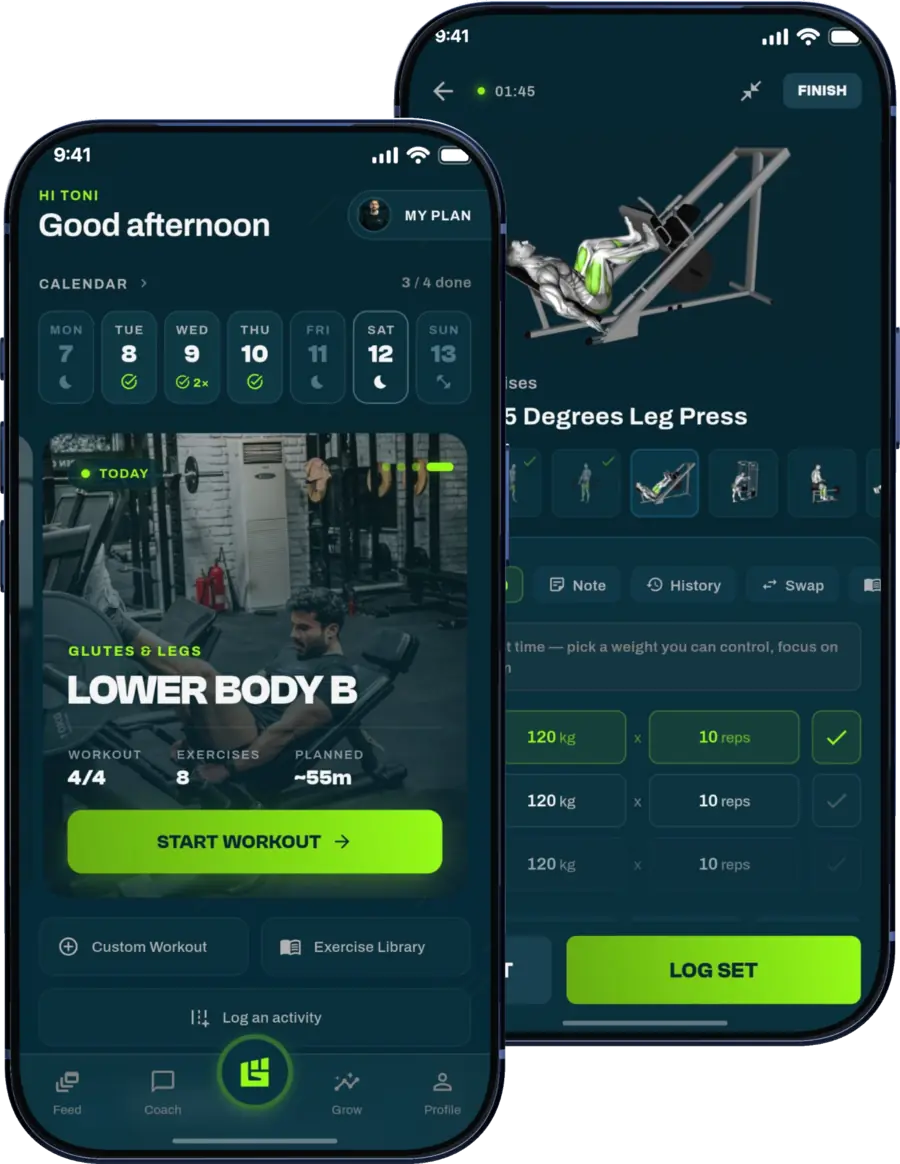
Get a personalized workout plan built around your goal, equipment and schedule. Train smarter, track every rep and keep moving forward, one workout at a time.






I see this most often after periods of stacked stress. Hard sessions. Poor sleep. Too much intensity too often. Sometimes it shows up in lifters who are chasing strength. Sometimes in endurance athletes who assume only hard intervals can leave them neurologically flat. Sometimes in busy professionals who technically made it to the gym, but arrived with their system already overloaded from work and life.
Some of the worst training days happen when your body feels mostly fine but your output is missing.
That's where understanding how nervous system fatigue impacts training becomes useful. Not in an abstract lab sense, but on the gym floor. You need to know what it is, what it looks like, and how to adjust before one bad day becomes three bad weeks.
Understanding Nervous System Fatigue
An athlete can have fresh legs, no major soreness, and still produce a poor session because the problem sits higher up the chain. The issue is not always the muscle. Sometimes the limiting factor is the quality of the signal that organizes force, timing, and coordination.

Central fatigue and peripheral fatigue
In training, fatigue usually shows up through two interacting buckets: central and peripheral fatigue.
Central fatigue refers to a reduced ability of the brain and spinal cord to drive the working muscles. The athlete still wants to perform, but the command signal loses strength, speed, or staying power. A review in the Journal of Physiology examined how the central nervous system contributes to fatigue during exercise and showed that the brain's role changes with task duration, intensity, and the feedback coming back from the body in this review on central and peripheral fatigue mechanisms.
Peripheral fatigue happens in and around the muscle itself. It includes limits in excitation-contraction coupling, metabolite buildup, and the local mechanics that let muscle fibers keep producing force. In practice, this is why two athletes can both miss targets for different reasons. One cannot recruit well enough. The other can recruit, but the tissue cannot keep delivering output.
The cleanest way to separate them on the gym floor is to ask where the bottleneck is.
- Central fatigue lowers the quality of the command.
- Peripheral fatigue lowers the muscle's ability to answer that command.
- Performance fatigue is the drop you see in speed, power, pacing, or technique.
For a deeper look at the scientific basis of workout optimization, it helps to treat fatigue as a layered performance problem instead of a single feeling.
Why the brain changes output
The nervous system does not act like an on-off switch for motivation. It constantly adjusts output based on incoming information about threat, effort, heat, fuel status, pain, and prior stress. That regulation can protect the organism, but it can also blunt training performance.
A 2022 review described exercise-related fatigue as a process tied to biochemical changes involving serotonin, dopamine, glutamate, and gamma-aminobutyric acid, all of which can affect perceived effort and motor drive in this review on exercise-related fatigue mechanisms.
That distinction matters in coaching. Athletes often label a flat day as poor discipline. Sometimes discipline is the issue. Sometimes the nervous system is downregulating output because the total stress load is high, even if the muscles are not especially sore.
Practical rule: Separate effort from output. An athlete can try hard and still be in a low-readiness state.
Why short hard work and long hard work create different fatigue
Heavy singles, repeated sprints, long threshold work, and hard mixed-modal sessions do not stress the nervous system in the same way. Brief maximal work can create a sharp drop in output that recovers fairly quickly. Longer efforts tend to layer central strain, local muscular fatigue, and rising perceived effort in a slower, messier way.
That is why athlete type matters.
A powerlifter may see nervous system fatigue show up first as slower bar speed and poor coordination under high load. An endurance athlete may notice pacing drift, loss of rhythm, and a rising sense of effort at workloads that are usually controlled. A busy professional training at 6 a.m. may have neither issue in isolation. They often arrive carrying sleep debt, work stress, and inconsistent nutrition, which lowers the quality of the signal before the session even starts.
Lab science helps explain the mechanism. Coaching matters because it tells you what to do with it.
Common Signs and Performance Effects
A common pattern looks like this. The athlete sleeps enough to expect a good session, the body does not feel especially beat up, but the first few explosive reps have no snap. Warm-ups move, but they do not move well.
That is usually the first clue. Nervous system fatigue shows up in output quality before it shows up as obvious pain or soreness. On the gym floor, I care less about how dramatic the athlete feels and more about whether the signal from brain to muscle is producing the usual result.
What it often looks like in real training
The best signs are objective enough to coach around.
- Warm-ups feel heavier than they should. Submaximal loads look slow early, before local muscular fatigue has had time to build.
- Explosive qualities drop first. Jump height, bar speed, first-step quickness, and throw velocity are often the first things to flatten out.
- Skill under speed gets messy. Timing slips, positions shift, and lifts that are usually automatic need too much conscious effort.
- Intent is present, output is not. The athlete wants to attack the set but cannot turn that intent into force or speed.
- Recovery signals get noisy. Sleep can feel shallow, mood gets shorter, and some athletes feel tired and restless at the same time.
Those signs do not all show up together. Strength athletes often notice slower bar speed and less stable bracing under heavy loads. Endurance athletes usually see pacing drift, poor rhythm, and a higher effort level at a familiar pace. Busy professionals tend to get a mixed picture because work stress, travel, and sleep debt blur the read on training readiness.
For field sport athletes, the same pattern often appears as a loss of repeat sprint quality and poorer movement timing late in the week. That is one reason smart weekly planning matters as much as any single hard session. A lot of the same ideas show up in these football player conditioning secrets.
Why output drops even when effort stays high
The practical issue is simple. The system responsible for recruiting muscle and coordinating force is not firing at its usual level. The athlete is still trying hard, but the command signal is less clean and less forceful.
In training, that usually looks like this:
- A top single that should move cleanly turns into a grind earlier than expected.
- Sprint mechanics fall apart at speeds you can usually hold.
- Repeated high-quality reps disappear even though focus is still high.
- Technical errors show up from rep one instead of after obvious muscular fatigue.
This is why effort and performance have to be judged separately. Athletes often mistake a low-readiness day for a motivation problem and coaches sometimes mistake it for a toughness problem. The better question is whether the athlete can still express force, speed, and coordination at the level the session requires.
If intent is high and power is down, adding more aggression usually makes the session worse.
Nervous system fatigue versus soreness
Soreness is a tissue signal. Nervous system fatigue is a performance signal.
A sore athlete may still jump well, sprint well, and move a heavy bar with authority once warm. A neurologically flat athlete often looks fine walking into the gym, then fails to produce speed and precision once the work starts.
That distinction changes the response. Extra mobility work, soft-tissue work, or a longer warm-up can help a stiff athlete. They do much less for an athlete whose main problem is poor readiness and reduced neural output. In that case, the better adjustment is usually to lower the demand for precision and speed, trim volume, or swap the session goal from peak output to quality practice.
Key Training Factors That Cause Fatigue
The biggest mistake athletes make is treating nervous system fatigue like a problem caused only by max-effort barbell work. Heavy lifting can contribute, but that idea is too narrow to be useful.
The myth of only heavy equals neural
A research-based critique argues that low-intensity, high-duration exercise can produce more central fatigue than short, high-intensity work, and that the amount of musculature involved is not a reliable predictor of CNS fatigue in this critique of common CNS fatigue assumptions.
That should change how you audit your week.
A long session with sustained output demands, repeated concentration, and accumulating effort can leave an athlete more centrally drained than a short heavy session that looks scarier on paper. This is one reason endurance athletes and hybrid athletes often underestimate the nervous system cost of their training. If you're interested in how field athletes organize repeated running, speed, and conditioning demands, some of the same planning ideas show up in these football player conditioning secrets.
What usually drives the problem
Training fatigue tends to spike when several demanding variables stack together:
- High volume near failure. Sets that drag on while output falls force the system to keep pushing against declining quality.
- High frequency on the same pattern. Repeating the same movement stress before output returns often leads to stale sessions.
- Complex lifts under fatigue. Movements that require timing, balance, and bracing punish a tired nervous system faster than simple machine work.
- Long sessions. Decision fatigue, concentration loss, and sustained effort all matter.
- Life stress layered on training stress. The body doesn't separate a brutal deadline from a brutal squat day as neatly as athletes like to think.
What works and what doesn't
What doesn't work is labeling exercises as “CNS killers” and stopping there. That phrase is usually lazy programming language.
What works is asking better questions. How long was the session? How many hard exposures were there? How much skill did the work require? How often are you repeating it? How much non-training stress is coming into the session?
A deadlift session with low volume and clean spacing may be easier to recover from than a poorly designed conditioning block that looks lighter but never lets the system reset.
How to Monitor Your Readiness and Fatigue
You walk into the gym on schedule, your muscles feel fine, and the plan says heavy work. Then the bar feels slow in the warm-up, your timing is off, and the session never really starts. That is the moment to stop guessing and start checking the right signals.

Start with what you can measure today
A useful readiness system should fit real training life. If it takes too long, needs expensive equipment, or changes every week, athletes stop using it. The goal is a short process you can repeat under the same conditions.
Start with a daily check-in before training:
- Sleep quality. Focus on whether sleep felt restorative, not just time in bed.
- Mood and stress. Irritability, mental drag, or unusually low drive often show up before performance drops.
- Readiness for high output. Separate actual readiness from discipline, habit, or guilt.
- Warm-up quality. Early sets often reveal more than your pre-session opinion.
Then pair that with one repeatable performance marker. Expert review notes that readiness is better tracked by performance markers such as jump output or bar speed than by soreness alone, because many direct measures of CNS fatigue recover within minutes to hours while broader performance declines can last 1 to 3 days in this review on readiness tracking for speed and power athletes.
Good options include:
- Countermovement jump
- Broad jump
- Bar speed on a known warm-up load
- Sprint time over a short standard distance
Use the same test, at the same point in the session, with the same setup. Random testing produces noise, not useful decisions.
Use subjective and objective tools together
Athletes who only use feel tend to miss patterns. Athletes who only use devices tend to ignore context. The best read comes from combining both.
A lifter may report poor sleep and low motivation, but if warm-up bar speed is normal and positions look sharp, the session may still be there. An endurance athlete may feel mentally ready, yet short stride pop or poor jump output can show lingering fatigue from prior work. A busy professional often sits in the middle. Life stress pushes readiness down even when training volume looks reasonable on paper.
Here is how common tools help on the gym floor:
| Tool | Best use | Limitation |
|---|---|---|
| Bar speed | Useful for lifters with consistent warm-up loads | Needs repeatable setup and honest comparison |
| Jump testing | Quick snapshot of explosiveness | Loses value if effort or technique changes day to day |
| HRV | Can flag broader recovery strain | Easy to misread without training context |
| Sleep tracking | Helps spot routine breakdowns | Wearables do not replace coaching judgment |
If your main issue is local tissue soreness, the answer may lean toward broader muscle recovery strategies. If the issue is repeated readiness drift across weeks, your programming may need stronger adaptive training principles.
What to do with the information
Monitoring matters only if it changes the session.
If jumps are down, bar speed is off, and warm-ups feel heavy, do not force a speed or max-strength day just because the spreadsheet says so. For a strength athlete, that may mean fewer top sets and cleaner submaximal work. For an endurance athlete, it may mean trimming intensity and keeping the aerobic objective. For a busy professional with poor sleep and a full workday ahead, it may mean keeping the habit with a shorter, lower-cost session instead of chasing numbers.
A structured tool can also help. GrabGains builds adaptive routines based on performance trends over time, which is useful when you want day-to-day training decisions to reflect actual output rather than a fixed spreadsheet.
Programming Adjustments for Different Athletes
Good programming respects both the session and the person living around the session. Nervous system management isn't just about what's hard. It's about what's hard for you, in your sport, with your schedule, stress load, and recovery capacity.
Universal rules that apply to almost everyone
The basics still carry most of the load.
Sleep quality matters. Enough food matters. Consistent training times help. So does limiting unnecessary all-out work. Athletes often want a special recovery hack when they really need fewer junk stressors and better spacing between demanding sessions.
A controlled study found that heavy resistance or sprint sessions can produce neuromuscular fatigue that takes up to 72 hours to fully resolve, with reductions in voluntary activation lasting 24 to 48 hours, which is why repeated high-intensity sessions for the same movement pattern should usually be spaced with at least 48 hours of recovery according to this study on neuromuscular recovery after strength and sprint work.
That doesn't mean you have to rest completely for two days after every hard session. It means you should be careful about repeating the same high-output demand too soon.
Strength athletes
Strength athletes usually get into trouble by stacking too many high-neural exposures in the same week. Heavy squats, heavy pulls, grinders to prove toughness, then another “heavy-ish” day before the previous one has settled.
What works better:
- Keep the high-output work clear and intentional.
- Use submaximal work with good bar speed more often.
- Separate hard exposures for the same pattern.
- Use planned lighter weeks to prevent training burnout.
When a strength athlete ignores readiness, the first thing to go is usually speed. The second is technical consistency. The third is confidence.
Hypertrophy-focused lifters
Muscle-focused trainees often assume nervous system fatigue isn't their issue because they aren't chasing singles. That's a mistake.
High volume, repeated sets near failure, and long sessions can create a lot of fatigue even without maximal loads. The fix usually isn't to stop training hard. It's to choose where hard lives. Push a few key movements. Keep some accessories away from failure. Don't let every session become a marathon.
This is also why a balanced model that blends functional strength and aesthetics can be useful. It tends to reward movement quality and recoverable loading instead of endless fatigue for its own sake.
Endurance and HYROX athletes
These athletes often carry the most hidden fatigue because they normalize feeling tired. Long aerobic work, intervals, sleds, running mechanics, and strength training all pull on the same system from different angles.
The biggest programming win is separating key outputs. Don't bury speed after a session that already dulled coordination and drive. Place your most technical or explosive work where your nervous system is freshest. If combined training keeps blurring every session into medium-hard, you're probably accumulating fatigue without building enough quality.
Busy professionals
Busy professionals usually don't fail because of bad exercise selection. They fail because the plan assumes a recovery life they don't have.
If work stress is high, don't program as if you're a full-time athlete. Use fewer hard sets, tighter session lengths, and repeatable templates. Protect consistency over heroics. A clean forty-minute session performed well beats an ambitious ninety-minute plan that keeps colliding with real life.
Recovery capacity is part of the program, even if it isn't written on the sheet.
Programming adjustments for nervous system recovery
| Athlete Profile | Primary Fatigue Driver | Key Programming Tweak | Example |
|---|---|---|---|
| Strength athlete | Repeated high-intensity exposures on the same movement pattern | Space heavy sessions and reduce unnecessary grinders | Heavy squat early week, lighter technical lower-body work later |
| Hypertrophy enthusiast | High volume and too many sets near failure | Reserve failure for selected work, trim session sprawl | Push one main lift hard, keep accessory work controlled |
| Endurance or HYROX athlete | Mixed stress from long work, intervals, and lifting | Separate key quality sessions and protect explosive work | Place sprint or power work on fresher days |
| Busy professional | Limited sleep, work stress, inconsistent recovery | Use concise sessions and autoregulated loading | Train full body with flexible top sets and minimal fluff |
Frequently Asked Questions About Nervous System Fatigue
Can caffeine or adaptogens help
They can help you feel more alert, and caffeine can improve training performance acutely for some athletes. But neither fixes a poorly recovered system. If the issue is accumulated fatigue, stimulants may just help you ignore the signal and overshoot what you can recover from.
How is this different from burnout or depression
Training-related nervous system fatigue is about reduced readiness, output, and neural drive around performance. Clinical burnout and depression are broader health issues that affect mood, behavior, motivation, and daily function far beyond training. If low energy, poor mood, or sleep issues extend well outside the gym, don't treat it like a programming puzzle. Get proper medical or mental health support.
How long should a deload be
There isn't one perfect answer. The right deload depends on what created the fatigue in the first place. If the issue is mostly acute neural sharpness, a few lighter days may help. If you've stacked hard weeks, poor sleep, and life stress, you may need a fuller reduction in volume and intensity across the week. The key is to return when output, coordination, and motivation come back, not just when guilt fades.
If you want your training plan to adjust to real-world readiness instead of forcing fixed sessions onto unpredictable weeks, GrabGains is built for that style of coaching. It helps you organize strength, hypertrophy, endurance, mobility, and recovery work around actual performance so fatigue management becomes part of the plan, not an afterthought.
Get inspired and motivated