Why most lifters ignore recovery too long
Stuck on a plateau? Discover why most lifters ignore recovery too long, the signs of under-recovery, and how to adjust your training for real progress. You're consistent. You train hard. You care about your numbers. You probably track food better than others around you. Yet your lifts feel heavier than they should, your joints are louder than they used to be, and your motivation keeps dipping for no obvious reason. That's the trap.
Most lifters don't ignore recovery because they're lazy. They ignore it because hard training gives immediate feedback and recovery doesn't. A tough set feels productive right away. Going to bed earlier, backing off a lift, or taking a lighter week feels like you're doing less, even when it's the exact thing that would move progress forward.
That gap between what feels productive and what drives results is why most lifters ignore recovery too long.
The progress paradox in strength training
You've seen this lifter before. Maybe it's you.
They never miss sessions unless life forces it. Their program looks organized. Their meals are mostly on point. They attack every top set like it matters. But after a stretch of solid progress, things start sliding. Squats feel slow in the warm-up. Pulling heavy ruins the rest of the week. Bench numbers stop moving. Every session turns into a negotiation with fatigue.

Most dedicated lifters respond the same way. They add effort. They tighten nutrition. They look for a better split, a smarter accessory, a new pre-workout, or another trick. What they rarely do first is ask whether the work is outpacing the body's ability to recover.
Built for progress
Take the guesswork out of training
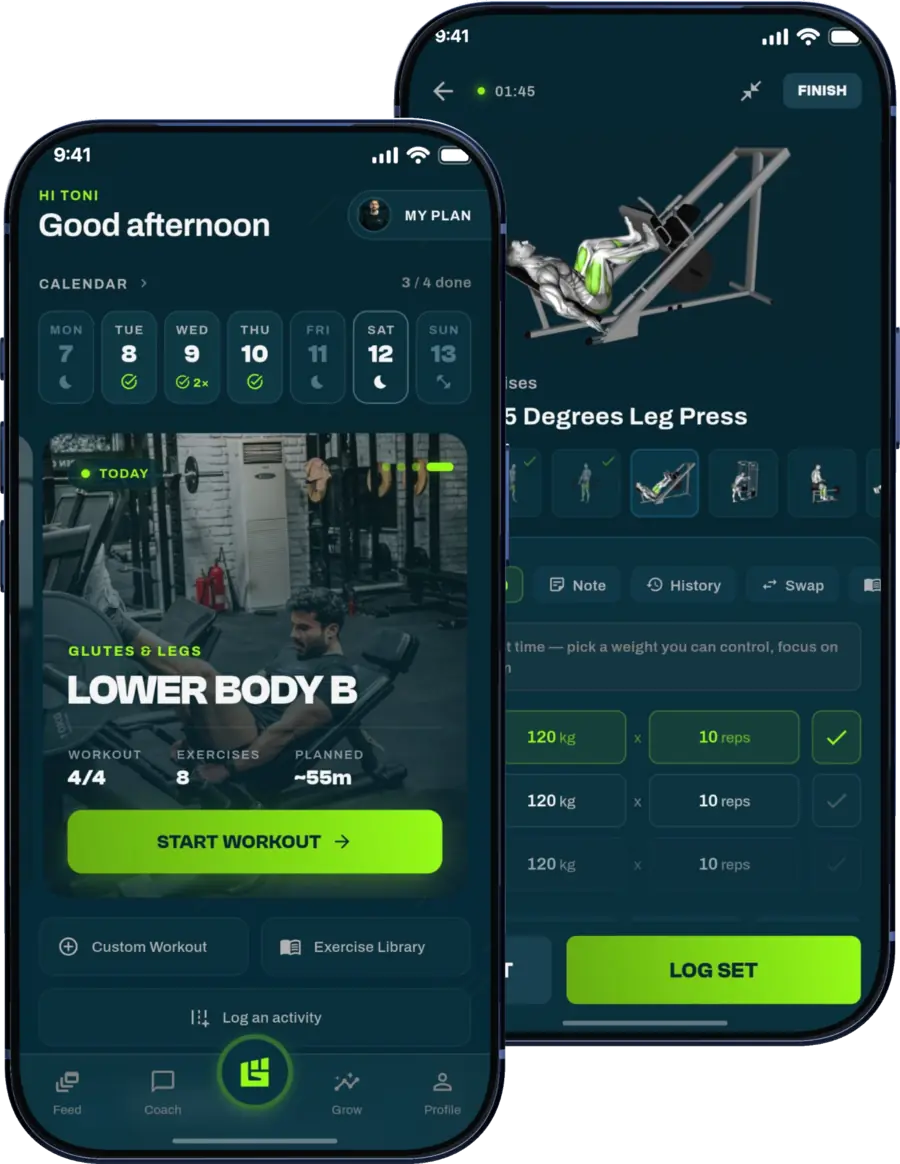
Get a personalized workout plan built around your goal, equipment and schedule. Train smarter, track every rep and keep moving forward, one workout at a time.






That's the progress paradox. The more serious you are, the easier it is to believe every slowdown needs more input from training. In reality, once stress rises high enough, more effort can produce less progress.
Why hard work hides the problem
Strength culture rewards visible grind. Heavy sets, soreness, sweat, and discipline all look like progress. Recovery habits are quieter. Sleep, lighter days, session spacing, and planned reductions in load don't carry the same emotional payoff, even when they matter more.
That's why a lot of smart lifters benefit from spending time understanding athlete recovery as a training variable, not as an afterthought. The best programs don't just tell you what to do in the gym. They account for what your body can absorb.
The mistake isn't a lack of discipline
The mistake is confusing output with adaptation.
Training is the stimulus. Recovery is where adaptation gets paid back. If you keep raising the demand without restoring the system, the bill shows up somewhere else. It shows up in bar speed, motivation, technique, sleep quality, and eventually aches that stop being “normal gym stuff.”
A useful companion read is the GrabGains perspective on overtraining, because it addresses the same blind spot many lifters run into. More training isn't always better. Sometimes it's just more.
Practical rule: If your training week keeps feeling harder but your performance isn't improving, stop assuming the answer is more effort.
The Real Problem Is Under-Recovery Not Overtraining
A lot of lifters use the word overtraining when they really mean “I feel beat up, flat, and behind.” Those aren't the same thing.
A widely cited strength-training review summarized the issue clearly. “Overtraining is rare” while “under-recovery is common,” and planned deloads help prevent breakdown and extend training longevity, as discussed in this review on overtraining vs under-recovery.

Think of training like a budget
Training stress is a withdrawal. Recovery is a deposit.
If you take out a little more than you replace for a few days, you might not notice much. If you do it for weeks, performance starts to sag. If you keep doing it, technique changes, motivation drops, and small issues become real setbacks.
That's why under-recovery is such a useful concept. It explains the slow drift that most lifters experience. They aren't in some dramatic clinical collapse. They're just carrying a recovery deficit long enough that the body stops paying for new adaptation and starts paying for survival.
Why lifters miss it
Under-recovery doesn't always feel dramatic at first. It often feels normal.
You still show up. You still complete sessions. You might even hit some reps through pure will. That creates a false sense that things are under control. Many lifters only recognize the problem once the signs get obvious, such as stalled lifts, constant soreness, or a nagging pain that won't leave.
Here's the hard part. Being able to tolerate fatigue is not the same as recovering from it.
A lot of lifters who are rebuilding after a layoff, managing pain, or trying to keep aerobic work in while healing also need alternatives that don't add the same recovery burden. That's where resources like BionicGym for post-injury fitness can be useful. The goal is to keep training aligned with what your system can handle, not to force the old plan onto a body that can't currently absorb it.
Under-recovery is dangerous because it feels disciplined. You keep pushing, so you assume you're doing the right thing.
What actually works
The fix usually isn't dramatic. It's targeted.
| Problem | What lifters often do | What tends to work better |
|---|---|---|
| Stalled performance | Add more volume | Reduce fatigue for a period |
| Persistent soreness | Train through it harder | Adjust session spacing |
| Low motivation | Chase a harder stimulus | Lower stress and restore freshness |
| Technique breakdown | Force the planned load | Back off before bad reps become a habit |
Most lifters don't need fear-based messaging about overtraining. They need a better eye for recovery debt.
Five Reasons You Are Skipping Recovery
Most recovery problems aren't caused by ignorance alone. They come from reward systems that make overreaching feel productive and recovery feel optional.
You're rewarded for effort, not readiness
The gym gives instant emotional feedback for pushing. A hard set feels honest. A lighter day feels suspicious. That's why motivated lifters often trust intensity more than they trust restraint.
The problem is simple. The body doesn't care how fired up you were. It only responds to stress it can recover from.
You were taught to respect soreness too much
A lot of lifters still use soreness as proof that a session “worked.” That's a bad metric once training gets more serious.
Soreness can show novelty, tissue stress, or poor spacing between hard sessions. It does not automatically show productive programming. Chasing it often leads people to stack demanding work too closely and ignore the signals that matter more, such as stable performance, clean technique, and motivation that doesn't crash.
Your life quietly cuts into recovery
Many adults get blindsided by the fact that recovery capacity doesn't exist in a vacuum. Work stress, family obligations, inconsistent sleep, long commutes, and mental load all reduce what you can recover from.
Guidance for lifters over 40 notes that recovery is no longer as fast as it used to be and recommends mobility work every 48 hours plus at least eight hours of sleep per day, while also acknowledging that overtime, kids, stress, and other obligations make consistency harder in real life, as outlined in this advice for lifters over 40.
What this looks like in practice
- The busy professional: Trains hard before work, sits all day, sleeps short, and wonders why legs never feel fresh.
- The parent lifter: Keeps the same program they used years ago, but now recovery gets interrupted by responsibilities outside the gym.
- The older intermediate: Still has the drive, still has the skill, but can't ignore fatigue the way they used to.
You confuse consistency with never backing off
Consistency matters. So does timing.
Many lifters think reducing load, taking a rest day, or using a deload means they're losing momentum. In practice, those decisions often protect momentum. A good plan includes fluctuations. A bad plan demands the same output regardless of accumulated fatigue.
You've adapted to feeling tired
This is one of the sneakiest traps. If you live in a mildly fatigued state long enough, it stops feeling like a warning sign. It starts feeling like your baseline.
That's when recovery gets ignored the longest. You don't feel “wrecked,” so you assume you're fine. Then one day your warm-ups feel wrong, your patience is gone, and your usual weights move like someone else loaded the bar.
Coaching note: The more dedicated a lifter is, the more likely they are to rationalize fatigue instead of respecting it.
Red Flags Your Recovery Is Lacking
Recovery problems show up before they become injuries. The issue is that most lifters don't treat the early signs as information. They treat them as something to push through.
A useful 2024 review found that training to failure, higher volume, multi-joint and lower-body work, eccentric loading, and lengthened-position work all increase recovery time. It also notes that lower-body work often needs about 48–72 hours, while many upper-body sessions may need 24 hours or less, which helps explain why performance drops when hard sessions are packed too closely, according to this 2024 review on recovery time.

Performance red flags
These are the signs I care about first, because the bar usually tells the truth before your mood does.
- Warm-ups feel heavy: Loads that should move crisply feel sticky early in the session.
- You need more psych-up for normal work: Focus and arousal become a substitute for readiness.
- Bar speed drops across the week: Especially after hard lower-body days.
- Technique starts changing under familiar loads: You grind, shift, or compensate instead of moving cleanly.
If your reps only look good when you're unusually fresh, your workload may be too expensive.
Physical and mental red flags
Your body also reports under-recovery outside the gym.
| Sign | What it often means |
|---|---|
| Persistent soreness | The last session's fatigue hasn't cleared |
| Joint irritation that lingers | Tissue stress is accumulating faster than it resolves |
| Irritability or flat mood | Fatigue is affecting more than muscle |
| Trouble sleeping well | Stress load is staying high |
| Loss of motivation to train | The system isn't ready for more demand |
Some people notice this pattern as “burnout.” Often it's less mysterious than that. It's repeated hard training arriving before the last hard training has been recovered from.
A simple self-check
Use this checklist before assuming you need a harder plan:
- Look at recent performance. Are your main lifts stable, improving, or slipping?
- Check soreness and joint feel. Is discomfort resolving between exposures, or lingering into the next hard day?
- Notice your motivation. Are you eager to train, or just forcing compliance?
- Watch your sleep. Falling asleep, staying asleep, and waking refreshed all matter.
If several of those are off at once, don't guess. Adjust. This guide on how to fix recovery issues is useful if you want a practical next step.
If your body keeps asking for more time and your plan keeps saying no, the plan is wrong.
Actionable Strategies to Prioritize Recovery
Recovery improves when you stop treating it like a separate wellness project and start building it into your training decisions.
Expert strength guidance commonly recommends 48–72 hours between max-effort strength sessions, often with a day off after the heaviest work, because repeating high-intensity sessions too closely can degrade performance, raise perceived fatigue, and push lifters into technique changes that raise injury risk over time, as summarized in this guidance on rest between workouts.

Start with the non-negotiables
A lot of lifters want advanced recovery tools when the basics are still shaky.
- Protect sleep: If sleep gets cut first, recovery quality drops fast.
- Eat for repair: Hard training without adequate food support turns every week into damage control.
- Manage life stress where you can: Training stress and life stress both count against the same system.
- Use mobility and light movement deliberately: Not as punishment, but as maintenance.
If you want a simple outside resource on the basics, this article on how to recover faster from workouts gives a practical overview.
Program recovery, don't just hope for it
The strongest lifters I know don't “believe in recovery” as an abstract idea. They plan it.
That means spacing demanding sessions intelligently, not hammering max-effort work back to back, and reducing stress before your body forces the issue. Planned deloads work because they interrupt fatigue before it becomes a plateau or pain problem.
Useful programming moves
- Separate your heaviest sessions: Don't pile major stressors together just because the calendar allows it.
- Control failure work: Training to failure has a cost. Spend it carefully.
- Watch total volume: More sets aren't always better if quality drops.
- Rotate stress: Not every week needs to feel maximal.
Use tools that adapt, not just track
A logbook is still valuable. So is honest self-assessment. But many busy lifters do better when their planning system responds to performance trends instead of forcing a fixed template.
One option is GrabGains, which builds adaptive workout plans, tracks logged performance, and adjusts training variables over time based on your progress and recovery context. If you want a practical framework for that approach, this guide can help you optimize your recovery system.
Best bet: Build your week so recovery supports performance before you need rescue tactics after the fact.
Make Recovery Part of Your Training
The lifters who make the best long-term progress usually aren't the ones who can suffer the most. They're the ones who know when to push, when to hold, and when to reduce stress before performance forces the decision.
That's the answer to why most lifters ignore recovery too long. Recovery doesn't feel productive in the moment. Grinding does. But the body keeps score differently. It rewards stress that's matched by enough sleep, food, time, and spacing to turn work into adaptation.
If your lifts are stalling, your motivation is fading, or every hard session seems to bleed into the next one, don't assume you need more intensity. Ask whether your training is asking for more than your current life and body can repay.
Recovery is not the break between training. It is part of training.
Treat it that way, and you'll get more good sessions, better technique under load, fewer wasted weeks, and a much better shot at staying strong for years instead of just months.
If you want training that accounts for real-life recovery instead of pretending every week is the same, GrabGains offers adaptive workout planning built around your goals, logged performance, and changing capacity so your program can match what your body is ready to do.
Get inspired and motivated