Why fitness habits matter more than intensity: a guide
Discover why fitness habits matter more than intensity for long-term results. Learn the science behind consistency and how to build a routine you'll stick with. Most bad fitness advice sounds exciting because it sells intensity. Crush the workout. Empty the tank. Make every session count by making it brutal.
That approach works for about as long as motivation stays high.
Then real life shows up. Work runs late. Sleep gets shaky. Your knees feel beat up. You miss a few sessions, feel guilty, and try to make up for it with another overly hard workout. That cycle is why so many people stay stuck. They're training for exhaustion instead of training for repeatability.
Why fitness habits matter more than intensity comes down to one simple truth. Your body changes from training you can recover from and repeat. Not from occasional heroics.
A hard workout can feel productive. A habit is productive. If your goal is better health, more strength, more muscle, better endurance, or feeling capable in your own body, the foundation is the same. You need a routine you can keep. If muscle is part of your goal, this guide on how to build muscle with Cantein is useful because it reinforces the role of steady training, nutrition, and recovery instead of chasing shortcuts.
The truth about fitness progress you have been missing
The biggest mistake I see is treating fitness like a test of character. People assume the hardest workout is automatically the best workout. It isn't. The best workout is the one that moves you forward and still lets you come back tomorrow, or the next day, and do it again.
Built for progress
Take the guesswork out of training
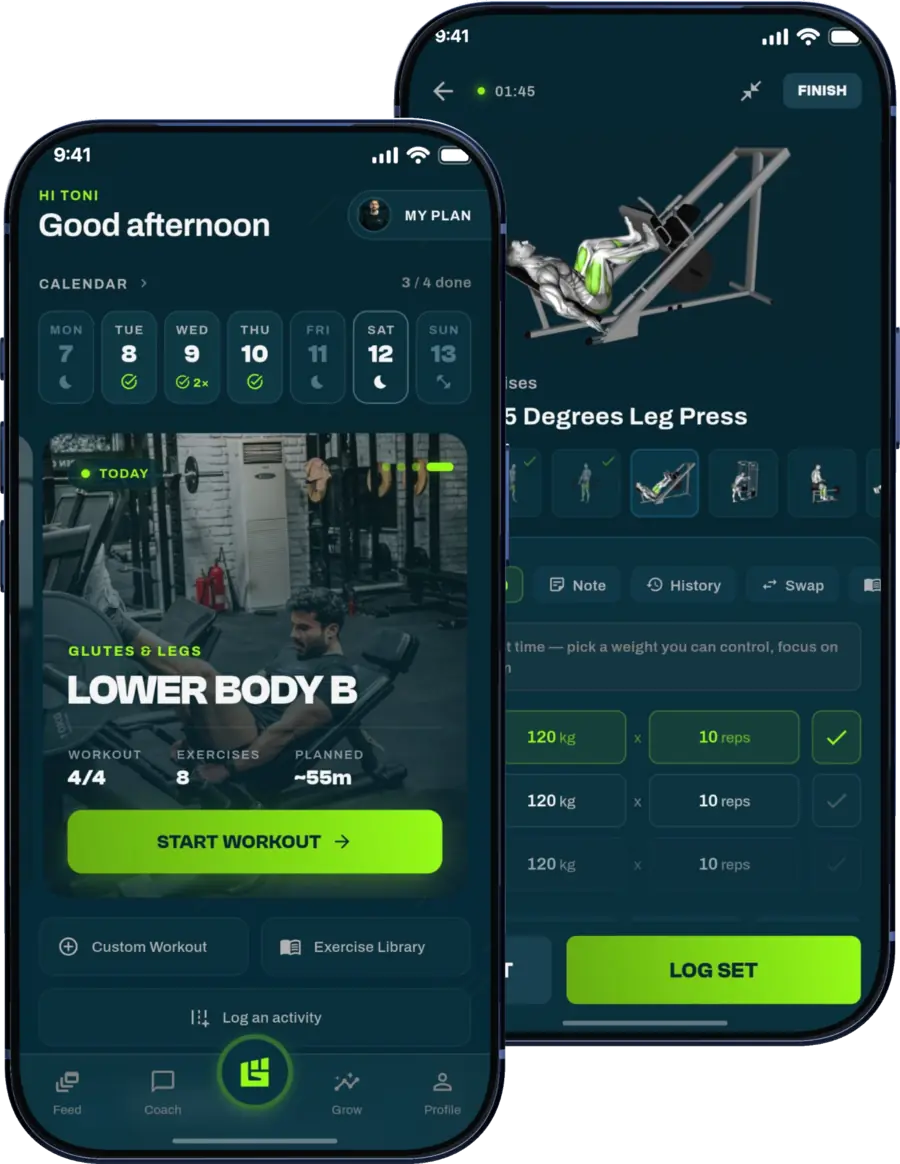
Get a personalized workout plan built around your goal, equipment and schedule. Train smarter, track every rep and keep moving forward, one workout at a time.






That sounds less glamorous than “go all in,” but it's how progress happens. The body responds to repeated signals. Muscles adapt to repeated tension. Your heart and lungs adapt to repeated aerobic demand. Your nervous system gets better at movement through repeated practice. None of that requires daily punishment.
Beast mode fails when life gets busy
The all-or-nothing mindset creates fragile routines. If your plan only works on perfect weeks, it doesn't work.
Individuals don't need more hype. They need a lower barrier to entry and a clearer minimum standard. Public health guidance reflects that reality. The World Health Organization recommends adults get 150 minutes of moderate-intensity activity per week or 75 minutes of vigorous activity, with 300 minutes per week offering additional benefits, plus muscle-strengthening work on 2 or more days a week in its physical activity guidance from WHO. That's weekly volume and repeatability. Not random all-out efforts.
Practical rule: Build a plan around what you can do on your busiest week, not your most motivated week.
Fitness compounds when you keep showing up
The hidden advantage of habits is accumulation. A moderate session done again and again builds far more than a maximal session you avoid repeating. It also protects your confidence. When people stack small wins, they start identifying as someone who trains consistently. That shift matters.
This is also why beginner plans should feel almost too manageable at first. Starting lighter doesn't slow progress. It often protects it. Mayo Clinic advises beginners to start at light intensity and increase activity by about 10% per week, which supports gradual progression instead of jumping straight into a level your body and schedule can't sustain, as noted in the earlier public-health guidance.
How your body actually builds strength and endurance
Hard sessions get attention. Repeatable sessions drive adaptation.
Your body responds to training when the stress is high enough to signal change and controlled enough that you can recover and train again. That is the trade-off good programming manages. Push too little for too long and progress slows. Push too hard too often and the quality of future sessions drops.

Adaptation needs the right dose
Strength and endurance improve through repeated cycles of stress, recovery, and re-exposure. Muscles repair and remodel. The cardiovascular system gets better at delivering oxygen. Tendons, connective tissue, and movement patterns adapt more slowly, which is one reason aggressive plans often fail before motivation does.
Harvard's guidance on staying active points to 150 to 300 minutes per week of moderate-intensity aerobic activity plus at least 2 days per week of muscle-strengthening exercise, with sessions spread across the week. That schedule fits the biology. Adaptation responds better to frequent, manageable inputs than to one heroic workout followed by several missed days.
In coaching, the better question is usually not “How hard can I go today?” It is “What workload can I recover from and repeat this week?”
Strength and endurance are also skill qualities
People often treat strength as pure muscle and endurance as pure cardio. Training is more specific than that.
Your nervous system learns movement through repetition. A lifter gets better at producing force in a squat because the muscles are stronger, but also because timing, bracing, balance, and coordination improve. A runner builds endurance through aerobic development, but also through better pacing, stride control, and running economy. This is why two athletes with similar effort levels can get very different results. The one who practices the pattern more often usually progresses faster.
If you want a simple explainer on what causes muscle gain, focus on the overlap between mechanical tension, recovery, and enough exposures over time. One punishing session can leave you sore. Repeated quality sessions are what build tissue.
Health changes with small, regular inputs
The same principle shows up in public health. The CDC reports that adults who move more and sit less gain health benefits, and JAMA Network Open published the underlying analysis estimating that if U.S. adults ages 40 to 85 added more moderate-to-vigorous physical activity, many premature deaths could be prevented. The study found that adding even 10 minutes per day was associated with a meaningful reduction in deaths per year, with larger benefits at higher activity increases, in this JAMA Network Open study on physical activity and preventable deaths.
That matters for programming. A busy parent, a beginner with low training tolerance, and an experienced runner in a heavy work season do not need the same dose. They need a minimum effective dose they can keep hitting. For one person that might be 20-minute strength sessions three times a week. For another it might be four short zone 2 sessions and one longer weekend effort.
For endurance athletes, smart programming beats random suffering. Sessions need purpose, spacing, and progression. Coaches working on launching successful endurance programs usually get better long-term outcomes when they build around repeatable training weeks instead of turning every workout into a test.
The body adapts to patterns it sees often enough to trust.
Four fitness myths that are sabotaging your consistency
Bad fitness myths usually survive because they feel tough, and toughness gets confused with effectiveness. But if a belief makes you inconsistent, it's probably hurting your results.

Myth one no pain no gain
Discomfort and effort are part of training. Pain is not the goal.
Workouts that are too demanding are harder to maintain and can increase injury risk. The British Columbia Medical Journal makes that point clearly in its piece on why consistency beats intensity. This is a significant issue with "no pain, no gain." It teaches people to treat warning signs like proof they're doing it right.
What to do instead:
- Use effort, not punishment: Finish most sessions feeling challenged, not wrecked.
- Leave room to recover: You should be able to train again without dread.
- Adjust early: If a pattern keeps irritating joints or draining energy, modify it.
Myth two more sweat means a better workout
Sweat tells you your body is cooling itself. It does not measure training quality.
A hot room, long rest-free circuits, or stress can all make you sweat more. None of that automatically means the session matched your goal. A strength workout with longer rest periods might produce excellent results with less sweat than a rushed circuit.
A better filter is this small comparison:
| If your goal is | Judge the workout by |
|---|---|
| Strength | Quality reps, load, technique, recovery |
| Muscle gain | Enough productive sets, progressive challenge, repeatability |
| Endurance | Sustained output, pacing, aerobic consistency |
| General health | Weekly movement volume and adherence |
Myth three you must be sore to grow
Soreness is a response, not a scoreboard.
You might get sore from a new exercise, a big jump in volume, or returning after time off. That does not mean the session was more effective. It often means it was less familiar. Chasing soreness can push people into unnecessary recovery debt.
Coaching note: Judge progress by performance, energy, and consistency first. Treat soreness as background noise.
Myth four longer workouts are always better
Long sessions can be useful. They are not automatically superior.
For many busy adults, the session that gets skipped is the one that was “ideal” on paper. The shorter session that happens consistently wins. This concept aligns with GrabGains smart training insights and good coaching practice. More training is only better when you can recover from it and keep doing it.
The better question is not “How much can I cram into one workout?” It's “What amount of work keeps me progressing without making next week worse?”
How to build a fitness routine you can actually stick to
Hard plans fail more often than easy plans.
The problem usually is not exercise selection. It is behavioral cost. If a routine requires perfect energy, a wide-open schedule, and high motivation, it will fall apart the first time work runs late, sleep drops, or life gets noisy. Training that survives real life beats training that looks impressive for eight days.

Start with a minimum effective dose
A useful routine begins with the smallest weekly dose that still drives adaptation for your goal.
For a deconditioned adult, that might be walking most days and two brief strength sessions. For an intermediate lifter, it might be three focused sessions with controlled volume and no junk work. For a recreational endurance athlete, it could be two easy aerobic sessions, one quality session, and one short strength workout. The right floor depends on training age, recovery, schedule, and injury history.
Use this standard:
- Set a weekly floor: Choose the version you can complete during a stressful week, not an ideal week.
- Build in a fallback session: Keep one 10 to 20 minute option for days when time and energy are low.
- Progress after stability: Add sets, load, or frequency only after two or three steady weeks of adherence.
This is the trade-off coaches deal with constantly. A lower dose produces slower progress on paper, but it produces more total progress when it gets done for months.
Attach training to fixed cues
A session with no time slot is wishful thinking.
Put training next to events that already happen. Before the first shower of the day. After dropping the kids off. Right after logging off work. Habits stick faster when the start cue is obvious and repeated in the same context.
If you need practical behavior ideas, these effective fitness resolution tips are a solid reminder that routine design matters as much as motivation.
Define success by completion first
A routine becomes durable when people stop treating every imperfect week as failure.
A shortened session still counts. Reduced load still counts. Twenty minutes of focused work keeps the pattern alive, and that pattern is what supports strength, endurance, and body composition over time. I would rather see someone hit the floor version of their plan for twelve weeks than chase an ambitious setup they abandon after two.
Track the variables that predict adherence
You do not need a spreadsheet full of noise. You need a few signals that tell you whether the plan fits your life.
Track session completion, perceived effort, energy, soreness, and whether the session length matched the day. If completion is dropping, the issue is usually not discipline. The plan is too expensive. Cut friction before you add ambition.
Tools can help with that. GrabGains workouts organize training around goals, equipment, schedule, and recovery, while logging performance over time. Used well, that kind of system makes it easier to adjust workload before missed days turn into missed weeks.
Make the routine enjoyable enough to repeat
Enjoyment predicts repeat behavior because people return to training they do not dread.
That does not mean every session should feel easy or entertaining. It means the format should suit the person. Some athletes like chasing numbers on compound lifts. Others stay more consistent with circuits, machines, outdoor cardio, classes, or short solo sessions with minimal setup. A plan that fits your psychology has a better chance of surviving travel, stress, bad sleep, and low motivation.
Pick a training format you can complete on a tired Thursday, not just on a highly motivated Monday. That is the routine with the best chance of lasting.
Consistency in action simple routines for every goal
Theory matters, but examples make it usable. A good routine should fit a real person with a real schedule, not an imaginary athlete with unlimited time and perfect recovery.
Regular physical activity has a dose-response relationship with health risks, and the greatest health gains occur when the least-fit people become active, according to this review on physical activity and health risk. That's why manageable routines matter so much. They get people moving without making training feel impossible.

The busy professional
This person needs efficiency more than variety.
Weekly pattern
- Monday: 20 minutes of full-body strength
- Wednesday: 20 minutes of full-body strength
- Friday: 20 minutes of intervals or brisk incline walking
- Daily: 10-minute walk after one meal
A sample strength session could be squat, push, hinge, row, and carry. Keep rest honest, exercises simple, and setup minimal. The target is finishing fresh enough that work and family life don't feel harder afterward.
The hypertrophy-focused lifter
This person usually doesn't need more intensity. They need enough quality volume they can recover from.
A simple micro-routine:
- Day 1: Upper body, moderate volume
- Day 2: Lower body, moderate volume
- Day 3: Rest or easy cardio
- Day 4: Upper body, slightly different angles
- Day 5: Lower body, slightly different emphasis
Keep a few core lifts stable for progression. Add isolation work where it matters. Don't turn every set into a grinder. Muscle is built by productive work repeated over months, not by testing limits every session.
The HYROX athlete
This athlete often makes the mistake of doing every session hard because the event feels hard.
A better micro-structure looks like this:
| Day | Focus |
|---|---|
| Monday | Easy aerobic work plus mobility |
| Tuesday | Strength and skill work |
| Thursday | Threshold-style effort or race-specific intervals |
| Saturday | Mixed HYROX simulation at controlled effort |
That split lets the athlete build capacity without cooking the legs all week. If you want ready-made GrabGains workouts for different goals and schedules, structured planning tools can help keep sessions focused instead of random.
The complete beginner
Beginners need proof that training can fit their life. They do not need punishment.
Try this:
- Three days a week: 15 to 20 minutes of walking.
- Two days a week: One round each of sit-to-stand, wall push-ups, hip hinges, and a light carry.
- Daily: Five minutes of easy mobility.
That routine is intentionally modest. It works because it lowers fear, builds coordination, and creates a repeatable rhythm. Once that rhythm feels normal, adding challenge becomes much easier.
The best beginner program is the one that feels almost boring for two weeks and then becomes part of your life.
Why personalized planning is the key to long-term success
Consistency is the engine. Personalization is the steering.
A generic plan can get you moving, but long-term progress depends on matching training to your schedule, recovery, goals, equipment, and current capacity. That matters even more because the conversation is not really “consistency or intensity.” It's about when to use intensity inside a routine that remains sustainable.
A University of California, Davis summary of a 2023 study notes that exercise intensity can matter more than step count for cardiovascular outcomes in some contexts, which is why thoughtful programming matters in this UC Davis article on exercise intensity and health. The takeaway isn't that everyone should train harder. It's that once the habit is stable, the right dose of intensity should be placed with intent.
That's what good coaching does. It keeps the base easy enough to sustain and adds challenge where it has the highest return. For a beginner, that might mean protecting the routine. For an experienced trainee, it might mean placing one harder conditioning session in the week while keeping the rest of the plan recoverable.
If you want lasting results, stop asking whether today's workout felt extreme enough. Ask whether your training is organized well enough to survive next month.
If you want a practical way to turn this philosophy into daily training, GrabGains is built around adaptive planning rather than one-size-fits-all workouts. It helps you organize training by goal, schedule, equipment, and recovery so you can keep showing up, adjust intelligently, and make progress without relying on all-out effort every time.
Get inspired and motivated