Why more training isn’t always better
Discover why more training isn’t always better. Uncover the science of overtraining, find your optimal workout volume, and train smarter for better results. Individuals who hit a plateau don't need more motivation. They need a better dose.
That goes against the loudest message in fitness. Train harder. Add another day. Push through fatigue. If progress slows, the common advice is to do more work and show more grit.
Sometimes that works for a short stretch. Often it doesn't.
A lot of frustrated lifters and runners are not underworking. They're over-applying stress and underestimating recovery. They keep stacking sessions onto a body that hasn't finished adapting to the last round. The result looks confusing from the outside. You're disciplined, consistent, and serious, yet your numbers stall, your joints get cranky, and every workout starts to feel heavier than it should.
Why more training isn't always better comes down to one idea. Progress happens when stress and recovery match. If the stress is too low, nothing changes. If the stress is too high for your current recovery capacity, your body spends more time surviving training than benefiting from it.
There's a sweet spot. Find it, and you break plateaus faster with less wasted effort. Miss it, and “working harder” can turn into a long detour.
Built for progress
Take the guesswork out of training
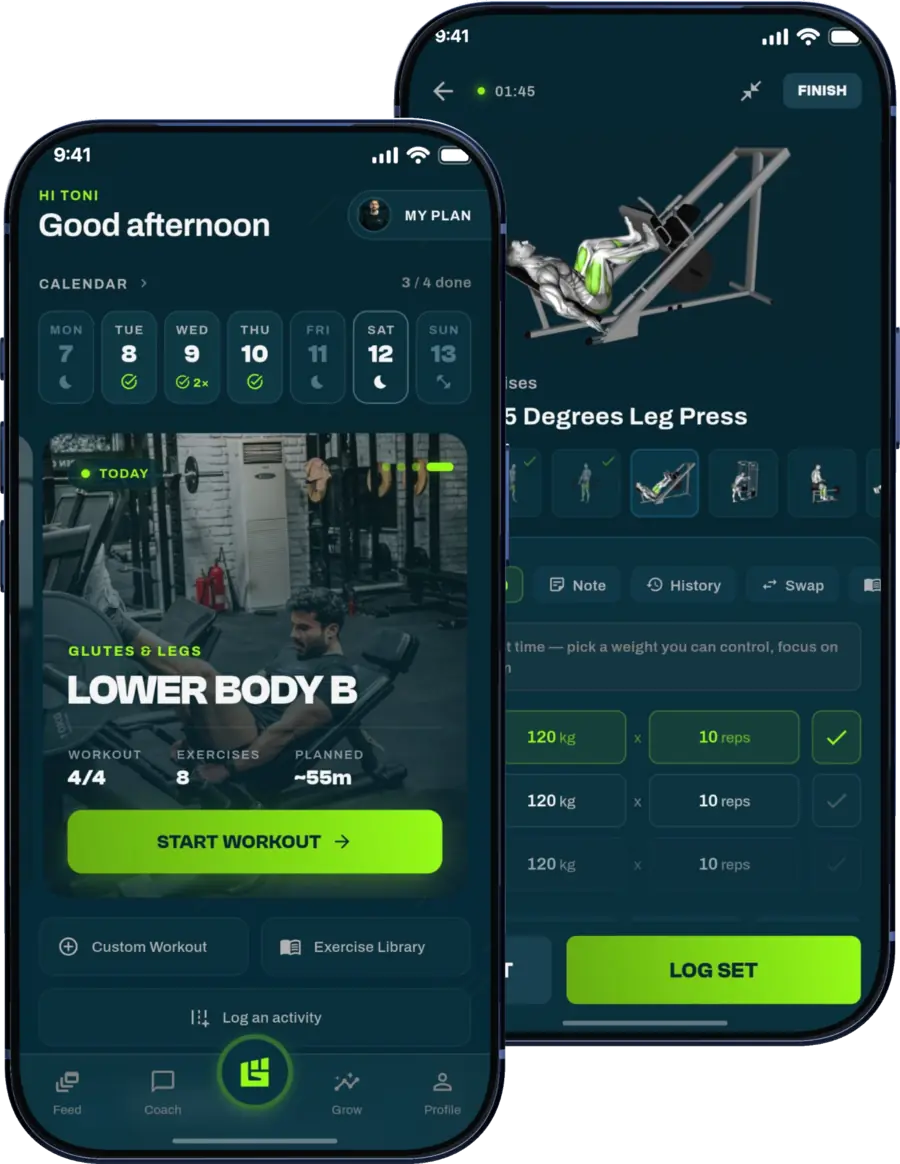
Get a personalized workout plan built around your goal, equipment and schedule. Train smarter, track every rep and keep moving forward, one workout at a time.






The myth of more is better in fitness
The “more is better” mindset sounds tough, but it's incomplete.
If your body were a machine that improved just because you turned it on longer, then adding more workouts would always solve the problem. But your body isn't a machine in that sense. It's a living system that responds to stress, recovery, and timing. That means the same workout can help one person improve and push another person backward.
You've probably seen this in the gym. One person adds a sixth training day and grows. Another adds the same day and suddenly feels flat, sore, and unmotivated. The difference usually isn't character. It's capacity.
Effort and results are not the same thing
Motivated clients often confuse effort with effectiveness. I understand why. Effort is visible. You feel it. You can brag about it. Recovery is quieter, and because it looks less impressive, people discount it.
But soreness isn't the same as progress. Exhaustion isn't proof that a session was productive. A brutal workout can be useful, but only if your body can absorb it.
Coach's rule: The best program is not the one that leaves you wrecked. It's the one that leaves you improving.
That's where many people get stuck. They assume a plateau means they need more volume. In reality, a plateau can come from at least three different problems:
- Too little stimulus means the workout isn't challenging enough to force adaptation.
- Poorly targeted stimulus means you're working hard, but the exercise choice or progression doesn't match the goal.
- Too much fatigue means the plan asks for more than you can currently recover from.
Those are very different problems. They need different fixes.
The sweet spot most people miss
The goal isn't to train as much as possible. The goal is to train enough to trigger adaptation, then recover enough to realize that adaptation.
That sweet spot changes with your age, job stress, sleep, nutrition, training history, and sport. A busy professional sleeping poorly and working long hours won't tolerate the same workload as someone with abundant recovery time. That doesn't mean they can't make excellent progress. It means they need tighter programming.
Less is more doesn't mean lazy training. It means removing work that creates fatigue without creating enough return.
The science of gains stress recovery and adaptation
Training works because it disrupts your current baseline.
Lift weights, run intervals, or do hard conditioning, and your body experiences a challenge. That challenge creates stimulus, but it also creates fatigue. The workout itself is not the gain. The gain comes later, when your body repairs and rebuilds.

What stimulus fatigue and recovery actually mean
Think of training like pressing your thumb into wet clay.
Press too lightly, and nothing changes. Press too hard too often, and you ruin the shape. Apply the right pressure, then leave it alone long enough, and you create a useful result.
In practical terms:
- Stimulus is the training challenge that tells your body it needs to get stronger, more skilled, or more conditioned.
- Fatigue is the short-term cost of that challenge. It can show up as soreness, reduced force output, mental drain, or lower performance in the next session.
- Recovery is the process that restores your system and lets adaptation happen.
If you train again before recovery catches up, fatigue piles on top of fatigue. That's when people say, “I'm working harder than ever, but I'm getting worse.”
For a deeper look at that repair phase, this breakdown of the science of muscle repair is useful because it connects what you feel after training with what your body is doing.
Why diminishing returns matter
A foundational reason more training isn't always better is the law of diminishing returns. A widely cited example comes from step-count research summarized in reviews discussed by Howard Luks. For adults over 60, health benefits plateaued around 6,000 to 8,000 steps per day, while for younger adults the curve flattened closer to 8,000 to 10,000 steps per day in that step-count review summary. Beyond those ranges, the added payoff may be limited compared with the extra time and recovery cost.
Strength training follows the same logic. More sets can help, but the return from each added set tends to shrink as volume rises.
Training should solve the next problem in front of you. If it only adds fatigue, it's no longer helping.
Adaptation is a cycle not a grind
The basic cycle is simple. You train, performance dips in the short term, you recover, then you come back better prepared for that demand. If you repeat that cycle well, you improve over time.
If you interrupt that cycle by piling on stress without enough recovery, your body never gets the chance to cash in the work. That's why smart athletes care about session quality, sleep, food, and scheduling. It's also why marathoners pay attention to logistics as much as workouts. Good gear tips and fueling guidance matter because poor setup can turn a manageable training load into unnecessary fatigue.
Are you doing too much key signs of overtraining
A hard week can leave you tired. That's normal.
A pattern of poor recovery feels different. You don't just feel challenged. You feel flat, stale, and oddly fragile. Workouts that should feel manageable start feeling like a fight before the main set even begins.
A 2024 review in sports science literature reported that excessive training load without adequate recovery significantly increases injury risk, performance stagnation, and illness susceptibility in this sports science review summary. That matters because many people miss the early warning signs and assume they just need more discipline.

Subjective signs your body is waving a red flag
These signs matter because they often show up before a major performance drop:
- Persistent fatigue means you feel drained even after a lighter day or a full night in bed.
- Low motivation shows up when training starts to feel like friction instead of focus.
- Irritability or mood swings often reflect a system under too much total stress.
- Poor sleep can mean trouble falling asleep, waking up often, or sleeping enough but not feeling restored.
- Appetite changes may show up as reduced hunger or a strange disinterest in food.
- Lingering soreness is different from normal post-workout stiffness. It hangs around and colors the next session.
None of these signs prove overtraining by themselves. Together, especially for more than a few days, they deserve attention.
Objective signs you can track
You don't need a lab to spot a problem. You need a few anchors.
Watch for these patterns:
- Performance drops such as missed reps, slower bar speed, weaker top sets, or paces that feel harder than usual
- Higher resting heart rate compared with your normal waking baseline
- Frequent minor illness like recurring colds or that run-down feeling that never quite clears
- Nagging pain that keeps returning in the same area
- Reduced work capacity where your usual warm-up feels like the whole workout
A single bad session isn't a crisis. Everyone has off days. The pattern matters more than the event.
If your output drops across multiple sessions while effort stays high, stop calling it laziness. Start treating it as a recovery problem until proven otherwise.
Normal hard training versus too much training
People often find this confusing. Productive training can temporarily lower performance. That's part of the process. The key question is whether your body rebounds.
Use this quick comparison:
| Pattern | More likely productive | More likely too much |
|---|---|---|
| Soreness | Fades and doesn't derail the next week | Lingers and alters movement |
| Motivation | Returns after a rest day | Keeps dropping |
| Performance | Brief dip, then rebounds | Stays flat or declines |
| Sleep | Mostly normal | Disturbed or unrefreshing |
| Mood | Stable overall | More irritable or wired |
If the right-hand column sounds familiar, adding more volume is usually the wrong move.
Finding your optimal volume and intensity
Once you stop assuming the answer is always “do more,” training gets clearer.
I like to use two guardrails. The first is minimum effective dose. That's the least amount of work that still moves you forward. The second is maximum recoverable volume. That's the most work you can do and still bounce back well enough to benefit from it.
Your best training usually lives somewhere between those two.
Why volume and intensity need different adjustments
People often mash these together, but they are not the same thing.
Volume is how much work you do. In lifting, that usually means total hard sets across the week.
Intensity is how hard the work is. In lifting, that can mean load and how close you get to failure.
If progress slows, ask which dial needs turning.
- If workouts feel easy and performance is stable, you may need more stimulus.
- If workouts are hard but don't target the goal well, you may need better exercise selection or progression.
- If everything feels heavy, motivation is dropping, and performance is slipping, you may need less volume or more rest.
That distinction matters because adding sets to a poorly designed plan just gives you more of the wrong thing.
What the evidence suggests for hypertrophy
In strength programming, meta-analyses consistently show that hypertrophy improves with increased weekly sets per muscle group, but gains begin to plateau after a moderate-to-high volume range. The marginal benefit of adding more sets shrinks while soreness and performance decrements rise, as described in this hypertrophy volume summary. That's why the best plan is often the smallest effective dose you can recover from.
That idea helps busy people a lot. You do not need to chase the biggest possible workload. You need enough high-quality work to force adaptation, then enough recovery to keep adapting.
A practical way to choose your next move
Use this decision filter for the last two to three weeks of training:
- Performance rising and recovery decent
Keep the plan steady. Don't fix what's working. - Performance flat but recovery good
Add a small amount of volume, or increase effort on key lifts. - Performance flat and fatigue high
Hold volume or reduce it. Keep technique sharp. Let recovery catch up. - Pain building or motivation crashing
Back off. Reassess exercise choice, schedule, and sleep before pushing again.
If you want a broader framework for adjusting workload, this guide on training volume for lifters can help you think through what “enough” looks like.
Example weekly set volume guidelines per muscle group
These are example ranges, not rules carved in stone. Your recovery, exercise selection, and effort level change what you can handle.
| Experience Level | Minimum Effective Volume (Sets/Week) | Maximum Recoverable Volume (Sets/Week) |
|---|---|---|
| Beginner | Low end | Moderate end |
| Intermediate | Moderate end | Moderate to high end |
| Advanced | Moderate end | Higher end if recovery supports it |
Notice what's missing. There's no prize for living at the top end all year. Better progress is often made by spending more time near the middle, then increasing or reducing workload based on what their body is showing them.
Smart recovery strategies that accelerate progress
If training is the signal, recovery is the construction crew.
You can write a brilliant program, but if sleep is erratic, food intake is sloppy, and stress is boiling over, your body won't express the results you've earned. Recovery isn't passive. It's a set of habits that make your training usable.

Sleep is the first lever
Most plateaued clients want a new supplement or a more advanced split. Most would improve faster by respecting bedtime.
Try these basics:
- Keep a consistent sleep schedule so your body isn't guessing when it's supposed to power down.
- Make the room easier to sleep in by keeping it dark, quiet, and cool.
- Reduce screen exposure before bed if your brain feels wired when your body is tired.
If your training is solid but recovery feels stuck, sleep is the first place I'd audit.
Nutrition should support the work
Hard training without enough nutrition is like trying to renovate a house without materials. You can create plenty of disruption, but you can't rebuild well.
Focus on the fundamentals:
- Eat enough protein to support muscle repair and adaptation.
- Include balanced meals with carbohydrates, fats, and protein so you have energy for both training and recovery.
- Stay hydrated across the day instead of trying to fix it after the session.
For people dealing with recurring aches that don't seem to calm down, broader recovery support can matter too. Resources on Bayside Osteopathic Health's pain support may be useful when pain is complicating your ability to recover and train consistently.
Recovery reminder: You don't recover from what happens in the gym alone. You recover from training plus work stress, poor sleep, travel, and everything else you carry.
Active recovery should make you feel better not busier
Active recovery is helpful when it reduces stiffness, improves blood flow, and leaves you feeling more prepared. It stops being helpful when it turns into another hard session in disguise.
Good options include:
- Light cardio that feels easy enough to hold a conversation
- Mobility work or stretching for areas that tighten up with your training
- Easy mind-body practices like yoga or breathing work if stress is part of the fatigue picture
Rest days are training days too
A rest day isn't a missed opportunity. It's part of the program.
If you always feel guilty when you back off, remind yourself what the goal is. You're not trying to collect workouts. You're trying to collect adaptations.
How grabgains automates smarter training
The hardest part of smart training isn't understanding the concept. It's making the right adjustment at the right time.
Trainees can tell when something feels off. Fewer know whether they should add volume, push intensity, change exercise selection, or pull back and recover. That's exactly why adaptive programming has become such an important direction in coaching.
A major emerging trend is the shift toward adaptive, data-driven programming that adjusts to readiness and performance. More sets or sessions won't help if the exercise prescription is mismatched to the goal or fatigue is unmanaged. The most effective approach diagnoses whether the issue is stimulus, exercise choice, or recovery, then individualizes the program accordingly, as described in this adaptive programming overview.
Why automation helps with the decision problem
Motivated people are often biased toward doing more. When left to self-manage, they add sets because they're impatient, keep intensity high because they fear losing progress, or ignore warning signs because they mistake restraint for weakness.
A smart system helps by looking at what happened, not what your ego wants to believe. If performance trends are improving, it can reinforce the plan. If output is dropping and fatigue is accumulating, it can flag that the answer may be less work, not more.
That matters for busy professionals in particular. Your recovery capacity changes with work deadlines, travel, disrupted sleep, and life stress. A static plan doesn't care. Adaptive programming does.
What a better training system should track
A useful platform should do more than log sets and reps. It should help answer practical questions like:
- Is my current volume producing progress or just fatigue?
- Am I pushing hard enough on the lifts that matter?
- Are my exercise choices aligned with my actual goal?
- When should I hold steady, progress, or pull back?
That's where GrabGains workouts stand out. The platform is built around adaptive routines, progress tracking, and goal-based planning rather than simple workout storage. It combines personalized programming with an exercise library, video demonstrations, tools like a 1RM calculator and macro calculator, and mobile features such as real-time tracking.
The real benefit is less guesswork
For beginners, that means fewer random workouts and more structure.
For hypertrophy-focused lifters, it means a better chance of sitting in the productive middle ground instead of bouncing between undertraining and burnout. For HYROX and hybrid athletes, it means balancing strength, conditioning, and recovery without turning every week into a fatigue contest.
Good coaching doesn't just tell you to work hard. It helps you apply the right amount of work at the right time.
That's the whole point of why more training isn't always better. Better results come from a better match between stress and recovery. When your plan adapts to your output, you spend less time guessing and more time progressing.
If you want a training system that helps you find your personal sweet spot instead of blindly adding more work, GrabGains is worth exploring. It's designed to build adaptive routines around your goals, track your performance, and help you make smarter training decisions whether you're chasing muscle gain, strength, endurance, or better recovery.
Get inspired and motivated