Why sleep quality impact muscle growth: boost Your gains
Discover why sleep quality impacts muscle growth. Poor sleep hurts hormones, protein synthesis, & recovery. Get actionable tips to maximize gains! You're in the gym four or five days a week. You hit your protein, follow your plan, and still look in the mirror wondering why progress feels slow. Strength might be inching up, but size isn't moving the way it should.
Most lifters respond by adding more. More sets, more intensity techniques, more supplements, more caffeine to push through tired sessions. That usually misses the underlying issue.


A lot of muscle-building plateaus come from recovery that looks fine on paper but isn't doing the job. You may be in bed long enough, yet still waking up unrested, dragging through workouts, and staying sore longer than expected. That's why sleep quality impacts muscle growth more than is often recognized. It isn't just about how many hours you spend in bed. It's about whether your body gets uninterrupted, restorative sleep that lets it repair what training breaks down.
You train hard and eat right but are you growing
A common pattern shows up with lifters who seem to be doing everything right. They train consistently. Meals are structured. Progress photos are tracked. But their physique stalls, their pumps don't carry over into visible growth, and every workout starts to feel a little flatter than it should.
In practice, this usually isn't a motivation problem. It's a recovery bottleneck.
Built for progress
Take the guesswork out of training
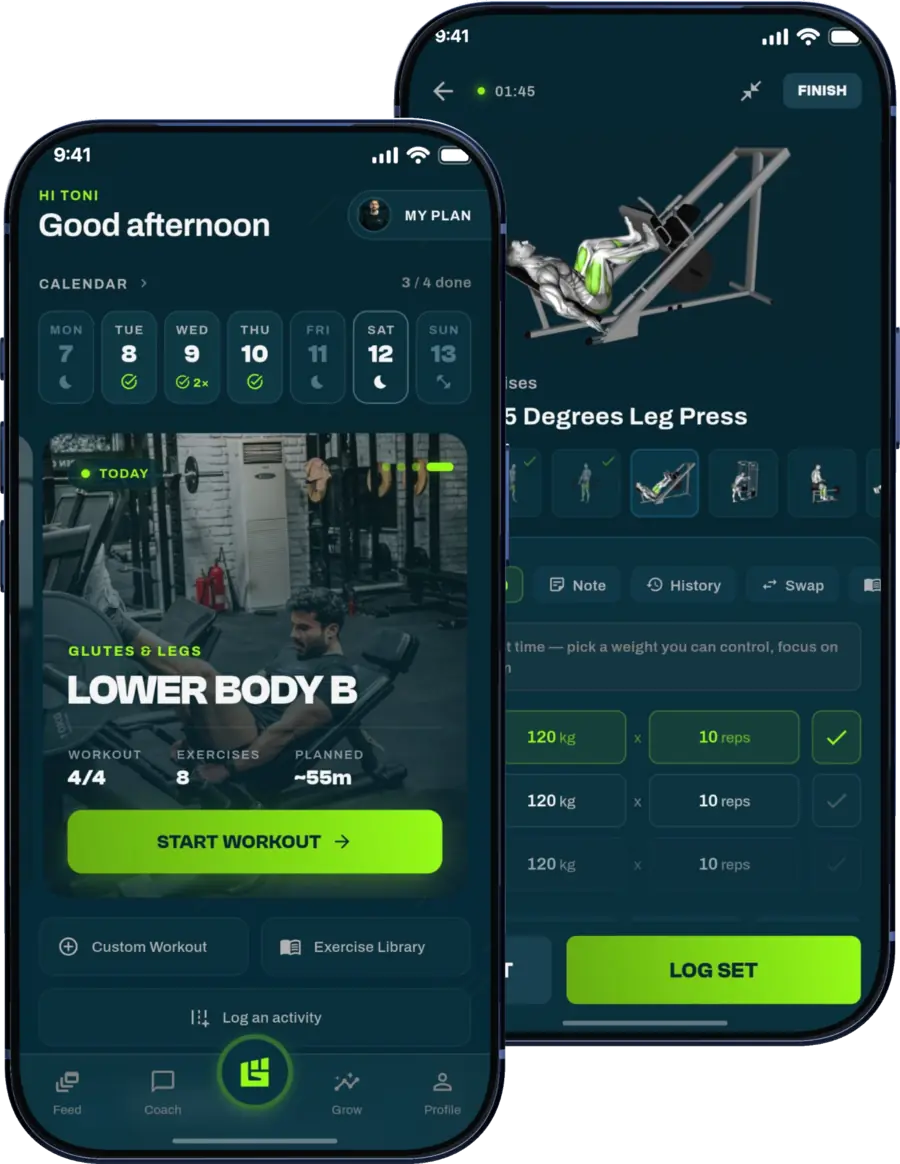
Get a personalized workout plan built around your goal, equipment and schedule. Train smarter, track every rep and keep moving forward, one workout at a time.






The plateau that doesn't make sense
The lifter goes to bed at a reasonable time, gets roughly enough sleep, and assumes recovery is covered. But when you ask better questions, the gaps appear fast. Are they waking up several times a night? Falling asleep with a phone in hand? Drinking late coffee to survive afternoon meetings? Lying in bed for an hour with a racing mind?
That's where muscle gain often gets undermined. A person can log “eight hours” and still sleep badly enough that recovery never fully happens.
Poor sleep quality doesn't always feel dramatic. Sometimes it shows up as average workouts, stubborn soreness, and a body that won't grow from work it used to respond to.
Why the missing piece is often sleep quality
Sleep is often considered in terms of duration because it's easy to count. Quality is harder to see. But quality determines whether the night restores you or just passes time.
If your sleep is fragmented, your body spends less of the night doing the kind of repair that supports muscle growth. You might wake up often enough that you never sink into the deeper, more restorative parts of sleep for long. You can't out-train that with a harder push day.
That's one reason broad sleep education still matters. If you want a simple refresher on the wider health side, the SouthShoreblog on sleep gives a useful high-level overview of why sleep affects much more than energy.
What usually doesn't work
When recovery is the issue, the typical fixes tend to fail:
- Adding more volume: More work on top of poor recovery often just deepens fatigue.
- Changing programs too quickly: Lifters blame the split when the issue is that they aren't adapting to any split.
- Leaning on stimulants: Extra caffeine can make a bad sleep cycle worse.
- Treating weekends like catch-up sleep: Sleeping in helps you feel human again, but it rarely fixes a week of fragmented nights.
The better move is to look at whether your sleep is restorative. If training is the signal for growth, sleep is where that signal gets answered.
The nightly repair crew how sleep stages fuel muscle growth
Training damages muscle on purpose. Sleep is when your body sends in the repair crew.
That crew works in shifts. Light sleep helps you transition down from the day. REM supports brain function, learning, and skill consolidation. Deep sleep does the heavy physical restoration that lifters care about most.

What each sleep stage contributes
Think of the night like a gym renovation crew working after closing time.
- Light sleep helps the system settle down. Heart rate drops, body temperature shifts, and the body starts moving away from daytime stress.
- Deep sleep is where the physical rebuild matters most. This is the most important window for tissue repair and full-body recovery.
- REM sleep supports the brain side of performance. Motor learning, coordination, and skill retention all benefit here.
For muscle growth, the key point is simple. If sleep gets interrupted over and over, the crew keeps getting pulled off the job.
Why deep sleep is the part you can't afford to disrupt
A lot of lifters focus on bedtime but not on sleep continuity. That's a mistake. Deep sleep needs enough uninterrupted time to happen the way it should.
If you fall asleep fast but wake up repeatedly, your total hours may look decent while your physical recovery still suffers. That's why people with “enough sleep” can still feel beat up, weaker than expected, or unable to recover between hard sessions.
A few practical things tend to interfere with deep sleep most often:
- Late stimulants: Afternoon caffeine can still be hanging around when you're trying to wind down.
- Heavy mental activation: Work emails, doomscrolling, and high-stimulation media keep the nervous system too switched on.
- A poor sleep setup: Too much heat, noise, or light can turn one solid sleep block into a series of mini-interruptions.
If you want a deeper look at habits that support deeper rest, this piece on how to improve sleep quality and wellness is a useful companion resource. For a sport-focused angle, GrabGains' guide to performance sleep also connects sleep quality with better training output.
The goal isn't just to be unconscious for long enough. The goal is to stay asleep deeply enough for repair to happen.
The hormone shift sleep's control over your anabolic environment
You can hit your numbers, finish your sets, and still stall because recovery chemistry is working against you.
Poor sleep shifts the hormonal environment that supports muscle growth. The result is a body that is harder to build with, even when training and nutrition look solid on paper.

One bad night can change how your muscles use protein
A 2021 clinical study found that one night of total sleep deprivation reduced postprandial skeletal muscle protein synthesis by 18%, while cortisol increased by 21% and testosterone decreased by 24% in healthy young adults (study details here).
For a lifter, that changes the meaning of a missed night of sleep. The issue is not just feeling flat in the gym the next day. The muscle-building response to protein gets weaker, which is exactly how anabolic resistance starts to show up in real life.
Anabolic resistance means the usual inputs stop producing the usual return. You train. You eat enough protein. You recover poorly anyway because the muscle is less responsive to the signal to repair and grow.
What that looks like in the gym
This is one reason lifters hit a confusing plateau. Body weight may hold steady. Protein intake may be consistent. Programming may be reasonable. Yet soreness lingers, pumps feel worse, performance drifts, and muscle gain slows down.
In practice, I see athletes misread this as a training problem. They add volume, push intensity, or chase a better supplement stack. That can backfire if the underlying issue is poor sleep quality driving cortisol up and blunting the anabolic response they need from food and training.
The trade-off is simple. Hard training creates the demand for growth. High-quality sleep helps your body cash that check.
Practical rule: If progress is flat and sleep quality has been poor for a week or two, treat recovery as the first variable to fix, not the last.
If high stress is showing up alongside poor sleep, GrabGains' guide to protecting gains explains why those recovery problems tend to pile up fast.
This is also where tracking matters. A lifter who only logs sets, reps, and macros can miss the underlying bottleneck. A lifter who tracks sleep quality, readiness, and training performance together can catch anabolic resistance early and adjust before a plateau turns into a lost month.
Quality over quantity why eight hours is not always enough
“Get eight hours” is decent advice for the general public. It's incomplete advice for someone trying to build muscle.
The body doesn't care only about time in bed. It cares about how effective that time was. Eight hours of broken, restless sleep can leave you recovering worse than a shorter night of consolidated sleep.
What the research says about sleep quality
A 2023 longitudinal study in adults found that when sleep quality worsened from good to poor, skeletal muscle mass decreased more even when sleep duration stayed the same. The poor-quality group had a larger decline in adjusted mean muscle mass change, -0.049 vs. -0.024; p = 0.009, and also had a larger rise in fat mass index, 0.210 vs. 0.087; p = 0.006 (PubMed study).
That's the key distinction. The amount of sleep didn't tell the full story. The quality of the sleep changed the body-composition outcome.
Another useful nuance from a large university study is that good sleep quality was associated with greater strength even after adjustment, and men sleeping under six hours had poorer strength than those sleeping seven to eight hours or over eight hours. The same study noted no significant difference between seven to eight hours and over eight hours, which suggests that once sleep duration is sufficient, quality may matter more than just adding more time.
What to pay attention to instead of chasing a bigger number
Lifters do better when they stop treating sleep like a single total and start thinking in terms of effectiveness.
A few signs your sleep quality may be the underlying issue:
| Sleep factor | What good usually looks like | What often hurts recovery |
|---|---|---|
| Falling asleep | You settle down without a long battle | You stay wired in bed |
| Staying asleep | Few interruptions | Frequent waking or restless sleep |
| Morning feel | You wake relatively clear-headed | You wake groggy despite enough hours |
| Training carryover | Performance feels stable | Sessions feel flat and soreness lingers |
Why more hours isn't always the first fix
If your sleep is fragmented, spending more time in bed may not solve much. The first target should be cleaner, more consolidated sleep. That means fewer wake-ups, better wind-down habits, and a bedroom setup that supports deeper rest.
For muscle growth, better sleep isn't just “more.” It's more restorative.
Your action plan for high-quality sleep
Most sleep advice fails because it's too vague. “Sleep more” doesn't help someone who already spends enough time in bed and still wakes up tired.
What works is a repeatable system. Improve the environment, reduce the things that block deep sleep, and build a routine your body recognizes.
Build a bedroom that supports recovery
Start with the room itself. If the environment fights sleep, discipline won't save it.
- Keep it dark: Blackout curtains help. So does covering bright LEDs from chargers or devices.
- Keep it quiet: A fan or white noise machine can smooth out disruptive sounds.
- Keep it cool: Sleeping is often better in a cooler room than a warm one.
- Keep work out of it: If the bed becomes a second office, your brain stops linking it with sleep.
Clean up the hour before bed
The body doesn't switch from work mode to recovery mode instantly. You need a transition.
A solid wind-down routine can be simple:
- Cut screens down early. If you can't avoid them, lower brightness and stop stimulating content.
- Lower the mental load. Journaling tomorrow's tasks or writing a quick to-do list helps clear mental noise.
- Use low-stimulation activities. Reading, light stretching, and calm music work better than late-night scrolling.
- Keep bedtime consistent. Your body responds well to rhythm.
If sleep quality is poor, start by fixing the last hour of your day before you start buying supplements.
Use this sleep hygiene checklist
| Tactic | Do | Don't |
|---|---|---|
| Schedule | Go to bed and wake up at consistent times | Swing wildly between weekdays and weekends |
| Light exposure | Get morning daylight soon after waking | Stay indoors all morning and expect easy sleep later |
| Caffeine | Set a personal cutoff earlier in the day | Use late coffee to drag yourself through fatigue |
| Screens | Reduce stimulation before bed | Scroll in bed until you feel exhausted |
| Food | Finish heavy meals well before sleep | Go to bed overly full |
| Room setup | Keep the room dark, cool, and quiet | Treat the bedroom like a media room |
| Stress | Use a short shutdown routine | Carry work and rumination straight into bed |
What to try first if you want quick wins
Don't change ten things at once. Pick the levers that usually produce the fastest return:
- Move caffeine earlier
- Create a fixed bedtime
- Darken the room
- Stop scrolling in bed
- Get outside early in the day
That short list solves more sleep problems than is often anticipated.
Training and nutrition strategies for better recovery
Sleep quality doesn't exist in a vacuum. Your training schedule, meal timing, and dieting phase all influence how well you recover at night.
A lot of people accidentally sabotage sleep with choices that seem productive. They train too late, eat heavy too close to bed, or push an aggressive calorie deficit without respecting how much recovery pressure that creates.

Match your training to your bedtime
Hard training is good. Hard training too close to sleep can be a problem.
Some lifters handle evening sessions well. Others finish heavy work with their heart rate up, body temperature raised, and nervous system still buzzing. If you struggle to fall asleep after late workouts, the answer isn't more discipline. It may be better scheduling.
Use these simple guidelines:
- Heavy or highly stimulating sessions usually fit better earlier in the day when possible.
- Evening training often works better when volume is controlled and the cooldown is intentional.
- Deload weeks matter more when life stress and sleep quality are trending down.
Eat in a way that supports sleep, not just macros
Nutrition supports recovery best when it's organized with sleep in mind.
A few habits help:
- Spread protein across the day: Don't backload everything into one meal.
- Keep the final meal practical: Protein before bed can support overnight recovery, but huge meals often backfire.
- Use carbs strategically: Many lifters sleep better when dinner includes easy-to-digest carbohydrate sources instead of going ultra-low-carb late.
- Hydrate intelligently: Drink enough through the day, but don't load up right before bed unless you enjoy waking up at night.
If you're exploring add-ons for recovery, this overview of SleepHabits recovery solutions is worth reading with a practical lens. Supplements can help at the margins, but they work best after sleep habits are already solid.
Sleep matters even more during a cut
Muscle retention gets harder in a calorie deficit. That's why sleep becomes even more important when you're trying to get lean.
A frequently cited controlled study found that during negative energy balance, people sleeping 5.5 hours lost 60% more muscle mass and 55% less fat mass than those sleeping 8.5 hours (reported here). That's a body-composition shift every lifter should care about during a cut.
When calories are lower, don't stack every stressor at once. If sleep is poor, that's not the time to add extra conditioning, slash food harder, and keep volume maxed out.
Tracking recovery and adapting with GrabGains
Most lifters guess at recovery. They use mood, motivation, and whether the warm-up feels heavy. That's better than nothing, but it's still guesswork.
Recovery improves faster when you track patterns instead of reacting to one bad night. Sleep quality, energy, soreness, and performance trends usually tell the truth long before a plateau becomes obvious.

What to track if muscle growth has stalled
You don't need a lab. You need consistency.
Track a small set of useful signals:
- Sleep quality: Not just hours, but how restful the night felt
- Night disruptions: Waking up, trouble falling asleep, restless periods
- Readiness: Energy, motivation, and how the body feels before training
- Performance markers: Are loads, reps, and execution stable or slipping?
- Soreness pattern: Normal training soreness is one thing. Lingering whole-body fatigue is another.
A single rough night doesn't demand a change. A repeating pattern does.
Why adaptive training beats blind consistency
Smart tools help. If your recovery data keeps pointing in the wrong direction, the program should respond.
That might mean backing off volume for a session, swapping in lower-fatigue movements, or taking a lighter day before performance tanks. It could also mean recognizing that your current sleep pattern doesn't support the amount of training stress you're trying to carry.
That's the practical value of GrabGains. It gives you a way to stop treating recovery like a vague feeling and start using it as a training input. For busy professionals and serious lifters, that matters. The goal isn't to train less. It's to train in a way your body can adapt to.
Better recovery management usually doesn't look dramatic. It looks like fewer wasted weeks, steadier progress, and fewer times where you wonder why hard work isn't paying off.
Sleep quality impacts muscle growth because it changes whether your body can repair, respond, and build from the work you do. If you track that accurately and adjust accordingly, progress gets a lot more predictable.
If you want a smarter way to connect sleep, recovery, and programming, GrabGains is built for exactly that. Log your training, monitor recovery trends, and use adaptive planning to make sure hard work in the gym turns into measurable progress instead of stalled results.
Get inspired and motivated