How stress slows muscle growth: protect your gains
Learn how stress slows muscle growth via cortisol, poor sleep, and training disruption. Get evidence-based strategies to protect your gains now. You're training hard. Meals are mostly on point. You're showing up enough that you should be growing. But the mirror looks the same, your lifts feel flat, and recovery that used to take a day now drags on.
That's the moment most lifters blame the program, the exercise selection, or their genetics. Sometimes those matter. But a lot of stalled progress comes from a variable people underestimate: stress.
How stress slows muscle growth isn't just a hormone story. It's also a performance story. Stress changes how well you sleep, how much effort you can generate, how many quality sets you can complete, and whether you train consistently enough for muscle gain to happen at all.


Why Your Gains Stall When Life Gets Stressful
A common pattern shows up when life gets busy. Training stays on the calendar, but the quality drops. You go through the motions, your reps slow down early, your accessories turn sloppy, and workouts that used to feel productive start feeling like survival.
That's why generic advice like “manage cortisol” often misses the practical question lifters care about. Existing articles often recommend sleep or stress management in broad terms, but they rarely address whether stress slows muscle growth by reducing training output, not just through hormones. A more useful way to frame it is this: if you keep training hard, can you still build muscle under stress? The answer depends on whether stress is high enough to reduce your weekly effective training volume, as discussed in this guide on stress and muscle gain.
Stress changes what your program can produce
A hypertrophy plan only works if you can recover well enough to repeat quality effort. When stress climbs, that same plan can become too much, even if it looked perfect on paper a month ago.
Built for progress
Take the guesswork out of training
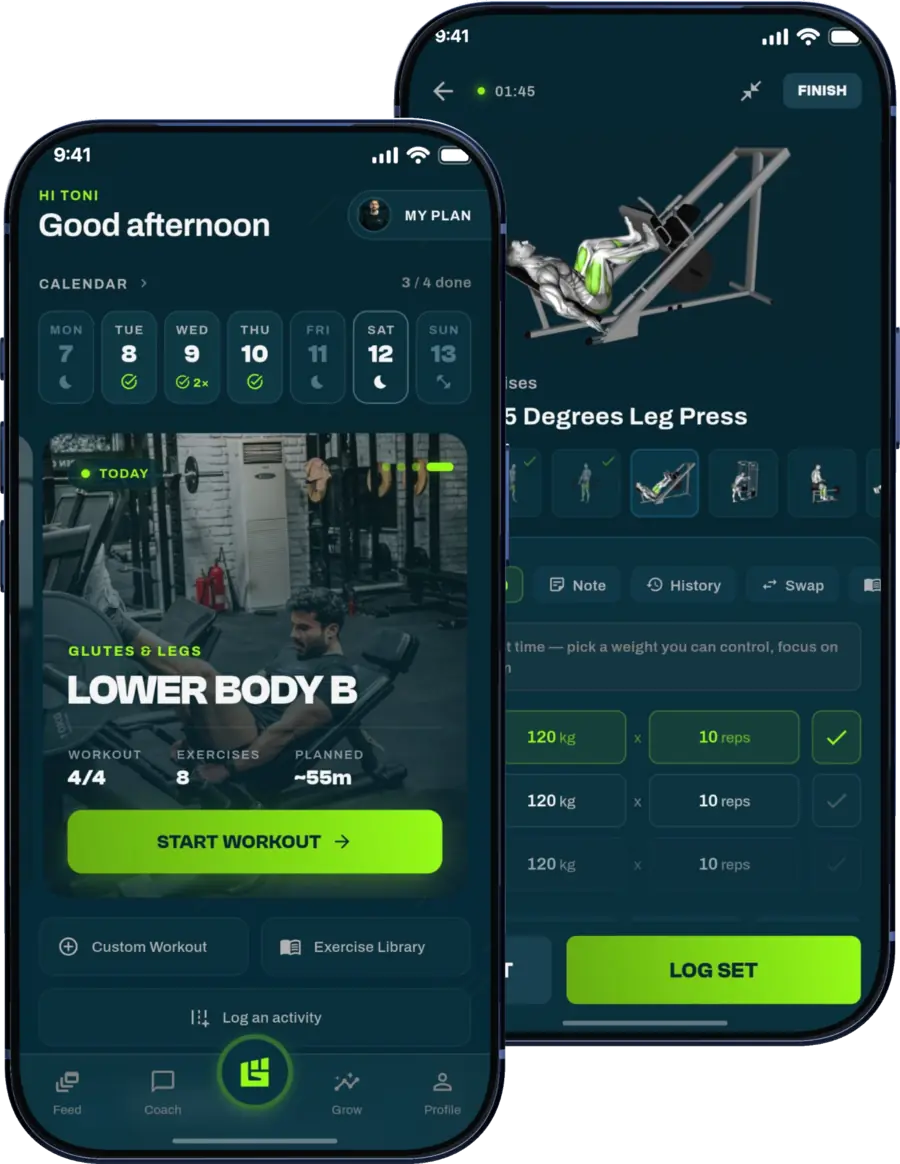
Get a personalized workout plan built around your goal, equipment and schedule. Train smarter, track every rep and keep moving forward, one workout at a time.






You don't always need a brand-new split. Sometimes you need the same goal with a different dose.
Stress rarely kills progress in one workout. It usually does it by reducing the quality and consistency of many workouts in a row.
If your pressing strength is stuck, your volume keeps drifting down, or your sessions feel harder than they should, that's when a smart adjustment matters more than blind effort. If that sounds familiar, this guide to fixing strength plateaus can help you separate poor programming from poor recovery.
The hidden variable isn't always motivation
People often say, “I'm just not motivated right now.” Sometimes that's true. But stress can make motivation look like the problem when recovery is the real bottleneck.
A stressed lifter often sees all of these at once:
- Lower training drive because mental fatigue makes hard sets feel harder before the warm-up even starts
- Worse session quality because energy and focus drop before enough productive volume is done
- Less consistency because missed sessions and shortened workouts reduce the weekly stimulus needed for growth
That combination is why muscle gain can stall even when you still feel committed.
Understanding Cortisol's Attack on Muscle Growth
When coaches talk about stress and muscle loss, they usually mean cortisol. That's the body's main stress hormone. Cortisol isn't evil. You need it. The problem starts when stress stays high long enough that your body keeps leaning toward breakdown instead of repair.
A simple way to think about it is this. Muscle protein synthesis is the builder. It creates new muscle tissue after training. Muscle protein breakdown is the demolition crew. Some breakdown is normal, but if demolition keeps outrunning construction, you don't grow.

Cortisol pushes the balance the wrong way
Researchers were already suggesting as far back as 1964 that cortisol hampers protein synthesis. Later work reinforced that stress can shift muscle toward breakdown rather than growth. One rodent study found that 7 days of restraint stress significantly decreased skeletal muscle mass and increased expression of atrophy-related genes, according to this overview of stress and fitness progress.
That matters because hypertrophy depends on spending enough time in a net anabolic state. If your body keeps getting signals to conserve energy, mobilize fuel, and break tissue down, it becomes harder to build new muscle after you train.
Why this matters after a hard workout
Lifting creates a reason for your body to adapt. Recovery is where that adaptation gets paid for. Chronically high stress makes that recovery environment worse.
Here's what that looks like in practice:
- Protein building gets weaker because cortisol interferes with the process needed to create new muscle tissue
- Breakdown pressure rises because stress biology shifts the body toward using stored resources
- Recovery quality drops because stress doesn't stay isolated to one system. It affects sleep, appetite, and how ready you feel for the next session
Practical rule: If your life stress is high, don't assume your normal training dose is still recoverable just because you completed it.
That doesn't mean every stressful week leads to muscle loss. It means chronic stress changes the odds. If you want a practical non-training resource for lowering overall stress load, this guide on how to reduce cortisol levels naturally covers simple recovery habits that can fit around training.
Cortisol isn't the whole story
One mistake lifters make is treating cortisol like the only lever that matters. It's important, but focusing only on the hormone can make you miss the bigger issue. Stress doesn't just affect your internal chemistry. It changes the training stimulus you can produce and recover from.
That's why two people can run the same hypertrophy block and get very different results. The program isn't happening in a vacuum. It's happening inside a nervous system, a work schedule, and a recovery environment.
Beyond Cortisol - Other Ways Stress Halts Progress
Cortisol gets the attention, but stress creates a broader environment that fights hypertrophy. You don't build muscle from one signal. You build it from repeated training stress plus enough recovery, food, and readiness to turn that stress into adaptation.
When stress stays high, that full system starts to wobble. Recovery gets delayed. Sleep quality tends to worsen. Food choices often become less consistent. Even if you still train, your body may not use training stress efficiently.

Excessive training stress can become anti-growth
Not all stress comes from your job, your sleep debt, or your schedule. Some of it comes from the way you train. That matters because lifters often respond to poor progress by adding more volume, more intensity techniques, and more fatigue.
That can backfire.
Muscle growth depends on enough stimulus, but also on your ability to recover from it. If the workload exceeds what your body can repair, growth slows down and can eventually stall.
A useful distinction is the difference between productive stress and excessive stress:
| Training factor | Helpful when managed | Problem when excessive |
|---|---|---|
| Mechanical tension | Drives hypertrophy when loads and execution are solid | Falls off if fatigue ruins rep quality |
| Training volume | Supports growth when recoverable | Becomes a recovery debt when piled on |
| Muscle damage | Can accompany hard training | Delays later sessions if it's too high |
| Metabolic stress | Can contribute to muscle gain | Interferes with force output when overdone |
Metabolic stress has a ceiling
Metabolic stress is a real hypertrophy mechanism, but more isn't always better. The literature notes that when metabolic stress becomes excessive, prolonged metabolite accumulation from very short rests or too many drop sets can lower the load or reps you can sustain, which may blunt the main hypertrophy driver of mechanical tension and volume over time, as described in this review on resistance training mechanisms.
That means the pump itself isn't the goal. The goal is using training methods that let you accumulate quality work.
A few common traps:
- Short rests on big lifts that turn strength work into survival work
- Too many intensity techniques like drop sets and supersets stacked into every session
- Chasing fatigue instead of progression so you leave wrecked, but not better stimulated
A session can feel brutally hard and still be poor hypertrophy training if fatigue strips away load, reps, and execution.
Stress changes how your body handles resources
High stress also tends to push behavior in the wrong direction. Recovery meals get skipped. Bedtime drifts later. Hydration gets sloppy. Low-level movement disappears because you're mentally cooked.
None of that needs a dramatic hormone explanation. It creates a worse environment for muscle gain. Stress becomes a multi-pronged attack. Less readiness, less quality, less consistency.
How Stress Ruins Your Workouts and Recovery
The biggest damage from stress often shows up where lifters can feel it. In the gym. Under the bar. Between sessions.
A lot of people assume that if they still make it to training, they're preserving progress. That's only partly true. Showing up matters, but effective work matters more. Stress can leave attendance intact while undermining the quality of the stimulus that drives growth.
Recovery gets compromised before you notice it
Stress is associated with measurable losses in lean mass and impaired recovery. A 2010 study found muscle mass declined after just 3 and 7 days of repeated stress, and 77% of American adults report that stress affects their physical well-being, according to this PMC-cited discussion of repeated stress and muscle loss.
That doesn't mean one rough week erases your physique. It means unmanaged stress can reduce recovery quality enough that your training starts producing less adaptation.
If you want a deeper look at the repair side of the equation, read this breakdown of what happens during recovery. It helps explain why muscle gain is never just about the workout itself.
Sleep loss turns a good program into a bad fit
Poor sleep is one of the fastest ways stress wrecks results. You can still drag yourself into the gym after a bad night, but your body won't respond the same way.
Sleep problems tend to create all of these:
- Lower readiness so your warm-ups feel heavy and your coordination feels off
- Worse session tolerance so your top sets and later accessories drop faster than usual
- Longer soreness and slower bounce-back which makes the next workout worse too
Often, lifters misread the problem. They think they need more discipline, more caffeine, or a harder program. What they need is a training dose that matches their present recovery capacity.
Stress cuts weekly effective volume
This point is often overlooked. Stress doesn't have to stop you from training to stop you from growing. It only has to reduce the amount of quality work you can perform and repeat across the week.
Here's how that usually looks in real life:
- Monday's workout underperforms. Loads feel heavier than normal.
- You compensate by grinding. Technique slips and fatigue rises.
- Recovery runs behind. The next session starts from a worse baseline.
- Weekly volume drops. Maybe not on paper, but in real reps, effort quality, and execution.
- Progress stalls. You still feel busy, but you're not delivering enough productive stimulus.
If stress lowers the number of high-quality sets you can recover from, it has already changed your hypertrophy plan.
Motivation matters because adherence matters
Mental fatigue doesn't just make training feel unpleasant. It reduces adherence. Missed sessions, shorter sessions, skipped accessories, and “I'll make it up later” thinking all shrink the consistency muscle growth depends on.
That's why a stressful work season can flatten progress even if your nutrition is decent. Your body doesn't respond to intentions. It responds to repeated, recoverable training.
Building Your Resilience - How to Manage Stress for Better Gains
You don't need a stress-free life to build muscle. You need a system that keeps stress from hijacking your training quality for weeks at a time.
The goal is resilience, not perfection. That means building habits that improve recovery, protect consistency, and stop high-stress periods from turning into lost months.

Start with the basics that protect training output
Most lifters want a supplement fix. Usually the bigger win is tightening the behaviors that keep workouts productive.
- Protect sleep timing: Go to bed and wake up on a stable schedule as often as your life allows. Consistency helps more than randomly trying to “catch up” on rest.
- Keep meals predictable: Stress pushes people toward reactive eating. A simple meal structure makes it easier to hit protein and total calories without relying on willpower.
- Use low-intensity recovery work: Walking, easy cycling, or light mobility can help you feel better without adding more fatigue.
One practical tool can also help here. Platforms like GrabGains build adaptive workout plans that adjust to goals and performance over time, which is useful when your recovery capacity changes from week to week instead of staying fixed.
Use stress reduction methods you'll actually repeat
Breathing drills and mindfulness work because they lower the general arousal level many stressed lifters carry into the rest of the day. But they only help if the method is realistic enough to repeat.
Try one of these approaches:
- Box breathing between work blocks: Inhale, hold, exhale, hold with equal counts for a few rounds before training
- A short walk after meals: Useful when your head feels crowded and you need to downshift
- A low-friction meditation habit: Even a brief session can create a cleaner transition from work mode into recovery mode
If work burnout is the main source of your stress, broader lifestyle fixes matter too. This article on strategies for overcoming workplace exhaustion is a good resource if your training is getting crushed by job-related fatigue.
Recovery habits don't need to be impressive. They need to be repeatable on your busiest week.
Nutrition should get simpler when life gets harder
Stressful periods are not the best time for complicated meal plans. Keep food boring if you need to. Boring is better than inconsistent.
A practical setup looks like this:
| Situation | Better choice | Worse choice |
|---|---|---|
| Busy workday | Pre-planned meals with easy protein sources | Skipping meals, then overeating late |
| Pre-workout | A meal or snack you tolerate well | Training hard after under-eating all day |
| High-stress week | Repeat familiar foods | Constantly changing diet rules |
Keep exercise as a stress manager, not just a stressor
Hard training can be therapeutic. It can also become another burden if every session is maximal, long, and draining.
Use this filter: after the workout, do you usually feel more stable or more crushed? If the answer is “more crushed” for several sessions in a row, your training is adding more stress than your current life can absorb.
Adapting Your Training Plan for High-Stress Periods
When stress rises, the smartest move isn't always to push harder or back off completely. It's to adjust the dose. Muscle growth depends on muscle protein synthesis exceeding breakdown over time. High training stress can stop producing gains once recovery capacity is saturated, and excessive muscle damage can prolong recovery, as summarized in this muscle hypertrophy overview.
That's why auto-regulation matters. You're not abandoning progression. You're matching the plan to the recovery you have.

When to push and when to pull back
Use your recent performance, not your ego, to decide.
- Keep training hard when sleep is decent, motivation is normal, and your loads move close to expected levels
- Keep intensity but trim volume when you can still lift well, but stamina and recovery feel off
- Reduce both volume and exercise count when every set feels unusually heavy and focus is poor
- Deload when fatigue has been building for long enough that multiple sessions in a row feel flat, sore, and unproductive
A simple high-stress decision framework
Think in terms of what you can recover from this week.
| Your current state | Best adjustment |
|---|---|
| Stress is high, but bar speed and focus are okay | Keep main lifts, cut some accessory sets |
| Stress is high and workouts are dragging | Shorten sessions and focus on compound lifts |
| Sleep is poor and soreness lingers | Reduce total volume and avoid extra intensity techniques |
| Fatigue has piled up for days | Take a lighter week and rebuild momentum |
Training hard while stressed can still work. Training hard on a dose you can't recover from won't.
What usually works best
For most lifters in a rough week, these changes protect progress:
- Cut sets before cutting load: This preserves some useful tension without burying recovery
- Drop the fluff: Skip extra finishers, marathon arm work, and fatigue for its own sake
- Shorten the session: A focused workout often beats a long, compromised one
- Use a planned deload when needed: If fatigue has accumulated for a while, don't wait until performance fully crashes. You can discover planned recovery benefits and use them strategically instead of reactively
The key idea is simple. Stress changes your recoverable volume. Your plan needs to respect that. The lifter who adapts early usually keeps progressing. The lifter who insists on winning every session often loses the month.
If you want a smarter way to manage training when recovery, stress, and performance keep changing, GrabGains is built for that reality. The platform creates personalized workout plans, tracks performance over time, and helps you adjust your training based on how you're doing, not how you hoped the week would go.
Get inspired and motivated