Why burnout is becoming more common in fitness: insights
Discover why burnout is becoming more common in fitness. Get key strategies to prevent it and maintain a healthy, sustainable training routine in 2026. You don't have to be lazy, undisciplined, or “bad at consistency” to burn out from fitness. A lot of people are doing more than ever, tracking more than ever, and still feeling worse. They're dragging themselves into workouts, watching performance stall, and wondering why something that used to help them cope now feels like another source of pressure.
That's a big part of why burnout is becoming more common in fitness. Training no longer sits in a separate bucket from the rest of life. It gets layered on top of work stress, poor sleep, social comparison, and the constant feeling that every area of life should be optimized. If the program doesn't adapt, the person pays for it.


What Fitness Burnout Actually Is and Why It's Spreading
Burnout in fitness isn't just “I'm tired today” or “I don't feel like training.” Exercise burnout is better understood as a lasting state of fatigue, workout dread, or avoidance that shows up when someone keeps pushing hard without proper rest. Peloton also notes common drivers such as unrealistic goals, training the same muscles too often, poor fueling, and a lack of enjoyable variety, with symptoms that can include persistent soreness, fatigue, frequent illness, and injuries, as outlined in its breakdown of exercise burnout and recovery warning signs.
That distinction matters because normal training fatigue is temporary. Burnout lingers. It changes how you feel about exercise itself. The person who used to look forward to the gym starts negotiating with every session, skipping workouts they once enjoyed, or forcing themselves through training with a growing sense of resentment.
It's not a motivation problem
A lot of people blame themselves too quickly. They think they've lost discipline when what they've lost is recovery capacity.
Built for progress
Take the guesswork out of training
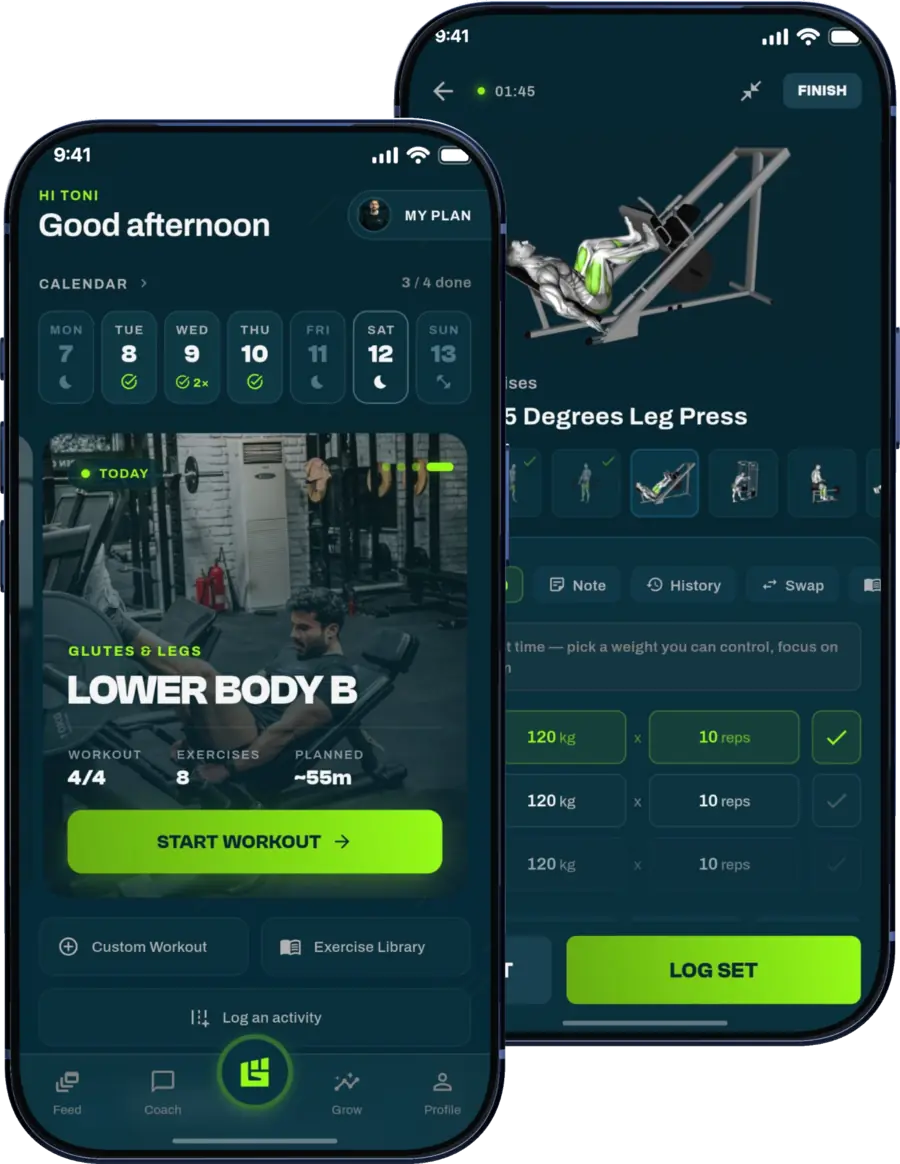
Get a personalized workout plan built around your goal, equipment and schedule. Train smarter, track every rep and keep moving forward, one workout at a time.






Burnout usually builds when physical stress and life stress stack up for too long. Hard sessions, poor sleep, under-eating, a packed work calendar, and emotional strain can all hit the same system. The body doesn't sort those stressors into neat categories. It just has to absorb them.
Practical rule: If your plan only tracks sets, reps, and calories but ignores sleep, soreness, mood, and motivation, it's missing the variables that often predict burnout first.
Why it's showing up more often now
Fitness culture has become louder, faster, and more performance-driven. People aren't just exercising for health or enjoyment. They're chasing visible progress, measurable output, and constant proof that they're improving.
That can be useful in small doses. It becomes a problem when every week feels like a test.
The rise in burnout also reflects how many people start training hard before they build durable habits. They go from low activity to high expectation in a short span. Instead of learning how to pace effort, recover well, and adjust load, they push until something gives.
Here's the trade-off many miss:
- Short-term intensity can feel productive because it creates soreness, sweat, and a sense of “I'm all in.”
- Sustainable progression feels less dramatic, but it's what keeps people training long enough to improve.
- Rigid plans often work on perfect weeks. They fall apart when real life shows up.
- Flexible structure protects consistency because it accounts for stress, energy, and recovery.
If you've been trying to prevent training injuries, consider this the start of that conversation. Many injuries don't come from one dramatic mistake. They come from staying in a fatigue hole too long and calling it commitment.
The Modern Pressures Pushing Us Past Our Limits
Fitness burnout doesn't happen in a vacuum. It reflects the environment people train in. Work follows them home, phones follow them everywhere, and social platforms keep serving up highlight reels of perfect physiques, early morning workouts, and “no excuses” messaging.
That creates a strange setup. Exercise is supposed to help regulate stress, but a lot of people now approach it with the same urgency they bring to their job. Every session has to count. Every week has to be productive. Missing one workout feels like falling behind.

Social media turns training into a performance
While social media is not real life, it still affects behavior.
When every feed is packed with transformation clips, elite routines, and polished progress updates, a normal training week can start to feel inadequate. People compare their day-to-day reality to someone else's curated best moments. That pushes them toward too much volume, too much intensity, and timelines their body can't match.
It also changes the emotional tone of training. Instead of asking, “What can I recover from this week?” people ask, “What would look impressive?” Those aren't the same question.
Work stress changes what your body can handle
Busy professionals often try to outwork stress with exercise. Sometimes that helps. Sometimes it backfires because they treat training like another arena for proving effort.
A demanding week at work lowers the margin for error. Sleep slips. Meals get rushed. Patience drops. Then a person tries to keep the exact same training load they'd use in a lower-stress week. On paper, the program hasn't changed. In reality, the body's ability to adapt has.
That's one reason burnout can sneak up on high performers. They're used to pushing through discomfort in other areas of life, so they apply the same strategy in the gym long after it stops working.
If your life is already running hot, adding more intensity isn't always the answer. Sometimes the smart move is reducing friction, not increasing effort.
The churn cycle starts with ambition
A useful clue comes from gym adherence. One fitness industry article reports that as many as 50% to 60% of new gym members stop attending within the first six months, a dropout pattern tied to ambitious starts followed by fatigue and frustration, according to this summary on why new gym members quit and how to stay on track.
That doesn't prove every new member is clinically burned out. But it does show a pattern many coaches recognize immediately. People start harder than they can sustain, mistake exhaustion for progress, then disappear before consistency has time to take hold.
Three forces tend to feed that cycle:
- Comparison pressure makes moderate training feel “not enough.”
- Time scarcity pushes people toward all-or-nothing plans that collapse under real schedules.
- Commercial fitness messaging often sells the idea that more effort and more products will solve a bad program.
For workplaces trying to support healthier habits without adding more pressure, it helps to think beyond step counts and leaderboard culture. Team leaders looking for lower-pressure approaches can borrow from these strategies for team well-being, especially when the goal is sustainable participation rather than internal competition.
When ‘Train Harder' Becomes Harmful
A hard session isn't the problem. Repeating hard sessions when your recovery is already tapped out is.
Physical activity can reduce exhaustion, but the relationship isn't linear. A systematic review found strong evidence that activity is associated with lower exhaustion while also showing that excessive frequency or intensity can produce the opposite effect when recovery capacity is exceeded, as discussed in this systematic review on physical activity and burnout. That's the trap many motivated people fall into. They keep increasing dose after the effective dose has already passed.

Think of recovery like a bank account
Recovery works a lot like a bank balance. Training is a withdrawal. Sleep, food, rest, and lower life stress are deposits.
A challenging workout can be productive when the account is healthy. The same workout can become harmful when the account is already overdrawn. That's why some people tolerate a tough block well while others hit a wall doing what looks like a moderate plan on paper.
Here's what drains the account fastest:
- Poor sleep leaves you less able to repair and regulate stress.
- Under-fueling makes it harder to support training demands.
- Constant intensity removes the easier days that help adaptation happen.
- Life overload adds stress even when you're not in the gym.
Progressive overload is not the same as piling on
Many plans fail in their approach to increasing challenge. Progressive overload means increasing challenge in a way the body can adapt to. Simple overloading means adding more because more feels productive.
The difference is huge.
A well-built program rotates stress. Some sessions push harder. Others maintain. Some weeks build. Others pull back enough to let fatigue clear. A bad program treats every day like a proving ground. It mistakes exhaustion for effort and effort for quality.
Coach's note: If every workout feels like a test, your program probably isn't building fitness anymore. It's just measuring how tired you already are.
Common programming mistakes that drive burnout
Many all-or-nothing lifters make the same training errors, even when they're highly motivated:
- Training to failure too often
Going all the way to the limit can have a place, but using it on too many lifts creates fatigue that outpaces benefit for many people. - Stacking hard days together without purpose
This often happens when someone follows social media workouts instead of a connected plan. - Ignoring non-gym stress
A brutal work week should change how you train. Most rigid templates don't account for that. - Chasing variety without structure
Random hard workouts can feel exciting, but they make fatigue harder to manage and progress harder to read.
People who want better optimal muscle gain strategies usually do better when they stop asking how to make every set harder and start asking how to make the whole week recoverable.
Are You Just Tired or Truly Burning Out
A normal training week includes fatigue. That's expected. You should feel challenged at times. What you shouldn't feel is chronically flat, irritated by the thought of exercise, and unable to bounce back even after rest.
Burnout tends to show up across multiple domains at once. The body feels beat up, motivation slips, and performance gets strangely inconsistent. One rough workout doesn't mean much. A repeating pattern does.
The signs usually cluster together
Physical warning signs often appear first. Persistent soreness that doesn't match the work, lingering fatigue, frequent minor illness, or aches that keep shifting around all suggest that recovery isn't keeping pace.
The psychological side matters just as much. Dreading workouts, feeling emotionally drained by your routine, or losing all sense of enjoyment are not minor mindset issues to brush off. They're often part of the same stress picture.
Performance changes are another clue. The person in trouble is not always the one who skipped training. Sometimes it's the one still showing up, but with declining output, slower progress, and less confidence under loads that normally feel manageable.
Normal fatigue vs burnout warning signs
| Symptom | Normal training fatigue | Burnout warning sign |
|---|---|---|
| Energy after workouts | Tired for a while, then recovered by the next session | Flat for days, even when training load should feel manageable |
| Muscle soreness | Specific to the worked areas and fades with recovery | Persistent, widespread, or repeatedly lingering |
| Motivation | Varies day to day, but returns once you get moving | Ongoing dread, avoidance, or emotional resistance to training |
| Mood | Temporary irritability after a hard effort | Broader frustration, cynicism, or feeling mentally drained |
| Performance | Small ups and downs are normal | Repeated stagnation or decline across multiple sessions |
| Relationship with exercise | Still feels meaningful or enjoyable overall | Starts to feel like an obligation, punishment, or burden |
What to ask yourself honestly
A quick self-audit often tells the truth faster than another motivational video.
- Do you feel restored by easier days, or just slightly less exhausted?
- Are you skipping workouts because you're busy, or because the thought of training feels heavy?
- Have you stopped enjoying forms of exercise you normally like?
- Are your expectations still realistic for your current life stress?
If several of those point in the wrong direction, don't solve it by doubling down.
The earlier you respond to burnout signals, the easier it is to recover. Waiting until you hate training makes the process longer and more frustrating.
In some cases, people also want a broader look at whether stress biology may be part of the picture. If that's relevant for you, it may help to review your UK cortisol testing options with proper medical context rather than guessing based on symptoms alone.
Building a Burnout-Proof Fitness Strategy
The answer to burnout isn't quitting hard training forever. It's building a system that can tell the difference between productive stress and reckless stress. Individuals don't need less ambition. They need better guardrails.
A burnout-proof strategy starts with one mindset shift. Your program should fit your life, not punish you for having one.

Build around recovery first
Recovery isn't what happens after the important work. It is the important work.
That means protecting the basics before you start adding intensity. Sleep, food quality, enough total intake to support training, and lighter sessions placed where they help are the foundation. If those pieces are unstable, the plan needs to get simpler, not more aggressive.
Useful adjustments include:
- Planned deloads so fatigue doesn't accumulate endlessly
- Exercise variety with purpose to reduce overuse and mental monotony
- Session caps that keep workouts from expanding into exhaustion contests
- Recovery check-ins based on sleep, soreness, mood, and motivation
Use process goals instead of constant outcome chasing
A lot of burnout starts with rigid expectations. People tie self-worth to scale changes, visible muscle gain, race pace, or weekly personal records. When progress slows, they push harder instead of adjusting better.
Process goals work better because they reward repeatable behaviors. Hitting your planned sessions, leaving a rep in reserve when needed, walking on off days, and fueling consistently are all behaviors you can control. They create momentum without demanding perfection.
This is also where mental load matters. If work is chaotic or family demands are high, the win may be completing a shorter version of the session and preserving the habit. That's not a compromise. That's intelligent training.
Adaptive programming is the modern guardrail
Static plans assume your body responds the same way every week. Real life doesn't work like that.
Adaptive programming is a better answer because it adjusts training load based on readiness, performance, schedule, and recovery signals. Instead of forcing the original plan no matter what, it gives you a framework that bends when life gets heavy and pushes when capacity is there.
That's where technology can help, if it's used as a filter instead of a pressure source. Tools built for adaptive training for professionals can support better decisions by organizing sessions around goals, schedule, and progress rather than locking users into an unrealistic fixed template. GrabGains is one example of this kind of approach, using personalized workout planning, progress tracking, and exercise guidance to help users adjust training over time instead of repeating the same workload blindly.
Bottom line: The smartest plan is not the one that looks hardest on paper. It's the one you can recover from, repeat, and still want to follow next month.
What works and what usually fails
What works is usually less exciting than what gets marketed.
What tends to work
- Autoregulation: Adjusting effort based on real readiness
- Reasonable frequency: Training enough to progress without crowding out recovery
- Built-in flexibility: Shorter or lower-stress versions of sessions for difficult weeks
- Support outside the gym: Stress management, boundaries, and realistic expectations
What usually fails
- All-or-nothing scheduling
- Punishment workouts after missed sessions
- Copying advanced athletes without their recovery setup
- Treating every plateau as proof you need more volume
If life stress is already high, broader recovery habits matter too. People trying to reduce pressure outside the gym may find this guide for managing work-life balance burnout helpful because training rarely improves until the rest of the stress picture becomes more manageable.
If your current routine leaves you drained, inconsistent, or stuck in an all-or-nothing cycle, it may be time to train with a plan that adapts to real life. GrabGains is built for that kind of smarter approach, with personalized workouts, progress tracking, and flexible programming that can help you keep moving forward without running yourself into the ground.
Get inspired and motivated