Why consistency beats perfection in fitness for real results
Discover why consistency beats perfection in fitness. Learn to overcome all-or-nothing thinking and build lasting habits for real, sustainable results.


You start strong on Monday. You've got a fresh program, a clean meal plan, and a level of motivation that makes everything feel possible.
Then real life steps in. A late meeting wipes out Tuesday's workout. Dinner with friends turns into dessert. By Thursday, the voice in your head says you've already blown it, so you might as well “restart next week.” That cycle is common, and it doesn't happen because people are lazy. It happens because they're chasing a version of fitness that can't survive normal life.
That's why consistency beats perfection in fitness. Results come from repeating workable actions long enough for them to become part of your routine. Not from stacking flawless days until one mistake knocks the whole plan over.
Built for progress
Take the guesswork out of training
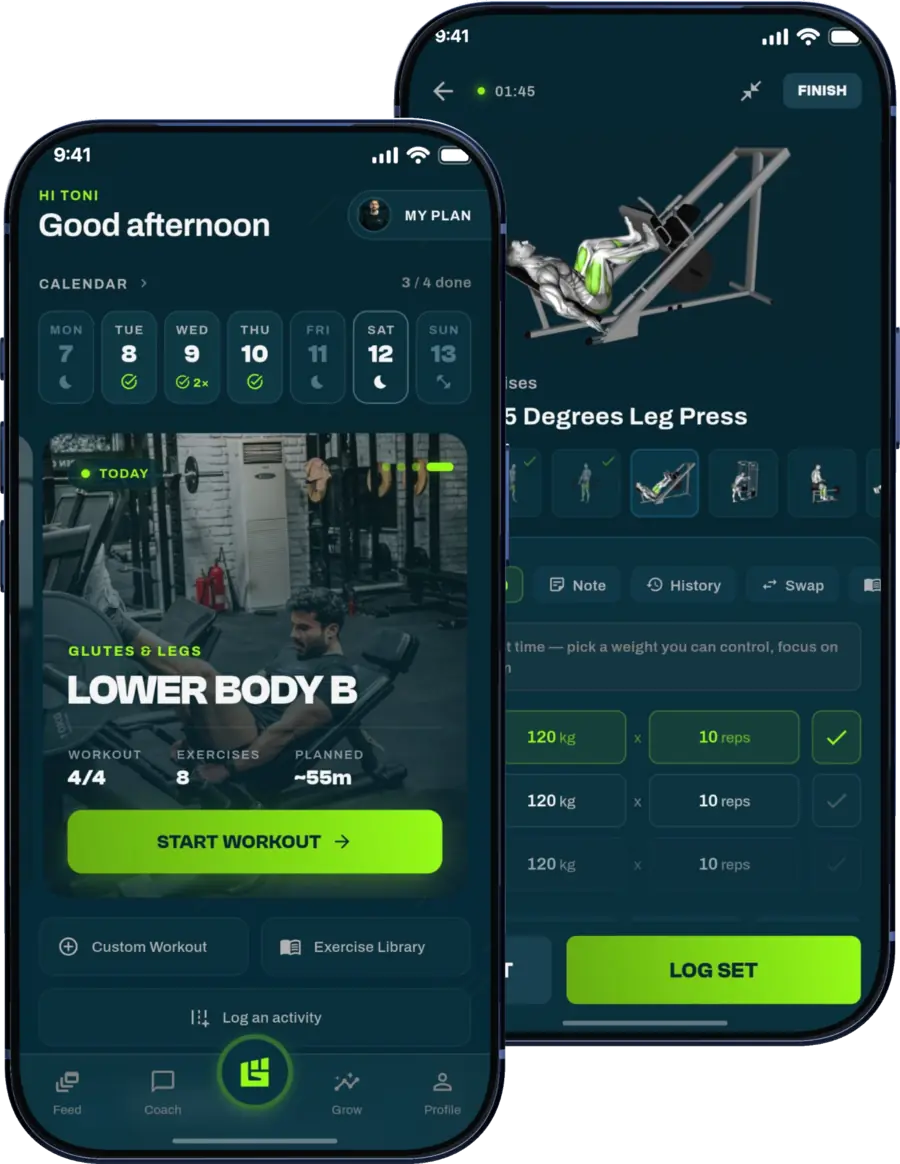
Get a personalized workout plan built around your goal, equipment and schedule. Train smarter, track every rep and keep moving forward, one workout at a time.






If you've been stuck in the start-stop pattern, the fix usually isn't more intensity. It's a simpler plan, fewer decisions, and a standard for success you can meet on busy, messy, imperfect days.
The All-or-Nothing Myth That Is Stalling Your Fitness
A lot of people don't fail because they picked the wrong exercises. They fail because they built a plan that only works under ideal conditions.
It often looks like this. Someone decides they're done “messing around” and commits to an aggressive routine. Early morning workouts every day. Strict meals. No flexibility. No room for low-energy days, travel, work stress, or family obligations. The plan feels powerful for a week or two because intensity can create a rush.
Then one workout gets missed.
That single disruption becomes a verdict. If the streak is broken, the whole effort feels ruined. The person who was ready to train hard now does nothing for days because the original standard wasn't “show up often.” It was “execute perfectly.”
That's the all-or-nothing myth. It tells you a short workout doesn't count, an imperfect meal cancels progress, and a missed day means you're off track. In practice, that mindset keeps people inconsistent far longer than any busy schedule does.
A better standard is simpler. Do what you can repeat.
If your current routine collapses every time life gets busy, your problem probably isn't discipline. It's structure. Building gym consistency means making fitness durable enough to survive imperfect weeks, not just motivated ones.
The plan that works on your worst realistic week usually beats the plan that only works on your best week.
Perfection feels productive because it's dramatic. Consistency looks less exciting, but it's what people can sustain. That's the difference between a phase and a lifestyle.
Understanding the Psychology of the Perfection Trap
Perfectionism in fitness rarely shows up as neat, high standards. More often, it shows up as hesitation, overthinking, and quitting early.
A person says they want to get in shape, but they spend days comparing programs, debating the perfect split, searching for the optimal meal timing, and wondering whether home workouts are “good enough.” That feels like preparation. A lot of the time, it's avoidance dressed up as research.
Why the perfect plan often leads to no plan
Perfection creates analysis paralysis. If every choice has to be the best choice, every decision starts to feel heavy. You don't just need a workout. You need the right workout, at the right time, with the right equipment, for the right duration.
That mental load drains momentum before training even starts.
Then there's catastrophic thinking. One missed workout turns into “I'm falling behind.” One weekend off routine becomes “I've ruined everything.” The actual event is small, but the interpretation is extreme. Once people label a minor setback as failure, they act like someone who failed. They stop.
A fitness routine should work like building a wall. You don't wait for the perfect brick. You place one solid brick at a time. A wall made from many ordinary bricks stands. A wall made from a handful of perfect bricks never gets finished if you keep stopping.
Perfection rewards identity and consistency rewards behavior
Perfectionism is often tied to self-image. People want to be the kind of person who never misses, always pushes hard, and eats clean all the time. That identity sounds strong, but it creates fragile behavior. The moment life proves otherwise, motivation drops.
Consistency shifts the target. Instead of asking, “Did I do this flawlessly?” you ask, “Did I keep the habit alive?”
That one change lowers pressure and increases follow-through.
| Situation | Perfection Mindset (The Trap) | Consistency Mindset (The Solution) |
|---|---|---|
| Missed a workout | “The week is ruined.” | “I'll train at the next chance.” |
| Low energy day | “If I can't do the full session, I'll skip it.” | “I'll do the short version.” |
| Ate off-plan | “I blew it, so I may as well keep going.” | “My next meal gets me back on track.” |
| Choosing a routine | “I need the ideal program.” | “I need a plan I can repeat.” |
| Busy schedule | “This isn't the right week to start.” | “I can still do something.” |
Coach's lens: The goal isn't to remove standards. It's to replace impossible standards with repeatable ones.
Decision fatigue plays a role too. If every workout requires fresh planning, fresh motivation, and fresh self-talk, you'll burn mental energy fast. People stay more consistent when the next action is obvious. Fewer choices. Fewer negotiations. Less drama.
Perfection makes each workout a test. Consistency makes it a practice. That difference changes everything.
The Compounding Power of Showing Up Consistently
The biggest mistake in fitness is assuming dramatic effort creates the best results. In reality, progress usually behaves more like compounding. Small deposits of effort, repeated over time, build something much larger than a few heroic weeks ever do.
That's true physically and mentally. Muscles, skill, confidence, and routine all respond to repeated exposure. Showing up again and again teaches your body what to adapt to and teaches your brain what to expect.
Repetition is what turns effort into habit
A widely cited habit-formation study by Phillippa Lally and colleagues found that new behaviors took an average of 66 days to become more automatic, with a wide range from 18 days to 254 days. That finding matters because it shows habits form through repetition over time, not through a short burst of flawless effort. You can read that summary in the British Columbia Medical Journal editorial on consistency and habit formation.
That range is important. Some people latch onto a habit fairly quickly. Others need much longer. Neither outcome means you're doing it wrong. It means habit formation is a process, not a pass-fail test.
This is why a modest routine often wins. A plan with a few realistic weekly sessions can survive work deadlines, low motivation, and travel. A plan built on constant intensity usually can't.
Why small sessions still matter
People underestimate what repeated “good enough” sessions can do. A short strength workout still reinforces movement patterns. A brisk walk still keeps the routine alive. A mobility session still counts as training behavior.
If you're trying to build endurance, strength, or event readiness, it helps to think in training blocks instead of isolated workouts. For readers working on runner training for your next race, this matters even more. One perfect run won't prepare you. Repeated, manageable runs will.
Progress usually hides inside ordinary days. Most people miss it because they're waiting for extraordinary ones.
Consistency also builds trust. Every time you follow through on a small promise to yourself, you reduce the gap between intention and action. That's one of the least talked about benefits of training regularly. You stop wondering whether you'll do it. You become someone who generally does.
That's the quiet engine behind long-term results. Not chasing perfect weeks. Banking repeatable ones.
Actionable Strategies to Build Lasting Fitness Habits
Mindset matters, but mindset alone won't save a plan that's too complicated to live with. You need systems that make follow-through easier on ordinary days.
Use a smaller starting point than your ego wants
Many individuals start too big. They choose the version of training that fits their ambition, not their schedule.
The Two-Minute Rule works because it lowers the barrier to action. Your first step can be absurdly small if it gets you moving. Put on gym clothes. Do one set. Walk for a few minutes. Start the warm-up. Once motion begins, resistance usually drops.
This doesn't mean every workout should stay tiny. It means the habit should always have a tiny entry point.
Attach exercise to something you already do
Habit stacking is simple. Link a new behavior to an established one so you don't have to invent a new cue.
Examples work better than theory:
- After morning coffee, do a short mobility sequence.
- After shutting your laptop, change into training clothes before doing anything else.
- After brushing your teeth at night, do bodyweight squats, stretching, or breathing work.
The cue matters because it removes one more decision. You're not asking, “When should I work out?” You already know what comes next.
Build a good, better, best workout menu
This is one of the most practical ways to beat all-or-nothing thinking.
Create three versions of the same training day:
- Good: the minimum version you can do when time or energy is low
- Better: the normal version
- Best: the full version for days when you feel strong and have space
A lower-body day might look like this:
- Good: a brief squat, hinge, and core circuit
- Better: your planned session with main lifts and a few accessories
- Best: the full workout plus conditioning or extra volume
Now “I can't do the ideal session” no longer means “I do nothing.” It means you switch levels and still keep the habit intact.
Pick a repeatable training time
A repeatable schedule usually beats an “optimal” one you can't maintain. In a PubMed-indexed study on exercise timing and maintenance, researchers found that temporal consistency in exercise timing was associated with greater moderate-to-vigorous physical activity, regardless of the specific time of day.
That fits what coaches see all the time. The best workout time is often the one you can protect most reliably.
Try this short filter:
- Choose the least interruptible window in your week.
- Protect the same slot as often as possible.
- Reduce setup friction by preparing clothes, equipment, or your gym bag ahead of time.
A schedule you can repeat beats a schedule that looks impressive on paper.
The less your routine depends on motivation, the more stable it becomes.
Sample Micro-Routines and How to Track Real Progress
The easiest way to stay consistent on busy days is to stop pretending every session needs to be long. Some days are built for a full workout. Some days are built for maintenance. Both matter.

Micro-routines that still count
A good micro-routine should be simple, easy to remember, and light on setup. It should answer one question fast. What can I do today without overthinking it?
Here are a few practical options:
- Bodyweight reset: squats, incline push-ups, glute bridges, and a plank
- Mobility flow: hip openers, thoracic rotations, hamstring mobility, and ankle work
- Walk and carry session: a brisk walk plus carries with whatever equipment you have
- Low-energy gym session: one main lift, one pulling movement, one core exercise, then leave
For older adults or anyone rebuilding movement quality, focused mobility can be a smart “good enough” session. Resources like essential mobility for seniors can help shape a safe starting point.
Track process, not just outcomes
A lot of people quit because they only measure outcomes that move slowly. Scale weight. mirror changes. personal records. Those metrics matter, but they're lagging indicators.
Process metrics keep you engaged because they reflect actions you can control right now. Better tracking questions include:
- Did you complete your planned sessions this week
- How many times did you choose the short version instead of skipping
- Did your energy improve after training
- Does a movement feel smoother or less intimidating now
- Are you recovering well enough to come back again
Effective use of data-driven training adjustments becomes useful. Good tracking isn't about obsessing over every detail. It's about spotting patterns so you can make sensible changes instead of emotional ones.
If you only define progress as dramatic visual change, you'll miss the steady wins that make dramatic change possible.
A person who completes many modest sessions usually moves forward faster than someone who keeps waiting for ideal conditions. Real progress often looks boring in the middle. More checkmarks. Less internal debate. Better follow-through.
That's not a lesser result. It's the foundation that makes every visible result possible.
Using GrabGains to Automate Your Consistency
Consistency gets easier when your system removes friction. That's where tools can help, especially for people who lose momentum when they have to plan everything from scratch.
How the right tool reduces perfectionist behavior
Perfectionists often stall in three places. They overthink the plan, they second-guess exercise selection, and they struggle to judge progress realistically.
A platform like GrabGains addresses those problems in practical ways. It builds adaptive workout planning around goals such as strength, muscle growth, cardio, endurance, mobility, or recovery. It also includes a library of 350+ movements with video demonstrations and step-by-step instructions, which can reduce hesitation when you're not sure what to do next.
That matters because uncertainty creates skips. If the workout is already laid out and the movements are clearly demonstrated, there's less room for analysis paralysis.
Consistency improves when feedback is visible
Progress tracking also changes behavior. When people can log sessions, review performance, and see patterns over time, they stop relying only on emotion to judge whether training is “working.”
Useful tools don't need to make you perfect. They need to make the next rep, next session, and next week easier to manage. Features like adaptive routines, offline access, calculators, and real-time tracking support that by lowering friction and simplifying decisions.
For busy professionals, home trainees, and beginners, that's often the difference between intending to work out and doing it.
The best fitness technology doesn't replace discipline. It supports repeatable behavior so discipline doesn't have to carry the whole load.
Your Questions on Consistency and Fitness Answered
How little is too little for a workout to count
If the session reinforces the habit, it counts. A shorter workout isn't worthless because it's short. It still protects the routine, gives you a physical and mental win, and makes the next session easier to start.
The bigger risk is not doing less. The bigger risk is doing nothing because less feels unimpressive.
What should I do if I miss a full week
Return gently and return fast. Don't punish yourself with a massive comeback workout. Pick the easiest version of your normal plan and rebuild momentum.
A missed week isn't proof that you failed. It's a disruption. Treat it that way.
Is intensity ever more important than consistency
Intensity matters, but it works best after consistency is in place. Hard training has value when your body, schedule, and habits can support it. If intensity keeps causing skipped sessions, soreness that derails the week, or mental burnout, it's being used at the wrong dose.
Build the base first. Then add challenge.
What if I'm motivated only when I see quick progress
That's common, and it's why process goals matter. Outcome changes can take time, but showing up is visible immediately. Mark completed sessions, note your energy, track how often you kept the habit alive on hard days. Those wins are real, and they keep motivation from collapsing when visible change is slower than you hoped.
How do I know if my plan is sustainable
Ask one question. Can you still do this during a stressful week?
If the answer is no, simplify it. A sustainable plan has room for lower-energy days, schedule changes, and imperfect execution. That flexibility isn't weakness. It's what keeps the plan alive long enough to work.
If you want a simpler way to follow a consistency-first approach, GrabGains can help by organizing adaptive workouts, clear exercise guidance, and progress tracking in one place so it's easier to keep training even when life isn't perfectly on schedule.
Get inspired and motivated