A guide to building lasting gym consistency in 2026
Tired of falling off the wagon? This guide reveals why motivation fails and how to build a system for gym consistency that actually sticks. Lasting gym consistency isn't about chasing motivation. It’s about building a reliable system that gets you to show up, even on the days you don't feel like it, until going to the gym feels as automatic as brushing your teeth.
Making that switch—from relying on willpower to running on habit—is the single most important factor in finally reaching your fitness goals.


The real reason your gym habit fades

Let's be honest: that first burst of New Year's energy or pre-vacation drive never sticks around. You start strong, hitting the gym a few times a week, but then life happens. A busy project at work, a single missed session, or feeling overwhelmed by your routine is all it takes to derail your progress, and suddenly you're back at square one.
If this cycle feels familiar, you’re not alone. The problem isn't a lack of discipline—it's a broken strategy. Relying on motivation to power your fitness journey is like trying to drive a car with a battery that’s always dying. It works for a little while, but it’s fundamentally unreliable.
True, lasting gym consistency is built on something much stronger: a system.
Built for progress
Take the guesswork out of training
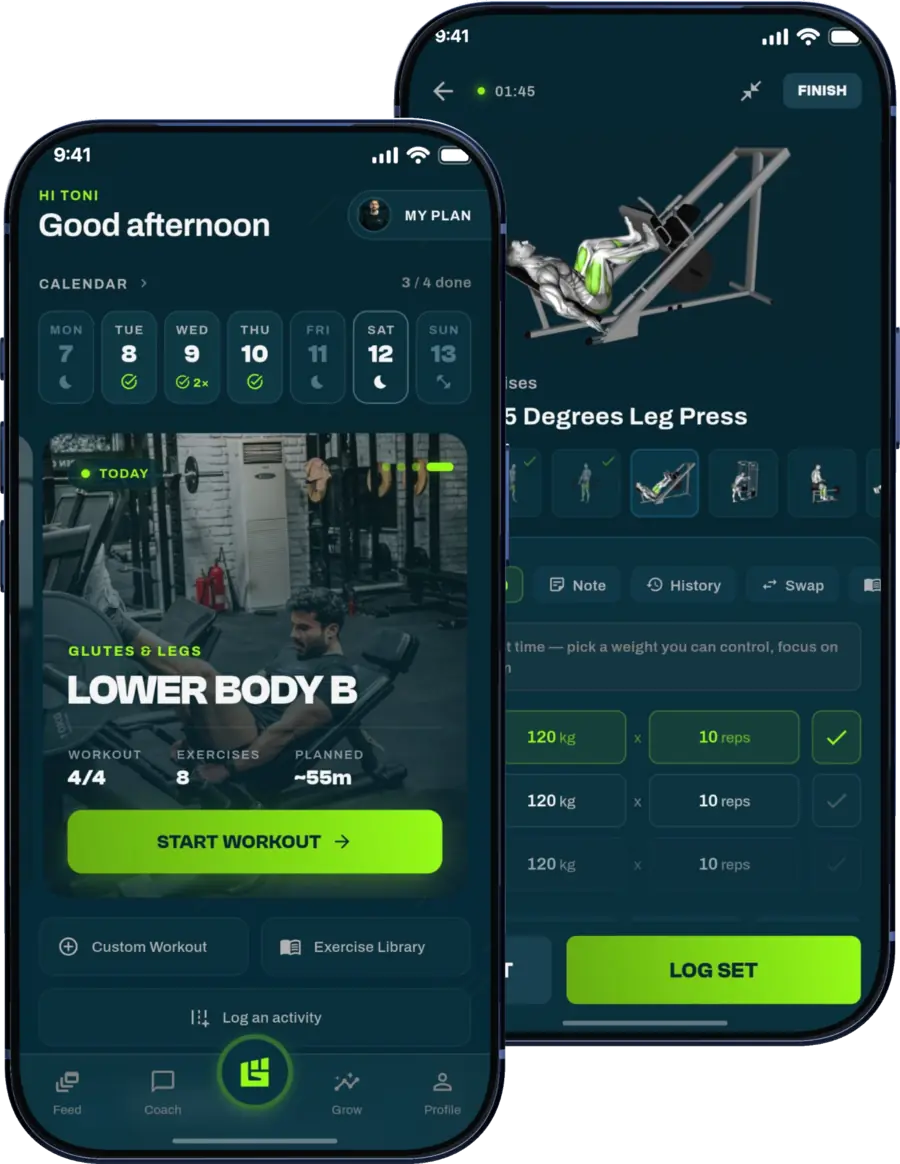
Get a personalized workout plan built around your goal, equipment and schedule. Train smarter, track every rep and keep moving forward, one workout at a time.






Why systems crush motivation every time
A system is just a pre-planned course of action that takes the daily decision-making out of the picture. You make the choice to go to the gym before you have to make it. Motivation, on the other hand, is an emotion. It comes and goes with your mood, your energy levels, and whatever else the day throws at you.
We've all seen this play out. You plan to hit the gym after work. If you're running on motivation, a stressful meeting is enough to make you think, "I'm exhausted, I'll go tomorrow." But if you have a system—your gym bag is already in the car, your workout is planned, and Wednesday is always a gym day—the decision is already made. All you have to do is follow the plan.
A system makes showing up the easy choice. Below is a quick comparison that shows why one approach builds long-term habits while the other leads to burnout.
Motivation vs system for gym consistency
| Approach | How It Works | Reliability | Best For |
|---|---|---|---|
| Motivation | Relies on feelings, willpower, and short-term goals. | Low—ebbs and flows daily. | Kicking off a new routine or a short-term push. |
| System | Uses scheduling, preparation, and triggers to make behavior automatic. | High—functions regardless of mood or energy. | Building sustainable, long-term fitness habits. |
As you can see, while motivation is great for getting started, a system is what keeps you going for the months and years it takes to see real change.
The most successful people in the gym aren't the most motivated; they are the most consistent. They've made fitness a non-negotiable part of their identity through repetition and routine.
The science of making it automatic
Your brain is wired to save energy. It does this by turning repeated actions into automatic habits, a process known as automaticity. Think about driving a car—you don't consciously process every single turn of the wheel. Building gym consistency is about using this exact same neurological shortcut.
The key is simple repetition. Research shows that when you stick to a consistent workout schedule, your brain starts to rewire itself to expect and even crave the activity. It's not magic; it’s neuroscience.
A system-based approach focuses on a few core actions:
- Scheduling: Treat your workouts like non-negotiable appointments you book in your calendar.
- Preparation: Get your clothes, meals, and workout plan ready ahead of time to remove any friction.
- Realistic Goals: Start with a frequency you can actually stick to, not an all-or-nothing plan you'll abandon in a week.
This focus on the habit loop is what separates people who get results from those who are perpetually "starting over next Monday." For example, studies show that new gym-goers who commit to working out at least four times a week for six weeks are far more likely to build a lasting habit. You can dig into the science behind this on Gyms4You.com.
When you focus on building a system, you stop fighting a daily battle with your own willpower. You create an environment where showing up is the default, paving the way for the kind of consistency that truly drives progress.
Designing your personal consistency blueprint
This is where the rubber meets the road. A perfect plan on paper is useless if it doesn't survive contact with your actual life. The goal here is to build a personal blueprint—a realistic, flexible schedule that makes showing up feel automatic, not like a chore.
First things first: you need to get brutally honest about your time. Forget wishful thinking about waking up at 5 a.m. if you're a night owl. Instead, do a quick audit of your week and find the real, available gaps.
Maybe it's that 45-minute window after you drop the kids at school, or the hour after work before you settle in for the night. Find those slots and block them out like you would any other important appointment.
Finding your ideal workout frequency
Once you've spotted some potential time slots, you need to decide how often you'll actually train. This isn't about matching an elite athlete's schedule; it's about what you can sustain right now. Your ideal frequency is a mix of your goals, experience, and lifestyle.
Are you looking to build serious muscle? Training for a HYROX race? Or do you just want to feel healthier and have more energy? Each goal has a different sweet spot.
- General Health & Wellness: Getting in two to three sessions a week is a fantastic, manageable goal that aligns with CDC guidelines for a healthy lifestyle.
- Muscle Growth (Hypertrophy): To hit each muscle group with enough volume to grow, you’ll want to aim for three to five sessions per week.
- Endurance Events (e.g., HYROX): This is more demanding, often requiring four to six sessions a week that mix strength, running, and functional work.
The real secret? Start with a frequency you know you can hit for a month straight. A consistent three-day-a-week habit is infinitely better than an ambitious five-day plan that falls apart in two weeks. You can always add more days later.
Making it effortless with habit stacking
The best way to make a new habit stick is to bolt it onto an old one. This simple but powerful trick is called habit stacking. Instead of inventing a new routine out of thin air, you just link your gym session to something you already do on autopilot.
For example, if you always have a coffee in the morning, your habit stack could be: "After I finish my morning coffee, I will immediately change into my gym clothes." That tiny link removes the need to think or decide. The cue (coffee finished) fires off the action (get dressed) automatically.
Another game-changer is to kill friction the night before. Lay out your gym clothes, fill your water bottle, and pack your bag. When you wake up, everything is sitting there waiting for you, taking away one of the easiest excuses.
Science backs this up. Research shows that consistent timing matters, with one study finding that people most active before 1 p.m. had better cardiorespiratory fitness. More importantly, it takes an average of 66 days for a new behavior to become automatic. You can read the full study in Medicine & Science in Sports & Exercise to see just how powerful that repetition is.
Your first week blueprint
Let's tie this all together with a quick example for someone aiming for three sessions a week.
Goal: Build foundational strength and feel more energetic. Frequency: 3 times per week. Time Audit: Found openings on Monday morning, Wednesday evening, and Friday afternoon.
- Sunday Night: Pack gym bag with clothes, shoes, and headphones for Monday morning. Put it by the door.
- Monday Morning: Wake up, have coffee, get into gym gear, and head out. No hesitation.
- Tuesday Night: Prep the gym bag again for Wednesday's session.
- Wednesday Evening: Drive straight to the gym from work. Don't go home first—that's a classic habit-killer.
This blueprint isn't meant to be rigid. Life happens. But having a default plan makes gym consistency the path of least resistance. It gives you a structure to fall back on, so one missed day never turns into a missed month.
Structuring workouts for results and adherence
A good schedule gets you in the door, but real, lasting gym consistency comes from something else entirely: seeing results.
When you notice your lifts getting heavier, your clothes fitting better, or the person in the mirror starting to look different, staying on track stops feeling like a chore. This is where a smart workout structure becomes your most powerful tool.
Just showing up and winging it won't cut it. To stay motivated, your training needs a purpose. It needs to be built around a simple principle that guarantees you're always moving forward and never getting bored.
The engine of progress: progressive overload
The single most important concept in getting stronger is progressive overload. Put simply, to build muscle and strength, you have to continually increase the demands on your body. Lift the same weights for the same reps forever, and your body has zero reason to change.
Your muscles are smart, but they're also lazy. They'll only do the bare minimum required to get the job done. To force them to adapt, you have to give them a new challenge every time.
This doesn't just mean piling more weight on the bar. Progressive overload comes in many forms:
- More Reps: Lifting the same weight for more repetitions than last time.
- More Sets: Performing an extra set of an exercise.
- Better Form: Mastering the technique to make each rep more effective.
- Less Rest: Cutting down your rest time between sets to increase workout density.
The goal is to always aim for just a little bit more. This constant, measurable progress is the feedback that makes you want to come back.
A workout plan without progressive overload is like a road trip with no destination. You're moving, but you're not actually getting anywhere. A structured plan keeps you focused and prevents stagnation.
How training frequency supercharges your gains

Another critical piece of the gym consistency puzzle is training frequency—how often you work out each week. While any activity is better than none, the data is clear: hitting the gym more often can seriously speed up your results.
For example, a major meta-analysis showed that groups training with higher frequency grew muscle 38% faster than those training less often. For lifters new to the gym, the effect was even bigger, with a 47% advantage. You can dig into the full findings on muscle growth at StrongerByScience.com.
There's no better motivator than seeing faster results. It turns your gym habit from a task into a rewarding part of your week.
Choosing the right workout split for you
Your "split" is just how you organize your workouts across the week. The best one for you depends on your experience and how many days you can realistically train.
Here are a few proven options that work.
1. For the Newcomer (2-3 Days/Week): Full-Body Routine This is the perfect place to start. You’ll train every major muscle group in each session, which is fantastic for learning the main lifts and building a solid base.
- Example Day: Squats, Bench Press, Rows, Overhead Press, and a core exercise.
- Why it works: It hits each muscle group frequently (2-3x per week), which is great for growth. It’s also forgiving—if you miss a day, you don’t skip training an entire body part for a week.
2. For the Intermediate (3-5 Days/Week): Push-Pull-Legs (PPL) Once you're more experienced, a PPL split lets you increase the training volume for each muscle group. You'll have dedicated days for pushing movements (chest, shoulders, triceps), pulling movements (back, biceps), and all your lower body work.
- Example Week: Monday (Push), Wednesday (Pull), Friday (Legs).
- Why it works: It strikes a great balance between intensity and recovery. You can hit muscles hard but still give them plenty of time to repair before their next session.
A smart, progressive plan is the antidote to boredom. It ensures every trip to the gym moves you closer to your goals, keeping you locked in and ready for the next workout.
How technology can supercharge your routine
Having a solid workout plan is a great start, but the real challenge is sticking to it week after week. This is where the right tech stops being a distraction and becomes one of the best tools in your gym bag for building long-term gym consistency.
Forget scribbling reps in a beat-up notebook or second-guessing your exercise choices. A good fitness app works like a personal trainer in your pocket, handling the tedious tracking and planning so you can put all your energy into the lift itself.
Eliminate guesswork with adaptive routines
One of the fastest ways to lose motivation is to hit a wall and not know what to do next. When your plan gets stale, your progress stalls right along with it. This is a problem technology is perfectly built to solve by creating workout routines that evolve as you do.
Imagine you finish a tough leg day. Instead of you having to figure out how to progress, your next session is automatically adjusted based on your performance. That’s the power of AI-driven planning. The system applies progressive overload for you, ensuring you're always challenged just enough to get stronger without getting burnt out.
This turns your phone into a smart training partner.
- It kills decision fatigue: You just open the app and know exactly what to do.
- It guarantees progress: The plan intelligently adds weight, reps, or intensity to keep you moving forward.
- It builds trust in the process: Knowing your program is smart and effective helps you show up confident.
Visualize progress with smart analytics
Nothing keeps you coming back to the gym like seeing proof that your hard work is actually paying off. You might feel stronger, but seeing your squat numbers climb over the last three months is undeniable motivation.
Smart progress tracking goes way beyond just logging sets and reps. It gives you clean, simple charts and graphs that tell the story of your progress. This visual feedback is incredibly powerful.
When you can see your strength trending upward on a graph, it reinforces the habit loop. That visual reward makes you eager to hit the next workout just to keep the line moving up.
This is where a quality Personalized strength training app like GrabGains becomes essential. It gives you detailed analytics on everything from your total volume per muscle group to your personal records on key lifts. This data makes your progress real, turning abstract goals into achievements you can see and measure.
Build confidence with guided form
Gym anxiety is a huge barrier to consistency. A lot of people feel nervous about using equipment incorrectly, especially when they’re trying a new or complex exercise. Technology is the perfect fix for this.
Having access to clear, step-by-step video demos for every exercise in your routine is a game-changer. You can watch the form right before your set, making sure you’re moving safely and effectively. This immediate expert guidance gives you the confidence to walk onto the gym floor and get it done.
You can also use the power of auto-reminders and task automation to lock in your schedule. Setting up these digital nudges helps make your gym time a non-negotiable part of your week. It’s all about creating an ecosystem that supports every part of your fitness journey, from planning the workout to actually showing up and doing it.
Overcoming common obstacles to consistency
Even the most dialed-in training plan will eventually collide with real life. A crazy week at work, an unexpected trip, or a sudden dip in motivation can all throw you off course.
Building real, lasting gym consistency isn’t about never missing a day. It’s about knowing how to handle these setbacks without letting them kill your momentum entirely. This is your game plan for when things go sideways.
The key is to ditch the "all-or-nothing" mindset. A "something is better than nothing" approach is what separates those who stay in the game from those who quit.
When you miss a workout
It happens. You planned to train, but you were exhausted, stuck in traffic, or just ran out of time. The absolute worst thing you can do is let guilt take over and write off the entire week.
This is where people fall into the "I'll start fresh on Monday" trap. It’s a vicious cycle of quitting and restarting that destroys all progress. Instead, your only focus should be on the very next chance you have to get back on track.
One missed workout is an accident. A week of missed workouts becomes a pattern. Don't let the first one cause the second. The most important session is always the next one.
Here’s exactly what to do:
- Don't double up: Trying to cram two workouts into one session is a fast track to burnout and injury. It's totally unnecessary pressure.
- Stick to the plan: If you missed Monday's workout, just show up for your planned Wednesday session. Don't reshuffle your whole week.
- Just nail the next one: Your only job after a missed workout is to show up for your next scheduled one. That's it. Doing so proves to yourself that you’re still in control.
How to stay active during busy times
Work projects, family commitments, and travel can make your normal gym schedule feel impossible. During these times, flexibility is your secret weapon. The goal isn't to abandon your training, but to adapt it.
When work gets chaotic, a short, intense 30-minute workout before you start your day is far better than skipping altogether. When you're on the road, you don't need a state-of-the-art gym to maintain the progress you've fought for.
Juggling fitness with a demanding schedule is a huge challenge for anyone serious about their goals. In fact, learning from others who are balancing triathlon training and life can offer some powerful lessons, even if your own goals are different.
Breaking through a frustrating plateau
Few things will test your gym consistency like hitting a plateau. You're showing up, you're putting in the work, but your numbers have completely stalled. It feels like you're spinning your wheels, and that can drain your motivation fast.
A plateau is almost never a sign that you need to go harder. More often than not, it's your body telling you it needs a strategic break to recover and adapt. This is where a deload week is invaluable.
A deload is simply a planned week of lighter training. It gives your muscles and central nervous system a chance to fully recover, which is exactly what you need to set the stage for your next phase of progress.
Here’s a simple way to structure a deload:
- Cut the weight: Drop your lifts by 40-50%.
- Keep the reps the same: Perform your usual sets and reps, just with the lighter load.
- Focus on form: Use this as a chance to perfect your technique on every single lift.
This isn’t a step back. A deload is a strategic move forward that helps you bust through that plateau, come back stronger, and get back to making progress.
Frequently asked questions about gym consistency
Even with a solid plan, sticking to the gym brings up real-world questions. We’ve been there. Here are the honest answers to the hurdles we see most often.
How long does it really take to build gym consistency?
Forget the "21-day" myth you see online. Real-world habit formation takes time. Research points to an average of 66 days for a new behavior to feel automatic, and the gym is no exception.
Your first major milestone is hitting your workouts consistently for six straight weeks. This is the period where the real rewiring happens in your brain. Focus on just getting through those six weeks, and you'll find the gym starts to feel less like a choice and more like a part of your identity.
Is workout duration or frequency more important for consistency?
When you’re starting out, frequency is king. Showing up four times a week for a focused 30-minute session will build the habit far more effectively than one exhausting two-hour workout on a Sunday.
Frequent, shorter workouts teach your brain that the gym is a normal part of your weekly rhythm, just like any other appointment. Once showing up is second nature, you can start fine-tuning the duration and intensity to chase specific fitness goals. First, build the habit. Then, optimize the work.
The most powerful shift you can make is from an "all-or-nothing" mindset to a "something-is-better-than-nothing" approach. Consistency isn't about perfection; it's about not letting one missed workout derail your entire week.
I feel intimidated at the gym. How can I stay consistent?
Feeling out of place at the gym is incredibly common. Studies have shown nearly 9 in 10 women have felt gym anxiety, worrying about everything from using equipment wrong to feeling judged. The single best way to beat this is to walk in with a clear, simple plan.
Here's how to build confidence from day one:
- Start Small: Your first few weeks should be simple. Stick to 2-3 full-body workouts per week using just a few key machines or a pair of dumbbells. You don't need to master the whole floor.
- Do Your Homework: Use a tool like the GrabGains exercise library to watch form videos before you go. Walking in knowing exactly what to do is a huge confidence booster.
- Find Off-Peak Hours: If your schedule allows, try going when the gym is quieter (like mid-mornings or later in the evening). This gives you space to get comfortable without feeling rushed.
Remember, every single person in that gym was a beginner at some point. The more you show up, the more the space becomes yours, and the less power that anxiety will have.
How do I stay consistent with an unpredictable schedule?
A chaotic schedule makes a rigid "Monday-Wednesday-Friday" plan impossible. The key is to switch your thinking from a daily schedule to a weekly goal. Aim for something like, "I will get three workouts in this week," and be flexible about when they happen.
Look at your calendar on Sunday night and block out a few potential gym times, but treat them as flexible appointments. This is where having a backup plan is a game-changer. If a meeting runs late and you can't make it to the gym, have a quality bodyweight or dumbbell workout from your GrabGains plan ready to go on your phone.
The goal is to maintain momentum, even if the time or place has to change. This approach ensures one hectic day doesn't turn into a lost week.
Ready to stop guessing and start progressing? GrabGains uses AI to build truly personalized workout plans that adapt to your performance, helping you build unstoppable gym consistency. Take control of your fitness journey and sign up to be the first to experience the future of training.
Get inspired and motivated