How social media changed fitness expectations: the new
Discover how social media changed fitness expectations. Learn pros, cons, and set realistic goals for your fitness journey. You open Instagram for a quick training idea and end up twenty minutes deep in a feed full of shredded abs, perfect lighting, dramatic before-and-afters, and captions that make discipline look effortless. By the time you close the app, your own plan suddenly feels small. Your workout looks ordinary. Your pace looks slow.
That reaction is common, and it doesn't mean you're weak or unmotivated. It means you're responding to an environment that has changed how fitness is presented, measured, and judged.
How social media changed fitness expectations isn't just a story about vanity or bad advice. It's a story about visibility. We now see more bodies, more workouts, more routines, and more opinions than any previous generation. That access can help people move more and learn faster. It can also make normal progress feel invisible.
The good news is that you don't need to quit social media to protect your fitness journey. You need a better lens for interpreting what you see, and a more personal standard for deciding what is important.
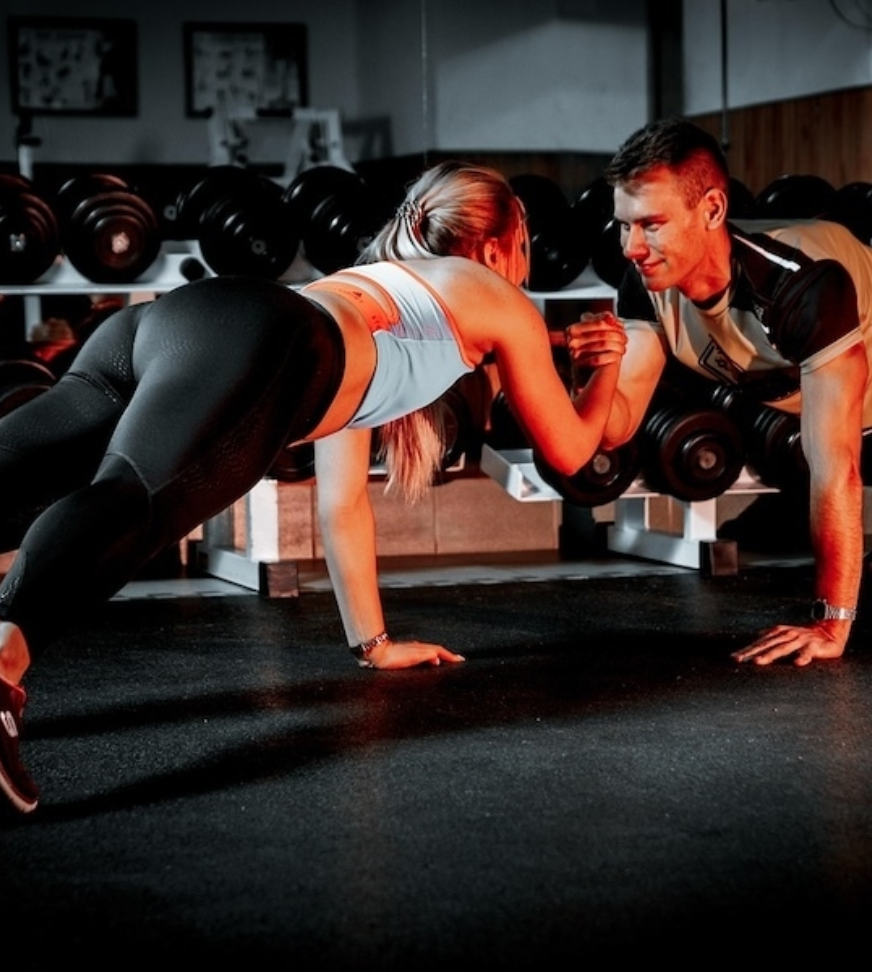
The Fitness Feed and the Filtered Reality
Users typically don't log on intending to feel worse about themselves. They're usually searching for something useful. A workout they can do at home. A meal idea. A bit of motivation after a long workday. Then the feed takes over.
One video shows a lean physique under gym lighting. The next shows a creator hitting a heavy lift with flawless form and a hype soundtrack. Then comes a transformation post that compresses months or years of effort into a few swipes. None of these posts is automatically harmful. The problem starts when repeated exposure makes that stream of content feel like a realistic baseline.
Why the feed changes your reference point
Fitness used to be shaped more by local experience. Your idea of “fit” might have come from your school coach, your gym community, or a family member who walked every morning and stayed active for decades. Social media changed that. Now your reference point may be dozens of creators you've never met, all posting polished snapshots from their strongest, leanest, or most photogenic moments.
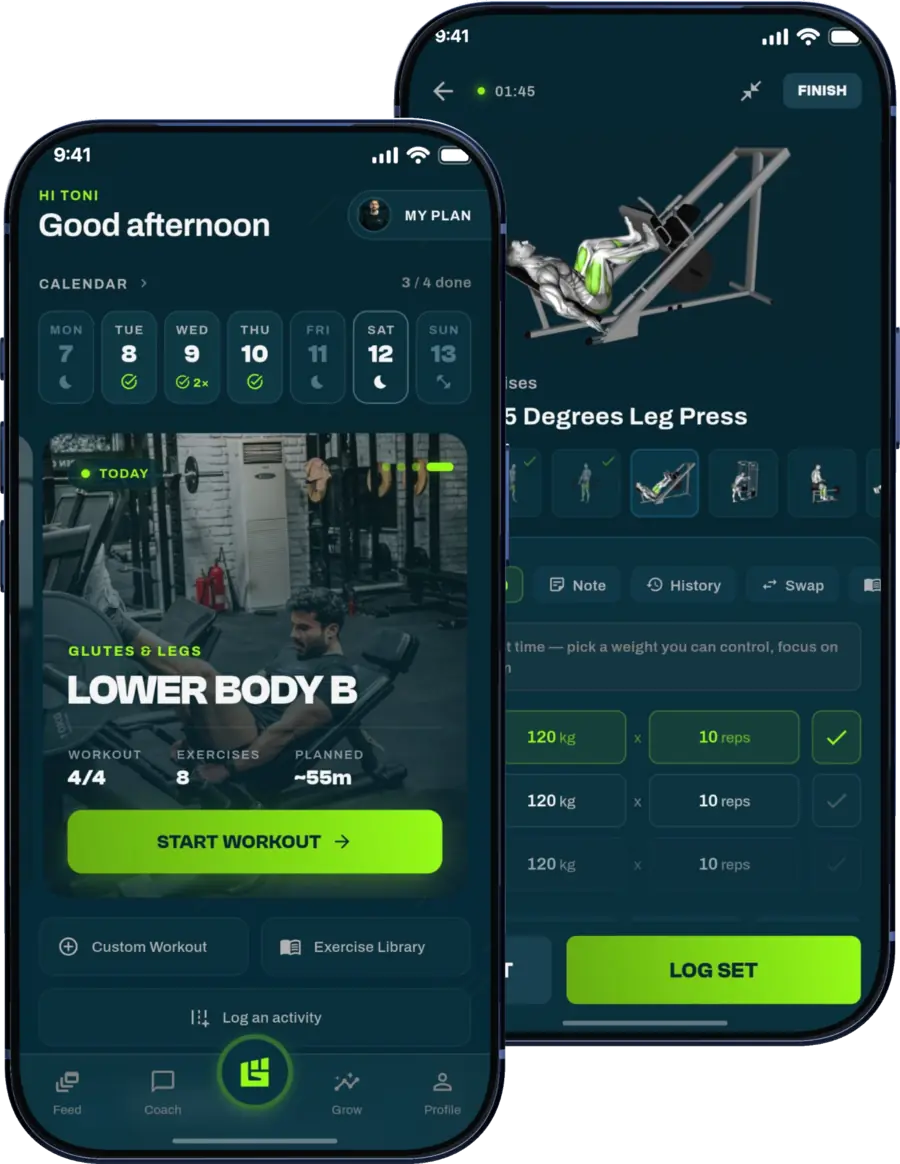
Built for progress
Take the guesswork out of training
Get a personalized workout plan built around your goal, equipment and schedule. Train smarter, track every rep and keep moving forward, one workout at a time.






That matters because expectations don't form in a vacuum. They form through repetition.
Social media doesn't just show you fitness. It quietly teaches you what fitness is supposed to look like.
If you're a creator yourself, this pressure works from both sides. You're not only consuming the standard. You're also tempted to perform it. That's one reason it helps to understand how platforms reward visuals, pace, and retention. If you want a clearer view of that side of the machine, this guide to optimizing your Reels strategy is useful because it explains why certain kinds of fitness content spread more easily than others.
What gets lost behind the scroll
The feed is built around moments, not full context. You see the highlight, not the tradeoffs. You see the top set, not the deload week. You see the meal prep containers, not whether the person enjoys eating that way. You see the mirror selfie, not the stress, genetics, editing, or scheduling flexibility behind it.
That doesn't mean everyone online is fake. It means the format is incomplete.
A busy parent training three days a week with interrupted sleep may be making excellent progress. A beginner learning movement quality may be doing exactly the right thing. A professional who chooses consistency over extremes may be building the strongest foundation in the room. Social media often makes those forms of progress look less impressive because they don't create instant visual drama.
The Rise of the Social Media Fitness Ideal
The modern online fitness ideal is specific. It usually means being lean year-round, carrying visible muscle in the “right” places, posting workouts with confidence, and presenting it all in a way that looks clean, energetic, and under control. That ideal didn't appear by accident. Influencer culture helped turn it into a recognizable template.
Research on fitness influencers helps explain why this template feels so powerful. In a review covering studies on fitness influencers, perceived social attractiveness, physical attractiveness, and trustworthiness all positively influenced users' parasocial relationships, and those parasocial relationships strongly predicted exercise intention with β = 0.597, p < 0.001. The same review also described another study with 507 participants in which trustworthiness, expertise, and attractiveness shaped influencer evaluation, while involvement with YouTube fitness videos and even lower health were associated with stronger behavioral intentions. You can read that review in this PMC article on fitness influencers and exercise intention.

Why influencers feel more persuasive than old fitness messaging
A public health message might tell you to exercise regularly. An influencer shows you their apartment, their coffee order, their warm-up, their gym outfit, and their “real talk” camera angle. That creates familiarity. Familiarity can feel like evidence, even when you're only seeing a curated slice of someone's life.
That's where people often get confused. They think, “I know this person's routine, so I know what made their body.” Usually, they know what the creator chose to post.
The online body is often a presentation, not just a physique
The body you see on social media is shaped by more than training. It's shaped by pose selection, camera height, pump, lighting, timing, and editing choices. Even honest creators still make presentation decisions. They choose the angle where posture looks strongest. They post on the day they feel leanest. They retake the clip where movement looks smooth.
A simple comparison helps:
| Online cue | What viewers often assume | What may actually be happening |
|---|---|---|
| Visible abs | “This is normal all day, every day” | Lighting, timing, pose, and body composition all affect appearance |
| Easy heavy lift | “I should be there too” | You're seeing one successful set, not the full training history |
| Daily polished content | “They live like this naturally” | Posting itself is part of the job for many creators |
Coach's reminder: If a body is also a brand, the image is doing marketing work.
That doesn't make inspiration off-limits. It just means you need to separate admiration from imitation. You can respect someone's discipline without assuming their body, schedule, and methods should become your personal standard.
Expecting Instant Gratification in a Long-Term Game
The fastest way social media distorts fitness isn't only through appearance. It's through speed.
You see countdowns, challenges, and transformation windows that make change look neat and compressed. The message is subtle but relentless. If you're focused enough, smart enough, or disciplined enough, visible results should happen quickly.

That's appealing because people want momentum. They want proof their effort matters. There's nothing wrong with that. The problem is that training adaptations rarely unfold on a clean, dramatic timeline, especially if you have a job, family responsibilities, travel, inconsistent sleep, or stress that doesn't fit inside a transformation graphic.
Why quick-turnaround fitness content is so sticky
Short timelines give people emotional clarity. A start date feels motivating. A finish line feels concrete. A visible challenge feels easier to commit to than a vague promise of long-term health.
But your body doesn't adapt for the camera. It adapts through repeated exposure to manageable stress, enough recovery, and enough time. Strength, muscle, work capacity, and skill all build through accumulation. Some weeks feel great. Some feel flat. Sometimes progress shows up in better form, more confidence, or improved recovery before it shows up in the mirror.
If you want a grounded look at realistic timelines, this article on how long to build muscle can help reset expectations.
What social media leaves out about progress
A transformation post often hides the middle. That middle is where most real fitness happens.
- Adaptation takes repetition. One hard week doesn't create a new body. Repeated weeks of appropriate training do.
- Recovery isn't optional. Sleep, food, and stress management influence what your body can build or maintain.
- Progress is uneven. You may improve in endurance while strength stalls, or build strength before your physique visibly changes.
This is one reason endurance athletes and event-based trainees often hold onto physical symbols of long work, not quick outcomes. If you like visual reminders of sustained effort rather than short-term spectacle, tools like a guide to find your ideal medal display can reinforce a healthier mindset. They point back to earned milestones, not algorithm-friendly speed.
A slow month with steady training usually beats a dramatic week followed by burnout.
A better standard than the countdown clock
Ask different questions when you see rapid-result content.
Does the plan fit a normal human schedule? Can it be repeated without draining you? Does it teach skills you'll still use later, or does it only promise urgency?
Progressive overload sounds technical, but the idea is simple. You ask your body to do a little more over time, then you recover well enough to adapt. That process is rarely flashy. It is effective.
The Double-Edged Sword of Digital Fitness
It would be easy to paint social media as the villain and end the conversation there. That would miss something important. Social platforms do help people train.
A 2025 study in Frontiers in Psychology found that fitness social media use significantly predicted exercise behavior (β = 0.295, p < 0.001), intrinsic motivation (β = 0.396, p < 0.001), and exercise intention (β = 0.254, p < 0.001). The study also reported positive correlations between fitness social media use and intrinsic motivation (r = 0.406) and exercise intention (r = 0.409). You can review those findings in the Frontiers in Psychology study on fitness social media use and exercise behavior.
That matches what many coaches see in real life. A person watches a beginner kettlebell tutorial and tries strength training for the first time. Someone joins a walking challenge because a friend posted about it. Another person finally learns a useful warm-up because a physical therapist broke it down clearly in a short video.

What digital fitness does well
Online fitness can be a practical doorway into movement, especially for people who feel intimidated by gym culture or don't know where to begin.
- It lowers the starting barrier. You can find mobility drills, bodyweight sessions, and form demos without walking into a crowded facility.
- It creates connection. People often stay more engaged when they feel part of a challenge, community, or shared goal.
- It supplies ideas on demand. If your routine feels stale, you can discover new exercises, equipment options, or training styles quickly.
Where it goes sideways
The same system that sparks motivation can also distort judgment. The problem usually isn't access. It's volume and incentive.
Creators compete for attention. Attention often favors certainty, aesthetics, novelty, and emotional intensity. That means balanced advice can get buried under dramatic claims, rigid rules, or visually impressive workouts that aren't universally appropriate.
Here's a simple way to think about it:
| If content leaves you feeling... | It may be doing... | Your next move |
|---|---|---|
| Informed and calm | Education | Save it and test it carefully |
| Fired up but grounded | Motivation | Use it as energy, not as law |
| Ashamed, frantic, or behind | Pressure | Mute, unfollow, or step back |
This is also where overreaching can sneak in. If every post you consume tells you to do more, lean out faster, and never miss, your normal fatigue can start to feel like failure. That's one reason conversations around managing training pressure with GrabGains matter. They help reframe training stress as something to manage, not something to glorify.
Use social media as a menu, not a command.
The real skill is selective engagement
The healthiest athletes I know don't necessarily consume less content. They consume it differently. They know when they're learning, when they're comparing, and when they're spiraling.
That distinction matters. Social media can widen your fitness world. It can also narrow your self-worth to appearance, output, and performative discipline if you stop questioning what you're seeing.
Train Smarter with a Personalized Game Plan
If your expectations have been shaped by the feed, the fix isn't to become less ambitious. The fix is to become more specific.
Individuals often don't need more motivation. They need a filter. They need a way to separate content that supports their goals from content that hijacks them. A personalized game plan does that by bringing fitness back to your body, your schedule, and your actual priorities.
Start with a feed audit
Look at the last handful of fitness accounts you consumed. Don't ask whether they're popular. Ask what effect they have on your behavior.
- Keep accounts that teach. Good creators explain exercise setup, progression, and context.
- Limit accounts that trigger comparison. If someone's content makes you feel constantly behind, that's useful information.
- Add more variety. Follow people who train for strength, mobility, health, endurance, and enjoyment, not only aesthetics.
A better feed won't solve everything, but it changes the emotional climate around your training.
Shift from appearance goals to performance markers
Aesthetic goals aren't wrong. They just tend to be fragile when they stand alone. Performance goals hold up better because they give you something concrete to practice.
Try replacing “I want to look fitter” with goals like these:
- Build a movement target. Examples include doing full push-ups, improving squat depth, or completing a comfortable run.
- Track a strength milestone. You might work toward a stronger deadlift, cleaner rows, or more controlled lunges.
- Improve consistency. For many busy adults, the key win is training regularly without feeling like life is falling apart.
Practical rule: Choose goals that you can influence this week through action, not only goals that depend on visible body change.
Match your plan to your real life
Under these circumstances, many people break trust with themselves. They choose a plan built for someone else's calendar. Then they call themselves inconsistent when they can't sustain it.
A useful plan fits your constraints. If you have limited time, your program should expect that. If you travel, it should adapt. If you're a beginner, the plan should teach before it tests. If you're advanced, it should progress without random noise.
That's the role of tools that personalize training rather than copy trends. One example is GrabGains training solutions, which offers goal-based workout planning, adaptive routines, progress tracking, exercise demos, and tools that help users organize training around muscle growth, strength, cardio, endurance, mobility, or recovery.

Use a simple framework when the internet gets noisy
When you're tempted to jump into every trend, run it through this checklist:
| Question | If the answer is yes | If the answer is no |
|---|---|---|
| Does this fit my current goal? | Consider testing it | Skip it |
| Can I recover from it? | Add it carefully | Reduce volume or avoid |
| Can I repeat it for weeks? | It may be useful | It's probably just novelty |
| Do I understand why I'm doing it? | Keep going | Learn first |
This kind of filter protects you from random program hopping. It also builds confidence. You stop chasing whatever is loudest online and start choosing what moves your training forward.
Let your body be part of the decision
A strong plan isn't rigid. It listens.
If your joints are irritated, your sleep is poor, or your motivation is dropping hard, those are not moral failures. They are signals. Sometimes the smart move is pushing. Sometimes it's adjusting load, reducing volume, or walking instead of forcing an intense session. Long-term success comes from reading those signals accurately, not overriding them because somebody online called rest “lazy.”
Building Your Own Definition of Fitness
Social media transformed the entire field. It changed what gets attention, what gets praised, and what many people think fitness should look like. It pushed aesthetics to the front, shortened our patience, and blurred the line between inspiration and pressure.
But it doesn't get to define your finish line.
Your version of fitness might mean building strength after years of inactivity. It might mean having enough energy for work and family. It might mean training for a HYROX event, reducing aches, improving mobility, or feeling at home in your body again. Those goals count, even if they don't look dramatic in a reel.
The most sustainable athletes are usually not the ones chasing every trend. They're the ones who know what they're training for. They understand that progress can be quiet. They respect recovery. They use social media for ideas, not identity.
If you remember one thing, let it be this: fitness works better when it becomes personal. Not performative. Not algorithm-friendly. Personal.
That's how you reclaim your standards. You decide what strength means for you. You decide what healthy effort feels like. You decide which voices get access to your attention.
If you want a more grounded way to train, GrabGains offers a practical alternative to piecing together workouts from the feed. It helps you build around your actual goals, track progress over time, and follow a plan that can adapt with your performance instead of pushing a one-size-fits-all trend.
Get inspired and motivated